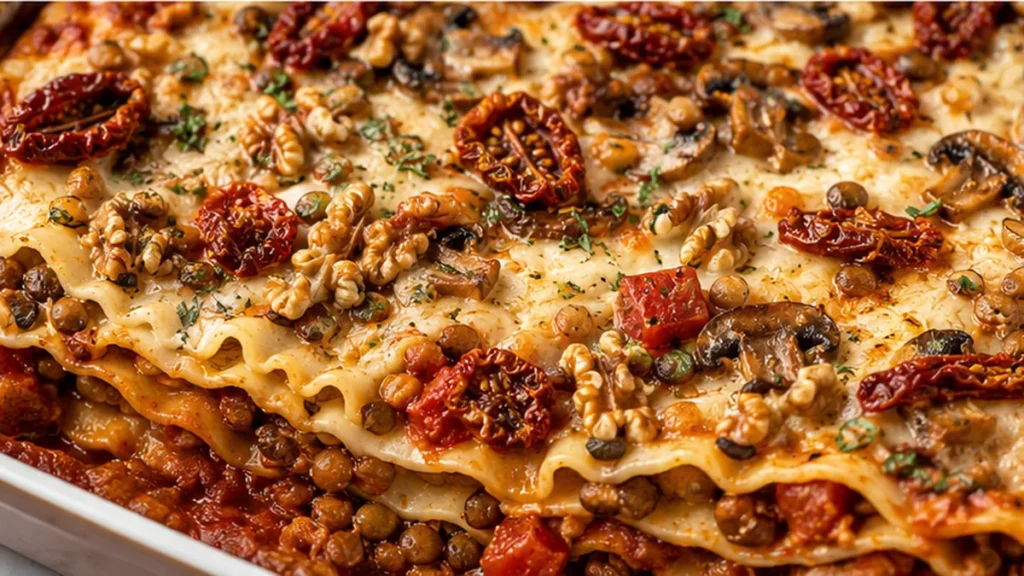
Craving a truly satisfying lasagna experience without the meat or dairy? This vegan lasagna recipe delivers all the comforting, savory flavors you love, with a hearty lentil, walnut, and mushroom filling that mimics the texture of traditional bolognese. It’s proof that plant-based eating can be incredibly delicious and deeply comforting. Perfect for weeknight dinners or special occasions, this vegan lasagna is surprisingly easy to assemble. The rich filling, combined with tender pasta layers and a hint of smoky sun-dried tomato, creates a dish that’s worth making at the table, vegans and omnivores alike.
Key takeaways
- Properly cooked lentils provide texture and protein.
- Sun-dried tomatoes enhance flavor and richness.
- Sautéing mushrooms prevents excess moisture.
- Layering techniques ensure a well-structured lasagna.
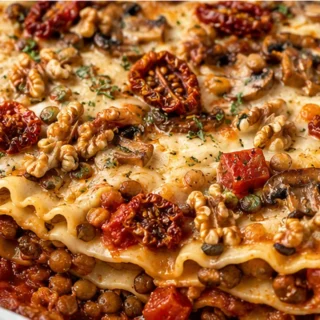
Vegan Lasagna That Tastes Amazing!
Ingredients
- 3 cups water
- ½ cup dried brown lentils (uncooked and rinsed)
- 2 tsp salt (divided)
- ¼ cup sun-dried tomatoes (in oil)
- ¼ cup walnuts
- 8 oz white mushrooms
- 1 tbsp reserved sun-dried tomato oil (or olive oil)
- 1 tbsp Italian seasoning
- 14.5 oz can petite diced tomatoes (in juices)
- 16 oz lasagna noodles
Instructions
- Preheat oven to 375°F.
- Cook lentils: Bring 3 cups water, ½ cup lentils, and 1 tsp salt to a boil. Simmer for 15-20 minutes until tender. Strain and set aside.
- In a food processor, combine ¼ cup sun-dried tomatoes, ¼ cup walnuts, and 8 oz. white mushrooms. Pulse until finely chopped.
- Stir in 1 Tbsp reserved sun-dried tomato oil, 1 Tbsp Italian seasoning, and ½ tsp salt.
- In a large bowl, combine the lentil mixture with 14.5 oz. can petite diced tomatoes.
- Layering: Spread a thin layer of the lentil mixture on the bottom of a 9×13 inch baking dish. Arrange a layer of 16 oz. lasagna noodles over the mixture.
- Spread half of the remaining lentil mixture evenly over the noodles. Add another layer of noodles. Spread the rest of the lentil mixture over the second noodle layer. Top with a final layer of noodles.
- Cover the dish tightly with foil. Bake for 25 minutes. Remove foil and bake for another 15-20 minutes, or until bubbly and noodles are tender.
Video
Notes
Understanding the Role of Lentils in Vegan Lasagna
The use of lentils in vegan lasagna not only provides a hearty texture but also contributes essential protein and fiber. Brown lentils, when cooked, can absorb flavors well and create a satisfying base. Cooking ½ cup of dried brown lentils in 3 cups of water with 2 teaspoons of salt for about 20-25 minutes allows them to soften without becoming mushy. This step is crucial for achieving the right consistency within the lasagna layers.
Why Sun-Dried Tomatoes Make a Difference
Sun-dried tomatoes add a concentrated flavor that elevates the overall taste of vegan lasagna. The oil in which they are preserved enhances the dish’s richness. When using ¼ cup of sun-dried tomatoes, ensure they are finely chopped and mixed with 1 tablespoon of reserved oil or olive oil to create a luscious layer that binds the ingredients together while infusing them with a robust taste.
The Importance of Mushroom Texture and Flavor
White mushrooms, when sautéed, release moisture and develop a deeper flavor profile, essential for balancing the dish. Sautéing 8 oz. of chopped mushrooms in the reserved oil until they are golden brown (approximately 5-7 minutes) helps to intensify their umami notes. This technique prevents the lasagna from becoming watery, ensuring a pleasant mouthfeel.
Layering Techniques for Optimal Structure
Proper layering is vital for a well-structured lasagna. Start with a base of sauce, followed by a layer of noodles, then the lentil mixture, mushrooms, and sun-dried tomatoes. Repeat this process, ensuring that the top layer consists of noodles covered with sauce. This method prevents the noodles from drying out, allowing them to absorb moisture during baking. Bake at 375°F (190°C) for 45 minutes, which allows the flavors to meld and the layers to set.
Common Pitfalls and How to Avoid Them
One common issue is a dry lasagna, often caused by insufficient moisture in the layers. To fix this, ensure each layer is adequately sauced and consider adding a bit more liquid if needed. Another problem is the noodles sticking together, which can be resolved by ensuring they are cooked al dente and not overcrowding the layers. Additionally, using a high-quality marinara sauce can significantly enhance flavor, preventing blandness.
How to Make Vegan Lasagna Ahead of Time for Optimal Flavor
Preparing vegan lasagna in advance not only saves time but also enhances the flavors. To make it ahead, assemble the lasagna as instructed, then cover it tightly with plastic wrap or aluminum foil. Refrigerate for up to 24 hours before baking. For longer storage, freeze the unbaked lasagna for up to three months. When ready to bake, thaw it overnight in the fridge and increase the baking time by about 15-20 minutes to ensure it heats through evenly. This method allows the flavors to meld beautifully, resulting in a richer dish.
Scaling Your Vegan Lasagna Recipe for Larger Gatherings
When scaling the recipe, consider the proportions of each ingredient carefully. For every additional batch, maintain the ratio of lentils, mushrooms, and sun-dried tomatoes to ensure consistent flavor and texture. If doubling, use a larger baking dish, ideally a 9×13-inch pan, and increase the baking time by about 10-15 minutes. Keep an eye on the top layer of noodles; they should be tender but not overcooked. Scaling up allows you to serve more people without sacrificing quality.
Choosing the Right Equipment for Baking Vegan Lasagna
The type of baking dish you use can significantly affect the outcome of your vegan lasagna. Glass or ceramic dishes are ideal as they retain heat well, promoting even cooking. Avoid metal pans, which can cause uneven browning. If using a glass dish, preheat your oven to 375°F (190°C) to ensure the lasagna cooks evenly. Additionally, a sharp knife is essential for cutting perfect portions once baked. Proper equipment ensures that your layers remain intact and visually appealing.
How Seasonal Ingredients Impact Your Vegan Lasagna
Using seasonal ingredients can elevate your vegan lasagna. For instance, during summer, fresh tomatoes can replace canned ones, adding a vibrant flavor and juiciness. In fall, consider adding roasted butternut squash or spinach for added nutrients and flavor depth. The quality of your ingredients directly affects the final dish; fresher produce enhances the overall taste and texture. Always aim to source local, seasonal vegetables for the best results, as they are often more flavorful and nutrient-rich.
Why Make-Ahead Vegan Lasagna Can Save You Time
Preparing vegan lasagna in advance can significantly enhance its flavors and make meal prep easier. By allowing the assembled lasagna to rest in the refrigerator for at least 4 hours, or ideally overnight, the flavors meld together, resulting in a more harmonious dish. This resting period allows the lentils to absorb moisture and soften, which improves texture. When ready to bake, preheat your oven to 375°F (190°C) and cover the lasagna with foil for the first 30 minutes to prevent drying out. After this, remove the foil for the last 15-20 minutes to achieve a beautifully browned top.
How Ingredient Quality Affects Your Vegan Lasagna
The quality of your ingredients can dramatically impact the final taste of your vegan lasagna. Fresh, high-quality vegetables, such as mushrooms and sun-dried tomatoes, bring depth and richness to the dish. Opt for organic lentils, which are less likely to contain additives or preservatives. Seasonal ingredients, like fresh basil or zucchini, can elevate the flavor profile. Be mindful that lower-quality canned tomatoes may contain added sugars or preservatives that can alter the taste. Using fresh herbs instead of dried can also enhance the overall flavor, making your vegan lasagna taste more vibrant.
Why Scaling Your Vegan Lasagna Requires Adjustments
When scaling your vegan lasagna recipe for larger gatherings, adjustments are necessary to maintain the dish’s integrity. Doubling or tripling the recipe requires careful consideration of cooking time and layering. The baking time may increase when using a larger pan, so check for doneness by inserting a knife through the center; it should come out hot and clean. Additionally, ensure that you have enough sauce to prevent the noodles from drying out. A general rule is to add an extra 10-15 minutes of baking time for each additional layer. This ensures that the flavors meld properly and the texture remains consistent.
How to Properly Store Vegan Lasagna for Maximum Freshness
Proper storage of vegan lasagna is crucial for maintaining its flavor and texture. Allow the lasagna to cool completely before storing it. Use an airtight container to prevent moisture loss and preserve flavor. If you plan to store it in the refrigerator, it can last for about 3-5 days. For longer storage, freezing is ideal. Wrap individual portions tightly in plastic wrap and place them in a freezer-safe container or bag. Frozen vegan lasagna can last up to 3 months. When you’re ready to enjoy it, thaw it overnight in the refrigerator before reheating. Reheat in the oven at 350°F (175°C) for about 30-40 minutes, covered with foil to retain moisture.
Adjusting Cooking Times for Different Equipment When Making Vegan Lasagna
The type of cooking equipment you use can significantly affect the cooking time and final texture of your vegan lasagna. Conventional ovens typically cook evenly, allowing for a well-baked lasagna in about 45-60 minutes at 375°F (190°C). However, if you’re using a convection oven, reduce the cooking time by about 10-15% as the fan circulates hot air, cooking the dish faster. Slow cookers can also be used for a more hands-off approach, but they may take 4-6 hours on low heat. When using a microwave, ensure that the lasagna is covered to prevent it from drying out, cooking in short bursts and checking for doneness. Always adjust your cooking time based on the specific equipment to avoid overcooking or undercooking.
Why make-ahead vegan lasagna can enhance flavor and convenience
Making vegan lasagna ahead of time allows the flavors to meld, resulting in a richer taste. When assembled and stored in the refrigerator for 24 hours, the ingredients have time to infuse, leading to a more cohesive dish. To prepare, layer the ingredients as per the recipe, cover tightly with plastic wrap or aluminum foil, and refrigerate. When ready to bake, preheat the oven to 375°F (190°C) and bake for an additional 10-15 minutes, as the dish will be cold. This method not only enhances flavor but also saves time on busy days.
Why the choice of equipment affects the texture of your vegan lasagna
The type of baking dish you use can significantly impact the texture and cooking of vegan lasagna. Glass or ceramic dishes are preferred as they distribute heat evenly, promoting thorough cooking of the noodles and preventing sogginess. Metal pans can lead to uneven cooking, potentially resulting in crispy edges while the center remains undercooked. For best results, ensure your baking dish is at least 2 inches deep to accommodate the layers without spilling over. Additionally, consider using parchment paper to line the dish, which can aid in easy removal and prevent sticking.
Pro tips
- The key to a great vegan lasagna is building flavor in the filling. Don’t skip sautéing the mushrooms and using sun-dried tomatoes for that umami punch.
- For a ‘cheesier’ flavor, you can add nutritional yeast to the lentil mixture.
- Ensure the lentils are cooked but not mushy – they should still hold their shape.
- Let the lasagna rest for at least 10 minutes after baking before cutting; this helps it set.
Enjoy this incredibly satisfying vegan lasagna, a testament to how flavorful and hearty plant-based meals can be!
Frequently asked questions
Can I use other types of lentils for this vegan lasagna?
While brown lentils are recommended for their texture and cooking time, you can use green lentils as a substitute. However, avoid red lentils, as they cook too quickly and may become mushy, impacting the lasagna’s structure.
How do I prevent my lasagna from being too watery?
To prevent a watery lasagna, ensure that all vegetables are properly sautéed to release moisture before layering. Additionally, use a thicker marinara sauce and avoid overcooking the noodles, which can absorb excess liquid.
Can I make this lasagna ahead of time?
Yes, you can assemble the lasagna a day in advance. Cover it tightly with plastic wrap and refrigerate. When ready to bake, remove the wrap and bake as directed, possibly adding a few extra minutes to account for the cold temperature.
What can I use instead of lasagna noodles?
If you want a gluten-free option, consider using zucchini or eggplant slices as a substitute for lasagna noodles. This will create a lighter dish, but be sure to salt and drain the vegetables to remove excess moisture before layering.
More from Baked Pasta Recipes →