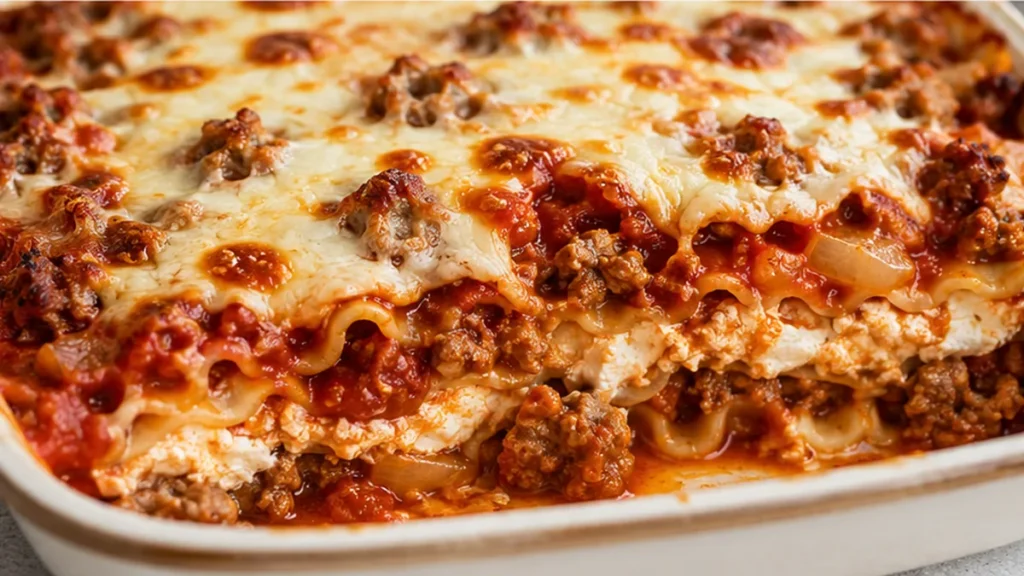
The secret to a truly satisfying homemade lasagna is balancing the rich, savory meat sauce with a creamy, well-seasoned cheese filling. This homemade lasagna recipe offers just that, providing a hearty and comforting meal perfect for any occasion. Preparing a delicious homemade lasagna doesn’t have to be complicated. This recipe simplifies the process while ensuring every layer contributes to a deeply flavorful and satisfying dish that will become a family favorite.
Key takeaways
- Balancing flavors with proper layering is key to success.
- Allow lasagna to rest before slicing for better structure.
- Use quality ingredients for the best flavor.
- Adjust moisture levels in sauce to avoid a watery dish.
Ingredients for homemade lasagna
- 1 lb. Italian sausage
- 1 yellow onion
- 1 28oz. can crushed tomatoes
- 3 oz. tomato paste
- 1 Tbsp Italian seasoning
- 2 cups whole milk ricotta
- 1 cup shredded Italian cheese blend
- 1 large egg
- 1/4 tsp freshly cracked pepper
- 9 lasagna noodles
How to make homemade lasagna
- Brown 1 lb. Italian sausage in a deep skillet over medium heat. Dice and add 1 yellow onion, cooking for 3 minutes until softened.
- Stir in 1 28oz. can crushed tomatoes, 3 oz. tomato paste, and 1 Tbsp Italian seasoning. Simmer on medium-low, partially covered, stirring occasionally.
- Preheat oven to 350ºF. In a bowl, combine 2 cups whole milk ricotta, 1 cup shredded Italian cheese blend, 1 large egg, and 1/4 tsp freshly cracked pepper.
- Boil 9 lasagna noodles in salted water for 8 minutes until tender, then drain.
- Layer 1 cup sauce, 3 noodles, and 1/3 cheese mixture in a 9×13-inch dish. Repeat twice. Top with remaining sauce and mozzarella.
- Cover with foil and bake for 40 minutes. Remove foil, broil for 5 minutes until cheese is golden.
- Garnish with chopped parsley if desired. Slice into 9-12 pieces and serve.
The Technique That Makes It
The key to a successful homemade lasagna lies in the balance of flavors and textures, achieved through proper layering and cooking techniques. The use of Italian sausage adds depth to the sauce, while the ricotta provides creaminess. When combining the ricotta with an egg, it creates an emulsion that helps bind the layers together, preventing them from becoming too watery. Additionally, the cooking of the meat and onions at the right temperature allows for the Maillard reaction to occur, enhancing the flavor profile. Layering the noodles, sauce, and cheese mixture with care ensures even cooking and prevents the noodles from becoming overcooked or mushy.
Troubleshooting
- Problem: Lasagna is watery.
Fix: Ensure that the meat sauce is simmered long enough to reduce excess moisture. Consider using less ricotta or draining it before mixing. - Problem: Noodles are too soft.
Fix: Use oven-ready noodles, which require less cooking time, or cook regular noodles al dente before layering. - Problem: Layers slide apart.
Fix: Allow the lasagna to rest for at least 15-20 minutes after baking. This will help the layers set and hold together better when sliced. - Problem: Cheese is too greasy.
Fix: Use a blend of low-fat cheese or reduce the amount of cheese used, ensuring a balanced flavor without excess grease.
Substitutions
- Italian sausage: Ground turkey or chicken can be used for a leaner option, resulting in a lighter flavor.
- Whole milk ricotta: Cottage cheese can be substituted for a lower-fat option, but it may alter the texture slightly.
- Shredded Italian cheese blend: Mozzarella and Parmesan can be used separately to achieve a similar flavor profile.
- Tomato paste: Tomato sauce can be used in a pinch, but it may require additional seasoning to achieve the desired richness.
Pro tips
- For optimal flavor, let the meat sauce simmer for at least 30 minutes, or even longer on low heat. A longer simmer deepens the flavors and makes the sauce more robust.
- Ensure your ricotta mixture is well combined to prevent pockets of unseasoned cheese. A large egg helps bind it, creating a smoother texture when baked.
- Cook your lasagna noodles al dente, as they will continue to soften in the oven. This prevents them from becoming mushy.
- Leftover lasagna can be stored in an airtight container in the refrigerator for up to 4 days, or frozen for up to 3 months. Reheat covered in the oven at 350°F (175°C) until heated through.
This homemade lasagna is a timeless classic that brings warmth and satisfaction to any table. Try this recipe and share your comforting creations with friends and family. Enjoy every delicious layer!
Frequently asked questions
Can I prepare the lasagna in advance?
Yes, you can prepare the lasagna a day ahead. Assemble it completely, cover it tightly, and refrigerate. When ready to bake, allow it to come to room temperature before placing it in the oven.
How do I store leftover lasagna?
Leftover lasagna should be stored in an airtight container in the refrigerator for up to 3-4 days. It can also be frozen for longer storage, up to 3 months, but be sure to wrap it tightly.
What can I serve with homemade lasagna?
Homemade lasagna pairs well with a simple green salad, garlic bread, or steamed vegetables. These sides help to balance the richness of the lasagna.
Can I use no-boil lasagna noodles?
Yes, no-boil lasagna noodles can be used in this recipe. They will absorb moisture from the sauce as they cook, so ensure your sauce is not too thick to help them soften properly.