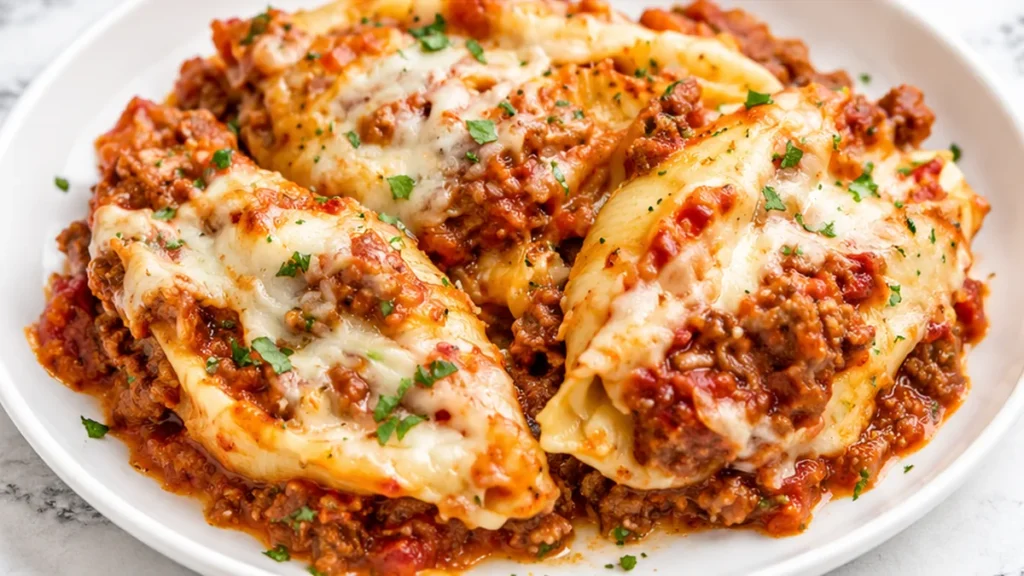
Cheesy stuffed shells are a hearty dish filled with a creamy spinach and ricotta mixture. This recipe is straightforward and perfect for family meals.
Key takeaways
- Use a balanced cheese mixture for optimal flavor and texture.
- Avoid overcooking pasta shells to prevent breakage.
- Consider ingredient swaps for dietary preferences without sacrificing taste.
- The unique structure of stuffed shells enhances sauce retention and texture contrast.
Cheesy Stuffed Shells
Ingredients
Instructions
- Preheat your oven to 350°F (175°C).
- Cook the jumbo shells in boiling salted water until al dente (about 10-12 minutes). Don’t overcook! Drain, rinse briefly with cool water, and set aside.
- Heat cooking oil in a large skillet over medium heat. Add ground beef and cook until browned. Drain excess fat.
- Add diced onion and minced garlic to the skillet with the beef. Sauté until onion is translucent and garlic is fragrant (about 3-5 minutes).
- Stir in the marinara sauce, tomato paste, Italian seasoning, salt, and garlic powder. Simmer for 3-5 minutes.
- Carefully stuff each cooked shell with the beef and sauce mixture. Arrange the stuffed shells in a 9×13 inch baking dish.
- Pour any remaining sauce over the stuffed shells.
- Bake uncovered for 20-25 minutes, or until heated through and bubbly.
Understanding the Cheese Mixture for Cheesy Stuffed Shells
The core of cheesy stuffed shells lies in the cheese filling. Typically, a combination of ricotta, mozzarella, and parmesan is used. Ricotta provides a creamy texture, while mozzarella adds stretchiness, and parmesan contributes a sharp flavor. For optimal flavor, use whole milk ricotta, which has a higher fat content, enhancing creaminess. Aim for a ratio of 2:1:1 for ricotta to mozzarella to parmesan, ensuring a balanced taste and texture.
Common Issues and Solutions in Stuffed Shells Preparation
One common issue is the shells breaking during the stuffing process. This often occurs due to overcooking the pasta. To prevent this, boil the shells for only 8-9 minutes, leaving them slightly undercooked. Another problem is the filling leaking out during baking, which can happen if the shells are overstuffed. Aim for about 2 tablespoons of filling per shell to maintain integrity. Lastly, if the dish turns out dry, it may be due to insufficient sauce. Ensure enough marinara sauce coats the shells before baking.
Ingredient Swaps and Their Impact
While traditional recipes call for ricotta, you can substitute it with cottage cheese for a lower-fat option. This swap will yield a slightly less creamy texture but will still provide a good flavor. If you’re looking for a dairy-free alternative, consider using cashew cheese, which can mimic the creaminess of ricotta. However, this will alter the overall taste profile. For an added kick, mix in some chopped spinach or herbs like basil or parsley, enhancing both flavor and nutrition.
Unique Characteristics of Cheesy Stuffed Shells
What sets cheesy stuffed shells apart from other pasta dishes is their filled structure and the combination of textures. The shells encapsulate the filling, which allows them to hold sauce better than flat pasta. This dish also benefits from the Maillard reaction during baking, where the cheese on top becomes golden brown and slightly crispy, adding a delightful contrast to the soft pasta and creamy filling. Additionally, cheesy stuffed shells can be prepared ahead of time and frozen, making them a convenient option for meal prep.
How to Prepare Cheesy Stuffed Shells in Advance
Making cheesy stuffed shells ahead of time can be a game-changer for busy weeknights or special occasions. To prepare in advance, assemble the shells with the cheese mixture and place them in a baking dish. You can cover the dish tightly with plastic wrap or aluminum foil and refrigerate it for up to 24 hours before baking. If you need to store them longer, consider freezing the assembled shells. To freeze, place the dish in the freezer without baking. When ready to cook, thaw overnight in the refrigerator and bake as directed. This method helps maintain the texture of the pasta and the filling, ensuring a delicious meal with minimal last-minute effort.
Adjusting Portions for Large Gatherings
Scaling the recipe for cheesy stuffed shells is straightforward, making it an excellent choice for gatherings. If you want to serve a larger group, simply multiply the ingredients by the number of servings you need. Keep in mind that a standard serving is typically around three to four stuffed shells per person. When adjusting the batch size, ensure that you have a sufficiently large baking dish to accommodate the increased number of shells. Additionally, consider the cooking time; larger quantities may require a few extra minutes in the oven to heat through completely. Always check for doneness by ensuring the cheese is melted and bubbly.
Choosing the Right Equipment for Perfectly Stuffed Shells
The equipment you use can significantly impact the outcome of your cheesy stuffed shells. A large pot for boiling the pasta is essential, as it allows for even cooking and prevents the shells from sticking together. Using a slotted spoon can help you transfer the shells without damaging them. For baking, a glass or ceramic dish is preferable as it distributes heat evenly. If you have a piping bag, it can make filling the shells much easier and neater, but a simple spoon will also work. Additionally, consider using parchment paper to line the baking dish for easier cleanup.
Pairing Suggestions that Enhance Cheesy Stuffed Shells
Cheesy stuffed shells can be paired with a variety of sides and sauces to enhance their flavor profile. A fresh green salad with a light vinaigrette complements the richness of the stuffed shells and adds a refreshing contrast. For sauce options, a classic marinara or a creamy Alfredo can elevate the dish. Additionally, consider serving with garlic bread to soak up any extra sauce. Wine pairings such as a light red like Chianti or a crisp white like Pinot Grigio can also complement the flavors of the dish, making for a well-rounded dining experience.
Understanding the Effects of Cheese Quality on Flavor and Texture
The choice of cheese in cheesy stuffed shells significantly impacts both flavor and texture. High-quality cheeses like fresh ricotta and aged mozzarella bring creaminess and depth, while pre-shredded cheeses often contain anti-caking agents that can alter melting properties. For optimal results, consider using a blend of cheeses. For instance, combining whole milk ricotta (approximately 250 grams) with 200 grams of freshly grated mozzarella creates a creamy filling that melts beautifully. Additionally, incorporating a bit of grated Parmesan can enhance the umami flavor, adding a savory note that elevates the dish. Always aim for cheeses that are at least 70% moisture for a rich, gooey filling.
Batch Scaling: How to Adjust Ingredients for Different Serving Sizes
When scaling the recipe for cheesy stuffed shells, it’s essential to maintain the ratios of the ingredients to ensure consistent flavor and texture. For instance, if you want to increase the serving size from 4 to 8, simply double the main components: use 500 grams of pasta shells, 500 grams of ricotta, and 200 grams of mozzarella. However, keep in mind that the baking time may need adjustment; a larger batch may require an additional 10-15 minutes in the oven to ensure even heating. Always check for doneness by ensuring the cheese is bubbly and golden brown on top. This method not only preserves the integrity of the dish but also allows for flexibility in meal planning.
Best Practices for Serving Cheesy Stuffed Shells
Serving cheesy stuffed shells can be enhanced by considering presentation and complementary flavors. For an appealing dish, arrange the shells in a single layer in a baking dish, topping them with a light layer of marinara sauce and a sprinkle of fresh basil or parsley just before serving. This not only adds color but also fresh flavor. Pairing with a simple side salad dressed with a lemon vinaigrette can balance the richness of the dish. Additionally, offering freshly grated Parmesan at the table allows guests to customize their experience. For a seasonal twist, consider incorporating roasted vegetables into the marinara sauce during the summer months, adding both nutrition and flavor.
How to Store Cheesy Stuffed Shells for Maximum Freshness
Proper storage of cheesy stuffed shells is crucial to maintain their flavor and texture. If you plan to save leftovers, allow the shells to cool completely before transferring them to an airtight container. Refrigerated, they can last for up to 3-5 days. For longer storage, consider freezing them. To freeze, place the stuffed shells in a single layer on a baking sheet until frozen solid, then transfer them to a freezer-safe container. They can be stored in the freezer for up to 3 months. When ready to eat, thaw them in the refrigerator overnight and reheat in the oven at 180°C (350°F) until heated through. This method helps retain moisture and prevents the shells from becoming mushy.
Scaling Cheesy Stuffed Shells: Adjusting for Larger Gatherings
Scaling a recipe for cheesy stuffed shells can be straightforward, but it requires careful attention to ingredient ratios and baking times. For larger gatherings, consider increasing the quantities by half or doubling the recipe, depending on the number of servings needed. Maintain the same ratios of cheese, pasta, and sauce to preserve the flavor profile. However, be mindful that large batches may require adjustments in baking time; larger dishes may need an additional 10-15 minutes in the oven to ensure they are heated through. Use a food thermometer to check that the internal temperature reaches at least 74°C (165°F) for food safety. Additionally, when preparing larger quantities, it may be beneficial to use multiple baking dishes to ensure even cooking.
Pro tips
Pro tip: Best served immediately while hot!
Frequently asked questions
Can I make cheesy stuffed shells ahead of time?
Yes, you can prepare cheesy stuffed shells ahead of time. Assemble the dish and refrigerate it for up to 24 hours before baking. Alternatively, you can freeze them before baking; just ensure to cover them well to prevent freezer burn. Bake from frozen, adding extra time to the cooking process.
What type of cheese is best for the filling?
The best cheese for the filling includes ricotta, mozzarella, and parmesan. Ricotta provides creaminess, mozzarella adds stretch, and parmesan contributes a sharp flavor. For a richer filling, opt for whole milk ricotta.
How do I prevent the shells from breaking?
To prevent breaking, avoid overcooking the shells. Boil them for about 8-9 minutes, leaving them slightly undercooked. Handle them gently when stuffing to maintain their integrity.
Can I add vegetables to the filling?
Yes, you can add vegetables like spinach or chopped mushrooms to the filling for added flavor and nutrition. Just ensure to sauté the vegetables first to remove excess moisture, preventing the filling from becoming too watery.
More from Baked Pasta Recipes →