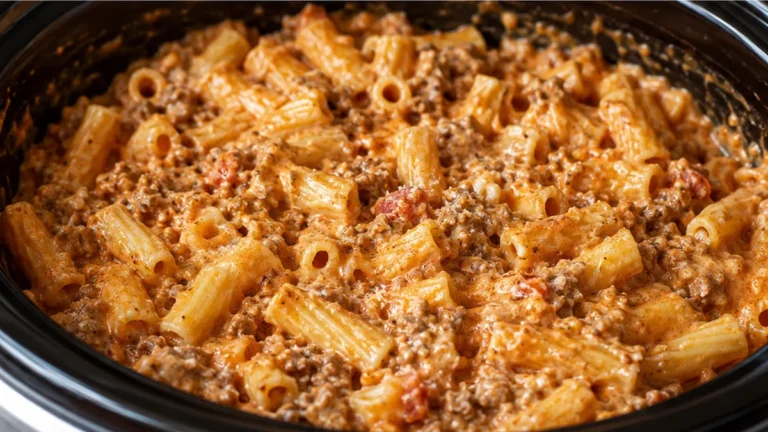
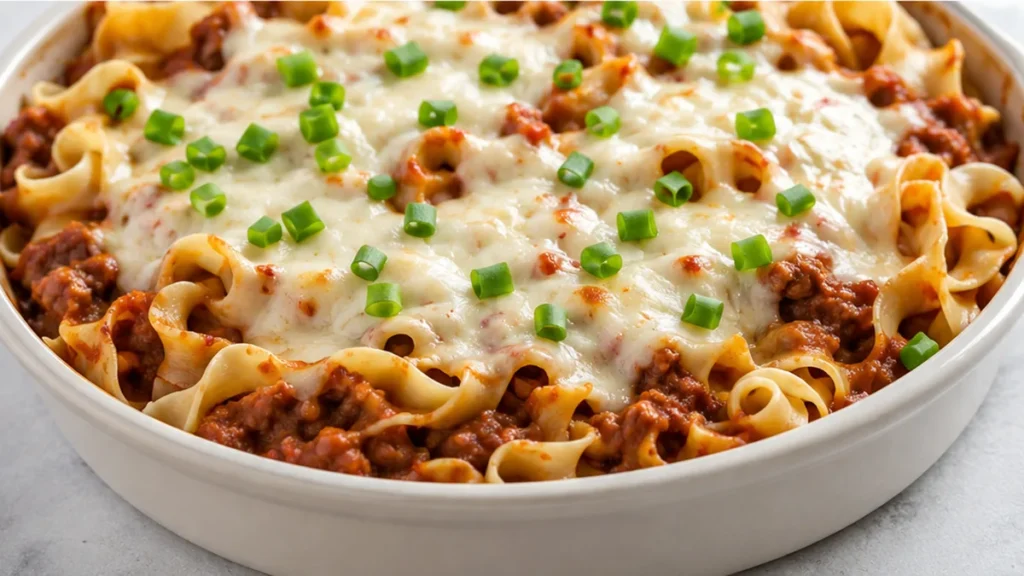
The quest for the perfect comfort food often leads to a hearty casserole, and this Beef Noodle Casserole is a prime example. It masterfully combines tender egg noodles with a savory ground beef and tomato sauce, all enveloped in a luscious, tangy cream cheese mixture. This dish is remarkably easy to assemble, making it an ideal choice for busy weeknights when you want a satisfying meal without the fuss. This noodle casserole isn’t just about comfort; it’s about balanced flavors and textures. The slight tang from the sour cream and the freshness of the green onions cut through the richness of the cream cheese and beef, while the bell pepper adds a subtle sweetness and crunch. It’s a complete meal in one dish, proving that simple ingredients can create something truly special.
Key takeaways
- Soften the cream cheese to about 60 to 65 F and beat it with the sour cream off the heat so the creamy layer stays smooth and does not split during baking.
- Drain the wide egg noodles 2 to 3 minutes shy of package doneness and skip rinsing, since the residual starch grips the cheese and the noodles finish cooking in the oven.
- Brown the ground beef hard until a crust forms near 300 F before adding tomato sauce, then bloom the dried tarragon in the simmering sauce rather than the raw meat.
- Rest the finished bake 10 minutes so the layers set and cut cleanly instead of running.
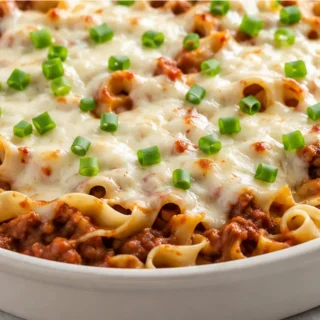
Ultimate Cheesy Beef Noodle Bake!
Ingredients
- 12-16 ounce package wide egg noodles
- 1 pound ground beef
- 16 ounces tomato sauce
- salt and pepper (to taste)
- 8 ounce package cream cheese, softened
- ¼ cup sour cream
- ⅓ cup green onion, chopped
- 1 medium bell pepper, chopped
- 1 teaspoon dried tarragon
Instructions
- Preheat oven to 375°F (190°C). Lightly grease a deep, medium-sized casserole dish.
- Cook egg noodles according to package directions. Drain and set aside. While noodles cook, brown ground beef in a skillet over medium heat. Drain excess fat, then stir in tomato sauce and season with salt and pepper to taste.
- In a separate medium bowl, combine the softened cream cheese, sour cream, chopped green onion, chopped bell pepper, and dried tarragon until well mixed.
- Spread half of the cooked noodles evenly in the prepared casserole dish. Top with half of the beef and tomato sauce mixture. Dollop or spread half of the cream cheese mixture over the beef layer. Repeat with the remaining noodles, beef mixture, and cream cheese mixture.
- Cover the casserole dish tightly with foil and bake for 30 minutes at 375°F (190°C), or until heated through and bubbly. For an extra-golden top, remove foil for the last 5 minutes of baking.
Notes
Why cream cheese in a noodle casserole splits when the sour cream layer overheats
The cream cheese layer is the part of this noodle casserole most likely to break, and it happens because cream cheese and sour cream are emulsions of fat, water, and protein that hold together only up to a point. Cream cheese contains roughly 33 percent fat suspended in a soft protein network; push that network past about 85 C (185 F) for long enough and the proteins tighten and squeeze out water, leaving grainy curds sitting in a puddle of grease. Sour cream is even more fragile because it carries lactic-acid bacteria and less stabilizing fat. Baking uncovered at 175 C (350 F) for 20 to 40 minutes keeps the interior gentle, since the mixture is buffered by starch from the noodles and moisture from the tomato sauce.
The fix is to soften, not melt. Serious Eats recommends bringing cream cheese to roughly 15 to 18 C (60 to 65 F) before mixing, the point where an 8-ounce block yields to a spoon without turning oily. Beat it with the quarter cup of sour cream first, off the heat, so you are folding a smooth cream into cool noodles rather than trying to melt a cold block in a hot dish.
Undercooking wide egg noodles by 2 to 3 minutes so the bake does not turn to mush
Wide egg noodles keep absorbing water and heat inside the casserole, so the doneness that matters is the doneness before they ever reach the oven. Drain them 2 to 3 minutes short of the package time, at the firm side of al dente. Pasta starch gelatinizes between roughly 55 and 70 C (130 to 160 F); once those granules swell and burst they cannot re-firm, which is why an overcooked noodle bake stays gluey no matter how you reheat it. The 20-plus minutes at 175 C (350 F) finishes the noodles in the dish, and a 12 to 16 ounce bag of wide egg noodles drinks up the extra liquid from the tomato sauce and dairy as it sets.
Do not rinse after draining. The thin starch film clinging to hot noodles is what grabs the cream cheese and sour cream and keeps the layers from sliding apart. Toss the drained noodles with the softened cheese mixture while they are still warm, around 60 C (140 F), so the fat coats every strand before it stiffens. Salt the boiling water at 1 to 2 teaspoons per batch, because unsalted noodles taste flat under a mild tomato-beef layer no amount of surface cheese can rescue.
Building real browned flavor from 1 pound of ground beef before the tomato sauce goes in
The single biggest flavor lever in this dish is how hard you brown the pound of ground beef, and most cooks stop too early. The Maillard reaction, the browning that builds savory, roasted notes, needs surface temperatures near 150 C (300 F) and really gets going closer to 165 C (330 F). Ground beef releases so much water that the pan hovers at the boiling point of water, 100 C (212 F), until that liquid cooks off. As food scientist J. Kenji Lopez-Alt has explained through Serious Eats, meat steams rather than browns while it sits in its own juices.
Spread the beef, let it sit undisturbed for 2 to 3 minutes to build a crust, then break it up. If you use 80/20 beef you will drain a meaningful amount of grease; leaner 90/10 needs little draining but browns faster once dry. After the fond forms, pour in the 16 ounces of tomato sauce to deglaze, scraping up the browned bits, then season with salt and pepper and the teaspoon of dried tarragon. Tarragon carries a delicate anise note that reads as sweet against acidic tomato, so add it to the simmering sauce, not the raw meat, to let it bloom in the fat.

Four swaps for the cream cheese, tarragon, and bell pepper and what each one costs you
This casserole tolerates substitution well, but every swap moves the flavor or texture in a predictable direction. Match the change to the result you want rather than grabbing the nearest jar.
- Cottage cheese for the cream cheese: the classic Pioneer Woman Sour Cream Noodle Bake uses cottage cheese, giving a tangier, lighter, slightly lumpy layer instead of the dense richness of an 8-ounce cream cheese block. Trade-off: less silky, more curd texture.
- Ricotta for the cream cheese: milder and a touch sweeter, ricotta bakes softer but lacks the tang; you lose the savory backbone cream cheese gives.
- Dried basil or Italian seasoning for the tarragon: a teaspoon of basil pushes the dish toward familiar Italian-American territory. Trade-off: you forfeit the distinctive licorice-adjacent lift that makes this bake taste different from every other beef-and-noodle casserole.
- Ground turkey for the beef: lighter and leaner, but add a tablespoon of oil since turkey lacks the fat that browns and carries flavor, and season more aggressively.
The chopped bell pepper and the third-cup of green onion are best folded in near the end or over the top; stirred through raw and baked briefly, they keep a bit of bite, while a full 40-minute bake softens them into the sauce.
The tarragon-and-tomato signature that sets this bake apart from a standard sour cream noodle casserole
Dried tarragon over a tomato-beef base is the one detail that makes this dish unlike nearly any other version of the recipe. Most creamy beef noodle bakes lean on garlic powder, onion, and basil; tarragon’s anise character against acidic tomato sauce is closer to a French kitchen than a weeknight casserole, and it is why the seasoning list here reads short but deliberate. A teaspoon of dried tarragon equals roughly a tablespoon of fresh, and dried is actually preferable here because its flavor holds up through a long bake where fresh would fade.
Because tarragon is assertive, resist doubling it. Combined with the green onion folded into the creamy layer and a mild bell pepper, it gives the finished casserole a green, slightly sweet aroma that cuts the richness of the cream cheese and beef. Serve the bake after a 10-minute rest so the layers set and slice cleanly instead of sliding.
Assembling the beef noodle bake tonight but baking it tomorrow without turning the noodles to paste
Assemble this noodle casserole up to 24 hours ahead, but stop one step short: hold back part of the pasta cook time. Wide egg noodles keep absorbing liquid from the tomato sauce and the cream cheese layer while the dish sits in the fridge, so noodles that were perfect at assembly are soft and swollen by morning. Boil them two to three minutes shy of the package direction, toss with a little oil, layer everything, then cover tightly and refrigerate. A cold 8-ounce cream cheese and sour cream layer also firms in the fridge, so pull the dish out 20 to 30 minutes before it goes in the oven.
Bake straight from cold and add roughly 10 to 15 minutes to the time, keeping foil on until the center reads hot; a chilled casserole that goes in uncovered browns the top long before the middle is warm. For freezing, dairy is the weak point. Sour cream and softened cream cheese tend to look grainy or curdled after a freeze-thaw, so freeze it unbaked in a double-wrapped dish for up to three months, thaw overnight in the fridge, and expect a slightly looser texture. Reheating leftovers works best covered with foil in a 325F (160C) oven for 20 minutes; the microwave is faster but drives moisture out of the noodles and can split the cream cheese if you push it past two minutes on high. Store leftovers three to four days.
Whether one pound of beef and a pound of noodles fills a 9×13 or needs a deeper dish
This recipe fits a standard 9×13-inch (23×33 cm) baking dish, which holds roughly 3 to 4 quarts and serves six to eight. One pound of ground beef, a 16-ounce package of noodles, and 16 ounces of tomato sauce fill it close to the rim, so a shallower dish will overflow once the cream cheese layer and green onion go in. Choose ceramic or glass over thin metal: they hold heat evenly and keep the sour cream layer from scorching at the edges before the middle sets. Metal pans conduct faster and can brown the noodle edges hard.
Scaling up is where cooks get burned. Doubling the recipe does not fit a single 9×13; use two dishes rather than one deep pan, because a taller bed of noodles insulates the center and the cream cheese and sour cream sit warm for too long, which is exactly what makes them split. If you halve the batch, an 8×8-inch (20×20 cm) dish works and the bake time drops by five to eight minutes. For serving, the tarragon and tomato profile leans savory and slightly sweet, so it pairs with sharp, acidic sides: a green salad with vinaigrette, quick-pickled cucumbers, or garlic bread to catch the sauce. A red bell pepper instead of green swings the dish sweeter, which matters most in late summer when peppers are fully ripe and at peak sugar; a green pepper in winter reads grassier and firmer, so dice it finer and give it an extra minute in the pan.
Pro tips
- Use wide egg noodles for best sauce-holding capacity.
- Don’t overcook the noodles before assembling; they will continue to cook in the oven.
- For a lighter casserole, you can substitute half the cream cheese with light cream cheese.
- Add a sprinkle of shredded cheddar cheese on top before the last 5 minutes of baking for an extra cheesy crust.
This Beef Noodle Casserole is your new go-to for an easy, comforting, and delicious meal. Enjoy!
Frequently asked questions
Do I have to cook the egg noodles before assembling?
Yes. This recipe assumes boiled noodles because there is not enough liquid from the tomato sauce and dairy to hydrate raw pasta during a short 20 to 40 minute bake. Boil them just shy of al dente, drain without rinsing, and let the oven finish them so they arrive tender but not gluey.
Why did my creamy layer turn grainy and greasy?
The cream cheese and sour cream overheated and broke. Their proteins tighten and expel fat above roughly 185 F. Make sure the cream cheese is softened and beaten smooth with the sour cream before it meets the noodles, bake at 350 F, and pull the dish once it is bubbly rather than leaving it in longer.
Can I substitute the tarragon with something I already have?
Yes, though it changes the character. A teaspoon of dried basil or Italian seasoning shifts the bake toward classic Italian-American flavor. You lose tarragon’s gentle anise note, which is the detail that distinguishes this casserole from an ordinary beef-and-noodle bake. Start with the same one-teaspoon amount and adjust to taste.
Should I drain the ground beef before adding the tomato sauce?
Drain if you used 80/20 beef, since a pound renders enough grease to make the finished casserole oily. Leaner 90/10 needs little or no draining. Either way, brown the meat fully first so it develops flavor, then deglaze with the 16 ounces of tomato sauce to lift the browned bits from the pan.
More from Baked Pasta Recipes →