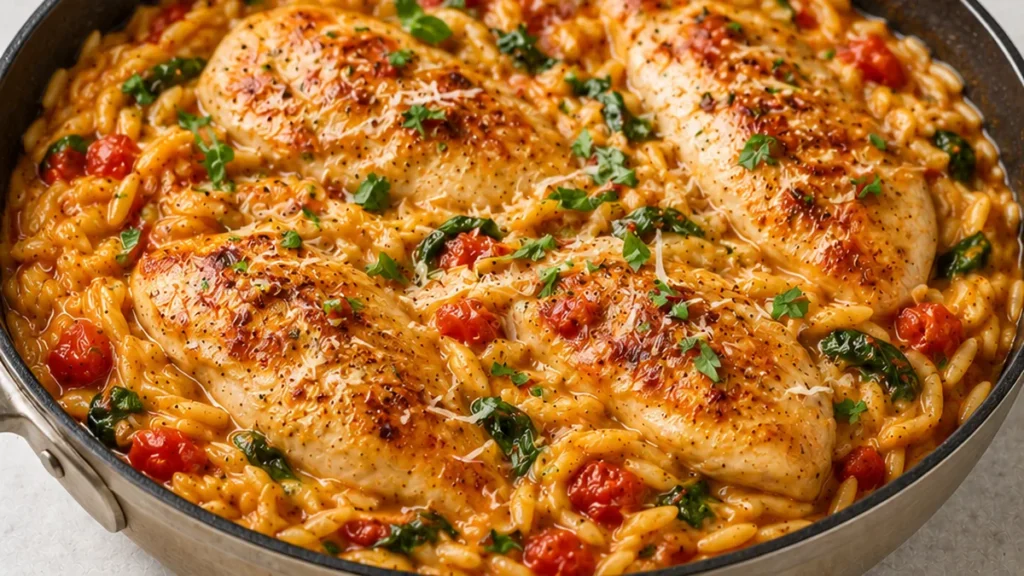
This one pot orzo recipe combines Italian chicken and orzo in a single pan. It simplifies preparation and cleanup for a practical weeknight meal. Cook time is under 45 minutes.
Key takeaways
- The key to this one-pot orzo is proper liquid-to-orzo ratio for creamy texture.
- Sear chicken first for flavor, then build aromatics.
- Manage heat to a gentle simmer to prevent scorching and ensure even cooking.
- Adjust liquid and cooking time based on orzo tenderness and desired sauce consistency.

One-Pot Italian Chicken & Orzo: Dinner Magic!
Ingredients
- 2 tbsp white wine vinegar
- 1 tbsp olive oil
- 1 tsp Dijon mustard
- 1 tsp Italian herb mix (or make your own with basil, parsley, oregano)
- 1 garlic clove (, minced)
- 1/2 tsp salt + black pepper
- 1 tbsp olive oil
- 4 x 110 – 120g/4oz chicken breasts (, skinless and boneless)
- 1/2 tbsp olive oil (if required)
- 1 small onion (, finely chopped (brown, white, yellow))
Instructions
- Mix the white wine vinegar, 1 tbsp olive oil, Dijon mustard, Italian herbs, garlic clove, salt, and pepper in a large bowl. Add chicken breasts and toss to coat. Marinate for at least 1 hour (or up to 24 hours in the fridge).
- Heat 1 tbsp olive oil in a large oven-safe skillet or pot over medium-high heat. Add the marinated chicken breasts and sear for 4 minutes per side until golden brown and mostly cooked through. Remove chicken and set aside on a plate, cover loosely with foil.
- Turn the heat up to medium-high. Add the remaining 1/2 tbsp olive oil if the pan looks dry.
- Add the chopped onion and minced garlic to the skillet. Sauté for 2 minutes until the onion is softened and translucent.
- Stir in the orzo pasta, diced tomatoes (with juices), chicken broth, Italian herbs, red pepper flakes, salt, and pepper. Bring the mixture to a simmer.
- Reduce heat to medium-low, cover the skillet, and simmer gently for 9-10 minutes, stirring frequently to prevent sticking, until the orzo is almost al dente.
- Return the chicken breasts to the skillet, nestling them into the orzo mixture. Cover and cook for another 5-7 minutes, or until the chicken is cooked through and the orzo is tender.
- Remove from heat. Stir in grated Parmesan cheese and fresh basil. The residual heat will finish cooking the orzo and melt the cheese, creating a delicious, saucy consistency.
Notes
The technique that makes it
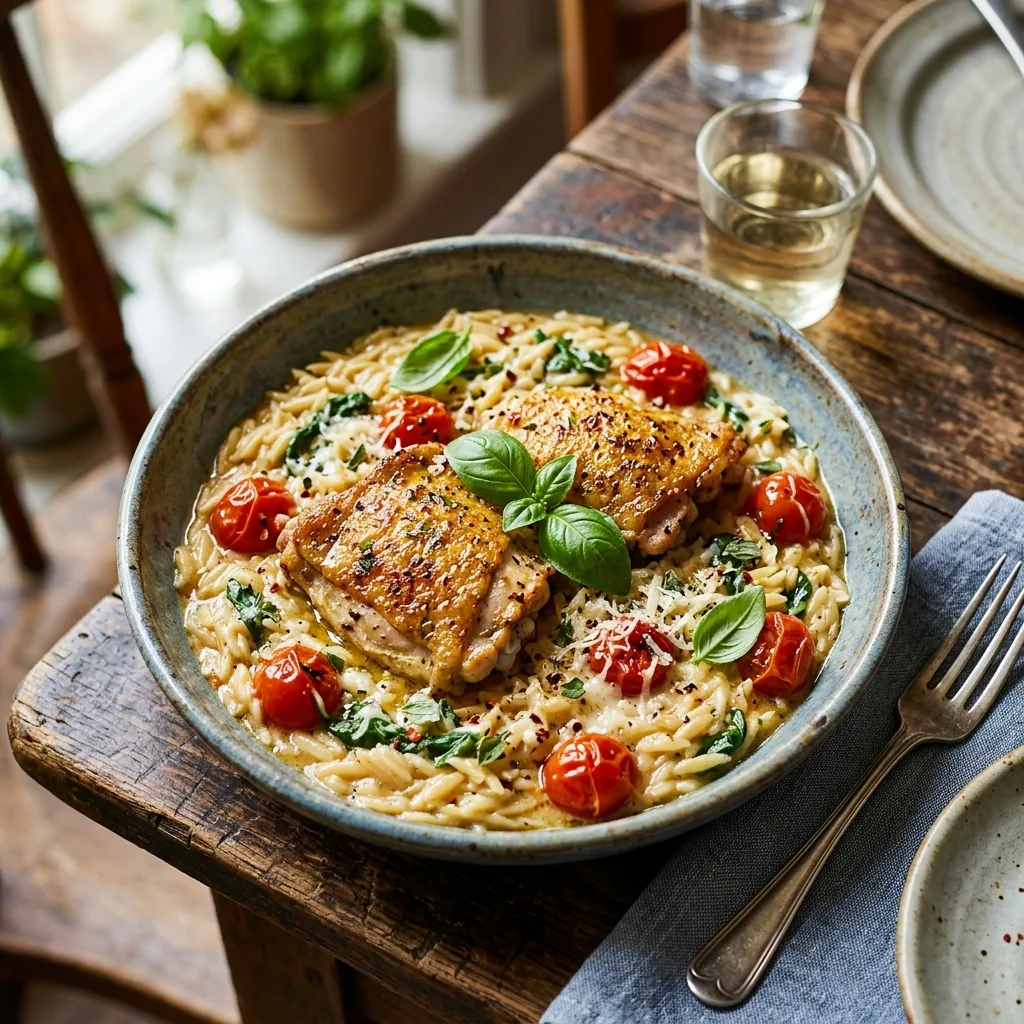
The trick to this One-Pot Italian Chicken & Orzo lies in the controlled hydration and starch release from the orzo pasta. As the orzo cooks, it releases starches into the liquid, which naturally thickens the sauce, creating a creamy, risotto-like consistency without the constant stirring. The key is to use the correct ratio of liquid to orzo. Too little liquid, and the orzo will be undercooked and gummy; too much, and the dish will be soupy. The initial searing of the chicken provides a foundational flavor and color, while the aromatics like onion and garlic bloom in the residual fat, building the savory base. The white wine vinegar and Dijon mustard in the dressing are crucial for balancing the richness of the chicken and the starchiness of the orzo, providing a bright, acidic counterpoint that improves the entire dish. Ensuring the orzo is submerged and the heat is managed to a gentle simmer allows for even cooking and prevents the bottom from scorching.
Troubleshooting
- Problem: Orzo is mushy or overcooked.
Fix: This usually indicates too much liquid or cooking for too long. Reduce the cooking time slightly or ensure you’re using the precise liquid amount specified. Next time, monitor the orzo closely in the final minutes of cooking. - Problem: Orzo is undercooked and hard.
Fix: Insufficient liquid or not enough cooking time are the usual culprits. Add a splash more broth or water (about 1/4 cup at a time) and continue to simmer, covered, until tender. Ensure the orzo is fully submerged. - Problem: Sauce is too thin.
Fix: The orzo should naturally thicken the sauce as it releases starch. If it remains thin, uncover the pot for the last 5-10 minutes of cooking to allow excess liquid to evaporate. Alternatively, you can create a slurry with 1 tsp cornstarch and 1 tbsp cold water, then stir it into the simmering sauce until thickened. - Problem: Chicken is dry.
Fix: Ensure the chicken breasts are not overcooked. They should be cooked through but still moist. Remove them from the pot once cooked, and let them rest while the orzo finishes. Reintroduce them just before serving to warm through.
Substitutions
- Chicken: Boneless, skinless chicken thighs can be substituted for breasts. They may require a slightly longer cooking time but will remain more moist. For a vegetarian option, use firm or extra-firm tofu, pressed and cubed, or chickpeas, added in the last 10 minutes of cooking.
- Orzo: Arborio rice or other short-grain rice suitable for risotto can be used, but the cooking time and liquid absorption will differ significantly, requiring adjustments to the recipe. Couscous is not a direct substitute as it cooks much faster and doesn’t release starch in the same way.
- White Wine Vinegar: Lemon juice or apple cider vinegar can be used for acidity. Use an equal amount, and adjust to taste.
- Italian Herb Mix: A combination of dried basil, oregano, and thyme can be used. For fresh herbs, add them towards the end of cooking for maximum flavor.
Pro tips
- Marinate the chicken for at least 1 hour for best flavor, or skip marinating by searing chicken first and adding marinade ingredients to the pot with the orzo.
- Stir the orzo frequently during cooking to prevent it from sticking to the bottom of the pot.
- For a saucier consistency, add a splash more chicken broth if needed. The dish should be very saucy when you take it off the heat, as it thickens upon standing.
Enjoy this delightful one-pot Italian chicken and orzo, a guaranteed hit for any night of the week!
More from Chicken Pasta Recipes →
Frequently asked questions
Can I use a different type of pasta instead of orzo?
While orzo is ideal for its starch release and creamy texture, small pasta shapes like ditalini or acini di pepe could work. They will absorb liquid differently, so you may need to adjust cooking time and liquid amounts to achieve a similar consistency.
How do I ensure the chicken cooks through without drying out?
Sear the chicken pieces first to develop flavor, then remove them from the pot while the orzo cooks. Add them back in during the last few minutes to reheat, ensuring they are cooked through but still tender and moist.
What kind of liquid is best for cooking the orzo?
Chicken broth or vegetable broth provides the best flavor base. Water can be used in a pinch, but it will result in a less flavorful dish. Ensure the liquid is warm or hot when adding it to the pot to maintain a consistent simmer.
Can this recipe be made ahead of time?
This dish is best served fresh as the orzo can become mushy if stored and reheated. However, you can prep the ingredients in advance. The cooked dish can be stored in the refrigerator for up to 2 days and reheated gently on the stovetop with a splash of broth.