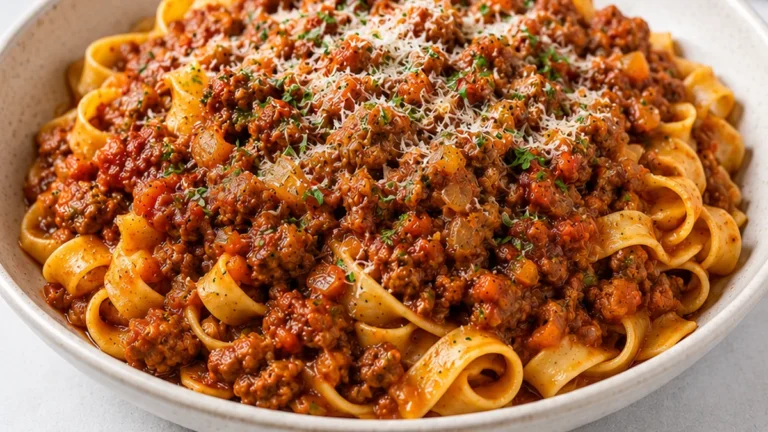
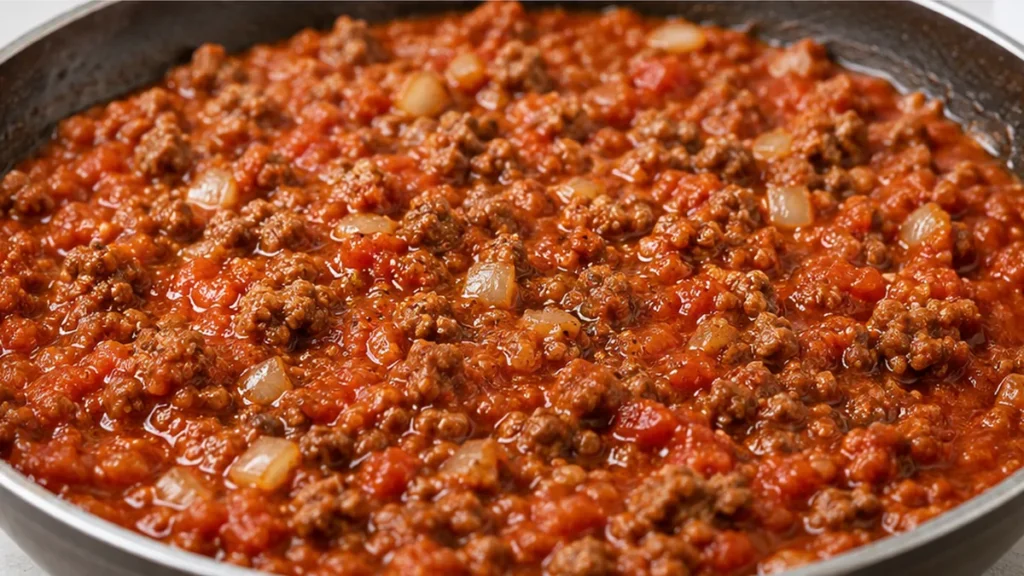
This pasta sauce is simple and flavorful. Made with ground beef, crushed tomatoes, and aromatics, it comes together in under 40 minutes.
Key takeaways
- Browning the ground beef enhances flavor through the Maillard reaction.
- Sauté onions in butter for sweetness and depth in the sauce.
- Use quality crushed tomatoes for a vibrant base and balance acidity with seasoning.
- Taste frequently and adjust seasoning to achieve a well-rounded flavor.
Best Weeknight Pasta Sauce
Ingredients
- ½ lb ground beef
- 1 tbsp olive oil
- 1 small onion
- 2 tbsp butter
- 28 oz can crushed tomatoes
- ½ tsp Italian seasoning blend
- black pepper (freshly cracked)
- salt (to taste)
Instructions
- In a pot, add ground beef and olive oil. Sauté over medium heat until beef is cooked through, about 5 minutes. Drain excess fat if needed.
- While beef cooks, finely dice the onion. Add the diced onion and butter to the pot with the beef. Sauté until onion is soft and translucent, about 5 minutes.
- Stir in the crushed tomatoes, Italian seasoning, and freshly cracked black pepper.
- Place a lid on the pot and bring the sauce to a simmer. Reduce heat to low and let it simmer for at least 30 minutes, stirring occasionally.
Video
Notes
Choosing the Right Meat for Flavor
Using ½ lb. of ground beef in this pasta sauce provides a rich flavor base. The Maillard reaction occurs when the beef is browned, creating complex flavors. For optimal browning, heat the olive oil in a pan to about 350°F (175°C) before adding the beef. This temperature allows the meat to sear properly without steaming.
Building the Sauce with Aromatics
Onions and butter are essential for developing the sauce’s depth. Sautéing a small chopped onion in 2 tablespoons of butter until translucent (about 5-7 minutes) releases natural sugars, enhancing sweetness and complexity. This step is crucial as it forms the aromatic foundation of the sauce.
Perfecting the Tomato Base
The 28 oz. can of crushed tomatoes is the heart of the sauce. Ensure you choose quality tomatoes for a vibrant flavor. The acidity of the tomatoes can be balanced with ½ teaspoon of Italian seasoning blend, which adds herbal notes. Simmer the sauce for at least 20 minutes to allow flavors to meld and develop.
Seasoning for Balance
Seasoning is key to a well-rounded sauce. Start with freshly cracked black pepper and salt to taste. The salt enhances the natural flavors, while black pepper adds a subtle heat. Taste the sauce periodically as it simmers, adjusting seasoning as necessary. This iterative process ensures a balanced final product.
Common Mistakes and How to Avoid Them
- Too Watery Sauce: If the sauce is too thin, let it simmer uncovered for longer to reduce excess liquid.
- Bland Flavor: Under-seasoning can lead to a bland sauce. Always taste and adjust seasoning as it cooks.
- Overcooked Meat: Cooking ground beef for too long can make it tough. Brown it just until cooked through before adding other ingredients.
- Burnt Onions: If onions burn during sautéing, they can impart a bitter flavor. Cook them on medium heat and stir frequently to prevent this.
How to Make Ahead for Busy Weeknights
Preparing your pasta sauce in advance can save time during hectic weeknights. Cook the sauce according to the recipe, allowing it to cool completely before storing. Transfer it to an airtight container and refrigerate for up to 3 days or freeze for up to 3 months. When reheating, gently warm on the stove over low heat, stirring occasionally to maintain a smooth texture. This method allows the flavors to meld, often improving the sauce’s taste.
Adjusting Portions for Larger Gatherings
If you need to scale the recipe for a larger group, simply multiply the ingredients by the desired factor. For instance, doubling the recipe means using 1 lb. of ground beef, 2 cans of crushed tomatoes, and so forth. Keep in mind that cooking time may increase slightly, especially if using a larger pot. Ensure the sauce simmers adequately to develop flavors, which typically takes an additional 5-10 minutes for larger quantities.
Choosing the Right Equipment for Optimal Results
The choice of cookware can significantly impact the final flavor and texture of your pasta sauce. A heavy-bottomed pot or Dutch oven is ideal, as it distributes heat evenly and prevents scorching. Avoid non-stick pans for this recipe, as they may not allow for the same depth of flavor development during browning. If using an electric stovetop, consider adjusting the heat settings to ensure consistent simmering.
Understanding Seasonal Ingredient Impact on Flavor
Ingredient quality can vary with the seasons, influencing the overall taste of your pasta sauce. Fresh, in-season tomatoes will yield a brighter, more vibrant sauce compared to out-of-season canned varieties. Similarly, onions and herbs should be chosen based on their freshness. For instance, using fresh basil in the summer can enhance the sauce’s flavor profile, while dried herbs may be more suitable in winter. Adjust your seasoning accordingly to balance the flavors.
How to Store and Reheat Leftover Pasta Sauce
Proper storage of your pasta sauce can significantly extend its shelf life and maintain flavor. Allow the sauce to cool completely before transferring it to an airtight container. It can be stored in the refrigerator for up to 3-4 days or frozen for up to 3 months. When reheating, use low to medium heat to avoid scorching the sauce. Stir occasionally and add a splash of water or broth if it thickens too much.
Adjusting Flavor Intensity for Personal Preference
The flavor intensity of your pasta sauce can be adjusted based on personal taste. If you prefer a richer flavor, consider increasing the amount of Italian seasoning or adding a pinch of sugar to balance acidity. Conversely, if the sauce is too rich, a splash of vinegar or a squeeze of lemon juice can brighten the flavors. Start with small adjustments, tasting as you go to find the perfect balance.
Choosing the Right Tomato Product for Optimal Flavor
While this recipe uses crushed tomatoes, the choice of tomato product can greatly affect the flavor profile. San Marzano tomatoes, known for their sweetness and low acidity, can enhance the sauce’s overall taste. Alternatively, using diced tomatoes will yield a chunkier texture. Be cautious with tomato paste; while it intensifies flavor, it can overpower if used excessively. Always taste and adjust accordingly.
Pairing Pasta with Sauce for the Best Experience
The type of pasta you choose can elevate your sauce experience. A thicker sauce pairs well with robust pasta shapes like rigatoni or pappardelle, which can hold the sauce better. Conversely, a lighter sauce might suit delicate pasta such as angel hair. Consider also the addition of freshly grated cheese or fresh herbs just before serving to enhance the dish’s overall appeal.
How to Ensure Your Pasta Sauce Stays Fresh and Flavorful
When making the Best Weeknight Pasta Sauce, it’s essential to understand how to store it properly to maintain its flavor and texture. After cooking, allow the sauce to cool to room temperature before transferring it to an airtight container. This prevents condensation from forming, which can lead to watery sauce. Properly stored, the sauce can last in the refrigerator for up to 5 days. For longer storage, consider freezing the sauce in portions. Use freezer-safe containers or resealable bags, removing as much air as possible to avoid freezer burn. When ready to use, thaw in the refrigerator overnight or use the defrost setting on your microwave. Reheat gently on the stovetop, adding a splash of water or broth if needed to restore its consistency.
Scaling the Recipe for Family Gatherings
This pasta sauce recipe is designed for a quick weeknight meal but can be easily scaled for larger gatherings. To maintain the same flavor profile when increasing the quantity, follow a simple rule: for every additional pound of ground beef, increase the crushed tomatoes by 28 oz. For instance, if you want to make a batch with 1 lb. of beef, use two 28 oz. cans of crushed tomatoes. Adjust the onion and seasoning accordingly—use one small onion for each pound of meat and keep the Italian seasoning blend at ½ tsp per pound. Be cautious with salt; it’s best to taste and adjust as you go. Cooking times may also increase slightly; allow for an extra 10-15 minutes to ensure all flavors meld together.
How to Enhance Flavor Depth for Weeknight Pasta Sauce
To elevate the flavor profile of your weeknight pasta sauce, consider the Maillard reaction, which occurs when proteins are heated, creating complex flavors. Searing the ground beef in a hot pan (around 375°F or 190°C) for 5-7 minutes before adding other ingredients helps develop a rich, savory base. Additionally, incorporating the onion with the beef allows it to caramelize slightly, enhancing sweetness and depth. For a touch of brightness, add a splash of red wine after browning the meat, letting it reduce for 2-3 minutes before adding the crushed tomatoes. This not only adds acidity but also layers of flavor that make the sauce more complex.
Understanding the Impact of Ingredient Quality on Sauce Texture
The texture of your pasta sauce can significantly change based on the quality of ingredients used. Fresh, high-quality ground beef (preferably 80/20 for a good fat-to-lean ratio) will yield a juicier sauce compared to leaner cuts. Similarly, using whole canned tomatoes and crushing them by hand rather than relying on pre-crushed varieties can give you a chunkier, more rustic texture. This method allows for better control over the sauce’s consistency and enhances the overall mouthfeel. Additionally, if using fresh herbs instead of dried, add them towards the end of cooking to preserve their vibrant flavor and aroma. This simple adjustment can make your sauce stand out with freshness that canned herbs cannot replicate.
Pro tips
- Use good quality crushed tomatoes for the best flavor.
- Don’t skip sautéing the onion in butter; it adds a crucial sweetness.
- Simmering for at least 30 minutes allows flavors to meld beautifully.
- For a smoother sauce, you can blend it with an immersion blender after simmering.
Enjoy this simple yet incredibly satisfying weeknight pasta sauce. It’s a recipe you’ll return to again and again.
Frequently asked questions
Can I use ground turkey instead of beef?
Yes, ground turkey can be used as a leaner alternative. However, it may result in a milder flavor. To enhance taste, consider adding more seasoning or cooking it longer to develop a richer flavor.
How long should I simmer the sauce?
Simmer the sauce for at least 20 minutes to allow the flavors to meld. If time permits, longer simmering can deepen the flavor further, making it even more delicious.
What if my sauce is too acidic?
If your sauce tastes too acidic, add a pinch of sugar or a small amount of butter to balance the acidity. This can help round out the flavors and create a more harmonious sauce.
Can I freeze leftover pasta sauce?
Yes, this pasta sauce freezes well. Allow it to cool completely, then transfer it to an airtight container. It can be stored in the freezer for up to three months. Thaw in the refrigerator before reheating.
More from Pasta Sauces →