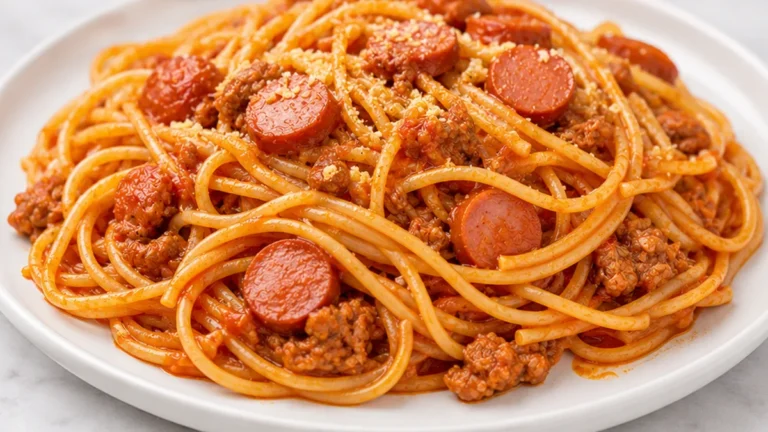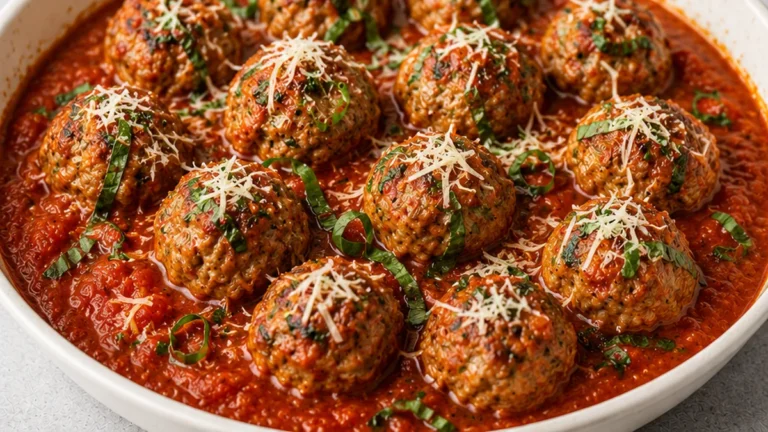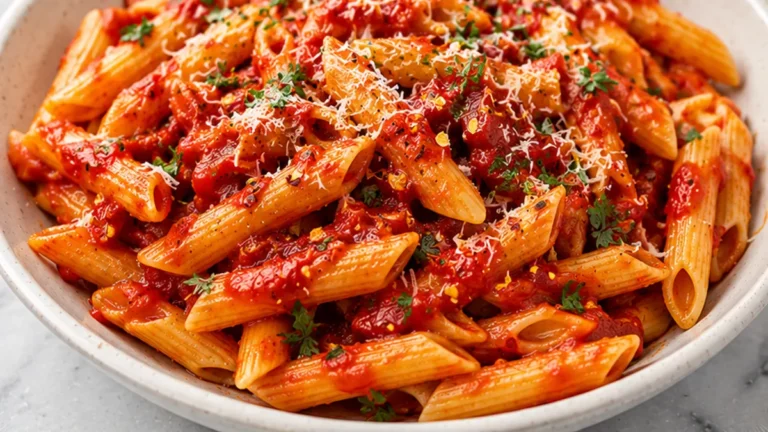
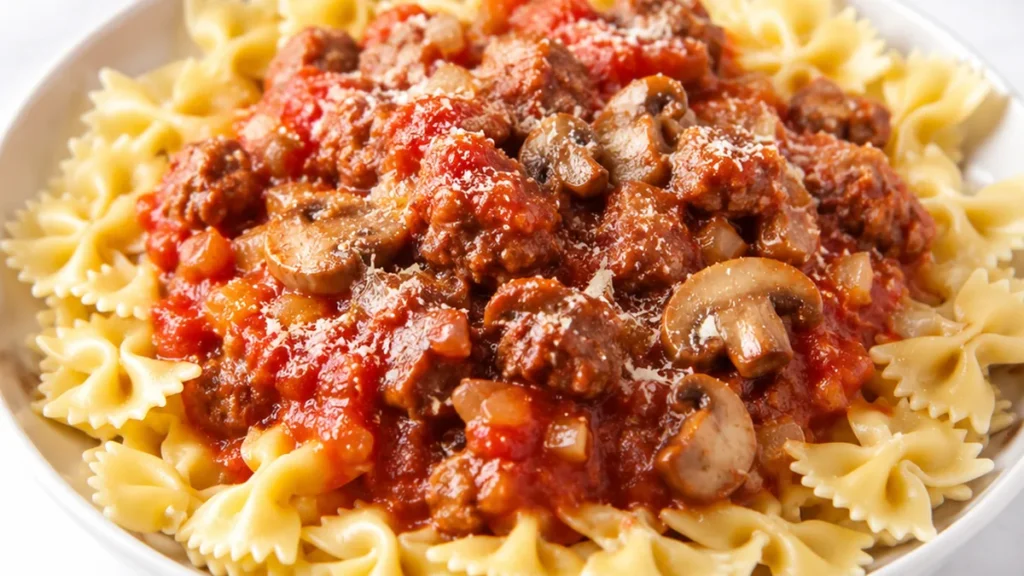
This 5-ingredient sausage pasta sauce is a real upgrade for busy weeknights. It transforms simple ingredients into a rich, savory sauce that coats pasta perfectly, offering authentic Italian flavor with minimal effort. If you’re looking for a quick, satisfying meal that doesn’t compromise on taste, this recipe is your answer. It proves that delicious, home-cooked food can be incredibly simple. We’ll walk you through how to make this sausage pasta sauce using only a handful of pantry staples and fresh ingredients. This recipe is designed for speed and flavor, ensuring a delightful meal even on your most hectic evenings.
Key takeaways
- Cook the crumbled sausage to 160F (71C) and leave it undisturbed long enough to build browned fond, which flavors the entire sauce.
- Sear fresh mushrooms in a single layer until their water evaporates; drain and dry canned mushrooms since they will not brown.
- Simmer the tomatoes uncovered for 15 to 20 minutes to reduce, thicken, and dissolve the fond from the pan bottom.
- Always stir the freshly grated Parmesan in off the heat so it melts creamy instead of seizing into rubbery lumps.
5-Ingredient Sausage Pasta Sauce: Dinner Done in 30 Min!
Ingredients
- 1 pound hot Italian Sausage links
- 1 small chopped yellow onion (about 1 cup)
- 6 ounce can mushroom pieces or fresh mushrooms
- 2 cans low sodium tomato sauce or stewed tomato chunks or one of each (15 ounce size)
- ¼ cup freshly grated Parmesan cheese
Instructions
- Squeeze the sausage out of the casings into large pieces (like meatballs) into a large sauce pan. Turn heat to medium and begin to brown.
- When sausage is about half cooked, 2-3 minutes, add onions and mushrooms. Continue cooking another 2-3 minutes.
- Add tomato sauce and Parmesan cheese, reduce heat and simmer for 15-20 minutes until sauce has thickened. Serve over pasta.
Video
Notes
Getting the sausage to 160F while building the fond that flavors the whole sauce
Squeeze the hot Italian sausage out of its casings and break it into small clumps before it hits the pan, because loose crumbles expose far more surface area than intact links, and surface area is where the Maillard reaction happens. Cook the pork over medium-high heat until it reaches 160F (71C), the safe minimum internal temperature for ground meat and sausage listed by FoodSafety.gov, a United States government resource. As the crumbles brown, they leave a rust-colored film called fond stuck to the pan. That fond is concentrated, water-soluble flavor, and every one of the five ingredients in this dish leans on it. Resist stirring for the first two to three minutes so a real crust can form.
Hot Italian sausage already carries fennel seed and red pepper flakes in its grind, so those spices bloom in the rendered fat and season the sauce from the inside out. You do not need a spice rack. You need patience and a wide pan.
Why casing-off crumbles beat sliced coins
Sliced cooked links look tidy but seal quickly and give up little fond. Crumbled raw meat renders its fat slowly, and that fat becomes the cooking medium for the onion and mushrooms in the very next step, carrying fennel and chili flavor into both.
Cooking mushrooms so they brown instead of stewing gray in their own water
Fresh mushrooms are roughly 50 percent water by weight, which is why they steam and turn rubbery-gray if you crowd them into a cool pan. To brown fresh mushroom pieces, cook them in the rendered sausage fat over medium-high heat in a single layer and leave them alone until the released moisture evaporates and the edges catch color, usually four to six minutes. America’s Test Kitchen, a recipe-testing organization, notes that raw mushrooms are full of air pockets that soak up oil like sponges until their water cooks off. Only once the pan is dry does true browning begin, and that browning is what gives this sausage pasta sauce its savory backbone.
The six-ounce can of mushroom pieces behaves differently. Canned mushrooms are already cooked and packed in liquid, so they will not brown no matter how hot the pan gets. Drain them well, pat them dry, and add them later in the simmer purely for texture and mild umami rather than for sear.
Fresh, canned, or one of each
Fresh gives you deeper roasted flavor and a firmer bite. Canned gives you convenience and a softer, more uniform piece that melts into the sauce. Using half and half splits the difference: sear the fresh ones hard, then fold the drained canned ones in during the last ten minutes so they warm through without disintegrating.
Turning two cans of low-sodium tomatoes into a sauce that tastes seasoned
Low-sodium tomato sauce and stewed tomato chunks arrive under-seasoned on purpose, so the simmer is where you concentrate them. Pour the tomatoes over the browned sausage, onion, and mushrooms, then scrape the fond loose from the pan bottom with a wooden spoon; that deglazing step dissolves the browned flavor into the liquid where it belongs. Simmer uncovered at a gentle bubble for fifteen to twenty minutes so water evaporates, the sauce thickens, and the flavors marry. A closed lid traps steam and leaves you with a thin, watery result.
If you chose stewed tomato chunks, break them down against the side of the pan for a rustic sauce, or leave them whole for a chunkier bite. Taste before serving and correct salt gradually, since the sausage and the Parmesan both add sodium of their own. Serious Eats, a food-science publication, points out that a knob of fat emulsified into tomato sauce makes it richer and helps it cling to pasta, and here the rendered sausage fat is doing exactly that job for free.
Balancing acidity without a sugar bowl
Canned tomatoes taste sharp because producers often add acid to preserve color. A longer, gentler simmer mellows that edge naturally. If it still bites, a small pinch of sugar or the incoming Parmesan will round it out; you rarely need both.
Adding Parmesan off the heat so it melts instead of seizing into rubbery lumps
Grated Parmesan is the finishing ingredient, and it is the one most likely to fail if rushed. Parmigiano-Reggiano is a hard, low-moisture cheese whose proteins tighten and squeeze out fat when they get too hot, which is why cheese stirred into a boiling sauce clumps into stringy or grainy knots. Pull the pan off the burner, let the bubbling stop for a minute, then stir the quarter cup of freshly grated Parmesan in gradually. Residual heat around 150F is warm enough to melt it into a glossy, creamy finish without breaking it.
Grate it fresh rather than shaking it from a can. Pre-grated shelf cheese contains anti-caking starches like cellulose that resist melting and can leave a chalky mouthfeel, whereas freshly grated cheese from a Microplane or box grater is fluffy and dissolves fast.
Common failures and the exact fix for each
Gray, soggy mushrooms: the pan was crowded or too cool, so they stewed. Cook fresh mushrooms in a single layer over medium-high heat and wait for the water to evaporate before stirring.
Watery, thin sauce: you simmered with the lid on or cut the time short. Uncover and reduce another five to ten minutes until it coats the spoon.
Grainy or clumped cheese: the Parmesan hit boiling liquid. Take the pan off the heat first, then add cheese in small handfuls.
Flat, under-seasoned flavor: the fond was left stuck to the pan. Deglaze with the tomatoes and scrape it up so nothing is wasted.
Swaps and the trade-off each one brings
Mild sausage for hot: loses the built-in red pepper heat, so add a pinch of chili flakes to compensate or the sauce will read sweet.
Full-sodium tomatoes for low-sodium: saves a step but removes your control over salt; skip added salt entirely and taste late.
Pecorino Romano for Parmesan: sharper and saltier, which cuts the fat nicely but can overpower, so use a slightly lighter hand.
Red onion for yellow: milder and sweeter raw, but it browns unevenly, so cook it a minute longer to develop the same base sweetness. For more on building an aromatic base, see our guide to caramelizing onions for pasta sauces.
Why this sauce tastes even better the second day, and how to store it right
Sausage pasta sauce improves overnight because fat-soluble flavor compounds from the fennel, garlic, and paprika in Italian sausage keep migrating into the tomato base while it sits. Cool the pot within two hours to stay out of the 4C to 60C (40F to 140F) danger zone, then refrigerate in a sealed container for up to 4 days. The rendered sausage fat rises and sets into a pale cap; leave it, then stir it back in when reheating because that fat carries most of the browned-fond flavor. Reheat gently over medium-low, adding a splash of water or pasta water to loosen the paste that thickens as starch and pectin bind on cooling. For the freezer, portion into flat bags and lay them down to freeze; they keep 3 months and thaw in minutes. Hold the Parmesan out of any batch you plan to freeze, since dairy can turn grainy after a freeze-thaw cycle. Stir in fresh grated cheese only when the reheated sauce is off the burner. One quirk specific to this recipe: because it uses canned mushroom pieces or stewed tomato chunks rather than a smooth puree, the texture stays chunky through storage and never separates into a watery ring the way a blended marinara can. If you started with fresh mushrooms, expect them to soften further overnight and release a little more liquid, so simmer the reheated pot two extra minutes to pull it back together.
Doubling the pot for a crowd, and the pan size that keeps the sausage browning
Scaling this five-ingredient sauce past a single pound of sausage fails at one point: the browning step. Sausage needs single-layer contact with hot metal to build the fond, so two pounds of casing-off crumbles crowded into the same skillet will steam gray instead of browning. Brown in two batches, or move to a 12-inch (30 cm) wide pan or a shallow Dutch oven where the meat spreads thin. Everything else scales cleanly at a straight ratio: double the onion to about 2 cups, use four 15-ounce cans of tomato, and two 6-ounce cans of mushrooms. Salt does not scale linearly, so add it in stages and taste, because low-sodium tomato sauce concentrates as a bigger pot simmers longer. Speaking of time, a doubled batch takes roughly 8 to 10 extra minutes to reduce to the same coating thickness, since more surface area is needed for the same evaporation. A wide pan beats a tall stockpot here every time. If all you have is a narrow pot, expect a thinner, brighter sauce and simmer it uncovered a few minutes longer. The Parmesan still goes in last and off the heat, and a quarter cup per single batch is the right anchor; scaling it to a half cup for a double pot keeps the salty, nutty finish balanced without turning the sauce cheesy. For a party, undercook the pasta by a minute and finish it in the sauce so it holds without going mushy on a buffet.
Pro tips
- Use hot Italian sausage for a little kick, or mild if you prefer less spice.
- Don’t overcrowd the pan when browning the sausage; cook in batches if necessary for a good sear.
- For a thicker sauce, simmer uncovered for a few extra minutes. For a thinner sauce, add a splash of water or broth.
- Serve over spaghetti, penne, or any pasta shape you love!
Enjoy this incredibly simple yet satisfying sausage pasta sauce. It’s proof that a few quality ingredients can create a truly delicious meal. Buon appetito!
More from Baked Pasta Recipes →