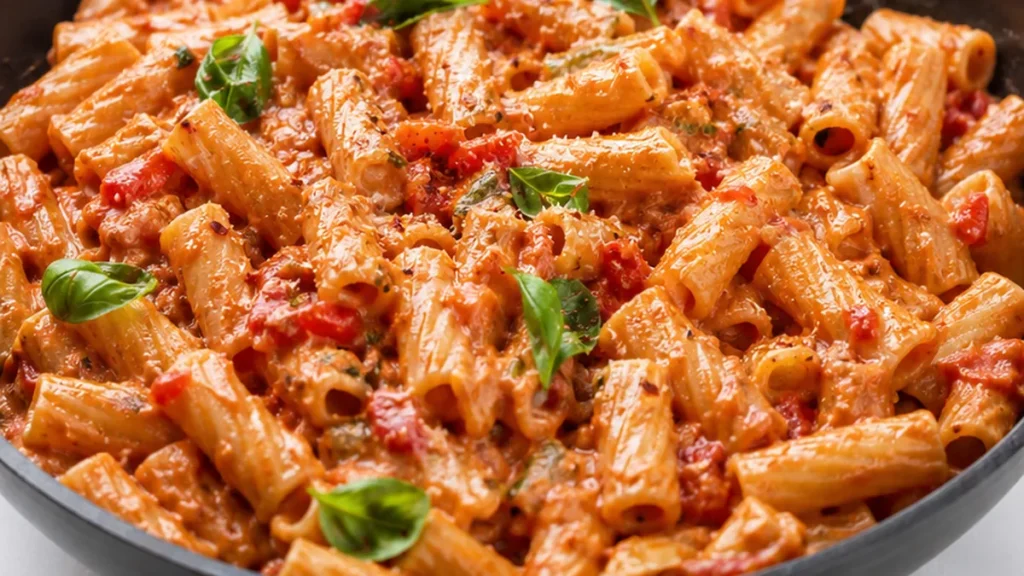
Preparing vodka pasta requires balancing the acidity of tomatoes with dairy. This method relies on fresh tomatoes, which cook down quickly in the pan. You will boil the noodles while the base reduces.
Key takeaways
- Blanch the three tomatoes only 15 to 30 seconds, then ice-shock, so the skins slip off without cooking the flesh to mush.
- Add the vodka before the cream and let it bubble at least a minute so the alcohol releases tomato aromatics instead of tasting raw.
- Use true heavy cream at 36 percent fat and keep the pan below a hard boil to stop the acidic tomato from curdling the dairy.
- Reduce the fresh tomatoes uncovered before adding cream, and finish with reserved starchy pasta water so the sauce clings.
Creamy Vodka Pasta with Fresh Tomatoes Your New Weeknight Obsession!
Ingredients
- 1 tablespoon vegetable or olive oil
- 1 small onion, chopped (about ½ cup)
- 1 large clove garlic (crushed)
- 3 large tomatoes, blanched and coarsely chopped, about 3 cups (see note)
- ¼ teaspoon crushed red pepper flakes (adjust to taste)
- 1 teaspoon fresh basil leaves, chopped (¼ teaspoon dried basil)
- ½ cup heavy cream
- ¼ cup fresh parsley (chopped)
- ¼ cup parmesan cheese (grated)
- 3 tablespoons vodka (optional)
Instructions
- In a 3-quart saucepan, heat oil over medium-high heat. Add onion and garlic. Cook, stirring occasionally, 3 to 5 minutes until onion is translucent. Add tomatoes, red pepper flakes, and basil; bring to a boil over high heat. Reduce heat to low, cover, and simmer 5 minutes to blend flavors.
- Stir in heavy cream, parsley, 3 tablespoons grated cheese, and vodka. Cook until heated through. Keep warm.
- Place pasta on a platter and top with sauce and remaining cheese.
Video
Notes
What vodka actually does to fresh tomatoes and cream (the ethanol trick)
Vodka pasta works because ethanol dissolves flavor molecules that neither water nor fat can pull out on their own. Vodka is roughly 40 percent ethyl alcohol and 60 percent water, and that alcohol acts as a bridging solvent: it releases the fat-soluble aromatic compounds locked inside your three chopped tomatoes while it simultaneously helps the water in the tomatoes and the butterfat in the heavy cream stay mixed rather than separating. The result is a rounder, glossier sauce than tomatoes and cream alone could ever give you. The 3 tablespoons here are modest on purpose. Culinary Solvent, a food-grade ethanol supplier, notes that ethanol also interacts with tomato pectin and softens the perception of acidity, which is exactly why fresh, tart summer tomatoes benefit from it. Add the vodka after the onion and garlic soften, then let it bubble for at least a minute so the raw alcohol edge cooks off before the cream goes in.
Why fresh tomatoes change the math versus canned
Canned San Marzano tomatoes are picked ripe, concentrated, and already low in free water. Your three fresh tomatoes are the opposite: a ripe beefsteak or Roma runs well over 90 percent water. That is why the recipe has you blanch and coarsely chop about 3 cups, then cook them down. Expect to simmer 8 to 12 minutes uncovered before adding cream so the excess water evaporates and the sauce clings instead of pooling. Serious Eats and cook Ethan Chlebowski have both shown in side-by-side tests that fresh out-of-season tomatoes taste thin, so this dish rewards peak-season fruit.
Blanching your 3 tomatoes so the skins slip off in 30 seconds
Blanching loosens tomato skin by melting the thin layer of pectin that glues it to the flesh, and it takes far less time than most people fear. Score a shallow X on the bottom of each of your three tomatoes, drop them into rolling boiling water for 15 to 30 seconds, and pull them the instant you see the skin curling back at the X. Simply Canning warns that leaving tomatoes in past 60 seconds starts cooking the flesh, which turns your coarse chop to mush. Immediately shock them in ice water for a minute to stop carryover heat and shrink the flesh away from the skin. The skins then slide off with your fingers. Skip the peel and you get chewy curls of skin suspended in an otherwise silky sauce, because tomato skin is rich in insoluble cellulose that never softens at sauce temperatures. Once peeled, chop coarsely rather than to a puree; you want visible pieces of tomato that break down during the simmer and give the finished vodka pasta its rustic, fresh character.
Stopping the cream from curdling when it hits acidic tomato
Curdled cream is the single most common failure in this dish, and it comes down to two forces working against you: acid and heat. Tomatoes sit around pH 4.3 to 4.6, acidic enough to destabilize the casein proteins in dairy, and high heat accelerates that collapse into grainy white flecks. The half cup of heavy cream in this recipe is your best insurance, because true heavy cream carries 36 percent or more milk fat, and that fat coats the casein and buffers it against acid. Whipping cream at 30 to 35 percent fat is more fragile, and sour cream at 18 to 20 percent will almost certainly break here.
Three moves keep it smooth. First, add the cream after the vodka has cooked and the tomato sauce has already reduced, never to raw, screaming-hot tomatoes. Second, keep the pan at a bare simmer once cream is in; heavy cream resists breaking up to about 82 degrees Celsius (180 degrees Fahrenheit) but splits fast at a hard boil. Third, temper if you are nervous: stir a spoonful of the warm sauce into the cream first to raise its temperature gradually before it joins the pan.
Four failures and the fix for each
- Sauce broke into grainy flecks: the cream boiled or met acid too fast. Pull the pan off heat and whisk in an extra tablespoon of cold cream; its fat can re-coat the proteins and pull a lightly broken sauce back together.
- Sauce tastes sharp and boozy: the vodka did not cook long enough. USDA figures show 15 minutes of simmering still leaves about 40 percent of the alcohol, so give it more time; even a couple of extra minutes softens the raw bite.
- Sauce is watery and slides off the pasta: the fresh tomatoes were not reduced enough. Simmer uncovered a few more minutes, or stir in a ladle of starchy pasta cooking water, which acts as an emulsifier and helps the sauce cling.
- Sauce tastes flat despite ripe tomatoes: under-seasoned or the parmesan went in too early and seized. Salt in layers and finish the grated parmesan off the heat.
Smart swaps for the vodka, cream, and tomatoes (and what each costs you)
Every substitution here changes the sauce in a predictable direction, so choose based on what you are missing. The vodka is marked optional for a reason: leave it out entirely and you still have a fine tomato-cream sauce, you simply lose the flavor-releasing solvent effect and a little of the acid-taming. If you want the aromatic lift without alcohol, a splash of white wine vinegar plus a pinch of sugar mimics the brightness, though not the smoothness.
- Vodka to white wine: gives a fruitier, more acidic result at a lower alcohol level; expect a tangier sauce, so ease off any added acid.
- Heavy cream to half-and-half: lighter and less rich, but half-and-half sits near 10 to 18 percent fat and curdles far more easily, so keep the heat low and add it last.
- Fresh tomatoes to one 14-ounce can: more consistent and deeper year-round, but you lose the fresh brightness this recipe is built around; reduce added liquid since canned tomatoes hold less free water.
- Parmesan to Pecorino Romano: saltier and sharper; cut back on any additional salt or the finished dish tips over-seasoned.
The starchy-water finish most recipes forget
Whatever pasta you pair with this, reserve a cup of the cooking water before you drain. That cloudy liquid is dissolved starch, and stirring a few tablespoons into the pan does two jobs: it loosens a sauce that has reduced too far, and its starch molecules bridge the tomato water and the cream fat into a stable emulsion that coats every noodle. This is the same principle behind classic pasta all’assassina and cacio e pepe, and it is what separates a sauce that clings from one that puddles at the bottom of the bowl. For more on building glossy pan sauces, this guide to fixing watery tomato sauce covers reduction technique in depth, and the tomato-peeling walkthrough at Simply Canning is worth a look before your first blanch.
Making the sauce a day ahead without the cream splitting on reheat
Make the tomato base ahead, but hold the heavy cream and parmesan until the reheat. The oil, onion, garlic, blanched tomatoes, and red pepper flakes hold beautifully for three days at 4C (39F); the half cup of cream is what turns grainy when a stored, acidic sauce is blasted over high heat. Fat globules destabilize fastest between 82C and 96C (180F to 205F), and yesterday’s tomatoes are more acidic than fresh-off-the-stove ones as pectin and organic acids concentrate.
Reheat the tomato base gently, covered, over medium-low until it barely steams, roughly 6 to 8 minutes for a single batch. Pull it off direct heat, stir the cream in off the boil, then return it to low just to warm through. Parmesan goes in last, off heat, so its proteins don’t seize into strings.
For freezing, the tomato base alone freezes cleanly for two months; cream sauces separate on thaw because ice crystals rupture the emulsion. Thaw overnight in the fridge, never in the microwave from solid, then rebuild the dairy fresh. Vodka’s three tablespoons largely cook off in the first version, so reheated portions taste rounder but slightly less bright.
Sauced pasta is different from sauce alone. Once penne sits in the sauce it keeps drinking liquid, so a portion that looked glossy at dinner turns claggy by morning. Loosen leftovers with a splash of hot water or milk, one tablespoon at a time, and reheat only to warm, not to a rolling bubble.
Doubling the batch and choosing the right pan so the tomatoes reduce instead of stew
Scaling this sauce is about surface area, not just bigger numbers. Three tomatoes give about 3 cups of pulp, and that pulp has to lose water to concentrate. Double the recipe in a narrow saucepan and the tomatoes stack two inches deep, trapping steam, so you get pale, watery stew instead of a clingy sauce. Use a 30cm (12-inch) skillet or wide saute pan for a double batch: the wider the evaporation surface, the faster the acids mellow and the color deepens toward brick red.
Aromatics don’t scale linearly. Doubling the single clove of garlic to two is fine, but four cloves in one pan can turn bitter before the tomatoes soften, so add the second half partway through. The quarter teaspoon of red pepper flakes, however, does scale straight up, and heat reads hotter in a larger, richer pot because there’s more fat to carry capsaicin to the palate. Taste before committing the full amount.
Match pasta to sauce volume: one batch coats roughly 225 to 250g (8 to 9 oz) of dry short pasta. Penne rigate and rigatoni are the classic choice because their ridges and hollow cores trap this cream-tomato hybrid where smooth shapes shed it. Finish the pasta in the sauce with a few tablespoons of starchy cooking water, cooked at 2 quarts water per pound so it runs extra-starchy, and toss off heat until it turns silky, following the method America’s Test Kitchen documents. For pairing, a high-acid white like Pinot Grigio cuts the cream; for more on building weeknight pasta dinners, see our guide to fast weeknight pasta dinners and this walkthrough on emulsifying pasta sauce with starchy water.
Pro tips
- For an extra punch of flavor, use San Marzano tomatoes if possible.
- Don’t skip the simmering time; it allows the flavors to meld beautifully.
- Adjust the red pepper flakes to your spice preference.
- If not using vodka, you can simply omit it, or add a tiny splash of white wine vinegar for a touch of acidity.
Enjoy this delightful Pasta alla Vodka with Fresh Tomatoes – a simple yet elegant dish that’s sure to become a favorite!
Frequently asked questions
Can I make this vodka pasta without the vodka?
Yes. The recipe marks the 3 tablespoons as optional, and you will still get a pleasant tomato-cream sauce. What you lose is the ethanol that dissolves fat-soluble tomato aromatics and softens acidity. For a little of that lift without alcohol, add a small splash of white wine vinegar and a pinch of sugar near the end.
Why did my cream curdle when I added it to the tomatoes?
Tomato acid around pH 4.3 destabilizes dairy proteins, and high heat speeds the collapse. Add the cream only after the tomatoes have cooked down and the pan is at a gentle simmer, never a rolling boil. Using full heavy cream at 36 percent fat rather than half-and-half gives the most protection against grainy flecks.
Will I taste the alcohol in the finished sauce?
Not if you cook it properly. Let the vodka bubble in the pan before the cream goes in. USDA data shows about 40 percent of alcohol still remains after 15 minutes of simmering, so a longer, gentle cook keeps softening any sharp boozy edge until only the rounder tomato flavor is left behind.
Can I use canned tomatoes instead of fresh?
You can. One 14-ounce can replaces the three fresh tomatoes and gives a deeper, more consistent result year-round, especially out of season. The trade-off is losing the bright, fresh character this recipe is built around. Because canned tomatoes hold less free water, reduce your simmering time so the sauce does not turn too thick.
More from Baked Pasta Recipes →