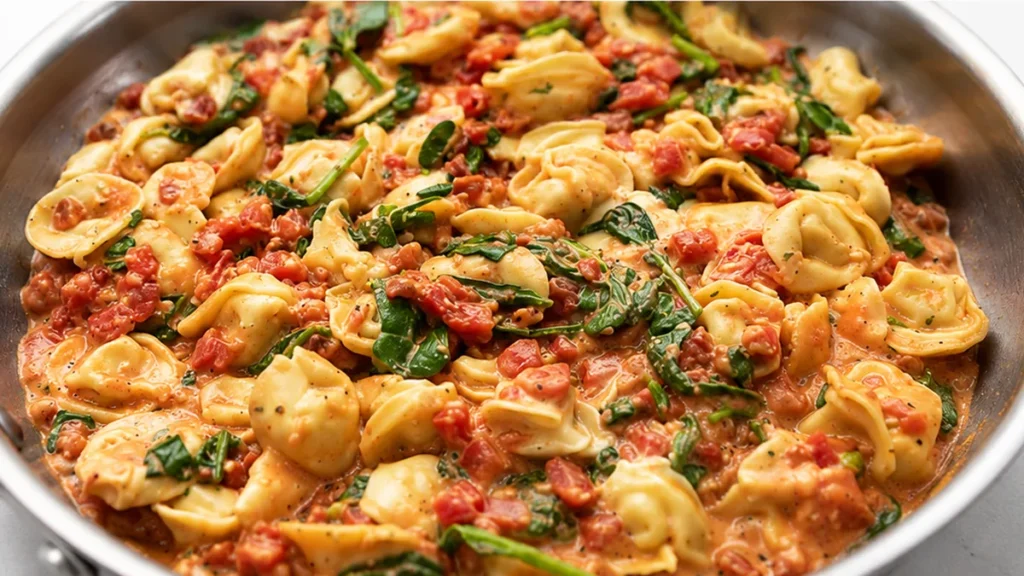
Tortellini skillet meals deliver the simplicity and flavor needed for a satisfying weeknight meal. Forget multiple pots and pans; this recipe brings together tender cheese tortellini, fresh spinach, and a rich, creamy tomato sauce all in one skillet. It’s designed for busy evenings when you want a hearty meal without the fuss. Perfect for families or anyone seeking comfort food with minimal effort.
Key takeaways
- Keep the pan at a gentle simmer near 82 C when the cream cheese meets the acidic tomatoes so the dairy emulsifies instead of curdling.
- Saute the 4 cloves of garlic only 30 to 90 seconds and add the tomatoes the instant it smells sweet, since scorched garlic ruins the whole base.
- Pull the tortellini right around the 5-minute mark once the pieces float and a test piece is tender, before they split and empty their filling.
- Add the 2 cups of spinach last and expect it to shrink by about three-quarters, then simmer uncovered a minute to re-tighten the sauce.
Creamy Spinach Tortellini Skillet
Ingredients
- 4 cloves garlic
- 1 tbsp olive oil
- 1 can petite diced tomatoes
- 1/2 tsp dried basil
- 1/2 tsp dried oregano
- 1/4 tsp black pepper
- 4 oz cream cheese
- 19 oz frozen cheese tortellini
- 2 cups fresh spinach
- 1/4 cup grated Parmesan cheese
Instructions
- Mince the garlic and sauté it in olive oil over medium heat for about one minute.
- Add diced tomatoes, basil, oregano, and black pepper to the skillet. Cook until hot.
- Cut cream cheese into chunks and add to the skillet, stirring until melted.
- Boil water for tortellini, add tortellini, and cook until they float, about three minutes.
- Chop spinach and add to the skillet, stirring until wilted.
- Add drained tortellini to the skillet and mix with the sauce.
- Sprinkle Parmesan cheese on top and stir. Adjust seasoning to taste.
Notes
Tortellini skillet works because frozen cheese tortellini finishes cooking directly in a tomato-and-cream-cheese sauce instead of being boiled separately, so the pasta absorbs flavor while its released starch thickens the pan. This one-pan tortellini skillet builds a stable creamy sauce from just 4 oz. cream cheese, a can of petite diced tomatoes, and a handful of Parmesan, with garlic and dried herbs doing the aromatic work in under twenty minutes start to finish.
The dish rewards attention at three moments: the garlic, the point where cream cheese meets acidic tomato, and the exact minute the tortellini stops absorbing and starts falling apart. Get those right and the sauce clings; miss them and you get a broken, grainy pan.
Quick answer: A tortellini skillet cooks 19 oz. frozen cheese tortellini in a garlic-tomato base thickened with softened cream cheese, then folds in 2 cups fresh spinach and Parmesan off high heat. Keep the pan at a gentle simmer around 82 C rather than a hard boil so the dairy proteins do not seize against the tomato acid. Frozen tortellini needs roughly 4 to 6 minutes once it floats, and the spinach collapses to about a quarter of its raw volume in under two minutes.
How cream cheese survives the acidic tomato without breaking
The most fragile moment in a tortellini skillet is when 4 oz. cream cheese meets a can of petite diced tomatoes. Tomatoes sit around pH 4.3 to 4.5, and acid plus high heat is exactly what makes dairy proteins clump. Cream cheese is at least 33 percent milk fat by U.S. Food and Drug Administration standard of identity, and that fat is what keeps the sauce glossy instead of grainy, so protect it. Melt the cream cheese into the warm tomatoes over medium heat, stirring until no white lumps remain, and hold the pan below a rolling boil.
Whey proteins begin denaturing above roughly 70 to 74 C, and a hard boil pushes past that fast. A lazy simmer near 82 C (180 F) melts and emulsifies without curdling. Cut the cream cheese into small cubes first; a full block dropped in cold will streak. If the sauce ever looks split, pull it off heat and whisk hard, or add a splash of pasta water. Serious Eats has documented that a little starch, the kind frozen tortellini sheds naturally, helps trap fat droplets and stabilize a cheese emulsion.
The garlic window that decides whether the base tastes sweet or scorched
Four cloves of garlic in 1 Tbsp olive oil is a 30-to-90-second job, not a set-and-forget one. Garlic is mostly water and sugar with very little fiber, so on medium heat minced garlic turns fragrant in about 30 seconds and can scorch inside a minute. Once it browns past pale gold it goes acrid, and that bitterness carries through the entire tortellini skillet because everything else is built on top of it.
The safeguard here is built into the recipe order: the can of petite diced tomatoes goes in almost immediately after the garlic. Tomato liquid drops the pan temperature instantly, halting the browning the moment the garlic smells sweet and nutty. If your garlic is already deep brown before the tomatoes hit, start over. Whole or thickly sliced cloves tolerate heat far better than a fine mince, but mince gives more surface area and a stronger backbone for the 1/2 tsp dried basil and 1/2 tsp dried oregano to bloom against.
Reading frozen tortellini so it stays plump instead of splitting open
The 19 oz. of frozen cheese tortellini is the clock the whole dish runs on. Cook it too little and the centers are icy; cook it too long and the pasta swells, splits, and dumps its cheese filling into the sauce. Most frozen tortellini needs 4 to 6 minutes of gentle simmering and is done shortly after the pieces float, which is the visual cue to trust more than a timer since brands differ.
Because this tortellini skillet simmers the pasta in sauce rather than a big pot of water, stir gently and keep the liquid barely bubbling. If the sauce looks too tight before the pasta is tender, add water 2 Tbsp at a time; the pasta needs a loose, saucy medium to hydrate evenly. Test one piece at the 5-minute mark. When the dough is tender but the parcels still hold their shape, they are done, and every extra minute past that trades structure for mush.
Common failures and the actual fix
- Grainy, curdled sauce: caused by boiling the cream cheese against tomato acid. Drop to a simmer near 82 C and whisk in a splash of pasta water off the heat.
- Bitter background flavor: the 4 cloves of garlic scorched. There is no fix once burnt; the only remedy is to restart the garlic step and add tomatoes sooner.
- Watery pan at the end: spinach released its water and the sauce never re-tightened. Simmer uncovered 1 to 2 minutes after the spinach wilts to reduce.
- Split, empty tortellini: over-simmered past the float point. Pull the pan the moment a test piece is tender, usually right around 5 minutes.
Why 2 cups of raw spinach almost disappears, and what to do about it
Two cups of fresh spinach looks like a lot going into the pan and then all but vanishes, which surprises first-time cooks. Spinach is over 90 percent water, and it loses roughly three-quarters of its raw volume as it wilts, collapsing in well under two minutes of residual heat. That is not a mistake in the recipe; it is why the amount looks generous raw. Fold it in at the very end, off or on the lowest heat, and stir only until the leaves turn glossy and limp.
Timing matters for texture and nutrition both. Add spinach too early and it turns to olive-drab slime and weeps water into your carefully thickened sauce. According to the University of Illinois Extension, one cup of cooked spinach carries about 245 milligrams of calcium, though the vegetable is also high in oxalates, which the USDA Agricultural Research Service notes can bind calcium and iron and limit their absorption. A brief wilt keeps the leaves bright and the sauce intact.
Swaps and what each one actually costs you
- Mascarpone for cream cheese: richer and less tangy, and it melts more smoothly because of its higher fat, but the sauce loses the slight sharpness that balances the tomato.
- Fire-roasted diced tomatoes for petite diced: adds smoky depth, but their extra char can read as bitter alongside the dried oregano, so ease off the pepper.
- Baby kale for fresh spinach: holds its shape and does not water out the sauce, but needs an extra minute or two and stays chewier rather than silky.
- Fresh mozzarella folded in with the Parmesan: pushes the dish toward a baked-ziti richness, but it can string and clump if the pan is still near a boil, so add it fully off heat.
One quirk sets this tortellini skillet apart from most cream-sauce pastas: the pasta itself is the only cheese course you strictly need. Because cheese tortellini carries its own filling, the 1/4 cup grated Parmesan and 4 oz. cream cheese are seasoning and body, not the main dairy event, which is why the dish tastes complete on so little added cheese compared with an Alfredo built on cups of cream.
Holding the sauce overnight without the tortellini turning to mush
Reheat this tortellini skillet gently and it holds for three to four days in the fridge, but the pasta keeps drinking sauce the whole time. Cheese tortellini is filled dough, so its starchy shell stays porous even after cooling. Within about 12 hours the 4 oz of cream cheese and the liquid from the petite diced tomatoes migrate into that shell, leaving a thicker, drier skillet the next day. Store it in a shallow airtight container so it cools inside two hours, which keeps the dairy out of the 4 to 60 degree C (40 to 140 F) danger zone. When you reheat, add a splash of milk or pasta water, one or two tablespoons per portion, and warm it over medium-low on the stove rather than blasting it. Microwaving on full power boils the cream cheese emulsion and can weep it into oily beads. If you want to prep ahead, stop before the pasta stage: cook the garlic, tomatoes, dried basil and oregano, and melt in the cream cheese, then refrigerate that base for up to two days. Boiling the frozen tortellini fresh and folding it into rewarmed sauce with the 2 cups spinach gives a far plumper result than reheating the whole assembled dish. Freezing the finished skillet is possible but the cooked tortellini softens noticeably on thaw, so it is a texture compromise rather than a genuine upgrade.
Doubling the skillet for a crowd without steaming the tortellini gray
Double this recipe and your biggest enemy is pan crowding, not seasoning. The 19 oz bag of tortellini needs room to sit in a single loose layer so the sauce coats each piece; pile a double batch into a 10-inch pan and the bottom pieces steam against each other, going pale and gummy instead of glossy. Step up to a 12-inch skillet or a wide braiser for two bags, and give the base an extra two to three minutes of simmer, since a can and a half to two cans of petite diced tomatoes carry more water to cook off. Scale the aromatics with a lighter hand than the liquids: eight cloves of garlic in a double batch can turn sharp, so seven is plenty, while the 1/2 tsp each of dried basil and oregano can move to a scant 1 tsp rather than a full double. Cream cheese scales straight, 8 oz for two batches, but soften it and cut it into cubes first so it melts before the tomatoes overreduce. Fold the 4 cups of spinach in two additions; a mountain of raw leaves dumped at once traps steam and drops the pan temperature. Taste for salt only at the very end, because the 1/2 cup of grated Parmesan you finish with brings its own salinity and can push a doubled pot over the edge if you seasoned early.
Pro tips
- Use good quality cream cheese for the smoothest sauce.
- Don’t overcook the tortellini; they should be al dente.
- Adjust the spice level by adding a pinch of red pepper flakes with the tomatoes.
- For a richer sauce, stir in a splash of heavy cream with the cream cheese.
Enjoy this effortlessly delicious Spinach Tortellini Skillet, a true weeknight savior. Serve hot and savor every creamy bite!
Frequently asked questions
Can I use refrigerated tortellini instead of frozen?
Yes, but shorten the simmer. Refrigerated cheese tortellini cooks in about 2 to 3 minutes versus 4 to 6 for frozen, and it floats sooner. Watch the pieces closely and test one early, because refrigerated pasta oversoftens fast and will split and leak its filling into the sauce if left too long.
Why did my sauce turn grainy and how do I save it?
Graininess means the cream cheese proteins seized against the tomato acid, almost always from too much heat. Pull the pan off the burner immediately, whisk hard, and add a splash of pasta water or a little more cream cheese. Next time keep the pan at a gentle simmer near 82 C rather than a rolling boil to prevent it.
Can I make this tortellini skillet ahead of time?
It is best fresh, since reheating can tighten the sauce and soften the pasta further. If you must, undercook the tortellini by a minute, cool quickly, and refrigerate up to three days. Reheat gently over low heat with a splash of water or milk, stirring, and add the spinach and Parmesan only when you serve.
Do I need to thaw the frozen tortellini first?
No. Add it straight from frozen; thawing makes the delicate pasta gummy and prone to sticking. Just make sure the tomato-and-cream-cheese sauce is loose and at a simmer before the tortellini goes in, so the pieces have enough liquid to hydrate evenly. Stir gently and add water 2 Tbsp at a time if the pan tightens up.
More from Creamy Pasta Recipes →