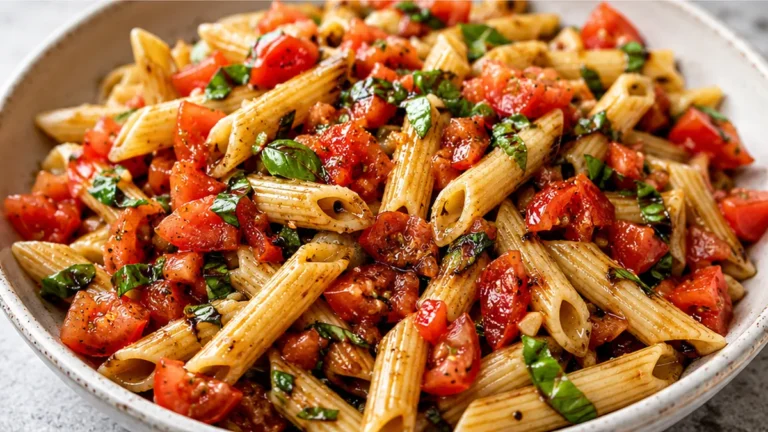
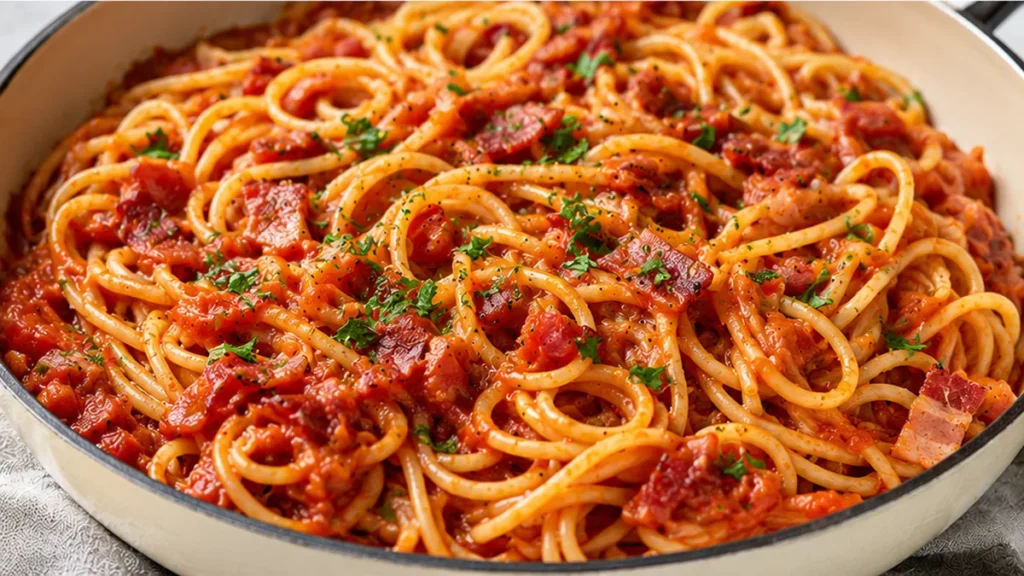
This bacon pasta recipe is a weeknight savior! Forget complicated sauces and long cooking times; this dish brings together the irresistible combination of crispy bacon and rich tomato sauce in a way that’s both comforting and incredibly easy to make. It’s perfect for busy evenings when you crave a satisfying meal without the fuss. We’ll guide you through creating a flavorful pasta dish that highlights the savory crunch of bacon and the bright acidity of tomatoes. It’s a simple yet elegant meal that proves delicious food doesn’t need to be complicated. Get ready to impress yourself and your family with this stellar bacon pasta.
Key takeaways
- Render bacon fat to build a flavorful base for sautéing aromatics.
- Simmer sauce to thicken and meld flavors; a pinch of sugar can balance acidity.
- Cook pasta al dente and finish in the sauce with pasta water for an emulsified coating.
- Season generously and finish with fresh herbs and olive oil for brightness.
Crispy Bacon Tomato Pasta – Insanely Delicious!
Ingredients
- 160 g / 5 oz spaghetti or other long strand pasta of choice
- 1 tsp olive oil (or butter)
- 150-180 g / 5 – 6 oz bacon (, diced)
- 1 garlic clove (, minced)
- 1/2 onion (, finely diced (brown, white, yellow))
- 400 g / 14 oz canned crushed tomato
- Salt and pepper
- pinch sugar (, if needed (Note 1))
- Extra virgin olive oil
- Finely chopped parsley
Instructions
- Have all ingredients measured and ready to go.
- Boil water, salt generously, and cook pasta 2 minutes LESS than packet instructions.
- While pasta cooks, heat olive oil in a skillet over high heat. Add bacon and cook for 1 minute until crisping. Add garlic and onion, cook 3 minutes until onion is translucent and bacon is golden. Drain excess fat if desired.
- Reserve a mug of pasta water. Add about 1/2 cup to the skillet. Simmer and stir, scraping up browned bits from the bottom.
- Add crushed tomatoes to the skillet. Bring to a simmer for 2 minutes, then reduce heat to medium-high.
- Drain pasta (or use tongs to transfer directly into the skillet with the sauce).
- Toss pasta gently with the sauce for 2 minutes until pasta is well-coated and sauce has thickened. Add reserved pasta water, a splash at a time, if needed.
- Season with salt and pepper to taste, remembering bacon is salty.
Notes
The technique that makes it
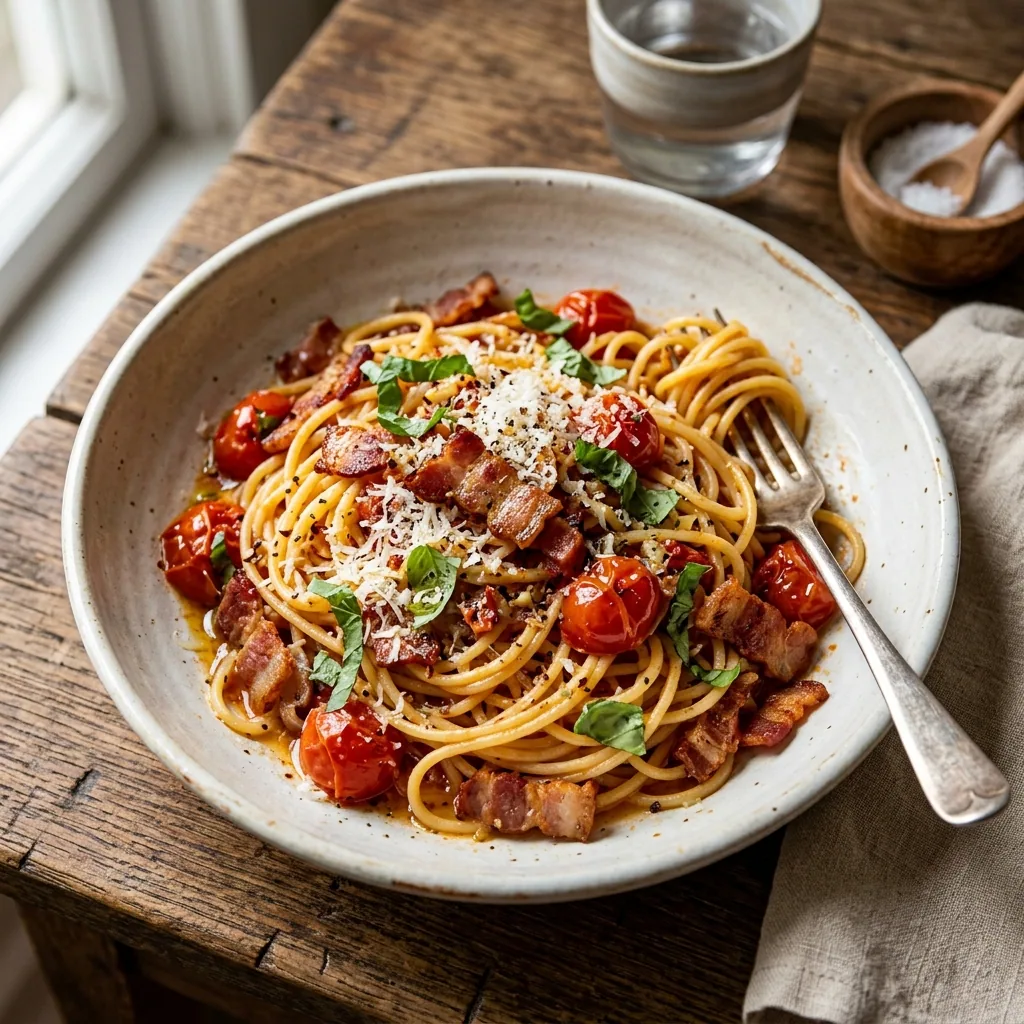
What makes this bacon pasta work is how the bacon fat is utilized to build flavor. Instead of just frying the bacon separately and draining it, we’re rendering it down in the pan first. This process releases its flavorful fat, which then becomes the base for sautéing the aromatics – the garlic and onion. This infusion of bacon essence into the vegetables is crucial for a deep, savory foundation that permeates the entire dish.
When sautéing the onion and garlic in the rendered bacon fat, it’s important to do so over medium heat. High heat can scorch the garlic and make the onion bitter. We want them to soften and become translucent, releasing their sweetness and aroma into the fat. This gentle cooking ensures they meld harmoniously with the tomato base.
The crushed tomatoes are then added and simmered. Simmering is key here. It allows the sauce to thicken slightly and the flavors to meld. If the sauce seems too acidic from the tomatoes, a tiny pinch of sugar can balance it out, enhancing the overall taste without making it overtly sweet. The pasta itself should be cooked al dente, meaning it still has a slight bite. It will finish cooking in the sauce, absorbing its flavors and helping to thicken the sauce further with its starch.
Finally, tossing the cooked pasta directly into the sauce, along with a splash of the starchy pasta water, creates an emulsion. This starchy water acts as a binder, coating the pasta strands and making the sauce cling beautifully. Finishing with a drizzle of good quality extra virgin olive oil and fresh parsley adds a final layer of freshness and richness.
Troubleshooting
- Sauce is too watery: Ensure the sauce simmers uncovered for at least 5-10 minutes to allow excess liquid to evaporate. Also, make sure to reserve enough starchy pasta water to add gradually when tossing the pasta, as this helps thicken the sauce.
- Bacon is too greasy: After rendering the bacon, pour off most of the excess fat, leaving just enough (about 1-2 tablespoons) to sauté the onions and garlic. Too much fat can make the dish heavy.
- Pasta is mushy: Cook the pasta until it is just al dente, as it will continue to cook slightly when tossed with the hot sauce. Overcooking the pasta beforehand is irreversible.
- Sauce tastes bland: Ensure you’ve seasoned adequately with salt and pepper throughout the cooking process, especially after adding the tomatoes. A pinch of sugar can also help balance acidity and enhance overall flavor.
Substitutions
- Bacon: Pancetta can be used for a similar cured pork flavor, though it might be less crispy. For a vegetarian option, omit the bacon and sauté the onions and garlic in olive oil, adding a pinch of smoked paprika for a smoky note.
- Spaghetti: Any long pasta like linguine, fettuccine, or bucatini will work well. Shorter pasta shapes like penne or fusilli are also acceptable, but the sauce might not coat them as evenly.
- Canned crushed tomatoes: Diced tomatoes can be used, but they will result in a chunkier sauce. For a smoother sauce, pass whole peeled tomatoes through a food mill or blend them briefly. Tomato passata is also a good option.
- Onion: Shallots can be substituted for a milder, slightly sweeter onion flavor. A leek, white part only and thoroughly washed, can also be used for a delicate flavor.
Pro tips
- Reserve pasta water! It’s liquid gold for emulsifying the sauce and achieving the perfect consistency.
- Don’t overcook the pasta; it will finish cooking in the sauce. Aim for al dente.
- Adjust salt carefully at the end, as bacon is already quite salty.
- For extra flavor, a pinch of red pepper flakes can be added with the garlic and onion.
Enjoy this sensational bacon pasta recipe that’s perfect for any night of the week. It’s a simple yet flavorful way to improve your pasta game!
More from Pasta Sauces →
Frequently asked questions
Can I make this bacon pasta ahead of time?
While it’s best enjoyed fresh, you can prepare components ahead. Cook the bacon and set aside. Sauté the aromatics and make the sauce base. Reheat the sauce gently, add the cooked bacon, cook the pasta, and toss to combine. Adding pasta water will help bring it all together.
What kind of bacon is best for this pasta?
Smoked bacon, whether regular or thick-cut, provides the most robust flavor. The fat content is important for rendering, so avoid overly lean bacon. Regular cut smoked bacon is generally ideal for achieving a good balance of crispiness and rendered fat.
How can I make the sauce richer?
For a richer sauce, you can stir in a tablespoon or two of heavy cream or mascarpone cheese at the end of cooking, just before adding the pasta. This will add creaminess and a luxurious texture to the tomato base.
Is it important to use pasta water?
Yes, the starchy pasta water is crucial for emulsifying the sauce. It helps the sauce cling to the pasta, creating a cohesive dish rather than a watery sauce with pasta. It also adds a subtle richness and helps thicken the sauce.