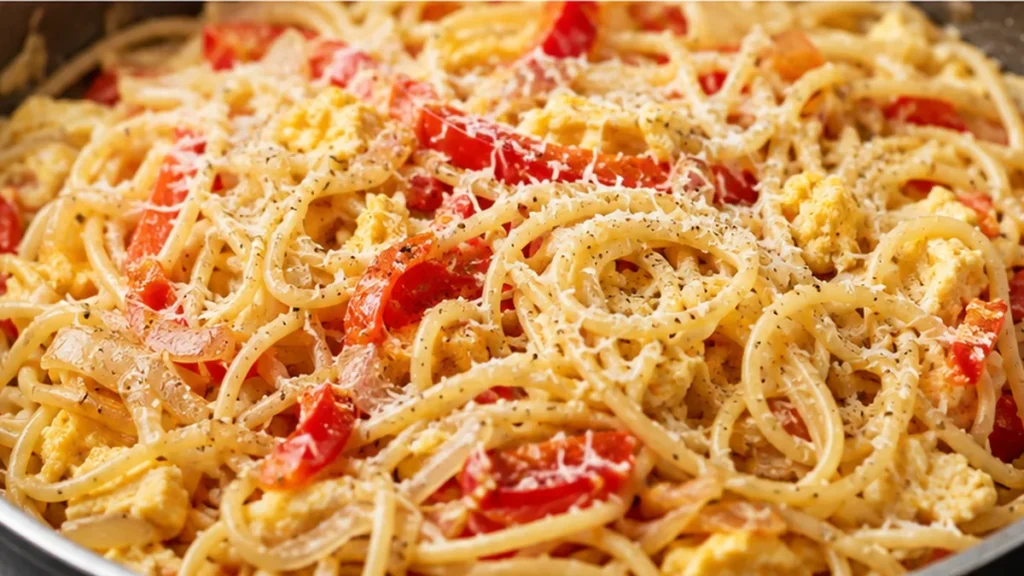
Pasta Mama is the ultimate weeknight dinner solution, offering a delightful blend of spaghetti, fresh vegetables, and creamy, cheesy eggs, all cooked in a single pan. This recipe simplifies meal prep without sacrificing flavor, making it perfect for busy families. What makes Pasta Mama work is its simplicity and speed. It transforms basic ingredients into a satisfying and wholesome meal in under 30 minutes, proving that delicious food doesn’t need to be complicated.
Key takeaways
- Use a large pot of boiling water for perfect spaghetti texture.
- Sauté vegetables properly to enhance their flavors.
- Incorporate eggs off the heat for a creamy consistency.
- Adjust cooking times to avoid mushy pasta and scrambled eggs.
Pasta Mama: One-Pan Wonder!
Ingredients
- 1/2 pound spaghetti
- 1 tablespoon olive oil
- 1 small onion, diced
- 1 garlic clove, minced
- 1 red bell pepper, diced
- 1 zucchini, grated
- 1 teaspoon kosher salt
- 6 eggs, whisked
- 1/4 cup grated parmesan cheese
Instructions
- Cook spaghetti according to package directions. Drain and set aside.
- Heat olive oil in a large sauté pan over medium heat. Add diced onion and sauté for 4 minutes.
- Add minced garlic, diced red bell pepper, grated zucchini, and kosher salt. Sauté for 2 minutes.
- Add the cooked spaghetti to the pan and toss to combine.
- Pour the whisked eggs and grated parmesan cheese over the pasta. Reduce heat to low.
- Cook, stirring gently, until the eggs are just set, about 3-5 minutes.
Video
Notes
How to Achieve Perfectly Cooked Spaghetti
The key to perfectly cooked spaghetti lies in the timing and water temperature. Use a large pot with at least 4 quarts of water for every pound of pasta. Bring the water to a rolling boil before adding the spaghetti. Cook for 8-10 minutes, stirring occasionally, until al dente. Remember to reserve some pasta water for later use in the dish.
The Importance of Sautéing Vegetables Properly
Sautéing the onion, garlic, and bell pepper in olive oil is crucial for developing flavor. Heat the oil over medium heat, adding the onion first and cooking for about 3-4 minutes until translucent. Then add the garlic and bell pepper, cooking for an additional 2-3 minutes. This process enhances the sweetness of the vegetables and adds depth to the overall dish.
Why Eggs Create a Creamy Texture
Incorporating whisked eggs into the pasta mixture creates a rich, creamy texture. The proteins in the eggs coagulate when heated, binding the ingredients together. For best results, add the whisked eggs off the heat to prevent scrambling. Stir quickly to ensure even distribution and creaminess throughout the pasta.
Common Mistakes and How to Fix Them
- Problem: Pasta is mushy.
- Cause: Overcooking the spaghetti.
- Fix: Cook pasta until al dente, about 1-2 minutes less than package instructions.
- Problem: Vegetables are undercooked.
- Cause: Not sautéing long enough.
- Fix: Increase sauté time to ensure vegetables are tender and flavorful.
- Problem: Scrambled eggs in the dish.
- Cause: Adding eggs to hot pasta directly.
- Fix: Remove the pan from heat before adding eggs and stir quickly.
Ingredient Substitutions and Their Effects
- Swap: Whole wheat spaghetti for regular spaghetti.
- Effect: Adds fiber and nutrients but may alter texture slightly.
- Swap: Spinach instead of zucchini.
- Effect: Provides a different flavor profile and color, but similar moisture content.
- Swap: Feta cheese instead of parmesan.
- Effect: Adds a tangy flavor but may not melt into the dish as smoothly.
Unique Aspects of Pasta Mama
Pasta Mama stands out because it combines pasta and a frittata-like element in one dish, making it a unique one-pan meal. This method allows the spaghetti to absorb the flavors of the sautéed vegetables and the creamy egg mixture, resulting in a comforting and satisfying meal unlike traditional pasta dishes.
How to Properly Store Leftover Pasta Mama
Storing leftover Pasta Mama requires careful handling to maintain its texture and flavor. Allow the dish to cool to room temperature before transferring it to an airtight container. Stored properly in the refrigerator, it can last up to 3 days. To reheat, place it in a skillet over low heat, adding a splash of water or broth to prevent drying out. Stir occasionally until heated through. Avoid microwaving, as it can lead to uneven heating and rubbery eggs.
Scaling the Recipe for Larger Gatherings
Pasta Mama is easily scalable for larger gatherings. To maintain the balance of flavors and textures, simply double or triple the ingredients while keeping the same ratios. For example, if doubling, use 1 pound of spaghetti, 2 tablespoons of olive oil, and 12 eggs. However, be mindful of the cooking time, as a larger batch may require additional time in the pan. Ensure even cooking by stirring frequently and checking for doneness.
Choosing the Right Equipment for Optimal Cooking
The choice of cookware can significantly impact the outcome of Pasta Mama. A non-stick skillet is recommended to prevent the eggs from sticking and to facilitate easy serving. If using cast iron, ensure it is well-seasoned to avoid sticking. Additionally, a wide, shallow pan allows for even cooking and better heat distribution, which is crucial for achieving the desired creamy texture without overcooking the eggs.
Adapting Pasta Mama to Seasonal Ingredients
Seasonal ingredients can elevate Pasta Mama’s flavor profile. In spring, consider adding asparagus or peas for freshness. Summer zucchini and bell peppers are perfect, while fall can introduce butternut squash or kale. Winter might call for heartier vegetables like root vegetables. Adjust cooking times based on the moisture content and density of the vegetables to ensure they are tender but not mushy.
How to Adjust Cooking Times for Different Batch Sizes
When scaling the Pasta Mama recipe, it is crucial to adjust cooking times appropriately. For every additional half pound of spaghetti, increase the cooking time by approximately 2-3 minutes. This is due to the increased volume of ingredients requiring more time to heat through. If doubling the recipe, consider cooking it in two separate pans to maintain even cooking and avoid overcrowding, which can lead to uneven texture and doneness.
Understanding the Role of Egg Quality in Creaminess
The quality of eggs used in Pasta Mama significantly affects the final dish’s creaminess. Fresh, organic eggs will provide a richer flavor and a more vibrant color, enhancing the overall appeal. When using lower-quality eggs, you may notice a less creamy texture and a paler color in the finished dish. Aim for eggs with a bright yellow yolk, as this indicates higher levels of nutrients and better flavor.
Choosing the Right Pan for Even Cooking
The type of pan you use can greatly influence the cooking process of Pasta Mama. A non-stick skillet is preferred for easy release of the ingredients and to prevent sticking. A heavy-bottomed pan helps distribute heat evenly, reducing the risk of burning the ingredients. Ensure the pan is large enough to accommodate all ingredients without overcrowding, which can cause steaming rather than sautéing, affecting the overall texture and flavor.
Pairing Pasta Mama with Seasonal Sides
To enhance the dining experience, consider pairing Pasta Mama with seasonal sides. In spring, a light arugula salad with lemon vinaigrette complements the dish well, while in autumn, roasted Brussels sprouts add a hearty contrast. Seasonal ingredients not only elevate the meal but also provide diverse flavors and textures that balance the richness of the pasta and eggs, creating a harmonious plate.
How to Make Pasta Mama Ahead of Time and Its Storage Behavior
Pasta Mama can be prepared in advance, making it a convenient option for meal prep. To do this, cook the dish up to the point where the eggs are added. Allow it to cool completely before transferring it to an airtight container. It can be stored in the refrigerator for up to three days. When reheating, use a skillet over medium heat, adding a splash of water or broth to prevent drying out. The key is to ensure even heating without overcooking the eggs, which can lead to a rubbery texture. If you plan to freeze Pasta Mama, it’s best to do so before adding the eggs. Freeze the cooked pasta and vegetables in a suitable container for up to two months. When ready to serve, thaw in the refrigerator overnight and then add the whisked eggs before cooking on the stovetop.
Understanding the Impact of Ingredient Quality on Pasta Mama’s Flavor
The quality of your ingredients can significantly affect the final flavor of Pasta Mama. Fresh, high-quality vegetables like zucchini and bell peppers will impart a vibrant taste that dried or overripe produce cannot match. When selecting your eggs, opt for organic or free-range options, as these tend to have richer flavors and a creamier texture. Parmesan cheese should be freshly grated rather than pre-packaged, as the latter often contains anti-caking agents that can dull the flavor. Seasonal vegetables can also enhance the dish; for instance, using fresh tomatoes in summer or hearty greens in winter can provide a unique twist. Keep in mind that the freshness of your ingredients will not only affect taste but also the nutritional profile of the dish, making it more wholesome.
Why the choice of pan affects the texture of Pasta Mama
The pan you choose for Pasta Mama is critical for achieving the right texture. A non-stick skillet is ideal as it prevents the eggs from sticking and allows for easy flipping. If using stainless steel, ensure it is well-oiled to avoid sticking. The heat distribution is also essential; a heavy-bottomed pan maintains consistent heat, preventing the eggs from cooking unevenly. Aim for a medium heat around 350°F (175°C) to ensure a gentle cook without burning. A well-chosen pan not only enhances the cooking process but also contributes to a creamy, cohesive texture.
How to adjust Pasta Mama for larger gatherings without losing quality
Scaling Pasta Mama for larger gatherings requires careful attention to ingredient ratios and cooking time. For every additional half pound of spaghetti, you should increase the other ingredients proportionally. However, keep the egg ratio consistent for creaminess; six eggs can adequately bind up to 1 pound of spaghetti. When cooking in larger batches, use a wider pan to ensure even cooking and avoid overcrowding, which can lead to uneven heat distribution. Monitor cooking time closely, as larger quantities may require an additional 5-10 minutes of cooking to set the eggs properly, ensuring the final dish is just as delicious as the smaller version.
Pro tips
- Use a good quality non-stick pan for easy cooking and cleanup.
- Don’t overcook the eggs; aim for a creamy, custard-like consistency.
- Feel free to add other vegetables like spinach or mushrooms for extra nutrients.
Enjoy this delightful Pasta Mama dish as a quick and satisfying meal that the whole family will love. Simple, fast, and flavorful!
Frequently asked questions
How do I know when the spaghetti is al dente?
The spaghetti is al dente when it is cooked through but still has a slight bite to it. This usually takes about 8-10 minutes, depending on the brand. Taste a strand to check for doneness.
Can I use other vegetables in Pasta Mama?
Yes, you can substitute other vegetables such as spinach, mushrooms, or broccoli. Just ensure they are cooked until tender before mixing in with the pasta and eggs.
What can I do if my Pasta Mama is too dry?
If your Pasta Mama turns out dry, add a splash of reserved pasta water or a drizzle of olive oil. This will help to moisten the dish and enhance the overall flavor.
Can I make Pasta Mama ahead of time?
Yes, you can prepare Pasta Mama ahead of time. Store it in an airtight container in the refrigerator for up to 2 days. Reheat gently in a skillet or microwave before serving.
More from Easy Pasta Recipes →