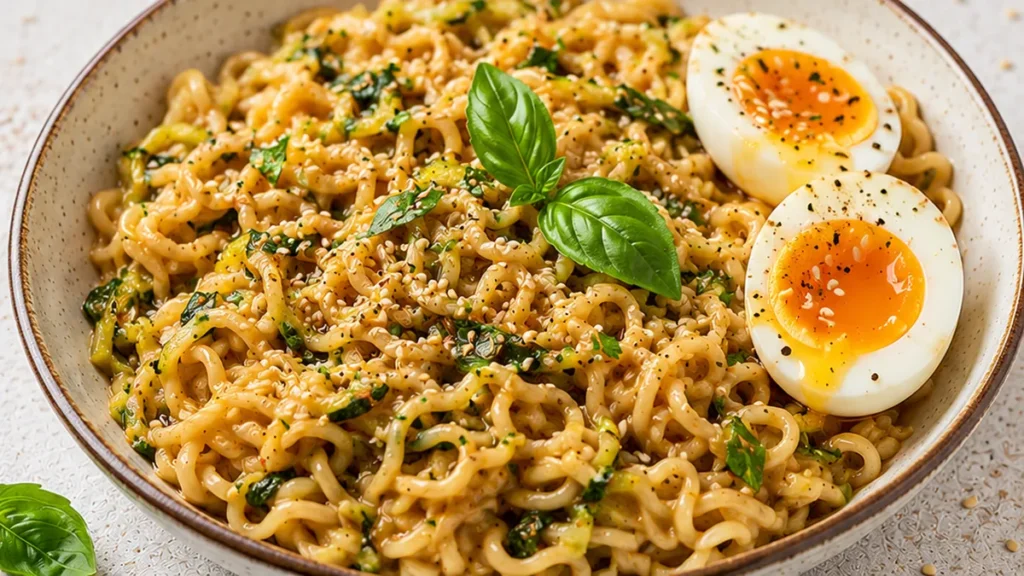
Garlic ramen noodles offer a perfect solution for those busy weeknights when you crave a comforting, flavorful meal without spending hours in the kitchen. This recipe transforms simple ingredients into a dish that’s both satisfying and surprisingly quick, delivering a rich and aromatic experience. These garlic ramen noodles come together fast and still deliver full flavor, proof that convenience doesn’t have to mean compromising on taste. This garlic ramen recipe is designed for maximum flavor with minimal effort, making it an ideal choice for students, busy professionals, or anyone looking to enjoy a homemade meal in a flash. The combination of savory garlic butter, fresh ginger, and tender ramen noodles creates a harmonious blend that’s hard to resist.
Key takeaways
- The sauce emulsifies by cooking aromatics in butter, then incorporating grated zucchini and soy sauce.
- Avoid burning the garlic to prevent bitterness; cook until just fragrant.
- If the sauce is too thin, simmer longer; if too salty, add a touch of sugar or more basil.
- Brown rice ramen can be swapped with other noodle types, and butter with plant-based alternatives or oil.
15-Minute Garlic Butter Ramen
Ingredients
- 2-3 brown rice ramen noodles
- 6 tablespoons salted butter
- 4 cloves garlic, minced or grated
- 2 teaspoons fresh grated ginger
- 2 small or 1 medium zucchini, grated
- 1/4 cup low sodium soy sauce
- 1/2 cup fresh basil, roughly chopped
- 4 soft boiled or fried eggs
- toasted sesame seeds (for serving)
Instructions
- Bring a large pot of water to a rolling boil. Cook the ramen noodles according to package directions until tender, about 3-5 minutes. Drain well.
- Meanwhile, heat a large skillet over medium-high heat. Add 6 tablespoons of salted butter and 4 cloves of minced garlic. Cook, stirring occasionally, until the garlic turns golden and caramelized, about 2-3 minutes. Stir in 2 teaspoons of grated ginger and cook for another minute.
- Add the grated zucchini to the skillet and cook for 2-3 minutes, stirring, until the zucchini has wilted into the garlic butter sauce.
- Add the drained ramen noodles, 1/4 cup of soy sauce, and 1/2 cup of fresh basil to the skillet. Gently toss all the ingredients together to combine evenly. Remove the skillet from the heat immediately.
- Divide the garlic butter ramen noodles among individual serving bowls. Top each bowl with toasted sesame seeds and, if desired, a soft-boiled or fried egg. Serve and enjoy immediately!
Notes
The technique that makes it
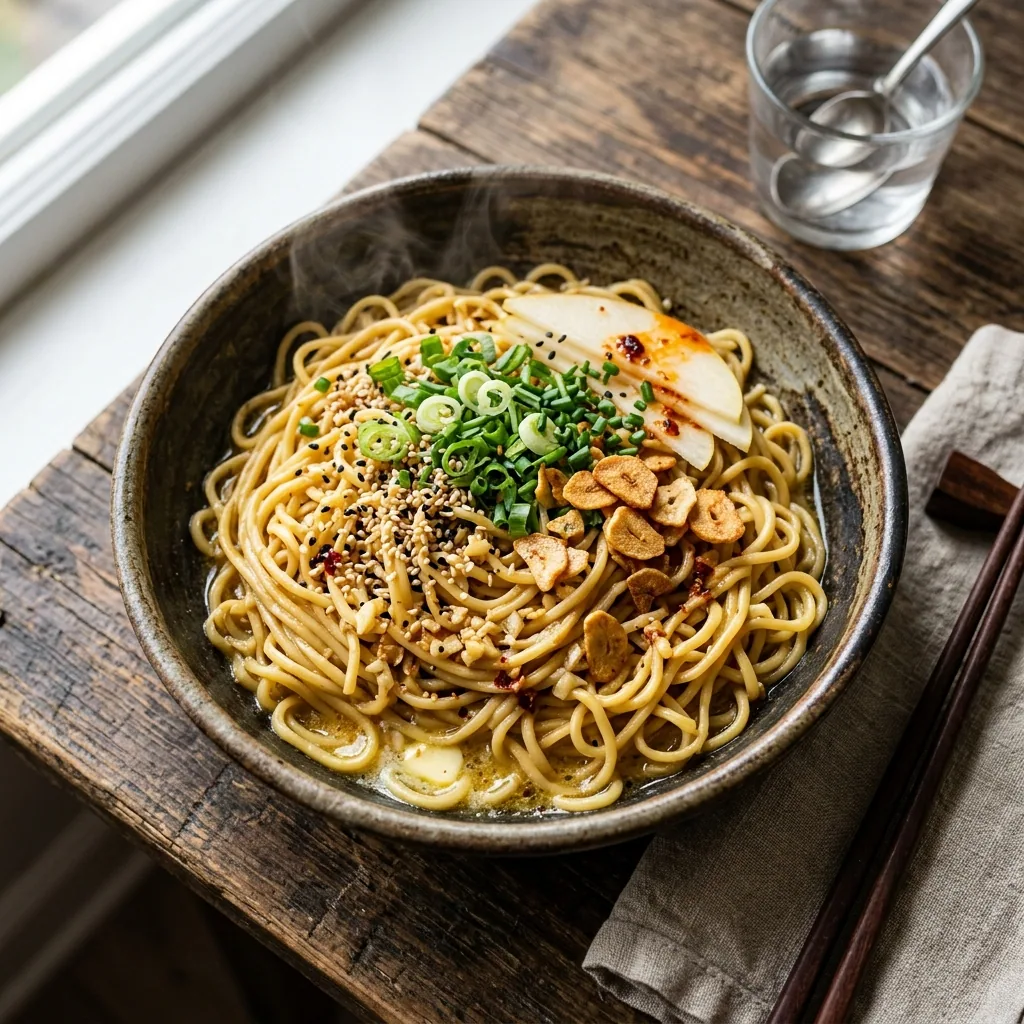
What makes this 15-Minute Garlic Butter Ramen work is the rapid emulsification of butter, garlic, and soy sauce, creating a rich, flavorful coating for the noodles. The key is to build the sauce directly in the pan where the ramen will finish cooking. Start by melting the butter over medium heat. Once melted, add the minced garlic and grated ginger. Sautéing these aromatics in butter allows their flavors to infuse deeply into the fat. It’s crucial not to burn the garlic; cook it just until fragrant, about 30-60 seconds. Overcooked garlic turns bitter, which will negatively impact the final taste. Immediately after, add the grated zucchini. The zucchini acts as a thickening agent and adds a subtle sweetness and moisture. Stirring it into the hot butter and garlic mixture helps it break down quickly. Then, introduce the soy sauce. The heat from the pan will help the soy sauce meld with the butter and zucchini, creating a cohesive sauce. The ramen noodles, once cooked and drained, are added directly to this sauce. Tossing them vigorously ensures each strand is coated evenly. The residual heat and the starch from the noodles help to further thicken and bind the sauce. Finally, the fresh basil is stirred in at the very end to preserve its bright, herbaceous flavor and bright color, rather than cooking it down.
Troubleshooting
- Failure: Sauce is too thin. Fix: Continue to simmer the sauce for an extra minute or two, stirring constantly. The zucchini should break down and thicken the sauce. If still too thin, you can toss the noodles in the sauce for a longer period, allowing more starch to release and bind the sauce.
- Failure: Garlic is burnt and bitter. Fix: Unfortunately, burnt garlic is difficult to salvage. The best approach is to start over, being very careful to sauté the garlic for a shorter duration (30 seconds or less) over medium-low heat.
- Failure: Noodles are clumpy. Fix: Ensure you rinse the cooked ramen noodles under cool water immediately after draining to prevent them from sticking together. When adding them to the sauce, toss them thoroughly to separate the strands and coat them evenly.
- Failure: Sauce is too salty. Fix: If the soy sauce makes the dish too salty, you can balance it with a touch of sweetness. Add a tiny pinch of sugar (about 1/4 teaspoon) to the sauce while it’s simmering, or increase the amount of fresh basil to add a fresh, palate-cleansing element.
Substitutions
- Noodles: While brown rice ramen provides a slightly nutty flavor and good texture, you can substitute with regular ramen noodles, udon noodles, or even spaghetti. Cooking times will vary, so follow package directions. The sauce will still adhere well to most noodle types.
- Butter: For a dairy-free option, use a good quality plant-based butter or a neutral oil like avocado oil. The flavor profile will change slightly, but the emulsification principle remains the same.
- Soy Sauce: Tamari can be used as a gluten-free alternative. Coconut aminos offer a sweeter, less salty option, which may require adjusting the quantity or adding a pinch of salt.
- Basil: If fresh basil is unavailable, fresh cilantro or parsley can be used. Cilantro will impart a distinct citrusy, bold flavor, while parsley offers a milder, fresh herbaceousness.
Pro tips
- Don’t overcook the ramen noodles: They will continue to soften slightly when tossed with the hot sauce. Cook them just until al dente for the best texture.
- Customize your veggies: Feel free to add other quick-cooking vegetables like spinach, mushrooms, or bell peppers along with the zucchini.
- Soft-boiled eggs: For perfect jammy yolks, boil large eggs for exactly 6.5-7 minutes, then immediately transfer to an ice bath to stop cooking. Store leftovers in an airtight container in the fridge for up to 3 days. Reheat gently in a microwave for 30-60 seconds.
This garlic butter ramen recipe is a testament to how simple ingredients can create extraordinary flavors in minutes. Give it a try for your next speedy meal and enjoy the delicious comfort it brings!
More from Easy Pasta Recipes →
Frequently asked questions
Can I make this ramen spicier?
Yes, you can easily add heat to this garlic ramen. Incorporate a pinch of red pepper flakes along with the garlic and ginger, or stir in some sriracha or chili garlic sauce at the end with the soy sauce for a more pronounced kick.
What kind of eggs work best?
Soft-boiled eggs are ideal as their runny yolks create an additional creamy sauce that blends beautifully with the garlic butter base. Fried eggs with a slightly runny yolk also work well. Ensure the yolk is not fully cooked through for the best result.
How do I prevent the noodles from getting mushy?
Cook the ramen noodles according to package directions, aiming for al dente. Rinse them briefly under cool water immediately after draining to stop the cooking process and prevent sticking. Toss them into the sauce promptly to coat and finish cooking.
Can I add other vegetables?
Certainly. Thinly sliced mushrooms, bell peppers, or snap peas can be sautéed with the zucchini. For leafy greens, add spinach or bok choy towards the end of the sauce-making process, allowing them to wilt before adding the noodles.