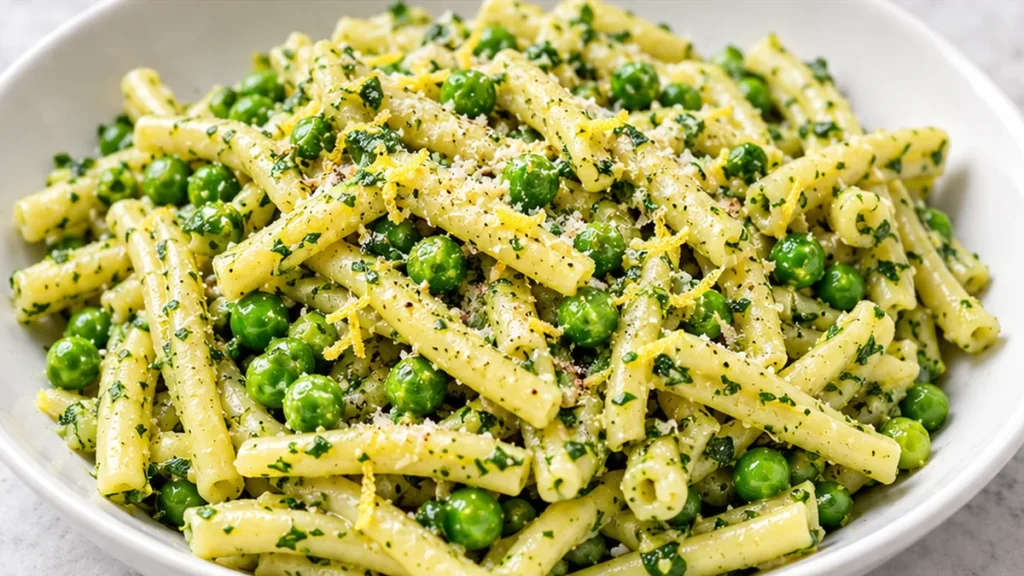
This bright fresh parsley pesto pasta is a quick and nutritious meal. Combining fresh parsley and peas, it offers a simple yet flavorful option for dinner.
Key takeaways
- Use fresh parsley and peas for the best flavor.
- Emulsification is key for a smooth pesto sauce.
- Adjust oil and solids ratio to prevent separation.
- Incorporate lemon juice for brightness and balance.
Bright & Fresh Parsley Pesto Pasta with Peas!
Ingredients
- 1 bunch flat leaf Italian Parsley
- 1 fresh lemon
- 1/2 cup grated or shredded Parmesan
- 2 cloves garlic
- salt and pepper
- 1/4 cup olive oil
- 1 lb pasta
- 1 cup frozen peas
Instructions
- Rinse the parsley well to remove any dirt or debris, then pat it dry with a clean, lint-free towel. Cut off the ends of the parsley stems and place the rest, leaves and stems, in the bowl of a food processor.
- Zest and juice the lemon. Add half of the zest and about 2 Tbsp of the juice to the food processor, along with the Parmesan, garlic cloves (peeled), and some freshly cracked pepper (about 15 cranks of a pepper mill).
- Pulse the mixture until everything is finely minced and combined. Begin to add the olive oil in a thin stream through the chute of the processor as it blends the mixture together. Once the oil has been incorporated, add salt to taste. I added about 1/4 tsp salt.
- Bring a pot of water to a boil for the pasta. Once boiling, add the pasta and continue to boil until the pasta is al dente. At the very end of the cook time, add the frozen peas and stir to combine. Let the peas sit in the hot water with the pasta for about a minute, then drain the pasta and peas in a colander.
- Allow the pasta to cool just to the point where it is no longer steaming heavily. Transfer the drained pasta to a bowl and add the parsley pesto. Stir to combine, then serve warm. Add a pinch of the remaining lemon zest over top of each serving.
The Role of Fresh Ingredients in Parsley Pesto Pasta
Using fresh ingredients is crucial for achieving the vibrant flavor profile in bright fresh parsley pesto pasta. Fresh parsley not only adds a bright green hue but also contributes essential oils that enhance aroma and taste. Ideally, the parsley should be used within a day or two of purchase to maintain its freshness. The use of fresh peas in this dish adds sweetness and a pop of color, making the dish visually appealing. Freshly grated Parmesan cheese or Pecorino Romano is recommended, as it offers a creamier texture and richer flavor compared to pre-grated varieties.
Understanding Emulsification in Pesto
Emulsification is a key process in creating a smooth and cohesive pesto sauce. When blending the ingredients, the goal is to create a stable emulsion of oil and water. The oil from the nuts and cheese needs to be properly incorporated with the moisture from the parsley and peas. A common ratio for a successful emulsion is about 3:1 oil to solids. Using a food processor or blender, pulse the ingredients gradually, allowing the oil to mix in slowly. This method helps prevent the sauce from separating and ensures a creamy consistency.
Common Issues and How to Fix Them
- Problem: Pesto is too bitter.
- Cause: Over-blending or using older parsley.
- Fix: Use fresh parsley and blend just until combined to prevent bitterness from releasing too many oils.
- Problem: The sauce is too oily.
- Cause: Too much oil was added during blending.
- Fix: Add a bit more cheese or peas to balance the oil content.
- Problem: Pesto is too thick.
- Cause: Insufficient liquid ingredients.
- Fix: Add a small amount of reserved pasta water to thin it out.
- Problem: The flavor is flat.
- Cause: Lack of seasoning or acidity.
- Fix: Incorporate lemon juice or zest to brighten the flavors and enhance overall taste.
Ingredient Swaps and Their Effects
- Walnuts instead of Pine Nuts: This swap will give the pesto a slightly different flavor and a creamier texture, but it may lack the traditional nutty notes of pine nuts.
- Spinach in Place of Parsley: While it will change the color and flavor profile, spinach can add a milder taste and additional nutrients.
- Vegan Cheese for Parmesan: Using a vegan cheese alternative will result in a dairy-free dish, but it may not provide the same depth of flavor.
- Sun-Dried Tomatoes instead of Fresh Peas: This will add a tangy sweetness and change the dish’s color, but it will lack the fresh crunch that peas provide.
Unique Characteristics of This Dish
Bright fresh parsley pesto pasta with peas stands out due to its unique combination of fresh herbs and sweet vegetables, making it a refreshing option compared to traditional pesto recipes. The addition of peas not only enhances the nutritional profile but also provides a delightful texture contrast. Unlike many other pesto dishes that rely heavily on nuts and cheese, this version emphasizes the freshness of herbs and vegetables, making it lighter and more suitable for warm weather dining.
How to Properly Store and Reheat Parsley Pesto Pasta
Storing your bright fresh parsley pesto pasta correctly can significantly affect its flavor and texture. To store leftovers, place the pasta in an airtight container and refrigerate for up to three days. For longer storage, consider freezing the pasta. However, note that the texture may change upon thawing due to the moisture content in the peas and pesto. When reheating, use a pan over low heat, adding a splash of water or olive oil to help revive the dish without compromising its freshness.
Scaling the Recipe for Different Servings
Scaling the bright fresh parsley pesto pasta recipe is straightforward. If you want to serve a larger group, simply multiply the ingredient quantities while maintaining the same ratios. For instance, if the original recipe serves four and you need to serve eight, double all ingredients. However, be cautious with the pesto; making it in larger batches can be tricky, as the blender or food processor may not emulsify the ingredients properly. Consider making the pesto in two batches if you scale up significantly.
Choosing the Right Equipment for Optimal Results
The equipment you use can influence the outcome of your bright fresh parsley pesto pasta. A high-quality blender or food processor is essential for creating a smooth pesto. If using a blender, ensure it has enough power to fully blend the ingredients. A food processor typically offers better control over texture, allowing for a chunkier pesto if desired. Additionally, using a pot with a heavy bottom for cooking the pasta helps maintain an even temperature, reducing the risk of overcooking.
Pairing Suggestions to Enhance the Dish
To elevate your bright fresh parsley pesto pasta, consider pairing it with complementary ingredients. Grilled chicken or shrimp can add protein and make the dish more filling. For a vegetarian option, roasted vegetables like zucchini or bell peppers work well. A sprinkle of freshly grated Parmesan cheese enhances the dish’s richness. For a refreshing contrast, serve with a side salad of mixed greens dressed in a light vinaigrette to balance the richness of the pesto.
Understanding the Impact of Ingredient Freshness on Flavor
The quality of the ingredients used in bright fresh parsley pesto pasta significantly affects the final flavor profile. Fresh parsley should be vibrant green, with a crisp texture and a fragrant aroma. When selecting peas, opt for the freshest available, as they contribute both sweetness and a pop of color to the dish. For the best taste, consider using seasonal produce; fresh peas in the spring, for instance, will have a sweeter flavor compared to frozen ones. The oils used in the pesto, typically olive oil, should also be of high quality, as they impart rich flavors to the dish. A good rule of thumb is to choose extra virgin olive oil, which has a lower acidity and a more robust flavor, enhancing the overall dish.
Batch Scaling and Its Effects on Texture and Taste
When scaling the recipe for bright fresh parsley pesto pasta, it’s essential to maintain the proper ratios of ingredients to preserve the intended texture and flavor. Doubling or halving the recipe can change the emulsification process of the pesto. For instance, if you are making a larger batch, using a food processor may be necessary to ensure even blending. Additionally, larger batches may require more time for the pesto to emulsify properly, so adjust the blending time accordingly. Keep in mind that when scaling, the flavor intensity may also shift; taste and adjust seasoning as needed, especially salt and lemon juice, to achieve the desired balance.
Make-Ahead Tips for Optimal Flavor Retention
Preparing bright fresh parsley pesto pasta ahead of time can save effort during busy weeknights, but it’s crucial to store it properly to retain freshness. To make ahead, prepare the pesto and store it in an airtight container with a thin layer of olive oil on top to prevent oxidation, which can dull the vibrant green color. Refrigerated, the pesto will last for about a week. When ready to serve, simply toss the pesto with freshly cooked pasta and peas. If you plan to freeze the pesto, consider portioning it into ice cube trays for easy use later. Frozen pesto can last for several months, but for the best flavor, use it within three months.
Understanding the Flavor Dynamics of Fresh Parsley in Pesto
Fresh parsley plays a pivotal role in the flavor profile of parsley pesto pasta. Its bright, herbaceous notes can significantly enhance the dish, but the vibrancy of the parsley is highly dependent on its freshness. When selecting parsley, look for bright green leaves that are crisp and fragrant. Avoid wilted or yellowing leaves, as they indicate age and loss of flavor. The best flavor extraction occurs when parsley is processed shortly after being harvested. The ideal ratio for a balanced pesto is about 50 grams of fresh parsley per 100 grams of pasta, which ensures that the herbaceous flavor complements rather than overpowers the dish. Additionally, incorporating a small amount of lemon juice can brighten the overall taste, enhancing the freshness of the parsley.
Batch Scaling: How to Maintain Flavor and Texture
Scaling the recipe for parsley pesto pasta can be tricky, as it requires careful attention to ingredient ratios to maintain the desired flavor and texture. When doubling or halving the recipe, ensure that the proportion of pesto to pasta remains consistent. A typical guideline is 1 cup of pesto for every 400 grams of pasta. However, if you’re increasing the batch size significantly, consider processing the pesto in smaller batches to ensure even blending and flavor distribution. The emulsification process is crucial here; larger batches may require additional oil or liquid to achieve the same creamy consistency. Additionally, when scaling up, be mindful of the cooking time for the pasta. Larger quantities may need slight adjustments in boiling time to ensure even cooking. Always taste and adjust seasoning as needed, as larger batches may dilute flavors.
Pro tips
Pro tip: Best served immediately while hot!
Frequently asked questions
Can I use frozen peas instead of fresh ones?
Yes, frozen peas can be used in this recipe. They are often flash-frozen at peak freshness, retaining their flavor and nutrients. Just make sure to thaw them before adding to the pasta.
How can I store leftover pesto?
Leftover pesto can be stored in an airtight container in the refrigerator for up to a week. To maintain its vibrant color, drizzle a thin layer of olive oil on top before sealing.
What type of pasta works best with this pesto?
Any pasta shape can work, but short shapes like fusilli or penne are particularly good at holding onto the pesto. Long pasta like spaghetti can also be used, but it may require more tossing to coat evenly.
Can I make this dish vegan?
Yes, you can easily make this dish vegan by substituting the Parmesan cheese with a vegan cheese alternative or nutritional yeast, which adds a cheesy flavor without dairy.
More from Easy Pasta Recipes →