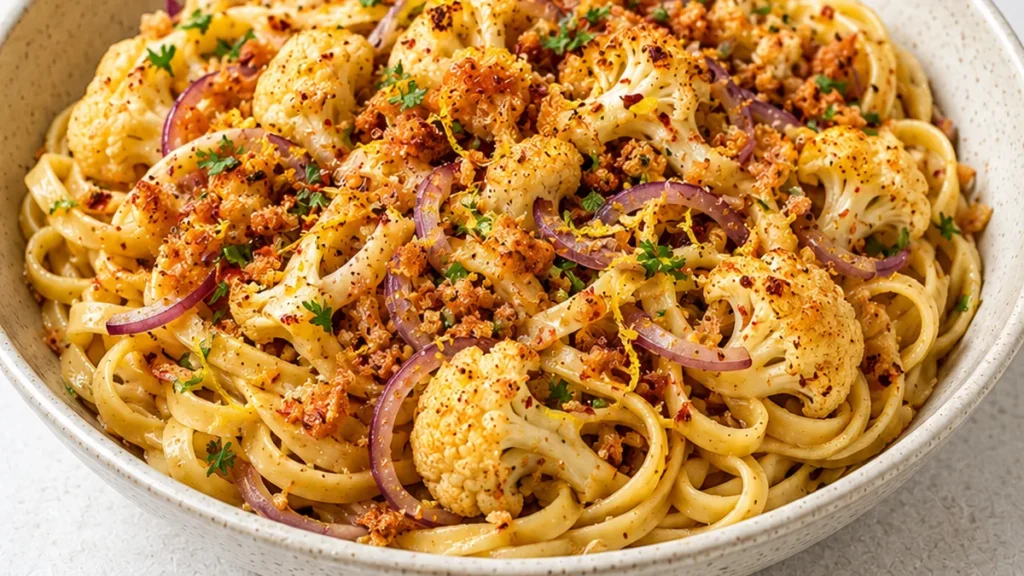
Cauliflower pasta has never been so exciting! This recipe improves humble cauliflower into a star, paired with perfectly cooked pasta and a mouthwatering garlic butter sauce. The crispy pangrattato adds an irresistible crunch. This dish is perfect for anyone looking to add more vegetables to their meals without sacrificing flavor. It’s a quick and satisfying option for busy weeknights or a delightful side dish.
Key takeaways
- The key to this cauliflower pasta is browning the cauliflower well for flavor and texture.
- Crispy breadcrumbs add essential crunch, mimicking pangrattato.
- Don't forget the lemon juice and zest for brightness.
- Seasoning throughout the cooking process is crucial for a flavorful dish.
Crispy Cauliflower Pasta Dream!
Ingredients
- 1 to 2 slices bread (, crusts removed, preferably stale (enough to make 1/2 cup))
- Oil spray (preferably olive oil)
- 2 tbsp unsalted butter
- 1 tbsp olive oil
- 2 garlic cloves (, smashed)
- 1/2 large head of cauliflower (, broken/cut into florets about 2″/5cm long (about 4 to 5 cups))
- 8 oz / 250 g fettuccine (or pasta of choice)
- 1/2 red onion (, thinly sliced)
- 1/2 to 1 tsp red chili flakes
- 1 lemon (: 2 tbsp lemon juice + zest of 1/2 the lemon)
Instructions
- Pangrattato: Dice the bread into small pieces (at least 1/2 cup). Spray generously with oil. Heat a large skillet over medium-high heat. Add bread pieces and sauté for about 2 minutes until golden brown. Remove to a bowl, sprinkle with salt, and set aside.
- Return the skillet to the stove. Melt the butter with the olive oil over medium heat. Add the smashed garlic cloves and cook for 1 minute until fragrant.
- Add the cauliflower florets to the skillet. Cook, stirring occasionally, for about 3 minutes. Add the sliced red onion, salt, and pepper.
- Continue cooking for another 5-7 minutes, until the cauliflower is beautifully golden brown but still slightly firm. Remove and discard the smashed garlic cloves.
- Meanwhile, cook the fettuccine in salted boiling water until 1 minute less than the packet’s recommended time (al dente). Reserve about 1/2 cup of pasta water before draining.
- Add the drained pasta and lemon juice to the skillet with the cauliflower. Toss well to combine, adding a splash of reserved pasta water if needed to create a light sauce. Stir in red chili flakes and lemon zest.
- Serve immediately, topped generously with the crispy pangrattato.
Notes
The technique that makes it
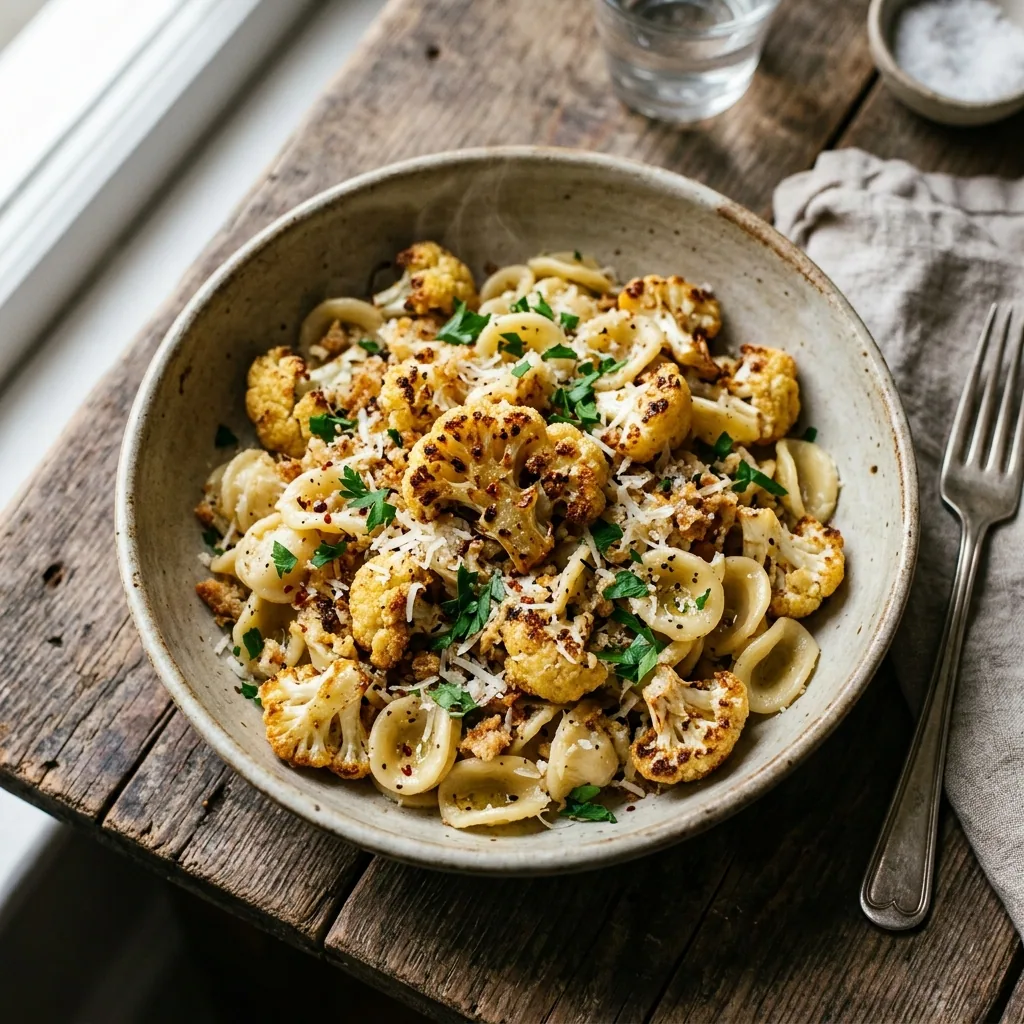
The magic behind this cauliflower pasta lies in transforming the humble cauliflower into a textural and flavorful component that rivals traditional sauces. The key is the initial preparation of the cauliflower and the breadcrumbs. First, ensure the cauliflower florets are cut to a manageable size, about 2 inches, allowing them to cook evenly and absorb flavors. Roasting or pan-searing the cauliflower until deeply golden brown is crucial. This caramelization develops a nutty, slightly sweet flavor and a tender-crisp texture. Avoid overcrowding the pan or baking sheet, as this will steam the cauliflower instead of browning it, leading to a mushy, less flavorful result.
Simultaneously, the breadcrumbs play a vital role. By toasting stale bread with oil spray until golden and crisp, you create a flavorful, crunchy topping that adds a delightful textural contrast to the tender pasta and cauliflower. This technique rounds out the dish beyond a simple pasta with vegetables, introducing a satisfying crunch reminiscent of pangrattato, or ‘poor man’s parmesan’. The combination of well-browned cauliflower, perfectly cooked pasta, and crispy breadcrumbs forms the foundation of this satisfying dish.
Troubleshooting
- Problem: Cauliflower is mushy and bland.
Fix: Ensure the cauliflower is cut into uniform florets and is not overcrowded when cooking. High heat and adequate space are necessary for browning, not steaming. You might have cooked it for too long or at too low a temperature. - Problem: Breadcrumbs are burnt or soggy.
Fix: Watch the breadcrumbs closely as they toast; they can go from golden to burnt very quickly. If they become soggy, it’s likely due to residual moisture from the cauliflower or pan. Ensure all components are dry before combining. - Problem: Pasta is overcooked or stuck together.
Fix: Cook the fettuccine to al dente according to package directions. Reserve about 1 cup of the starchy pasta water before draining. This water is essential for emulsifying the sauce and preventing the pasta from clumping. - Problem: Dish lacks flavor or brightness.
Fix: Don’t skip the lemon juice and zest at the end. This provides essential acidity to cut through the richness. Also, ensure you’ve seasoned the cauliflower and pasta adequately with salt and pepper throughout the cooking process.
Substitutions
- Pasta: While fettuccine is recommended for its ability to hold sauce, other long pasta shapes like spaghetti, linguine, or bucatini work well. Short pasta shapes such as penne or fusilli can also be used, though they may not coat as evenly.
- Breadcrumbs: If you don’t have stale bread, you can use fresh bread and toast it longer, or substitute with panko breadcrumbs for an extra-crispy texture. Ensure they are toasted until golden.
- Red Onion: Shallots can be substituted for red onion, offering a milder, sweeter flavor. If you prefer no onion, you can omit it, but you might lose a layer of aromatic depth.
- Butter and Olive Oil: You can use all olive oil (about 3 tablespoons total) instead of a combination of butter and olive oil. For a richer flavor, a small amount of bacon fat could be used in place of some of the oil.
Pro tips
- For extra crispy pangrattato, ensure your bread is stale. If it’s fresh, toast it lightly first.
- Don’t overcook the pasta; it should be al dente as it will finish cooking in the sauce.
- Add a pinch of salt to the pasta water; it seasons the pasta from the inside out.
- Store leftovers in an airtight container in the refrigerator for up to 2 days. Reheat gently on the stovetop or in the microwave.
Enjoy this flavorful and texturally exciting cauliflower pasta dish. It’s a simple yet impressive meal that proves vegetables can be the hero!
More from Easy Pasta Recipes →
Frequently asked questions
Can I make crispy cauliflower pasta ahead of time?
Yes, you can prep components ahead. Roast the cauliflower up to 2 days in advance and store it in an airtight container in the refrigerator. Cook the pasta just before serving for the best crispy texture. Reheat the roasted cauliflower gently in the oven or a skillet before tossing with the hot pasta and sauce.
What can I substitute for cauliflower in this pasta?
Broccoli florets are an excellent substitute for cauliflower. Brussels sprouts, cut into halves or quarters, also roast beautifully and offer a similar texture. For a different flavor profile, try chunks of sweet potato or butternut squash, though they will require a slightly longer roasting time.
How do I know when the cauliflower is crispy enough?
The cauliflower is ready when the edges are deeply golden brown and slightly charred. It should be tender when pierced with a fork but still hold its shape. Roasting at a high temperature (around 400-425°F or 200-220°C) and not overcrowding the baking sheet are key to achieving crispiness.
How to store leftovers of crispy cauliflower pasta?
Store any leftovers in an airtight container in the refrigerator for up to 3 days. The cauliflower may lose some of its crispiness upon refrigeration. To reheat, spread the pasta and cauliflower on a baking sheet and warm in a moderate oven (around 350°F or 175°C) until heated through.