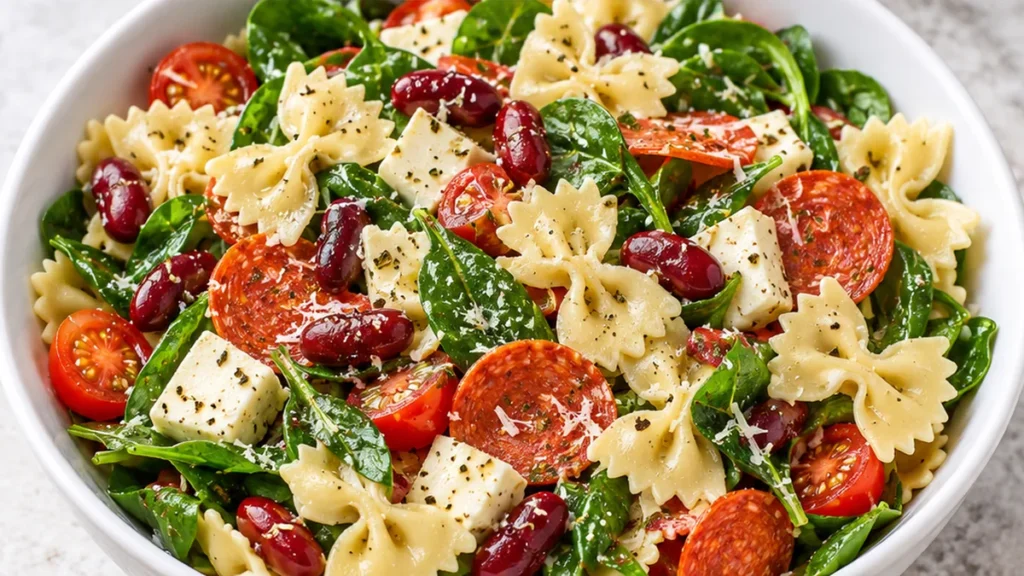
This pepperoni pasta salad is a simple and satisfying dish. It combines pasta, pepperoni, and fresh vegetables for a quick meal option.
Key takeaways
- Use high-quality ingredients for the best flavor.
- Cook pasta al dente to maintain texture.
- Chill the salad for at least 30 minutes before serving.
- Experiment with ingredient swaps to create unique flavors.
Easy Pepperoni Pasta Salad
Ingredients
- 8 oz bowtie pasta
- 1/2 tbsp salt
- 4 oz fresh baby spinach
- 15 oz can kidney beans
- 3 oz pepperoni
- 4 oz mozzarella, cubed
- 1 pint grape tomatoes
- 6 oz Italian dressing
- 1 tbsp Parmesan (optional)
- Freshly cracked pepper (optional)
Instructions
- Fill a medium sauce pot with water and add 1/2 Tbsp salt. Bring to a boil, then add pasta and cook until tender.
- Drain the pasta in a colander and rinse briefly with cool water.
- In a large bowl, roughly chop spinach, rinse and drain kidney beans, and slice grape tomatoes in half.
- Add beans, tomatoes, pepperoni, and cubed mozzarella to the bowl with spinach.
- Add the cooled pasta to the bowl and toss until combined.
- Add dressing and toss again until everything is coated.
- Serve with Parmesan and freshly cracked pepper on top.
Understanding the Role of Ingredients in Pepperoni Pasta Salad
The success of a pepperoni pasta salad hinges on the quality and balance of its ingredients. The pasta serves as the base, absorbing flavors while providing texture. Al dente pasta, cooked for about 8-10 minutes, ensures a firm bite that holds up against the other ingredients. Pepperoni, a key player, adds a spicy, savory punch, and its fat content helps to create a richer mouthfeel. Fresh vegetables like bell peppers and onions not only enhance the flavor but also contribute essential nutrients and a refreshing crunch. A well-crafted dressing, often a simple vinaigrette or creamy dressing, ties all the components together, ensuring that each bite is flavorful.
Common Mistakes When Making Pepperoni Pasta Salad
One frequent mistake is overcooking the pasta, which can lead to a mushy texture that detracts from the overall dish. To avoid this, always check the pasta a minute or two before the suggested cooking time. Another issue is using low-quality pepperoni; it can result in a greasy salad. Opt for a good-quality brand that offers a balance of spice and flavor. Additionally, not letting the salad chill before serving can prevent the flavors from melding properly. Ideally, allow the salad to rest in the refrigerator for at least 30 minutes to an hour before serving to enhance the taste.
Ingredient Swaps and Their Impact on Flavor
Experimenting with different ingredients can yield interesting variations of pepperoni pasta salad. For instance, substituting pepperoni with salami or chorizo can introduce a different flavor profile, with salami offering a milder taste and chorizo providing a smoky depth. If you’re looking to reduce calories, consider using turkey pepperoni instead; however, be aware that it may lack some of the richness of traditional pepperoni. For a vegetarian option, try marinated artichokes or olives, which can add a briny flavor that complements the pasta well. Each swap alters the salad’s character, so choose based on your preference.
The Science of Flavor in Pepperoni Pasta Salad
Flavor development in a pepperoni pasta salad is influenced by several factors, including temperature and resting time. When the salad is served cold, the flavors are more subdued, which is why chilling is essential. The fats from the pepperoni and dressing help to carry flavors, enhancing the overall taste experience. Moreover, the balance of acidity from vinegar or lemon juice in the dressing can brighten the dish, cutting through the richness of the pepperoni. Aim for a dressing ratio of about 1 part vinegar to 3 parts oil to maintain a good balance. This ratio helps ensure that the salad is flavorful without being overly oily or acidic.
How to Properly Store Pepperoni Pasta Salad for Maximum Freshness
When it comes to storing pepperoni pasta salad, the key is to keep it fresh and flavorful. To do this, store the salad in an airtight container in the refrigerator. This method can preserve the salad for up to three days. However, be mindful that the texture of the pasta may change as it absorbs moisture from the dressing. If you plan to make the salad ahead of time, consider keeping the dressing separate until just before serving to maintain the pasta’s integrity. For longer storage, you can freeze the salad, but note that the texture will be compromised upon thawing. To freeze, place the salad in a freezer-safe container, leaving some space for expansion, and consume it within two months for best quality.
Scaling the Recipe: Adjusting Portions for Any Gathering
Scaling your pepperoni pasta salad recipe is straightforward, making it perfect for any gathering, whether it’s a small family dinner or a large party. The base ratio of pasta to other ingredients can generally remain consistent, with 1 cup of pasta serving about 2-3 people. For larger gatherings, consider increasing the pasta by half or doubling it while maintaining the same proportions for pepperoni, vegetables, and dressing. This ensures that the flavors remain balanced. When scaling, keep in mind that larger batches may require more time to chill, so plan accordingly to allow the flavors to meld together properly.
Choosing the Right Equipment for Perfect Preparation
The right equipment can significantly influence the outcome of your pepperoni pasta salad. A large mixing bowl is essential for combining the ingredients without spilling. A pasta pot with a colander is crucial for boiling the pasta and draining it effectively. For chopping vegetables and pepperoni, a sharp chef’s knife and a sturdy cutting board can make the task easier and safer. If you’re preparing for a crowd, consider using a food processor for quick chopping. Additionally, a whisk or a jar with a tight-fitting lid can help you emulsify the dressing thoroughly, ensuring even coating on the pasta and other ingredients.
Seasonal Variations: Adapting Ingredients for Flavor and Freshness
Seasonal variations can enhance the flavor profile of your pepperoni pasta salad. In spring and summer, fresh vegetables like cherry tomatoes, cucumbers, and bell peppers add a crisp texture and vibrant color. In fall and winter, consider incorporating roasted vegetables like squash or Brussels sprouts for a heartier salad. Additionally, using seasonal herbs, such as basil in summer or rosemary in winter, can elevate the dish. When selecting your pepperoni, consider sourcing from local producers for fresher options, which can significantly impact the overall taste. Adapting ingredients based on the season not only enhances flavor but also promotes the use of fresh, local produce.
Understanding the Make-Ahead Benefits of Pepperoni Pasta Salad
One of the standout features of pepperoni pasta salad is its make-ahead capability. Preparing this dish in advance allows the flavors to meld beautifully, enhancing the overall taste. When you refrigerate the salad for at least a couple of hours, ideally overnight, the ingredients have time to interact, resulting in a more cohesive flavor profile. The pasta absorbs some of the dressing, making each bite more flavorful. To optimize this process, ensure that the pasta is cooked al dente, as it will continue to soften slightly while sitting in the dressing. Additionally, consider adding ingredients such as bell peppers or olives just before serving to maintain their crunch and freshness.
Choosing the Right Pasta Type for Optimal Texture
The type of pasta you choose can significantly impact the texture and overall experience of your pepperoni pasta salad. Short pasta shapes like rotini, fusilli, or penne are ideal because they have ridges that catch the dressing and other ingredients, ensuring a flavorful bite every time. Conversely, using long pasta like spaghetti may lead to clumping, making it difficult for the dressing to coat evenly. When cooking the pasta, aim for a cooking time that results in al dente texture, which prevents it from becoming mushy when combined with the other ingredients. This attention to pasta selection and cooking technique will elevate your salad from good to exceptional.
Understanding the Impact of Ingredient Quality on Flavor and Texture
The quality of ingredients used in your pepperoni pasta salad can significantly affect its overall flavor and texture. For instance, opting for high-quality, artisanal pepperoni can elevate the dish by providing a richer, spicier flavor profile compared to standard varieties. Fresh vegetables, such as crisp bell peppers and ripe tomatoes, contribute not only to the taste but also to the visual appeal of the salad. Choosing whole grain or specialty pasta can also alter the texture, making it more satisfying and nutritious. It’s essential to consider the freshness of your ingredients, as stale or overripe items can lead to off-flavors and a less enjoyable eating experience.
How to Scale the Recipe for Any Gathering
Scaling your pepperoni pasta salad recipe is straightforward, but it requires some attention to detail to maintain flavor and texture. When increasing the quantity, keep the ratios of pasta, dressing, and mix-ins consistent. For example, if you double the pasta, you should also double the amount of pepperoni, vegetables, and dressing. However, be cautious with the dressing; it’s often best to start with a smaller increase and adjust to taste, as different ingredients can absorb dressing differently. Additionally, consider the serving size; a standard serving is about one cup per person. This knowledge allows you to prepare the salad for gatherings, ensuring everyone can enjoy a delicious portion.
Pro tips
Pro tip: Best served immediately while hot!
Frequently asked questions
Can I make pepperoni pasta salad ahead of time?
Yes, you can prepare pepperoni pasta salad a day in advance. Just make sure to keep it refrigerated. This allows the flavors to meld together, enhancing the overall taste.
What type of pasta is best for this salad?
Short pasta shapes such as rotini, fusilli, or penne work best for pepperoni pasta salad. They hold onto the dressing and mix well with the other ingredients.
How can I make this salad healthier?
To make a healthier version of pepperoni pasta salad, consider using whole grain pasta, reducing the amount of pepperoni, or substituting it with turkey pepperoni or a vegetarian option like olives.
What dressing works best for pepperoni pasta salad?
A simple vinaigrette made from olive oil and vinegar is ideal for pepperoni pasta salad. You can also use a creamy dressing for a richer flavor. Aim for a balance that complements the spiciness of the pepperoni.
More from Easy Pasta Recipes →