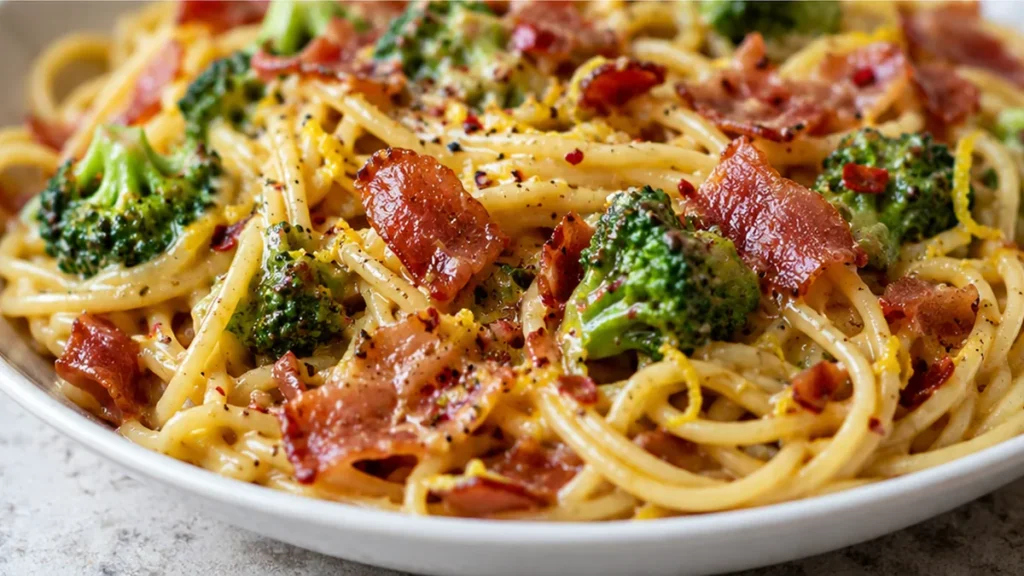
The secret to an outstanding broccoli carbonara lies in perfecting the creamy sauce without scrambling the eggs, a delicate balance of heat and technique. This recipe brings together the richness of classic carbonara with the wholesome goodness of roasted broccoli and the irresistible crunch of crispy prosciutto. This broccoli carbonara is designed for those who appreciate a luxurious pasta dish with added texture and flavor dimensions. The roasted broccoli adds a depth of savory sweetness, complementing the salty prosciutto and the velvety egg-and-cheese sauce. It’s a comforting yet sophisticated meal, perfect for a cozy dinner or a special occasion.
Key takeaways
- Achieve a silky sauce by tempering eggs with hot pasta and starchy water off the heat.
- Ensure prosciutto is rendered until crisp for maximum flavor and texture.
- Don’t overcook the pasta; al dente is key for the sauce to adhere properly.
- Balance richness with the fresh brightness of lemon zest and basil.
Crispy Prosciutto Carbonara: Flavor Bomb!
Ingredients
- 2-3 cups broccoli florets, roughly chopped
- 2 tablespoons extra virgin olive oil
- 4 cloves garlic, minced or grated
- Kosher salt
- Black pepper
- Red pepper flakes
- 3 ounces prosciutto, torn
- Zest of 1 lemon
- 3 large eggs, at room temperature and beaten
- 1 cup freshly grated Parmesan cheese
- 1/4 cup fresh basil, finely chopped
Instructions
- Preheat oven to 425°F. Toss broccoli, olive oil, garlic, red pepper flakes, salt, and pepper on a baking sheet. Bake 10 minutes. Add prosciutto and bake 8-10 more minutes until crispy. Toss hot broccoli with lemon zest.
- Whisk eggs and Parmesan together in a bowl.
- Boil pasta until al dente. Reserve 1 cup pasta water, then drain pasta and return to pot. Immediately add egg/cheese mixture, tossing quickly to create a sauce. Add basil and butter, tossing to combine. Thin sauce with reserved pasta water to desired consistency.
- Spread ricotta in serving bowls. Spoon pasta over ricotta, then top with roasted broccoli and crispy prosciutto. Enjoy!
Notes
The Technique That Makes It: Mastering the Carbonara Emulsion
The magic of a truly great carbonara, even one with broccoli, lies in creating a silky, emulsified sauce without scrambling the eggs. This is achieved through precise temperature control and the strategic use of starchy pasta water. As the hot pasta, infused with rendered prosciutto fat and garlic, is tossed with the egg and cheese mixture off the heat, the residual heat gently cooks the eggs, thickening them into a creamy sauce. The key is to work quickly and continuously toss. The starch released from the pasta into the cooking water is crucial; it acts as an emulsifier, binding the fat from the prosciutto and cheese with the egg yolks to form a cohesive, luxurious sauce. Adding a little of this starchy water gradually allows you to achieve the perfect consistency, preventing the sauce from becoming too thick or too thin. The broccoli, blanched or sautéed separately, adds texture and a fresh counterpoint to the richness of the sauce.
Troubleshooting
- Problem: Scrambled eggs in the sauce. Fix: Ensure you are tossing the pasta and egg mixture off the direct heat. The residual heat from the pasta is enough to cook the eggs gently. If the pan is too hot, remove it from the burner entirely before adding the egg mixture.
- Problem: Sauce is too thick or clumpy. Fix: This usually means not enough liquid was added or the eggs cooked too quickly. Add a tablespoon or two of the reserved hot pasta water at a time, tossing vigorously, to loosen and re-emulsify the sauce.
- Problem: Sauce is too thin or watery. Fix: The pasta water might not have been starchy enough, or too much was added. Continue tossing the pasta with the sauce off the heat; the cheese will continue to melt and thicken the sauce. You can also add a little more grated Parmesan cheese to help absorb excess liquid.
- Problem: Prosciutto isn’t crispy. Fix: Ensure the prosciutto is spread in a single layer in a cool or moderately heated pan and cooked slowly until the fat renders out and the edges become crisp. Avoid overcrowding the pan, which will steam the prosciutto instead of crisping it.
Substitutions
- Broccoli: Asparagus or green beans can be used. The result will be a similar fresh, green vegetable flavor and texture, though the cooking time may vary slightly.
- Prosciutto: Pancetta or good quality bacon can be substituted. The flavor profile will be smokier and potentially saltier, requiring a lighter hand with added salt.
- Parmesan cheese: Pecorino Romano offers a sharper, saltier alternative. The sauce will be tangier and more intensely cheesy.
- Lemon Zest: A small amount of lemon juice (about 1 teaspoon) can be added at the end for brightness, but use sparingly to avoid curdling the sauce.
Pro tips
- For a truly silky sauce, ensure your pasta is piping hot when you add the egg and cheese mixture, and toss continuously off the heat. If the pan is too hot, the eggs can scramble. Rushing this step with carbonara ends in scrambled eggs; taking the pan off the heat entirely makes all the difference.
- Don’t skip the pasta water! It’s crucial for achieving the perfect sauce consistency and helps emulsify the sauce. Reserve a full cup, even if you don’t use it all.
- Leftovers can be stored in an airtight container in the refrigerator for up to 2 days. Reheat gently in a skillet over low heat with a splash of water or broth to loosen the sauce, as it will thicken significantly when cold. Avoid high heat to prevent the sauce from breaking.
This Roasted Broccoli Pasta Carbonara with Crispy Prosciutto and Whipped Ricotta is a truly satisfying dish that improves a classic. Experiment with adding a touch of lemon zest to the ricotta for an extra bright note. Enjoy this perfect blend of flavors and textures!
Frequently asked questions
Can I cook the broccoli directly in the pasta water?
Yes, you can add the broccoli florets to the boiling pasta water during the last 2-3 minutes of cooking. This will cook the broccoli while also adding extra starch to the water, which helps create a creamier sauce. Drain them together with the pasta.
What happens if I add the eggs while the pan is still on the heat?
Adding the eggs to a pan that is too hot will cause them to scramble, resulting in a clumpy, unpleasant texture rather than a smooth, creamy sauce. Always toss the pasta with the egg and cheese mixture off the heat.
How do I make the sauce creamier if it seems too dry?
The key to a creamy sauce is the starchy pasta water. If your sauce seems too dry, gradually add a tablespoon or two of the hot reserved pasta water while tossing the pasta vigorously. This helps to emulsify the fats and create a luscious coating.
Can I use pre-grated Parmesan cheese?
While pre-grated Parmesan can be used in a pinch, freshly grated Parmesan cheese melts more smoothly and contributes significantly to the emulsification of the sauce. It also provides a superior flavor and texture compared to pre-grated varieties.
More from Creamy Pasta Recipes →