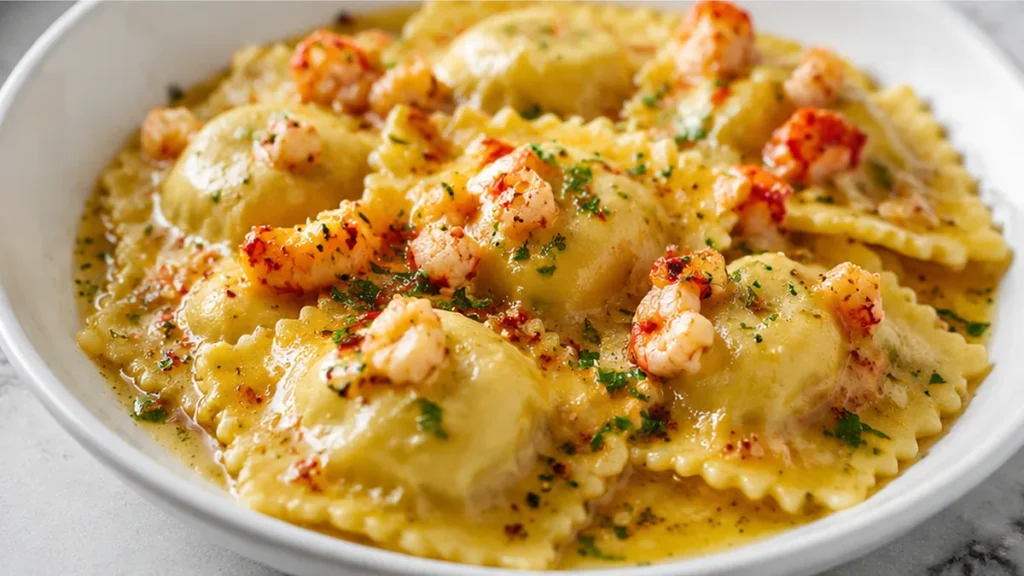
This lobster ravioli recipe brings a fine dining experience to your kitchen. Learn to create tender pasta pockets filled with succulent lobster and shrimp, coated in a rich brown butter sauce.
Key takeaways
- Achieve a creamy, emulsified sauce by gently incorporating ricotta into the warm butter and seafood base.
- Cook ravioli until just al dente; they should be tender with a slight bite.
- Seal ravioli edges thoroughly to prevent filling leakage during cooking.
- Serve immediately after tossing with the sauce to maintain optimal texture and temperature.
Lobster Ravioli: Ultimate Indulgence
Ingredients
- 3 lobster tails
- 1/4 pound uncooked shrimp, peeled and deveined
- 1 stick (1/2 cup) salted butter
- 2 cloves garlic, minced or grated
- 1/2 teaspoon crushed red pepper flakes, more or less to your taste
- 1/4 cup fresh parsley, chopped
- 1 teaspoon lemon juice + lemon zest
- 1/2 teaspoon kosher salt and pepper
- 1 cup (8 ounces) whole milk ricotta cheese
- 1 pound fresh pasta dough or 40 wonton wrappers
Instructions
- To make the ravioli: Bring a large pot of salted water to a boil. Add the lobster tails and shrimp and cook until the shells turn bright red and the shrimp pink, about 5-8 minutes. Remove from the water using tongs. Let cool and then remove the lobster meat from the shell. Finely chop both the lobster meat and shrimp.
- In a large skillet, brown the butter over medium heat, stirring often until the butter is golden and toasted. Add the garlic and crushed red pepper and cook another minute. Remove from the heat and stir in the lobster, shrimp, parsley, lemon juice, lemon zest, and a pinch each of salt and pepper. Add the ricotta cheese and mix to combine. Set the filling aside.
- Roll your pasta dough into lasagna sheets. Place 1 tablespoon of filling one inch apart over half the pasta sheet. Brush around the filling with water to moisten and then fold the sheet over the fillings, pressing down to seal. Cut into squares. Be sure to keep the ravioli covered as you work to prevent them from drying out. Repeat with remaining dough and filling. Alternately, you can make the ravioli in a ravioli press, or use this wonton wrapper method.
- Bring a large pot of salted water to a boil. Boil the ravioli in batches about 1-2 minutes or until they float. Drain.
- Divide the ravioli among bowls and EAT and ENJOY!
Notes
The Technique That Makes It: Emulsifying the Sauce and Perfecting Pasta Texture
The success of this lobster ravioli hinges on two key techniques: creating a rich, emulsified sauce and ensuring the ravioli themselves are cooked to perfection. The sauce begins with sautéing garlic and red pepper flakes in butter, which infuses the fat with flavor. Adding the lobster and shrimp to this aromatic base, then deglazing with a touch of liquid (though not explicitly in this ingredient list, a splash of white wine or even pasta water is ideal here), builds complexity. The real magic happens when the ricotta is incorporated. By gently stirring the ricotta into the warm, buttery lobster mixture, you create a creamy, cohesive sauce. Avoid high heat at this stage, as it can cause the ricotta to separate. The goal is a smooth, stable emulsion that coats the ravioli beautifully. For the ravioli, whether using fresh pasta dough or wonton wrappers, proper cooking is crucial. Overcooked pasta becomes mushy, while undercooked pasta is tough. The ideal texture is al dente – tender with a slight bite. For wonton wrappers, a brief simmer is all that’s needed; they cook very quickly. For fresh pasta dough, a few minutes in boiling salted water will suffice. The key is to cook them just until they float and are tender, then immediately transfer them to the sauce to coat.
Troubleshooting
- Problem: Sauce is too thin or watery. Fix: Gently simmer the sauce over low heat, stirring constantly, to allow some liquid to evaporate. Alternatively, whisk in a teaspoon of cornstarch slurry (1 tsp cornstarch mixed with 1 tbsp cold water) and simmer until thickened.
- Problem: Ravioli are sticking together. Fix: Ensure you are using a large enough pot of boiling, salted water. Gently stir the ravioli as they cook to prevent them from clumping. Adding a little oil to the water can also help, though it’s less traditional.
- Problem: Ricotta filling is grainy or separated. Fix: This usually happens from overheating. Ensure the ricotta is added to the sauce off the heat or over very low heat, stirring gently until just combined and warmed through.
- Problem: Pasta wrappers are tearing during cooking. Fix: Ensure the wrappers are well-sealed with a little water or egg wash. Don’t overcrowd the pot when cooking, and handle them gently. If using wonton wrappers, cooking them for a shorter time can also prevent tearing.
Substitutions
- Lobster: Crab meat or a firm white fish like cod or halibut can be substituted for lobster. The flavor will be different but still delicious, offering a seafood-forward ravioli.
- Shrimp: Scallops or even finely diced firm tofu can be used instead of shrimp. This allows for a variation in texture and a slightly different seafood or plant-based profile.
- Fresh Pasta Dough: Store-bought wonton wrappers are a convenient alternative. For a different texture, lasagna sheets cut into squares can also work, though they will be larger ravioli.
- Ricotta Cheese: Mascarpone cheese or a smooth cottage cheese (blended for smoothness) can be used. Mascarpone will yield a richer, creamier filling, while blended cottage cheese offers a similar texture with a slightly tangier profile.
Pro tips
- Don’t overcrowd the pot when boiling the ravioli; cook in batches to ensure they cook evenly and don’t stick.
- For perfectly cooked seafood, ensure the internal temperature reaches 145°F (63°C) for lobster and shrimp before chopping.
- If using wonton wrappers, brush the edges lightly with water to ensure a tight seal and prevent the filling from leaking during cooking.
- Leftover ravioli can be stored in an airtight container in the refrigerator for up to 2 days. Reheat gently in a skillet with a splash of water or broth to loosen the sauce.
This lobster ravioli is a testament to how simple ingredients can create a truly luxurious dish. Give it a try and elevate your next dinner party or a quiet evening meal. Enjoy every exquisite bite!
Frequently asked questions
Can I make the filling ahead of time?
Yes, the lobster and shrimp filling can be prepared a day in advance. Store it covered in the refrigerator. Gently warm it before adding the ricotta and tossing with the cooked ravioli to ensure a smooth sauce.
What kind of pasta dough should I use?
Fresh pasta dough provides the most authentic texture, but store-bought wonton wrappers are a convenient and effective substitute. Ensure they are fresh and pliable for best results when sealing and cooking.
How do I prevent the ravioli from sticking?
Cook the ravioli in plenty of well-salted boiling water and stir them gently as they cook. Avoid overcrowding the pot. Transfer them directly to the sauce immediately after they float to prevent them from sticking together.
Can I freeze leftover lobster ravioli?
It’s best to serve lobster ravioli immediately after preparation. Freezing cooked ravioli, especially with the creamy sauce, can affect the texture of both the pasta and the filling, potentially leading to a mushy consistency upon reheating.
More from Creamy Pasta Recipes →