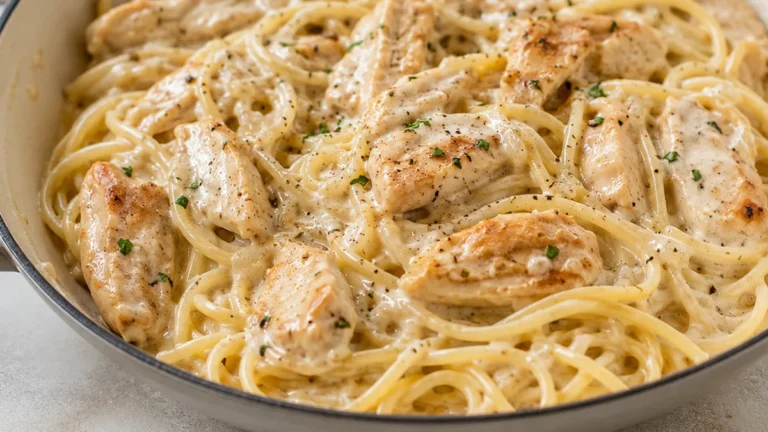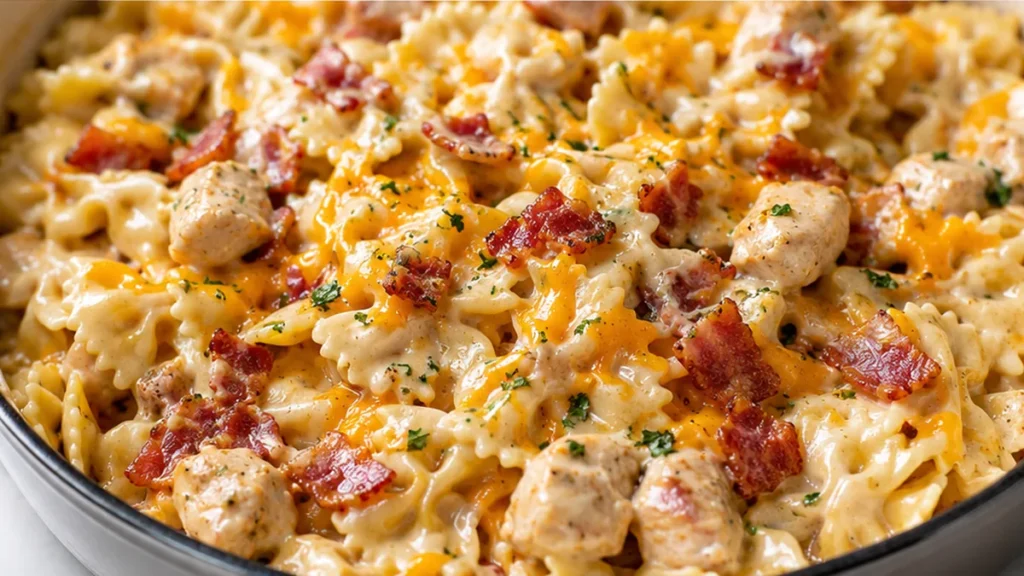
One-pot chicken pasta is the ultimate weeknight savior, and this chicken bacon ranch pasta recipe takes it to the next level. Forget multiple pans and endless cleanup – this dish brings together tender chicken, crispy bacon, and a rich, creamy ranch-infused sauce all in a single skillet. It’s the kind of meal that feels both incredibly comforting and surprisingly easy to make. This chicken pasta dish is designed for maximum flavor with minimum effort. The magic happens as the pasta cooks directly in the seasoned chicken broth, absorbing all the delicious flavors from the chicken, bacon, and spices. It’s proof that you don’t need to be a gourmet chef to create a meal that tastes like it came from your favorite restaurant.
Key takeaways
- Grate the 8-ounce cheddar from the block yourself; pre-shredded cheese is coated with anti-caking cellulose that makes the ranch sauce turn gritty.
- Drop the heat to low or pull the pot off the burner before stirring in cheese, and add it in two or three batches so the emulsion stays silky.
- Cut the thighs into uniform half-inch pieces and cook to 165 degrees Fahrenheit; thighs stay juicier than breast even if they linger a minute longer.
- Render the bacon slowly from a cold pot to build a seasoned fat base, then reserve most of it as a crisp garnish instead of folding it all in early.
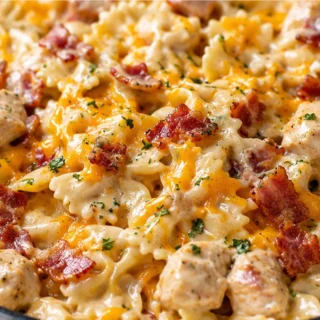
Viral Chicken Bacon Ranch Pasta – ONE POT MAGIC!
Ingredients
- Cooking spray
- 4 slices thick-cut uncured bacon, chopped (about 4 ounces)
- 1 (8 ounce) block cheddar cheese, shredded (~2 ½ cups)
- 1 ¼ lbs boneless skinless chicken thighs, cut into ½-inch pieces
- 3 cups (24 ounces) low-sodium chicken broth
- ½ teaspoon garlic powder
- ½ teaspoon onion powder
- ½ teaspoon dried parsley (optional)
- ¼ teaspoon dried dill
- ⅛ teaspoon black pepper
Instructions
- Place a large skillet (or Dutch oven) with a tight fitting lid over medium-high heat on the stovetop.
- Mist the skillet with cooking spray, then add the chopped bacon. Cook until the bacon is crisp, 7-8 minutes, stirring occasionally.
- While the bacon cooks, shred the cheese and set it aside.
- When the bacon is crispy, remove it to a paper towel-lined plate with a slotted spoon and drain all but 2 teaspoons of grease from the skillet.
- Return the skillet to medium-high heat and add chicken pieces in a single layer.
- Cook for 2 minutes, then flip each piece over and cook until partially cooked through, about an additional 2 minutes.
- Increase the heat to high. Add the broth, garlic powder, onion powder, dried parsley, dill, black pepper, and uncooked pasta to the skillet along with the chicken. Stir and bring to a boil.
- When the liquid is boiling, stir the pasta mixture again then cover the skillet with the lid and reduce the heat to medium.
- Simmer, covered, until the pasta is al dente and the liquid is mostly absorbed, about 15-18 minutes. Stir occasionally, scraping the bottom to prevent sticking.
- Remove the lid and stir in the shredded cheddar cheese and cooked bacon until the cheese is melted and the sauce is creamy. Taste and adjust seasonings if needed.
- Serve immediately, garnished with extra bacon and a drizzle of ranch dressing if desired.
Video
Notes
How chicken thighs at half-inch dice stay juicy in the same pot as the pasta
Chicken thighs cut into half-inch pieces reach the USDA safe minimum of 165 degrees Fahrenheit (74 degrees Celsius) in roughly six to eight minutes of active simmering, which is why this dish leans on thighs instead of breast. Thigh meat carries more connective tissue and fat, so it stays forgiving even if it sits at temperature a minute or two longer while the pasta finishes. Breast, at the same 165 degrees, has already started shedding moisture. The FSIS recommends a three-minute rest, and in a covered pot the residual heat keeps carrying the interior up while you stir in cheese. Pull a piece, cut it open, and look for opaque meat with clear juices.
The half-inch size matters more than most cooks expect. Larger chunks need longer in the broth, which overcooks the pasta around them; smaller shreds turn stringy. Half-inch cubes are the sweet spot where the chicken and a short pasta finish within the same window. If your thighs are wet, pat them dry before dicing so they sear rather than steam when they hit the rendered bacon fat.
Why grating the 8-ounce cheddar block yourself keeps the ranch sauce from turning gritty
Grate the cheddar from a block rather than reaching for a pre-shredded bag, because the anti-caking coating on bagged cheese is the single most common cause of a grainy chicken pasta sauce. Manufacturers dust pre-shredded cheese with cellulose and starches to stop the strands from clumping, and those same powders interfere with a smooth melt. Cheese proteins begin to seize and squeeze out fat when the liquid around them exceeds a gentle simmer, so the coating plus high heat is a double hit. The Kitchen Whisperer notes that adding cheese to a bubbling mixture forces the emulsifiers and coagulants to break down, producing exactly the grit you are trying to avoid.
The fix is temperature control. Once the pasta has absorbed most of the broth, cut the heat to low or pull the pot off the burner entirely, then add the shredded cheddar in two or three additions, stirring each one in before the next. Serious Eats’ work on stable cheese sauces shows that keeping the cheese below a hard boil, ideally around 82 degrees Celsius rather than a rolling 100, is what preserves the silky emulsion. The residual starch released by the pasta acts as a natural emulsifier here, which is a genuine advantage of the one-pot method: you are not fighting a separate roux, the pasta water is doing that job for you.
Rendering the four bacon slices first so their fat carries the ranch flavor through every bite
Start the chopped uncured bacon in a cold pot over medium heat rather than a screaming-hot one, because bacon fat renders at about 140 degrees Fahrenheit (60 degrees Celsius) and scorches near 325 degrees Fahrenheit (163 degrees Celsius). A slow render pulls the maximum fat out of those four thick-cut slices and leaves you with crisp pieces plus a pool of seasoned fat that becomes the flavor base for the chicken. Rush it on high heat and the exterior blackens while the interior stays chewy, and you lose the rendered fat that carries the garlic powder, onion powder, and dill through the whole pot.
Once the bacon is crisp, lift most of it out and reserve it so it stays crunchy as a finishing garnish; folding it in too early softens it back into the sauce. Cook the diced chicken directly in that bacon fat. The fond, those browned bits stuck to the bottom, dissolves the moment you pour in the chicken broth, and that deglazing step is where a lot of the dish’s savory depth comes from. Uncured bacon is a touch less salty than conventional cured bacon, which is one reason the recipe pairs it with low-sodium broth: you keep control of the final seasoning.
Common ways this one-pot chicken pasta goes wrong and the fix for each
Most failures with a one-pot pasta trace back to liquid, heat, or timing, and each has a direct fix. The recipe’s 3 cups (24 ounces) of low-sodium broth follows the standard one-pot ratio Allrecipes cites of roughly 8 ounces of liquid per 4 ounces of dried pasta, so measuring your pasta to match that ratio is the foundation everything else rests on.
- Sauce turned grainy or oily: the pot was too hot when the cheddar went in. Pull it off the heat, add cheese in stages, and stir. A splash of warm broth can sometimes bring a lightly broken sauce back together.
- Pasta still firm but the liquid is gone: the simmer ran too high and boiled off broth before the starch cooked. Add hot broth a quarter cup at a time and keep it at a gentle bubble, not a rolling boil.
- Sauce too thin and soupy: the pasta had not finished absorbing. Let it stand two to three minutes off heat; it thickens noticeably as the starch sets and the cheese cools slightly.
- Chicken tough or rubbery: pieces cut larger than half an inch, or a hard boil that tightened the proteins. Keep the dice uniform and the pot at a simmer, and confirm 165 degrees Fahrenheit rather than guessing.
Smart swaps for the cheddar, thighs, and dried dill without breaking the dish
Each core ingredient in this chicken pasta has a workable substitute, but each swap comes with a trade-off worth knowing before you commit.
- Chicken breast for thighs: leaner and quicker to cook, but far less forgiving. Pull it the instant it hits 165 degrees Fahrenheit or it dries out. Expect a slightly firmer bite and less richness in the sauce.
- Monterey Jack or Colby for the sharp cheddar: both melt smoother and milder. You gain creaminess but lose the tangy backbone that balances the bacon, so the ranch profile reads softer.
- Fresh dill for the quarter teaspoon of dried: use about three times as much fresh, stirred in at the end. Brighter and greener, but it will not distribute the same steady ranch note that dried dill releases as it simmers.
- Store-bought ranch packet for the loose spice blend: convenient, but most packets carry significant added salt, so drop the low-sodium broth’s seasoning and taste before adding anything more.
One quirk sets this recipe apart from nearly every other creamy pasta: it builds its entire ranch flavor from dry pantry spices, garlic powder, onion powder, dill, parsley, and pepper, rather than a bottled dressing or a fresh herb bunch. That means the flavor is fully in your hands and shelf-stable, and it is why grating your own cheese and controlling the broth’s salt matter so much. For more on why block cheese behaves differently, the food-science writers at Serious Eats explain stable cheese emulsions in useful detail, and the USDA safe minimum temperature chart is the reference to keep near the stove. If you like this style of hands-off cooking, our guide to weeknight one-pot chicken dinners covers the same ratio logic across other proteins.
How the ranch pasta reheats without the cheddar sauce splitting into grease
Leftover chicken bacon ranch pasta firms up in the fridge because the shredded cheddar sets and the starch from the noodles retracts, so the trick to reviving it is adding moisture and reheating low. Store it within two hours of cooking in a sealed container, where it keeps three to four days at 40F (4C) or below per USDA cold-storage guidance. When you reheat, splash in one to two tablespoons of low-sodium chicken broth or milk per cup of pasta before it hits the heat, then warm it gently in a covered skillet over medium-low or in the microwave at 50 percent power in 45-second bursts, stirring between each. High heat is what breaks a cheddar sauce: the proteins tighten past 82C (180F) and squeeze out the fat, leaving that greasy pool. Freezing is possible but the texture suffers because the emulsion and the cooked pasta both weep on thaw, so plan for a slightly softer, saucier result and refresh it with a little cheese off the heat. The bacon loses its crispness in storage regardless, so if crunch matters to you, reserve a spoonful of the rendered pieces before mixing and scatter them over the reheated bowl. J. Kenji Lopez-Alt has written extensively on why cheese sauces curdle under aggressive heat, and the fix here is the same principle applied to a one-pot dish.
Doubling the batch when your pot is too small for three cups of broth times two
Scaling this chicken pasta to feed a crowd is where most people flood the pot and end up with soup, because doubling every ingredient except the evaporation rate throws the liquid ratio off. When you go to 2.5 lbs of thighs and six cups of broth, the wider surface area of a bigger vessel evaporates faster, so start with about 5.5 cups of broth rather than a flat six and add the rest only if the pasta looks dry near the end. Use a pot of at least six to eight quarts so the noodles sit in a single loose layer; crowding them in a four-quart pot means the bottom layer overcooks while the top stays chalky. Brown the doubled bacon and chicken in two batches, not one heaped pile, or the pan temperature drops below the 150C (300F) range where the Maillard reaction gives you that browned, savory base. Cooking time barely changes since the pasta still hydrates in roughly the same window, but stir more often because a deeper bed of noodles is more prone to sticking and scorching. Grate the full pound of cheddar for a double batch fresh, since pre-shredded bags carry anti-caking starch like cellulose that turns a larger volume of sauce grainy faster. The America’s Test Kitchen team recommends resting a doubled one-pot dish off the heat for three to four minutes so the extra starch finishes thickening the sauce evenly.
Pro tips
- For extra crispy bacon, ensure it’s in a single layer in the pan and don’t overcrowd it.
- If you don’t have chicken thighs, boneless skinless chicken breasts can be used, but cook time may be slightly shorter to prevent drying out.
- Feel free to add a tablespoon of ranch seasoning mix with the broth for an even more pronounced ranch flavor.
- For a different texture, try using a different cheese like Monterey Jack or a blend of cheddar and mozzarella.
Enjoy this incredibly satisfying one-pot chicken bacon ranch pasta! It’s a flavorful and easy meal that the whole family will love.
Frequently asked questions
Can I use chicken breast instead of thighs in this pasta?
Yes, but breast is much less forgiving. It cooks faster and dries out the moment it passes 165 degrees Fahrenheit, so pull it promptly and keep pieces at a uniform half inch. You will get a firmer bite and a slightly leaner sauce, since thighs contribute more fat that enriches the ranch base.
Why did my cheese sauce turn grainy and oily?
The pot was too hot when the cheddar went in. Cheese proteins seize and push out fat above a gentle simmer, and pre-shredded cheese with anti-caking coating makes it worse. Cut the heat or remove the pot from the burner, add freshly grated cheese in stages, and stir each addition in fully before the next.
What if the pasta is still firm but the broth is gone?
Your simmer ran too hot and boiled off liquid before the starch finished cooking. Add hot chicken broth a quarter cup at a time and keep the pot at a gentle bubble rather than a rolling boil. Cover it between additions so the steam helps the pasta hydrate evenly.
Can I make this ahead and reheat it later?
You can, though cheese-based one-pot pastas thicken and can look broken once chilled. Reheat gently over low heat with a splash of warm broth or milk, stirring often to loosen the sauce back to a creamy texture. Add the reserved crisp bacon only after reheating so it keeps its crunch.
More from Baked Pasta Recipes →