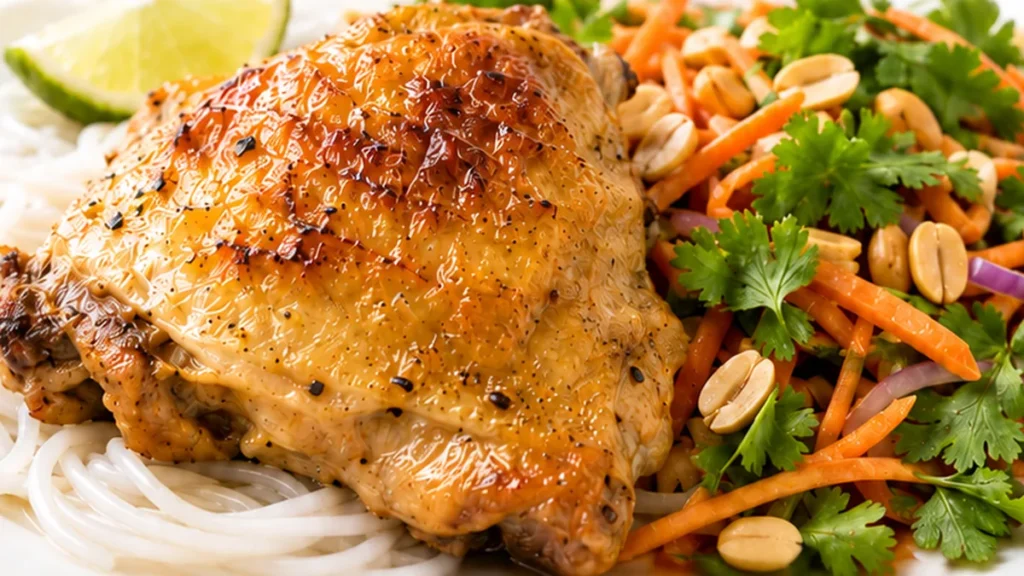
Coconut lime chicken lives and dies by the marinade’s sugar content and the oven temperature. Getting crispy skin while baking bone-in cuts requires a very hot oven, but the sugars in the marinade can easily burn if not monitored. In this recipe, the combination of light coconut milk and brown sugar coats the chicken thighs, providing deep caramelization. The acid from the lime tenderizes the meat during the four-hour rest, ensuring the inside remains juicy while the outside chars. This dish is designed for people who want bold, bright flavors with minimal hands-on cooking. Serving it over rice noodles catches every drop of the pan drippings.
Key takeaways
- Marinate chicken for at least 30 minutes to enhance flavor.
- Pat chicken dry for crispy skin during roasting.
- Use light coconut milk for moisture without excessive richness.
- Monitor cooking temperature to prevent dryness and ensure juiciness.
Ingredients for coconut lime chicken
- 1/4 cup lime juice, plus 1 tablespoon for serving
- 2 tablespoons lime zest
- 2 tablespoons brown sugar
- 5 cloves garlic, minced
- 1 tablespoon minced ginger
- 1 can light coconut milk
- Salt, to taste
- 3 lbs bone-in, skin-on chicken pieces
- Rice noodles, cooked, for serving
- Cilantro, peanuts, and shredded carrots, for serving
How to make coconut lime chicken
- Whisk 1/4 cup lime juice, 2 tablespoons lime zest, brown sugar, garlic, ginger, and coconut milk in a large bowl until the sugar begins to dissolve.
- Add 3 lbs bone-in, skin-on chicken pieces, season with salt, cover, and refrigerate for at least 4 hours.
- Preheat the oven to 475°F and lightly grease a rimmed baking sheet; place a wire rack on the sheet if desired for extra airflow.
- Remove the chicken from the marinade, let excess moisture drip off for about 1 minute, then arrange the pieces skin-side up on the prepared baking sheet.
- Roast for about 30 minutes, rotating the pan halfway through, until deeply browned and the thickest pieces reach 165°F internally.
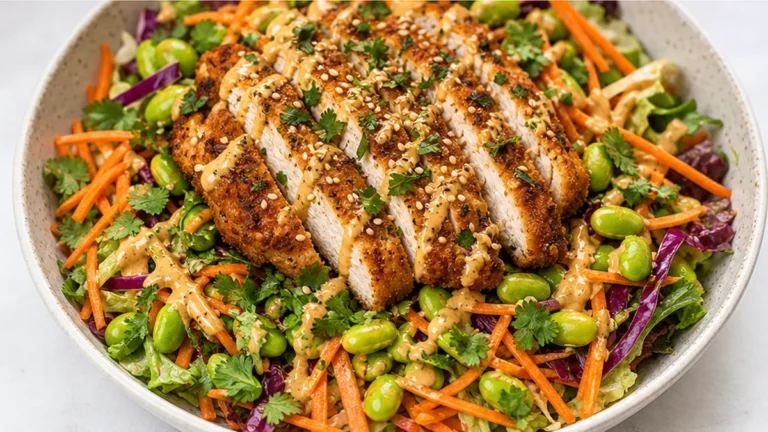
- Plate the hot chicken over cooked rice noodles, top with cilantro, peanuts, and shredded carrots, and drizzle with 1 tablespoon lime juice just before serving.
Understanding the Marinade’s Role in Flavor Development
The marinade is crucial for infusing the chicken with flavor. The combination of lime juice, zest, brown sugar, garlic, and ginger creates a balanced profile. The acidity of lime juice (approximately 5% acidity) helps tenderize the chicken while enhancing its natural flavors. Allow the chicken to marinate for at least 30 minutes, but ideally 2-4 hours for optimal flavor absorption.
Achieving the Perfect Crispy Skin
To achieve crispy skin on the chicken, it is essential to control moisture and heat. Pat the chicken dry before cooking to remove excess moisture. Roast the chicken at 425°F (220°C) to promote the Maillard reaction, which occurs at temperatures above 300°F (150°C), creating a golden-brown, crispy exterior. Cook for about 40-50 minutes, ensuring an internal temperature of 165°F (74°C).
Why Coconut Milk is Essential for Juiciness
Coconut milk adds richness and moisture to the chicken. The fat content in light coconut milk (about 9 grams of fat per 1/2 cup) helps keep the meat juicy during cooking. When combined with the marinade, it creates an emulsion that coats the chicken, preventing it from drying out. For best results, use light coconut milk to keep the dish balanced without overwhelming richness.
Common Issues and Their Solutions
- Skin not crispy: This could be due to excess moisture. Ensure the chicken is patted dry and avoid overcrowding the pan.
- Chicken dry or tough: Overcooking is often the culprit. Use a meat thermometer to check for doneness at 165°F (74°C).
- Flavor too strong or too weak: Adjust the marinade. If too strong, dilute with additional coconut milk; if too weak, increase lime zest or sugar for balance.
- Inconsistent cooking: Ensure even-sized chicken pieces for uniform cooking. If using larger pieces, consider adjusting cooking time accordingly.
Ingredient Swaps and Their Impacts
- Brown sugar vs. white sugar: Brown sugar adds a deeper flavor due to its molasses content, while white sugar will result in a cleaner sweetness.
- Bone-in vs. boneless chicken: Bone-in chicken retains moisture better, while boneless cooks faster but may require careful monitoring to avoid drying out.
- Fresh ginger vs. ground ginger: Fresh ginger offers a brighter flavor, whereas ground ginger provides a more concentrated spice but may alter the overall taste.
- Rice noodles vs. quinoa: Quinoa is a high-protein alternative but changes the dish’s texture and flavor profile.
Understanding the Impact of Cooking Time on Chicken Texture
The cooking time for coconut lime chicken is crucial to achieving a tender and juicy result. Bone-in, skin-on chicken pieces typically require about 35-45 minutes at 375°F (190°C) in the oven. This allows the fat to render, contributing to a moist texture while the skin becomes crispy. Using a meat thermometer to check for an internal temperature of 165°F (74°C) ensures food safety and optimal doneness. Undercooking can leave the chicken rubbery, while overcooking can dry it out. Therefore, monitoring the cooking time is essential for the perfect texture.
Scaling the Recipe for Larger Gatherings
If you’re planning to serve a larger group, scaling the coconut lime chicken recipe is straightforward. For every additional pound of chicken, increase the marinade ingredients proportionally to maintain flavor balance. However, ensure your cooking vessel is large enough to accommodate the increased quantity without overcrowding, which can lead to uneven cooking. Additionally, consider extending the cooking time by approximately 5-10 minutes per extra pound, checking the internal temperature as you go. This way, you can confidently serve delicious chicken to a crowd.
Choosing the Right Equipment for Optimal Results
The equipment you use can significantly affect the outcome of your coconut lime chicken. A heavy-duty roasting pan or cast-iron skillet is ideal, as they distribute heat evenly and retain it well. If using a grill, ensure it’s preheated to medium heat for even cooking. An oven-safe meat thermometer is also beneficial for monitoring the chicken’s internal temperature without opening the oven door, which can cause heat loss. Each cooking method will impart a slightly different flavor and texture, so select your equipment based on your desired outcome.
Seasonal Variations and Ingredient Quality Effects
The quality of ingredients can significantly influence the flavor profile of your coconut lime chicken. Fresh, in-season limes will provide a more vibrant citrus flavor compared to out-of-season limes. Similarly, using high-quality coconut milk can enhance the creaminess and richness of the dish. As seasons change, consider incorporating seasonal vegetables or herbs into your serving suggestions. For instance, adding fresh mango or avocado in the summer can complement the dish beautifully, while roasted root vegetables in the winter can provide a comforting side.
How to Prepare Coconut Lime Chicken Ahead of Time
To make Coconut Lime Chicken in advance, marinate the chicken pieces in the lime juice, zest, brown sugar, garlic, ginger, and coconut milk for at least 2 hours, or overnight for deeper flavor. Store the marinated chicken in an airtight container in the refrigerator. When ready to cook, remove the chicken from the fridge and let it sit at room temperature for about 30 minutes before cooking to ensure even cooking. This method not only enhances flavor but also tenderizes the meat, resulting in juicier chicken.
Understanding the Impact of Equipment on Cooking Results
The type of cookware you use significantly affects the outcome of Coconut Lime Chicken. A cast-iron skillet or heavy-bottomed pan retains heat better than a non-stick pan, promoting the Maillard reaction, which is crucial for achieving a crispy exterior. If using a grill, preheat it to medium-high heat for optimal searing. Additionally, if you opt for a slow cooker, the cooking time will increase, but the chicken will be incredibly tender. Adjust cooking times based on your equipment to ensure the chicken is cooked through without drying out.
Pairing Coconut Lime Chicken with the Right Sides
Coconut Lime Chicken pairs beautifully with light, refreshing sides that complement its tropical flavors. Rice noodles are an excellent choice, providing a neutral base that absorbs the sauce. For added texture and color, serve with shredded carrots, fresh cilantro, and chopped peanuts. Consider a side salad featuring crisp greens and a citrus vinaigrette to enhance the dish’s brightness. If you’re looking for a heartier option, serve it alongside jasmine rice or quinoa, which will soak up any leftover sauce.
Understanding the Impact of Ingredient Quality on Coconut Lime Chicken
The quality of your ingredients can significantly influence the flavor and texture of coconut lime chicken. Fresh, organic limes will yield a brighter, more vibrant flavor compared to older, less fragrant limes. When selecting chicken, opt for high-quality, pasture-raised options if possible; they tend to have better flavor and texture due to their diet and living conditions. The coconut milk should be full-fat for a creamier sauce, while light coconut milk can still work but may yield a thinner consistency. When using brown sugar, ensure it is fresh and moist, as stale sugar can clump and affect the marinade’s ability to penetrate the chicken. A good practice is to taste the marinade before adding the chicken to adjust the seasoning accordingly, ensuring you achieve a balanced flavor profile.
How to Scale Coconut Lime Chicken for Larger Gatherings
Scaling this coconut lime chicken recipe for larger gatherings requires careful consideration of cooking times and equipment. When increasing the quantity, aim for about 1 pound of chicken per person, adjusting the marinade in proportion. However, be cautious not to overcrowd your cooking vessel, as this can lead to uneven cooking and prevent the skin from crisping properly. If using an oven, increase the cooking time slightly, typically adding 5-10 minutes per additional pound of chicken. Monitor the internal temperature, ensuring it reaches 165°F (75°C) for safety. For larger batches, consider using multiple baking sheets or a larger roasting pan to allow for proper air circulation. If you have a grill, cooking in batches can also impart a wonderful smoky flavor, enhancing the dish’s overall depth.
Pro tips
- Brown sugar can scorch at 475°F, so keep a close eye and drop the heat to 425°F if the skin darkens too fast.
- Use a wire rack set inside your baking sheet to keep the chicken from getting soggy in its own fat.
- Internal temperature of bone-in chicken thighs must reach 165°F (74°C) for safe consumption.
Serve this hot right out of the oven, and try swapping the rice noodles for jasmine rice to soak up the extra sauce.
Frequently asked questions
Can I use boneless chicken for this recipe?
Yes, you can use boneless chicken, but be mindful of cooking time as it will cook faster than bone-in pieces. Ensure the internal temperature reaches 165°F (74°C) for safety.
How long should I marinate the chicken?
Marinate the chicken for at least 30 minutes, but for the best flavor, aim for 2-4 hours. This allows the flavors to penetrate the meat effectively.
What can I substitute for coconut milk?
If you don’t have coconut milk, you can use heavy cream mixed with a little water for a similar texture, but the flavor will differ. Almond milk is a lighter option but will not provide the same richness.
How do I know when the chicken is done?
The chicken is done when it reaches an internal temperature of 165°F (74°C). Use a meat thermometer to ensure accuracy, especially for thicker pieces.
More from Chicken Pasta Recipes →