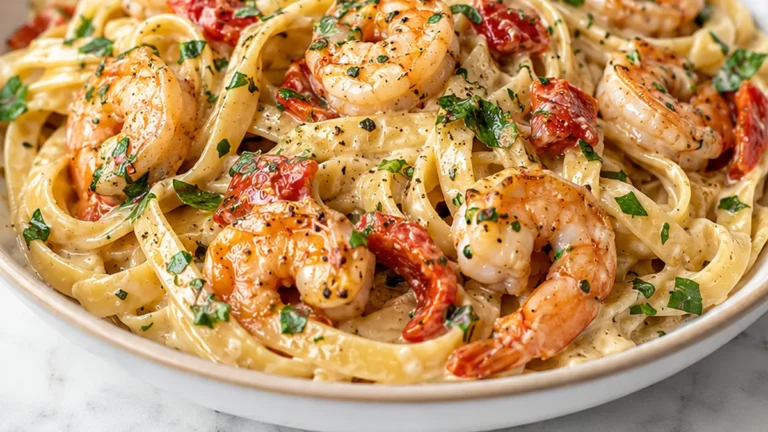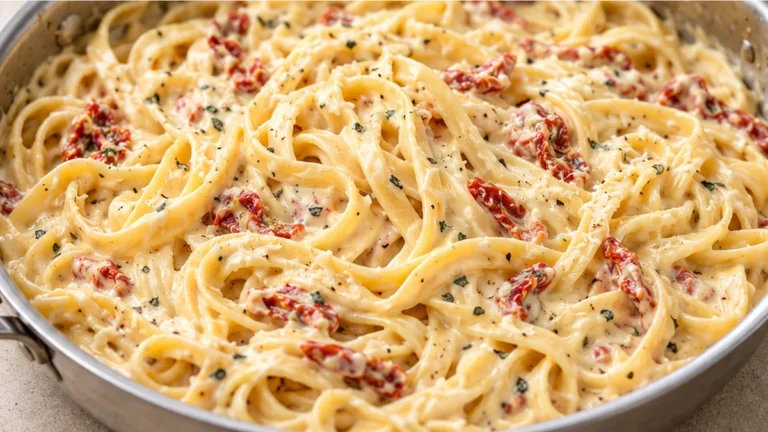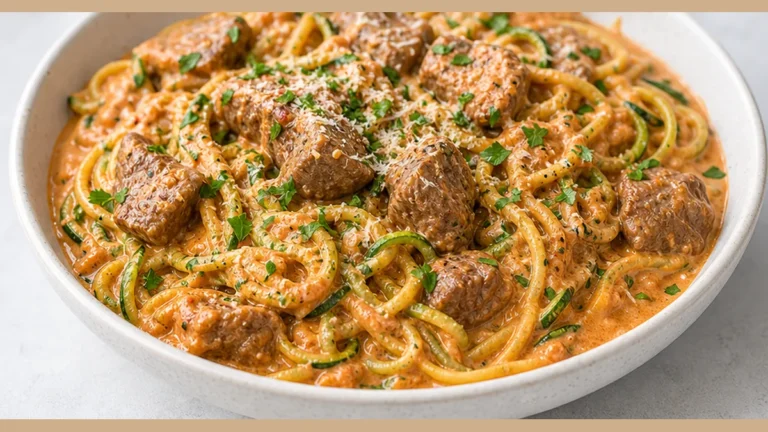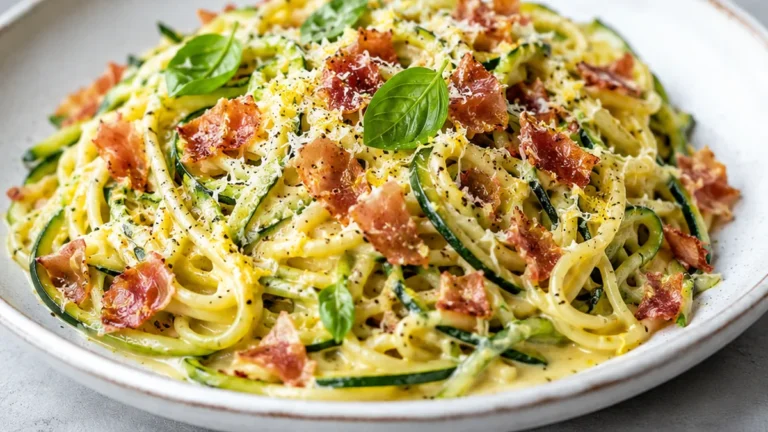
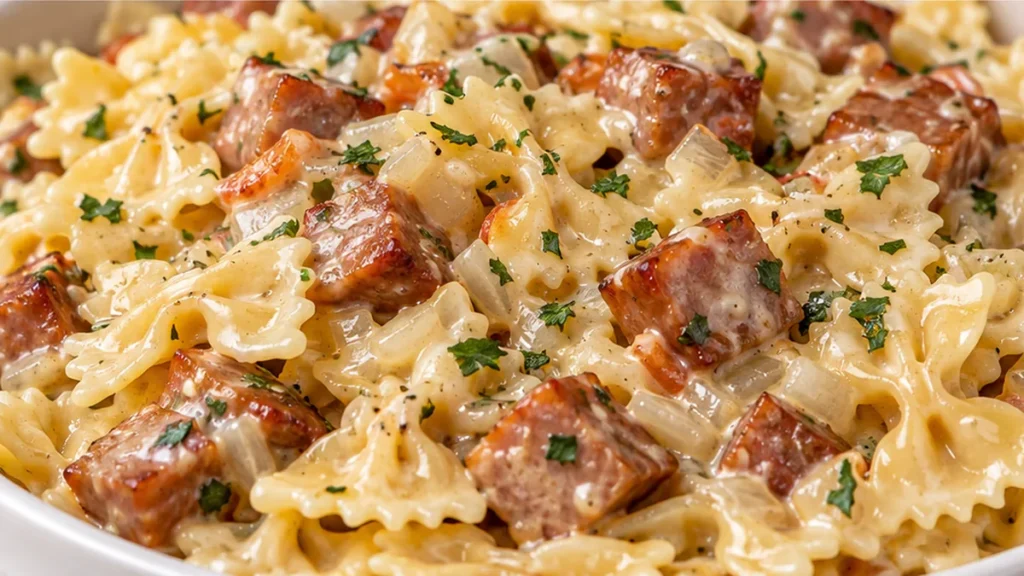
This creamy sausage pasta recipe combines savory sausage with fresh spinach in a rich cream sauce. It’s a straightforward dish that delivers on flavor.
Key takeaways
- Emulsification is key for a creamy sauce.
- Avoid boiling cream to prevent separation.
- Cook pasta al dente to maintain texture.
- Ingredient swaps can adjust flavor and health benefits.
Creamy Sausage Pasta Recipe
Ingredients
Instructions
- Bring water to a boil and cook pasta until al dente, about 8-10 minutes.
- Drain and set aside.
- Heat olive oil in a large skillet over medium heat.
- Add the diced sausage and brown it until cooked through, about 5-7 minutes.
- Add the diced onions and minced garlic. Cook until onions are tender and translucent, about 3-4 minutes. Stir in red pepper flakes if using.
- Stir in the diced tomatoes and heavy whipping cream.
- Bring the sauce to a simmer and stir in the Italian cheese blend until melted and creamy.
- Add the cooked pasta to the skillet and toss gently to coat everything in the sauce. Garnish with fresh parsley flakes.
The Importance of Creamy Emulsification in Pasta Dishes
In a creamy sausage pasta recipe, the key to achieving a luscious sauce lies in the emulsification process. Emulsification occurs when fat and water-based liquids combine to form a stable mixture. For this dish, the fat from the sausage and the cream must blend seamlessly. This can be achieved by gradually adding the cream to the pan while stirring, allowing the heat to help bind the ingredients together. A temperature of around 70°C (158°F) is ideal for emulsification, ensuring that the fat melts without boiling the cream, which can lead to separation.
Common Pitfalls and How to Avoid Them
While preparing creamy sausage pasta, several common issues may arise that can affect the dish’s final outcome. Here are some failure-fix pairs:
- Issue: Sauce is too thin. Fix: Increase the heat slightly and allow the sauce to reduce for a few minutes to thicken.
- Issue: Sauce separates. Fix: Ensure the cream is at room temperature before adding it to the pan and avoid boiling the sauce.
- Issue: Overcooked pasta. Fix: Cook pasta until al dente, as it will continue to cook slightly when mixed with the sauce.
- Issue: Lack of flavor depth. Fix: Incorporate fresh herbs or a splash of white wine to enhance the overall flavor profile.
Ingredient Swaps and Their Effects
Sometimes, you may want to modify the recipe based on availability or dietary preferences. Here are some effective swaps:
- Swap: Use turkey sausage instead of pork sausage. Result: A leaner dish with reduced fat content, but potentially less flavor.
- Swap: Substitute heavy cream with half-and-half. Result: A lighter sauce that may not be as rich but still creamy.
- Swap: Replace traditional pasta with whole-grain or gluten-free pasta. Result: A healthier option that may alter the texture slightly.
- Swap: Use vegetable broth instead of chicken broth. Result: A vegetarian-friendly version that maintains a savory base.
Unique Characteristics of Creamy Sausage Pasta
What sets creamy sausage pasta apart from other pasta dishes is its rich, velvety sauce that coats each strand of pasta. The combination of spices in the sausage, along with the cream, creates a depth of flavor that is both comforting and indulgent. Unlike tomato-based sauces, which can be acidic, the creamy sauce offers a smoother mouthfeel and a more luxurious dining experience. Additionally, the use of freshly grated Parmesan cheese not only enhances the flavor but also contributes to the creaminess of the dish, making it truly unique.
Understanding the Role of Ingredients in Creamy Sausage Pasta
The success of a creamy sausage pasta recipe hinges on the quality and characteristics of its ingredients. Fresh sausages, preferably made from pork or a blend of meats, provide a rich flavor that forms the base of the dish. When selecting sausage, look for those with a higher fat content (around 20-30%) as this fat renders during cooking, contributing to the creaminess of the sauce. Additionally, using fresh herbs like parsley or basil can enhance the flavor profile significantly. The choice of pasta is equally important; wider noodles like fettuccine or pappardelle hold the sauce better than thinner varieties. Cooking the pasta until al dente is crucial, as it continues to cook slightly when combined with the sauce, ensuring the perfect texture. Furthermore, using a good quality cream, ideally heavy cream, will result in a luxurious mouthfeel and prevent the sauce from becoming too thin or watery.
Scaling the Recipe for Different Portions
When it comes to scaling a creamy sausage pasta recipe, understanding the ratios of ingredients is essential. If you’re planning to double or halve the recipe, maintaining the balance of flavors is key. For instance, if you double the sausage, you should also increase the cream and pasta proportionally to ensure the dish remains cohesive. A good rule of thumb is to use about 100 grams of pasta per person and adjust the sausage to about 75 grams per person for a balanced meal. Additionally, when scaling, consider the cooking time; larger batches may require slightly longer cooking times, particularly for the pasta and sauce. Always taste and adjust seasoning as you scale, as larger quantities may dilute flavors. This attention to detail ensures that each serving maintains the rich and creamy essence of the original recipe.
Equipment Considerations for Optimal Results
The equipment used in preparing creamy sausage pasta can significantly influence the final outcome. A heavy-bottomed skillet or sauté pan is ideal for cooking the sausage, as it allows for even heat distribution and prevents sticking. If using a non-stick pan, ensure it is of high quality to withstand high temperatures without degrading. For the best texture, consider using a pasta pot with a built-in strainer, which simplifies the process of draining the pasta without losing any. Additionally, a wooden spoon or silicone spatula is recommended for stirring to avoid scratching non-stick surfaces. If you have access to an immersion blender, it can be used to blend the sauce for a smoother consistency, though this is optional. Ultimately, the right equipment not only enhances the cooking experience but also contributes to the dish’s overall quality.
Pairing and Serving Suggestions for Creamy Sausage Pasta
Serving creamy sausage pasta can be a delightful experience, especially when paired with complementary sides and beverages. A fresh green salad with a light vinaigrette balances the richness of the pasta, providing a refreshing contrast. Consider adding a side of garlic bread or a crusty baguette to soak up the creamy sauce. For beverages, a crisp white wine such as Pinot Grigio or a light-bodied red like Chianti pairs well, enhancing the dish’s flavors without overpowering them. When plating, a sprinkle of freshly grated Parmesan cheese and a few cracks of black pepper can elevate the presentation and taste. Additionally, garnishing with fresh herbs not only adds color but also freshness to each bite. These thoughtful pairings and serving suggestions can transform a simple meal into a memorable dining experience.
Understanding the Impact of Ingredient Quality on Flavor
The quality of ingredients plays a crucial role in the flavor profile of creamy sausage pasta. For instance, using high-quality sausages that are rich in spices and fat can significantly enhance the overall taste of the dish. Freshly grated Parmesan cheese will melt better and provide a creamier texture compared to pre-grated varieties, which often contain anti-caking agents. Additionally, the freshness of herbs like basil or parsley can elevate the dish, adding a vibrant flavor that dried herbs cannot replicate. When selecting your ingredients, consider sourcing local or artisanal products, as they often have superior taste and freshness, making a noticeable difference in your creamy sausage pasta.
Batch Scaling and Its Effects on Texture and Flavor
Scaling the recipe for creamy sausage pasta can alter both the texture and flavor if not done carefully. When increasing the batch size, it’s essential to maintain the ratios of ingredients to ensure consistent flavor. For instance, if you double the recipe, don’t simply double the cream; instead, consider slight adjustments to maintain the desired creaminess. Cooking time may also vary; larger batches might require more time to heat through evenly. Additionally, when scaling up, ensure that your equipment can accommodate the larger volume. A larger pot distributes heat differently, which can affect the cooking process. Always taste as you go to adjust seasoning and ensure the dish maintains its intended flavor profile.
Understanding the Impact of Cooking Time on Creaminess
The cooking time for your pasta and sausage plays a crucial role in achieving the desired creaminess of the dish. If the pasta is overcooked, it can become mushy and lose its ability to hold onto the sauce, leading to a less satisfying texture. Ideally, pasta should be cooked to al dente, which means it should still have a firm bite. This typically takes about 8-10 minutes for dried pasta, depending on the type. Additionally, the sausage should be cooked thoroughly but not to the point of drying out. Cooking it for about 10-12 minutes over medium heat allows the fat to render, which contributes to the sauce’s creaminess. The right balance of cooking times ensures that the pasta absorbs the sauce while maintaining a desirable texture.
How Ingredient Quality Affects the Final Dish
The quality of ingredients significantly impacts the flavor and texture of creamy sausage pasta. For instance, using high-quality sausages, preferably fresh and made from natural ingredients, enhances the overall taste. Look for sausages that contain a higher percentage of meat and less filler. The cream used in the sauce should also be of good quality; heavy cream is ideal for a rich texture, while lighter creams can lead to a less satisfying mouthfeel. Additionally, the cheese incorporated into the dish should be freshly grated rather than pre-packaged, as it melts better and offers a more robust flavor. The freshness of herbs and spices also contributes to the dish’s aroma and taste, making it essential to use the best available ingredients for optimal results.
Pro tips
Pro tip: Best served immediately while hot!
Frequently asked questions
Can I use a different type of sausage?
Yes, you can use chicken, turkey, or even plant-based sausages. Each will impart a different flavor profile, so choose according to your taste preference.
How do I prevent the sauce from separating?
To prevent separation, ensure that the cream is at room temperature before adding it to the pan and avoid boiling the sauce. Stir continuously to help emulsify.
What can I add for extra flavor?
Consider adding fresh herbs like basil or parsley, or a splash of white wine to enhance the flavor of your creamy sausage pasta.
How can I make this dish healthier?
You can make it healthier by using whole-grain or gluten-free pasta, opting for leaner sausage, or substituting heavy cream with half-and-half or a plant-based alternative.
More from Creamy Pasta Recipes →