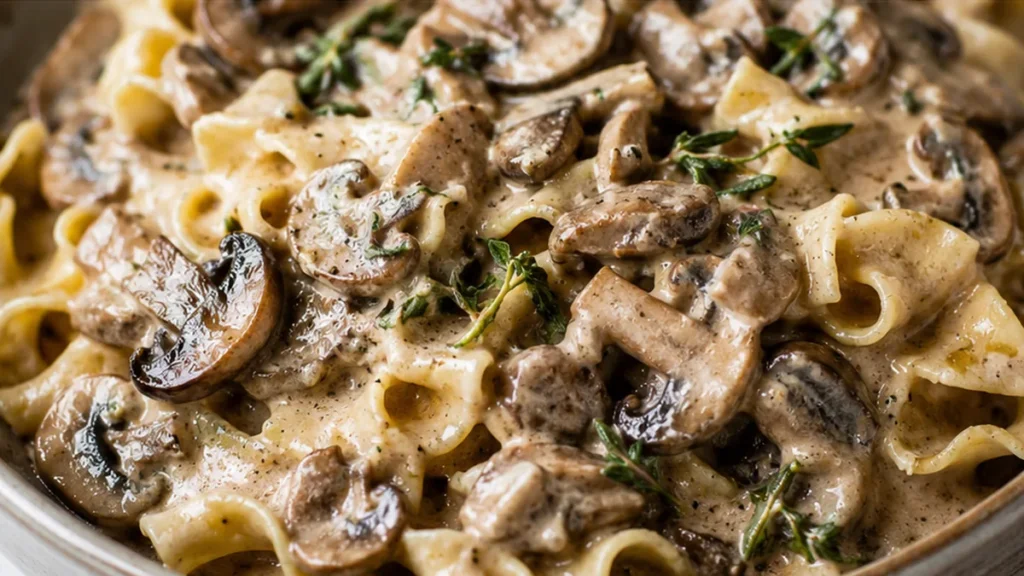
Mushroom stroganoff offers a delightful vegetarian twist on a classic comfort food, and this herby buttered version elevates it to new heights. The secret lies in developing deep umami flavors from the mushrooms before building a rich, creamy sauce that perfectly coats the tender egg noodles. This mushroom stroganoff recipe is designed for both ease and flavor, making it ideal for a quick weeknight dinner yet special enough for guests. The combination of fresh herbs and a luxurious sauce creates a truly satisfying dish that will quickly become a family favorite.
Key takeaways
- Sear mushrooms properly in batches to develop deep umami flavor.
- Cook the flour and butter mixture (roux) for at least a minute to avoid a raw taste.
- Add liquids gradually to the roux while whisking to create a smooth sauce.
- Avoid boiling the sauce after adding milk to prevent curdling.
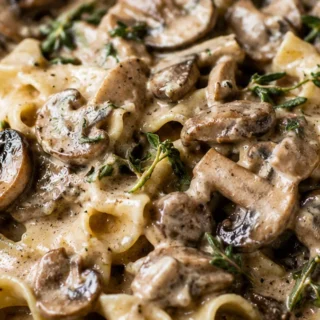
Creamy Mushroom Stroganoff: Pure Comfort!
Ingredients
- 8 ounces uncooked egg noodles
- 2 tablespoons extra virgin olive oil
- 1 large shallot, thinly sliced
- 4 cups mixed mushrooms, roughly torn or sliced
- kosher salt and black pepper
- 3 tablespoons salted butter
- 2 cloves garlic, minced or grated
- 2 tablespoons fresh thyme leaves
- 1 tablespoon fresh chopped sage
- 2 tablespoons flour
- 1 cup chicken broth
- 1/2 cup dry white wine
- 1 teaspoon Worcestershire sauce
- 1/2 teaspoon balsamic vinegar
- 1/2 cup milk
- 2 tablespoons fresh parsley, chopped
Instructions
- Bring a large pot of salted water to a boil. Cook the noodles according to package directions until al dente. Drain.
- Meanwhile, heat the olive oil in a large skillet over high heat. When the oil shimmers, add the shallots and cook until fragrant, 2-3 minutes. Add the mushrooms and season with salt and pepper. Cook undisturbed for 5 minutes or until golden. Reduce the heat to medium. Add the butter, garlic, thyme, and sage. Cook, stirring occasionally until the garlic is caramelized and fragrant, about 2-3 minutes. Remove half the mushrooms from the skillet to a plate and set aside.
- Sprinkle the flour over the mushrooms and cook, stirring to incorporate, for another minute. Slowly pour in the chicken broth, wine, Worcestershire, balsamic vinegar, and season with salt and pepper. Bring the sauce to a low boil, then reduce the heat to medium, simmer for 5 minutes or until the sauce has thickened slightly. Stir in the milk, cooking another 2-3 minutes.
- Add the noodles, reserved mushrooms, and parsley to the sauce, tossing to combine.
- Divide the noodles among plates. Top with fresh thyme and pepper. Enjoy!
Notes
The Technique That Makes It: Building Deep Umami and Creamy Texture
The success of this mushroom stroganoff hinges on two key techniques: developing intense mushroom flavor through proper searing and creating a stable, luscious sauce through careful emulsification. First, when cooking the mushrooms, avoid overcrowding the pan. This ensures they release their moisture and then begin to brown, a process known as the Maillard reaction. This browning is crucial for developing the deep, savory umami that defines stroganoff. Tearing or roughly slicing the mushrooms increases surface area for better browning. Don’t rush this step; allow the mushrooms to caramelize for maximum flavor.
Second, the sauce’s creaminess relies on a well-made roux and controlled emulsification. The flour, combined with the melted butter, forms a roux that thickens the liquid base. It’s important to cook the roux for at least a minute to eliminate the raw flour taste. When adding the liquids (broth and wine), incorporate them gradually while whisking to prevent lumps. Finally, the milk is added towards the end and gently heated. Overheating or boiling the sauce after adding milk can cause it to curdle. The fat from the butter and the proteins in the milk, when combined with the starches from the flour, create a stable emulsion that coats the noodles beautifully.
Troubleshooting
- Sauce is too thin: Whisk in an additional teaspoon of flour with a tablespoon of butter, cook for a minute, then gradually whisk into the simmering sauce. Alternatively, let the sauce simmer uncovered for a few more minutes to reduce and thicken naturally.
- Sauce is lumpy: Strain the sauce through a fine-mesh sieve to remove lumps. If the lumps are significant, you may need to re-emulsify by whisking in a small amount of additional milk or cream off the heat.
- Mushrooms are watery and not browned: Ensure the pan is hot before adding mushrooms and avoid overcrowding. Cook in batches if necessary, allowing each batch to release its moisture and brown before removing and adding more.
- Sauce has broken or curdled: This often happens from overheating after adding milk. Remove the pan from the heat immediately. Try whisking in a tablespoon of cold milk or cream to help re-emulsify the sauce.
Substitutions
- Mushrooms: While mixed mushrooms offer complexity, cremini or button mushrooms can be used. The flavor will be less intense but still good. For a richer flavor, consider adding a few dried porcini mushrooms, rehydrated, and using their soaking liquid in the sauce.
- Shallot: A small yellow onion or 2-3 green onions (white and light green parts) can be substituted for the shallot. The flavor profile will be slightly different, with onion being more pungent.
- White Wine: If avoiding alcohol, replace the white wine with an equal amount of additional chicken broth mixed with a teaspoon of lemon juice or white wine vinegar for acidity.
- Egg Noodles: Wide ribbon pasta like fettuccine or pappardelle will work well. For a gluten-free option, use gluten-free pasta, noting that cooking times may vary.
Pro tips
- To ensure your mushrooms brown properly and develop maximum flavor, avoid overcrowding the skillet. Cook them in batches if necessary, allowing enough space for moisture to evaporate.
- Adding too much liquid too quickly results in a thin sauce. Gradually whisk in the broth and wine to ensure a smooth, lump-free roux and a perfectly thickened sauce.
- For storage, refrigerate leftover stroganoff in an airtight container for up to 3 days. Reheat gently on the stovetop over low heat, adding a splash of milk or broth to loosen the sauce if needed.
This Herby Buttered Mushroom Stroganoff is a testament to how simple ingredients can create profound flavors. Give it a try and savor the rich, creamy goodness!
Frequently asked questions
Can I use different types of mushrooms?
Yes, a variety of mushrooms like cremini, shiitake, or even oyster mushrooms can be used. Using a mix provides a more complex flavor, but a single type will still yield a delicious stroganoff. Ensure they are properly browned for the best taste.
What if I don’t have white wine?
You can substitute the white wine with an equal amount of chicken broth. To add a touch of acidity that the wine provides, mix in a teaspoon of lemon juice or white wine vinegar with the broth before adding it to the pan.
How can I make this dish vegetarian or vegan?
For a vegetarian version, simply use vegetable broth instead of chicken broth. For a vegan version, use plant-based butter and milk (like cashew or oat milk), and ensure your Worcestershire sauce is vegan. Use vegetable broth as well.
My sauce seems too thin, what should I do?
If your sauce isn’t thick enough, you can create a slurry by mixing 1 tablespoon of cornstarch with 2 tablespoons of cold water. Stir this into the simmering sauce and cook for another minute until thickened. Alternatively, let the sauce simmer uncovered to reduce.
More from Creamy Pasta Recipes →