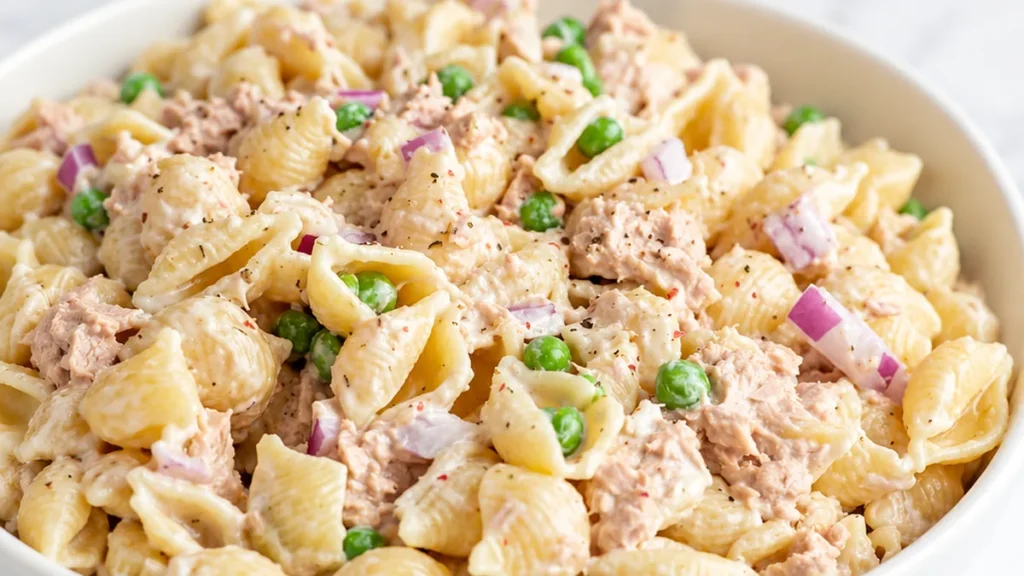
This creamy tuna pasta salad is a quick and easy dish that combines pasta, tuna, and fresh vegetables. Ideal for lunch or a light dinner.
Key takeaways
- Emulsification is key for a creamy texture; use a 3:1 mayo to sour cream ratio.
- Brighten flavors with acid and fresh herbs to avoid blandness.
- Cook pasta al dente and rinse with cold water to maintain texture.
- Consider ingredient swaps like fresh tuna or chickpeas for variety.
Creamy Tuna Pasta Salad
Ingredients
Instructions
- Make the dressing by combining mayonnaise, lemon juice, dill, salt, and pepper in a bowl.
- Finely dice the red onion and measure out the frozen peas.
- Bring a large pot of salted water to a boil over high heat.
- Add the pasta and boil until almost fully tender (about 5-6 minutes), then add the frozen peas.
- Cook the pasta and peas together for the last minute or two until fully tender.
- Drain the pasta and peas well in a colander and let them cool until no longer steaming.
- Combine the cooled pasta and peas with diced red onion and drained tuna, then pour the dressing over and toss gently.
Understanding the Creamy Base: Emulsification Techniques
The creamy texture of tuna pasta salad largely depends on the emulsion created by combining mayonnaise and other liquids. Proper emulsification requires a balance of fats and water. Aim for a ratio of about 3:1, mayonnaise to sour cream or yogurt, to achieve a rich, creamy consistency without being overly heavy. Whisking vigorously while slowly adding the liquids can help create a stable emulsion, preventing separation.
Common Pitfalls: Why Your Salad Might Be Lacking Flavor
One common issue with creamy tuna pasta salad is a lack of seasoning. If your salad tastes bland, it could be due to insufficient salt or acid. Adding a splash of lemon juice or vinegar can brighten the flavors significantly. Additionally, using fresh herbs such as dill or parsley can enhance the overall taste. Aim for about 1 tablespoon of fresh herbs per serving for optimal flavor.
Texture Troubles: Achieving the Right Pasta Consistency
Overcooking pasta can lead to a mushy texture in your salad. To avoid this, cook the pasta until al dente, which typically takes 1-2 minutes less than the package instructions. This ensures the pasta holds its shape and provides a pleasant bite. After draining, rinse the pasta under cold water to stop the cooking process and cool it down for the salad.
Ingredient Alternatives: Enhancing Your Pasta Salad
While canned tuna is a staple, consider using fresh tuna for a different flavor profile. If you’re looking for a vegetarian option, chickpeas can be a great substitute, providing similar protein content. When swapping ingredients, keep in mind that fresh tuna will require a shorter preparation time, while chickpeas will need to be well-seasoned to maintain flavor. Additionally, swapping regular pasta for whole grain or gluten-free options can alter the texture and nutritional profile, so adjust your cooking time accordingly.
Understanding the Impact of Ingredient Quality on Flavor
The quality of ingredients plays a crucial role in the overall flavor profile of creamy tuna pasta salad. Fresh ingredients, particularly vegetables like bell peppers, onions, and herbs, can significantly enhance the dish. For instance, using high-quality tuna packed in olive oil instead of water can impart a richer flavor. Additionally, the freshness of pasta is vital; dried pasta should be cooked al dente to maintain its texture. When using fresh produce, consider seasonal availability to ensure optimal taste and nutritional value. For example, ripe tomatoes in summer can elevate the dish compared to out-of-season varieties.
Scaling Your Recipe for Larger Gatherings
When scaling up creamy tuna pasta salad for larger gatherings, it’s essential to maintain the balance of flavors and textures. A general guideline is to increase the ingredient amounts proportionally while being mindful of the pasta-to-dressing ratio. For every additional 250 grams of pasta, increase the dressing components by approximately 20%. Remember that larger batches may require more time to chill in the refrigerator, allowing the flavors to meld effectively. Additionally, consider using a larger mixing bowl to ensure even distribution of ingredients, which can prevent clumping and ensure a consistent taste throughout.
Choosing the Right Equipment for Preparation
The equipment used in preparing creamy tuna pasta salad can affect both the process and the end result. A large mixing bowl is essential for combining ingredients without creating a mess. A sturdy spatula or wooden spoon works best for folding in delicate ingredients like tuna and vegetables without breaking them apart. If you’re making a larger batch, consider using a food processor for chopping vegetables quickly. However, be cautious not to over-process, as this can lead to a mushy texture. For serving, a large serving platter or bowl allows for easy access and presentation, making the dish visually appealing.
Optimal Serving Temperature and Pairing Suggestions
Serving temperature can significantly influence the enjoyment of creamy tuna pasta salad. Ideally, it should be served chilled, allowing the flavors to develop fully. If the salad has been stored in the refrigerator, let it sit at room temperature for about 15 minutes before serving to enhance its flavors. Pairing suggestions include crusty bread or crackers, which can complement the creamy texture of the salad. For a complete meal, consider serving it alongside a light green salad or grilled vegetables. Additionally, a crisp white wine can elevate the dining experience, balancing the richness of the dish.
How to Prepare Creamy Tuna Pasta Salad in Advance
Preparing a creamy tuna pasta salad ahead of time can be a game-changer for busy weeknights or gatherings. The key is to ensure that the pasta is cooked al dente, which helps it maintain its texture even after refrigeration. Aim for a cooking time of about 8-10 minutes in boiling salted water. Once cooked, drain and rinse the pasta under cold water to halt the cooking process. Combine it with the creamy dressing and other ingredients, but consider adding fresh ingredients like herbs or vegetables just before serving. This prevents them from becoming soggy and losing their vibrant flavor.
Adjusting Creamy Tuna Pasta Salad for Seasonal Ingredients
Seasonal ingredients can enhance the flavor profile of your creamy tuna pasta salad. For instance, summer brings fresh vegetables like cherry tomatoes, cucumbers, and bell peppers, which add a crisp texture and bright flavor. In contrast, fall might inspire the inclusion of roasted butternut squash or apples for a sweeter note. When substituting seasonal produce, consider how the flavors will meld with the creamy base. For example, if using sweeter vegetables, you might want to balance them with a bit of acidity, such as lemon juice or vinegar, to maintain a well-rounded taste.
Scaling Your Creamy Tuna Pasta Salad for Large Gatherings
When scaling your creamy tuna pasta salad recipe for larger gatherings, it’s essential to maintain the right ratios to ensure consistent flavor and texture. For every additional 100 grams of pasta, increase the creamy dressing components proportionally. This typically includes mayonnaise and sour cream, which should be adjusted to prevent the salad from becoming overly dry or too wet. Additionally, consider the serving method; if serving buffet-style, keep the salad chilled in a bowl over ice to maintain freshness. This is particularly important for ingredients like mayonnaise that can spoil if left out too long.
Understanding the Impact of Storage on Creamy Tuna Pasta Salad
Storage plays a crucial role in maintaining the flavor and texture of creamy tuna pasta salad. When stored properly in an airtight container, this dish can last in the refrigerator for up to three days. However, the quality may diminish over time. The creamy dressing can separate, and the pasta may absorb moisture, resulting in a less appealing texture. To mitigate these effects, consider storing the pasta and dressing separately if you plan to prepare the salad in advance. This allows for better preservation of the creamy consistency and prevents the pasta from becoming mushy. Additionally, always refrigerate the salad promptly after preparation to minimize bacterial growth and maintain freshness.
Adapting Creamy Tuna Pasta Salad for Seasonal Ingredients
Seasonal ingredients can significantly enhance the flavor profile of creamy tuna pasta salad. For instance, incorporating fresh herbs like basil or dill during the summer can add a refreshing touch. In contrast, roasted vegetables such as bell peppers or zucchini can be a great addition in the fall. When adapting the recipe, aim for a balance between the creamy base and the added ingredients to avoid overwhelming the dish. This may require adjusting the amount of dressing used to maintain the desired creaminess. Keep in mind that the quality of seasonal ingredients can also impact the overall taste; fresher produce typically leads to a more vibrant dish.
How to Properly Store Creamy Tuna Pasta Salad for Maximum Freshness
Storing creamy tuna pasta salad correctly is essential to maintain its texture and flavor. After preparing the salad, transfer it to an airtight container to prevent moisture loss and contamination. Ideally, consume the salad within 3 days when stored in the refrigerator at a temperature of 4°C (39°F) or lower. If you need to store it longer, consider freezing it, but note that the creamy texture may change upon thawing. To freeze, place the salad in a freezer-safe container, leaving some space for expansion. When ready to serve, thaw it in the refrigerator overnight and stir well before serving to restore some of the original creaminess.
Scaling Your Creamy Tuna Pasta Salad for Large Gatherings
When preparing creamy tuna pasta salad for a larger group, it’s important to scale the ingredients proportionally to ensure consistent flavor and texture. A common ratio is to use 100 grams of pasta per person, adjusting the amount of tuna and vegetables accordingly. For every 100 grams of pasta, approximately 50-75 grams of tuna and 30-50 grams of vegetables like celery or bell peppers can be added. Remember to account for the dressing; a good rule of thumb is to use about 100 ml of dressing for every 200 grams of pasta. Mixing in batches can help maintain the integrity of the salad, ensuring even distribution of ingredients. Always taste and adjust seasoning as you scale up, as larger quantities may require slight adjustments in salt and acidity to balance flavors.
Pro tips
Pro tip: Best served immediately while hot!
Frequently asked questions
Can I use a different type of pasta for this salad?
Yes, you can use various types of pasta such as whole grain, gluten-free, or even spiralized vegetables. Just ensure to adjust the cooking time based on the type of pasta you choose.
How can I make this salad healthier?
To make a healthier version, consider using Greek yogurt instead of mayonnaise, adding more vegetables like bell peppers or cucumbers, and opting for whole grain pasta for added fiber.
What can I do if my salad is too dry?
If your creamy tuna pasta salad is too dry, add more mayonnaise or a splash of olive oil. You can also incorporate a little pasta cooking water to help moisten the salad without overpowering the flavor.
How long can I store creamy tuna pasta salad?
This salad can be stored in the refrigerator for up to 3 days. However, it’s best to consume it within the first day or two for optimal freshness and flavor.
More from Creamy Pasta Recipes →