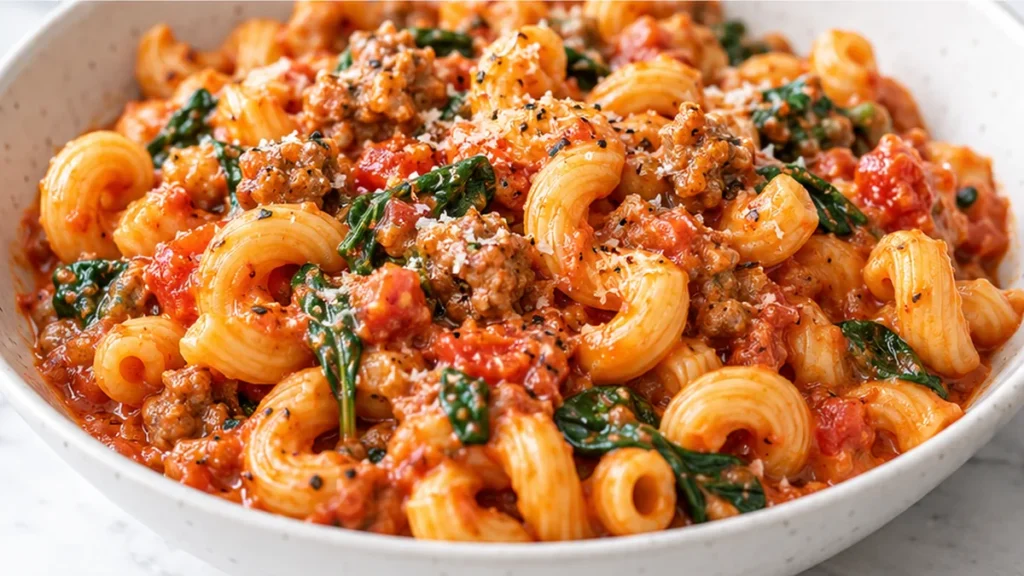
This creamy tomato sausage pasta is a hearty dish that combines savory sausage with a rich tomato cream sauce. It’s simple to prepare and perfect for any weeknight.
Key takeaways
- Use the right cream-to-tomato ratio for balance.
- Choose Italian sausage for enhanced flavor.
- Cook pasta al dente and finish in the sauce for best texture.
- Avoid common issues like clumping by adding cream gradually.
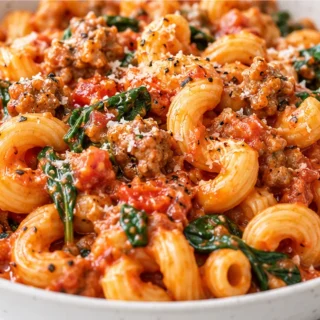
Creamy Tomato Sausage Pasta
Ingredients
Instructions
- Brown 1/2 lb. Italian sausage in a deep skillet over medium heat, breaking it into pieces. Mince 2 cloves of garlic, add to the sausage, and sauté for 1 minute.
- Add 2 Tbsp tomato paste, 1 28oz. can crushed tomatoes, 1 tsp Italian seasoning, and 1/2 cup water to the skillet. Stir to combine and simmer for 15-20 minutes, stirring occasionally.
- Bring a large pot of water to a boil. Add 1/2 lb. pasta and cook for 7-10 minutes until tender. Drain the pasta.
- Stir 1/3 cup heavy cream into the simmering sauce. Add 4 oz. fresh spinach and stir until just wilted, about 1-2 minutes.
- Add the cooked and drained pasta to the sauce and stir to combine. Serve immediately and enjoy!
Balancing Creaminess and Acidity in the Sauce
The key to a successful creamy tomato sausage pasta lies in achieving the right balance between creaminess and acidity. Cream, when added to the tomato sauce, softens the acidity of the tomatoes, creating a smooth texture. For every 400 grams of tomatoes, aim for about 100-150 ml of cream. This ratio allows the flavors to meld without overwhelming the palate. Additionally, consider using crushed tomatoes for a more robust flavor profile, as they provide a thicker consistency that pairs well with the cream.
Understanding Sausage Selection for Optimal Flavor
The choice of sausage can significantly influence the overall taste of your creamy tomato sausage pasta. Opt for Italian sausage, which typically contains a blend of spices and herbs that enhance the dish. If you prefer a milder flavor, sweet Italian sausage is ideal, while spicy varieties can add a kick. When using sausage, aim for about 300-400 grams per serving. Always remove the casing and crumble the sausage to maximize its surface area during cooking, allowing for better browning and flavor development.
Mastering Cooking Techniques for Perfect Pasta
Cooking pasta correctly is crucial for achieving the right texture in your creamy tomato sausage pasta. Use a large pot of boiling water—approximately 4-5 liters for 500 grams of pasta. Add salt generously; it should taste like the sea. Cook the pasta until just al dente, about 1-2 minutes less than the package instructions. This ensures that the pasta will finish cooking in the sauce, absorbing its flavors. Reserve some pasta water before draining, as it can be used to adjust the sauce’s consistency.
Common Issues and How to Avoid Them
One common issue is the sauce becoming too thick or clumpy. This can happen if the cream is added too quickly or if the sauce is overcooked. To prevent this, add the cream gradually while stirring and maintain a gentle simmer. Another issue is the pasta sticking together. To avoid this, ensure the pasta is stirred during the first few minutes of cooking and avoid rinsing it after draining, as the starch helps the sauce adhere. If the sauce tastes bland, consider adding a pinch of sugar to balance the acidity or a splash of red wine for depth.
Understanding the Impact of Ingredient Quality on Flavor
The quality of ingredients used in creamy tomato sausage pasta significantly influences the final dish’s flavor profile. Fresh, high-quality tomatoes can elevate the sauce, providing a vibrant acidity that balances the creaminess. Opt for San Marzano tomatoes, known for their sweetness and low acidity. Additionally, the type of sausage plays a crucial role; using fresh sausage with natural spices enhances the overall taste. Avoid pre-packaged or overly processed options, as they can introduce artificial flavors that detract from the dish’s integrity. The freshness of herbs, such as basil or oregano, also contributes to the aromatic complexity of the sauce. Aim for organic or locally sourced ingredients whenever possible to ensure maximum flavor.
Batch Scaling for Family Gatherings or Meal Prep
When scaling creamy tomato sausage pasta for larger gatherings or meal prep, it’s essential to maintain the balance of flavors and textures. Doubling or tripling the recipe is straightforward, but be mindful of the cooking times, especially for the pasta. Larger batches may require additional time to reach the desired al dente texture. Additionally, when scaling the sauce, consider using a larger pot to allow for even heat distribution. If preparing for meal prep, cook the pasta slightly under al dente, as it will continue to cook when reheated. Store the sauce and pasta separately to prevent the noodles from becoming mushy. This method ensures that each portion retains its original texture and flavor when reheated.
Equipment Variations and Their Effects on Cooking
The choice of cooking equipment can significantly affect the outcome of creamy tomato sausage pasta. For instance, using a heavy-bottomed pot or a Dutch oven can provide better heat retention, allowing for more even cooking of the sauce. If using a non-stick skillet, be cautious with the heat level, as high temperatures can cause the sauce to stick or burn. An immersion blender can be a great tool for achieving a smooth sauce without transferring to a blender, but be aware that blending too long can alter the sauce’s texture. Additionally, if using a pasta maker, ensure it’s well-floured to prevent sticking, and adjust the thickness of the pasta sheets based on personal preference. Understanding how different equipment interacts with the ingredients can lead to a more successful dish.
Seasonal Adjustments for Fresh Ingredients
Seasonal changes can greatly impact the availability and quality of ingredients for creamy tomato sausage pasta. In summer, ripe, juicy tomatoes are at their peak, making them ideal for a fresh sauce. In contrast, during winter months, you might consider using canned tomatoes, which can be just as flavorful if chosen carefully. When fresh herbs are not available, dried herbs can serve as a substitute, though they should be used sparingly due to their concentrated flavor. Additionally, consider incorporating seasonal vegetables, such as zucchini or bell peppers, into the dish for added flavor and nutrition. Adjusting the recipe to align with seasonal produce not only enhances the dish’s freshness but also supports local agriculture.
Understanding the Role of Cream and Tomato in Flavor Development
The balance between creaminess and acidity is crucial in creamy tomato sausage pasta. The cream adds richness, while tomatoes provide acidity, which can enhance the overall flavor profile. Aim for a ratio of 1 part cream to 2 parts tomato sauce to achieve a harmonious balance. When using fresh tomatoes, consider that they are less acidic than canned varieties, so you may need to adjust the seasoning accordingly. Cooking the tomatoes until they break down and release their natural sugars can also deepen the flavor, enhancing the overall dish.
Impact of Sausage Selection on Texture and Flavor
The type of sausage you choose significantly influences the texture and flavor of your creamy tomato sausage pasta. For instance, a spicy Italian sausage will impart a different flavor profile compared to a mild sausage. If using a fresh sausage, remove the casing and crumble it into the pan for even cooking. The fat content in the sausage also plays a role; a higher fat content can lead to a richer sauce but may require adjustments in the cream to maintain balance. Additionally, consider the seasoning in the sausage, as it can affect the overall seasoning of the dish.
Make-Ahead Strategies for Creamy Tomato Sausage Pasta
Making creamy tomato sausage pasta ahead of time can save you effort during busy weeknights. Cook the sausage and prepare the sauce in advance, allowing the flavors to meld. Store the sauce separately from the pasta to prevent it from becoming soggy. When ready to serve, reheat the sauce gently on the stove, adding a splash of cream to restore its consistency. Cook the pasta fresh to ensure it retains its texture. This method allows for a quick assembly while still delivering a satisfying meal.
How to Achieve the Perfect Creaminess in Your Sauce
When preparing creamy tomato sausage pasta, achieving the right consistency in your sauce is crucial. The key lies in the balance of your cream and tomato ratios. A typical ratio is 1 part cream to 2 parts tomato sauce, which allows for a rich but not overwhelming creaminess. Additionally, incorporating the cream at the right temperature is essential; adding cold cream to a hot sauce can cause it to curdle. To prevent this, temper the cream by gradually introducing a small amount of the hot sauce into the cream before mixing it back into the main sauce. This technique helps maintain a smooth and velvety texture.
Another factor is the type of cream used. Heavy cream, with a fat content of around 36%, provides the richest flavor and texture, while half-and-half or lighter creams may result in a thinner sauce. If you opt for a lighter cream, consider reducing the sauce longer to concentrate the flavors. Cooking the sauce for an additional 5-10 minutes can enhance its richness without compromising the creaminess.
Pairing and Serving Suggestions for Creamy Tomato Sausage Pasta
Pairing creamy tomato sausage pasta with the right accompaniments can elevate your dining experience. A fresh, crisp side salad is an excellent choice, as it provides a refreshing contrast to the rich creaminess of the pasta. Consider using ingredients like arugula, cherry tomatoes, and a light vinaigrette to balance the flavors.
For beverages, a light white wine, such as Pinot Grigio or Sauvignon Blanc, complements the dish beautifully without overpowering it. The acidity in these wines can cut through the creaminess, enhancing the overall flavor profile. If you prefer non-alcoholic options, consider serving sparkling water with a slice of lemon or lime to add a zesty touch.
When it comes to garnishing, fresh herbs such as basil or parsley can add a burst of color and freshness. A sprinkle of grated Parmesan cheese can also enhance the dish, adding a salty and nutty flavor that pairs well with the cream and sausage.
Pro tips
Pro tip: Best served immediately while hot!
Frequently asked questions
Can I use a different type of sausage?
Yes, you can substitute with chicken sausage or even vegetarian options. Just keep in mind that the flavor profile will change, so adjust your spices accordingly.
What can I do if my sauce is too acidic?
If your sauce tastes too acidic, add a pinch of sugar or a splash of cream to mellow the acidity. This will help balance the flavors without compromising the dish.
How do I store leftovers of creamy tomato sausage pasta?
Store leftovers in an airtight container in the refrigerator for up to three days. Reheat gently on the stove, adding a splash of water or cream to loosen the sauce.
Can I make this dish ahead of time?
Yes, you can prepare the sauce ahead of time and store it in the fridge. Just cook the pasta fresh when you’re ready to serve to ensure it remains al dente.
More from Creamy Pasta Recipes →