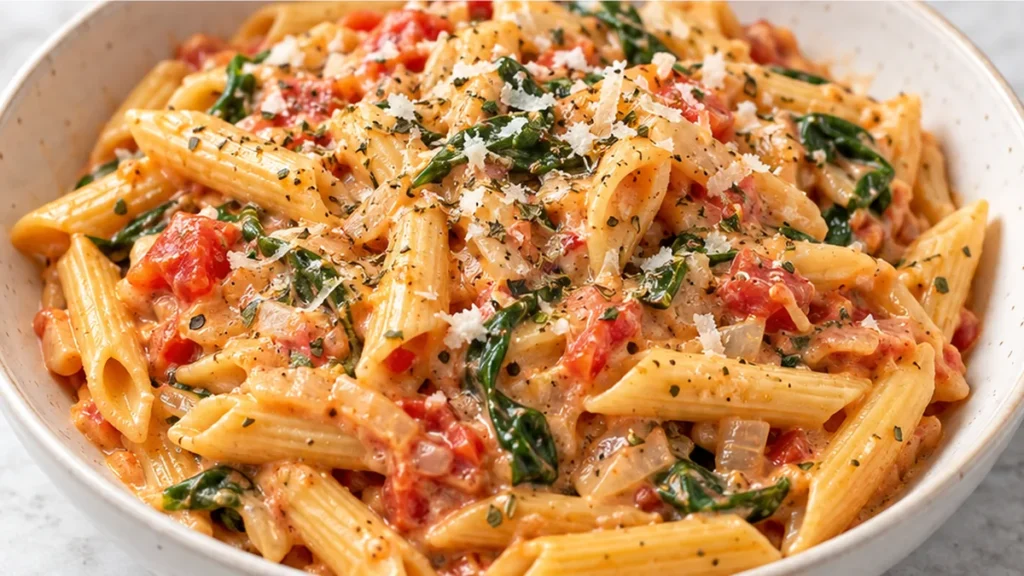
This creamy tomato pasta is a quick and easy dish that can be made in just 30 minutes. With fresh ingredients and a rich sauce, it’s perfect for dinner.
Key takeaways
- Create a stable emulsion by adding cream gradually to the tomato base.
- Cook pasta al dente to prevent it from becoming mushy.
- Use high-quality tomatoes and season well for maximum flavor.
- Experiment with ingredient swaps for different flavor profiles.
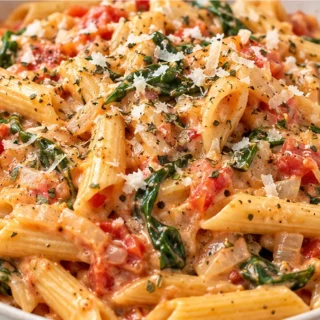
Creamy Tomato Pasta: 30-Minute Dinner
Ingredients
Instructions
- Gather and prepare all ingredients.
- Bring a large pot of water to a boil over high heat. Add the pasta and continue to boil until tender (7-10 minutes). Drain the pasta in a colander.
- While the pasta is cooking, prepare the creamy tomato sauce. Dice the onion and mince the garlic. Add the onion, garlic, and olive oil to a large skillet and sauté over medium heat until the onions are soft and translucent (3-5 minutes).
- Add the diced tomatoes (with juices), oregano, basil, crushed red pepper, salt, and some freshly cracked pepper to the skillet. Stir to combine. Add the tomato paste and a 1/2 cup (125ml) of water to the skillet and stir until the tomato paste has mixed into the sauce.
- Turn the heat down to low. Cut the cream cheese into a few pieces and then add them to the skillet with the tomato sauce. Use a whisk to stir the sauce until the cream cheese has fully melted and the sauce is creamy. Add the Parmesan to the skillet and stir until it is melted into the sauce.
- Add the fresh spinach to the skillet and gently stir it into the sauce until it has wilted (2-3 minutes). Add the pasta and stir until it is well coated in the creamy tomato sauce. Taste and adjust the salt and pepper as needed. Serve warm.
Understanding the Creamy Tomato Sauce Emulsion
The key to a successful creamy tomato pasta lies in creating a stable emulsion between the fat and the liquid. When making the sauce, it’s essential to gradually incorporate the cream or cheese into the tomato base, allowing the mixture to thicken and become silky. The ideal temperature for this process is around 70-80°C (158-176°F). If the sauce gets too hot, the cream can separate, leading to a grainy texture. Aim for a smooth consistency by stirring continuously and adding the cream slowly.
Common Mistakes and Their Fixes
One common issue when preparing creamy tomato pasta is the sauce becoming too thick or clumpy. This often happens when the heat is too high or the cream is added too quickly. To fix this, lower the heat and whisk in a bit of pasta water to loosen the sauce. Another potential problem is the sauce lacking flavor. This can be remedied by ensuring you use high-quality tomatoes and seasoning adequately with salt, pepper, and fresh herbs. Additionally, if the pasta is overcooked, it can become mushy and fail to hold the sauce. Always cook pasta until al dente, which usually takes 8-10 minutes depending on the type.
Ingredient Swaps and Their Effects
When making creamy tomato pasta, substitutions can significantly impact the dish. For instance, swapping heavy cream for half-and-half will result in a lighter sauce but may lack the richness. Alternatively, using canned crushed tomatoes instead of fresh can enhance convenience but may alter the freshness of the flavor. If you prefer a dairy-free option, coconut cream can be used; however, it will impart a distinct coconut flavor. Lastly, incorporating different herbs like basil or oregano can change the dish’s aroma and taste profile.
Unique Characteristics of Creamy Tomato Pasta
This dish stands out from other pasta recipes due to its creamy texture combined with the acidity of tomatoes. Unlike traditional tomato sauces that are often more liquid, the cream creates a velvety coating that clings to the pasta. This balance of creaminess and acidity is crucial for achieving a well-rounded flavor profile. Additionally, the use of fresh parmesan cheese not only enhances the creaminess but also adds a savory depth that complements the tomatoes beautifully.
Understanding the Impact of Ingredient Quality on Flavor
The quality of ingredients used in creamy tomato pasta significantly affects the final flavor of the dish. Fresh, ripe tomatoes, for example, provide a sweeter and more vibrant taste compared to canned tomatoes. When using canned tomatoes, opting for San Marzano varieties can enhance the dish due to their lower acidity and rich flavor profile. Additionally, the choice of cream can influence the richness; heavy cream yields a thicker, more luxurious sauce, while half-and-half will create a lighter version. Using fresh herbs, like basil or oregano, instead of dried can also elevate the dish, as fresh herbs have a more pronounced flavor. Ultimately, investing in high-quality ingredients can transform a simple pasta dish into a gourmet experience.
Scaling Up for Larger Gatherings
When scaling creamy tomato pasta for larger gatherings, it is essential to adjust cooking times and methods appropriately. Doubling or tripling the recipe may require a longer cooking time to ensure that the sauce thickens properly and the pasta cooks evenly. It’s advisable to cook pasta in batches to maintain its texture; overcooking can lead to mushiness. For the sauce, consider using a larger pot to allow for even heat distribution. Additionally, when scaling, be cautious with seasoning. Start with the base recipe’s seasoning and adjust gradually, tasting as you go to avoid overpowering the dish. This method ensures that the flavors remain balanced even in larger quantities.
Choosing the Right Equipment for Optimal Results
The equipment used to prepare creamy tomato pasta can greatly influence the dish’s outcome. A heavy-bottomed saucepan is ideal for making the sauce, as it distributes heat evenly and prevents the sauce from scorching. If using a blender to puree the sauce, a high-speed blender will yield a smoother texture compared to a standard one. For cooking pasta, a large pot with ample water is necessary to prevent the pasta from sticking together. Additionally, using a colander with fine mesh will help retain smaller pasta shapes, ensuring none are lost in the process. Investing in quality kitchen tools can enhance the cooking experience and improve the final dish.
Seasonal Variations and Ingredient Substitutions
Seasonal variations can bring a fresh twist to creamy tomato pasta. In summer, incorporating fresh vegetables like zucchini or bell peppers can add color and nutrition. In the fall, roasted pumpkin or butternut squash can be blended into the sauce for a unique flavor profile. Additionally, swapping traditional pasta for whole grain or gluten-free varieties can cater to dietary preferences while maintaining the dish’s integrity. When substituting ingredients, consider how each change affects the overall flavor and texture. For example, substituting Greek yogurt for cream can create a tangy version of the sauce, which may require adjusting other seasonings to balance the flavors.
How to Prepare Creamy Tomato Pasta in Advance
Preparing creamy tomato pasta in advance can save time on busy weeknights. To do this effectively, cook the pasta until it is just al dente, as it will continue to cook when reheated. After cooking, drain the pasta and toss it with a small amount of olive oil to prevent sticking. For the sauce, you can prepare the creamy tomato mixture ahead of time. Store the sauce in an airtight container in the refrigerator for up to three days. When ready to serve, reheat the sauce gently on the stove, adding a splash of pasta water to achieve the desired consistency. Combine with the reheated pasta for a quick and satisfying meal.
Understanding the Role of Fresh Ingredients in Flavor
The freshness of your ingredients significantly affects the flavor profile of creamy tomato pasta. Using ripe, in-season tomatoes enhances the sauce’s natural sweetness and acidity. Fresh herbs, such as basil or parsley, should be added just before serving to maintain their vibrant flavor and color. Conversely, dried herbs can be used if fresh ones are unavailable, but they will impart a different intensity. When using cream, opt for high-quality heavy cream for a richer texture and flavor. The quality of your ingredients not only influences taste but also the overall satisfaction of the dish.
Scaling Up Creamy Tomato Pasta for Gatherings
When scaling up creamy tomato pasta for larger gatherings, maintaining the balance of flavors is crucial. A general guideline is to increase the pasta quantity by 75 grams per person, adjusting the sauce ingredients proportionately. For instance, if the original recipe calls for 400 grams of pasta, use 700 grams for a party of eight. Additionally, consider preparing the sauce in batches to ensure even distribution of flavors. Keep in mind that larger quantities may require more cooking time, so monitor the pasta closely to avoid overcooking. Serving the pasta directly from the pot can keep it warm, and garnishing with fresh herbs or grated cheese adds a touch of elegance.
Understanding the Role of Pasta Cooking Time in Creamy Tomato Pasta
The cooking time of pasta is crucial for achieving the perfect texture in creamy tomato pasta. Ideally, pasta should be cooked al dente, which means it should still have a slight bite to it. This texture not only enhances the overall mouthfeel but also allows the pasta to better absorb the creamy tomato sauce. Cooking pasta for too long can lead to a mushy consistency, which detracts from the dish’s intended texture. For most pasta types, this cooking time ranges from 8 to 12 minutes, depending on the thickness and shape. Always refer to the package instructions, but start testing a minute or two before the suggested time to ensure you achieve that perfect al dente texture.
Pairing Ingredients for Enhanced Flavor Profiles in Creamy Tomato Pasta
The choice of ingredients significantly impacts the flavor profile of creamy tomato pasta. While the base of the dish is a creamy tomato sauce, incorporating additional ingredients can elevate the dish. For instance, adding fresh basil or oregano can introduce herbal notes that complement the acidity of the tomatoes. Similarly, incorporating a splash of white wine during the sauce preparation can add depth to the flavors. Consider using high-quality canned tomatoes, as their sweetness and acidity can vary greatly, influencing the overall taste. Additionally, the type of cream used can affect the richness; heavy cream will yield a more decadent sauce, while half-and-half will create a lighter version. Balancing these components is key to achieving a harmonious flavor in your creamy tomato pasta.
Pro tips
Pro tip: Best served immediately while hot!
Frequently asked questions
Can I use fresh tomatoes instead of canned for the sauce?
Yes, you can use fresh tomatoes, but they should be blanched and peeled for the best texture. Canned tomatoes often provide a more consistent flavor and are easier to use.
What type of pasta works best with creamy tomato sauce?
Pasta shapes like penne, fusilli, or farfalle work well as they hold the sauce better. However, you can use any pasta you prefer.
How can I make the dish spicier?
To add some heat, consider incorporating red pepper flakes or fresh chili peppers into the sauce. Start with a small amount and adjust to your taste.
Can I prepare the sauce in advance?
Yes, the creamy tomato sauce can be made ahead of time and stored in the refrigerator for up to three days. Reheat gently on the stove before serving to maintain its consistency.
More from Creamy Pasta Recipes →