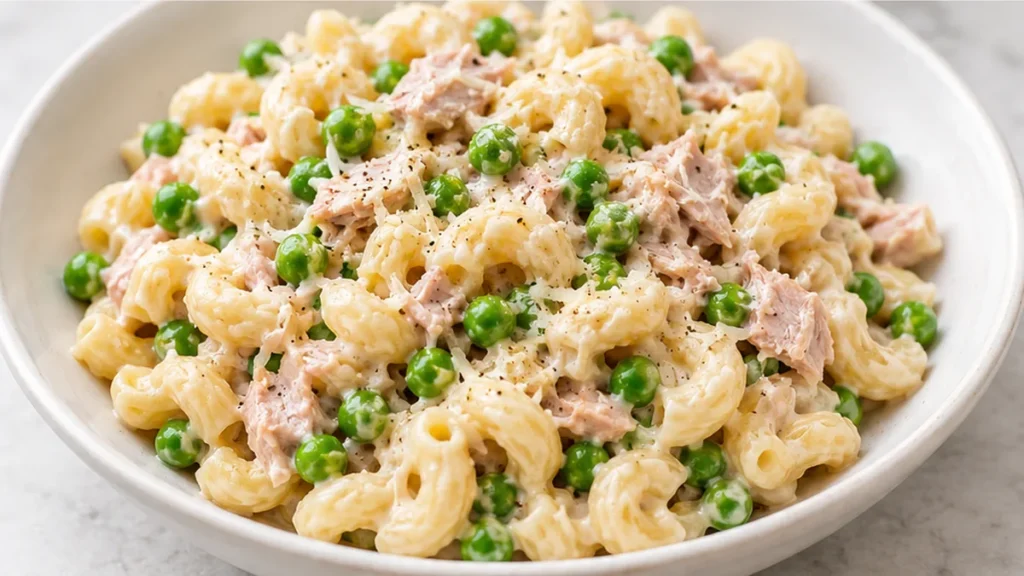
This creamy tuna pasta is a quick and easy dish to prepare. With a rich sauce and nutritious ingredients, it’s perfect for busy weeknights.
Key takeaways
- Creating a stable emulsion is crucial for a smooth sauce.
- Cook pasta al dente and reserve cooking water for the sauce.
- Substituting cream with Greek yogurt can add tanginess but alter texture.
- Canned tuna provides a quick and protein-rich option for weeknight meals.

Creamy Tuna Pasta: Quick Weeknight Meal!
Ingredients
Instructions
- Bring a pot of water to a boil for the pasta. Once boiling, add the pasta and continue to boil until tender. Drain the pasta.
- While pasta cooks, add butter and minced garlic to a large skillet. Sauté garlic over medium heat for about one minute until soft and fragrant.
- Add frozen peas, salt, and pepper. Sauté for a couple minutes more, or until peas are heated through. Add half and half and simmer for 3-5 minutes until slightly reduced.
- Add drained pasta to the skillet and stir to combine. Sprinkle Parmesan over pasta and stir until melted. Turn off the heat and season to taste.
- Finally, add the drained tuna and fold it into the pasta. Break up whole tuna chunks slightly as you stir. Serve warm!
Understanding the Creamy Emulsion in Tuna Pasta
The key to a successful creamy tuna pasta lies in creating a stable emulsion. This involves combining fat and water-based ingredients to achieve a smooth, cohesive sauce. The typical ratio for a creamy sauce is about 1:1 fat to liquid. In this recipe, the use of cream or a similar dairy product acts as the fat, while pasta water can serve as the liquid. The pasta water should be starchy, which helps the sauce adhere to the pasta effectively.
Common Issues and Their Solutions
One of the most common issues faced when making creamy tuna pasta is a sauce that separates or becomes too thick. This can happen for several reasons:
- Too much heat: If the sauce is cooked over high heat, it can break. Solution: Lower the heat and stir continuously.
- Insufficient liquid: A lack of pasta water can lead to a thick, unmanageable sauce. Solution: Gradually add pasta water until the desired consistency is achieved.
- Overcooking the pasta: Overcooked pasta can release too much starch, altering the sauce’s texture. Solution: Cook pasta al dente and reserve some cooking water.
Ingredient Swaps and Their Effects
When preparing creamy tuna pasta, certain ingredient substitutions can yield different flavors and textures. Here are some swaps to consider:
- Greek yogurt instead of cream: This will reduce the fat content and add tanginess, but may result in a less creamy texture.
- Canned salmon instead of tuna: This provides a similar flavor profile with a slightly different texture, making it a good alternative.
- Vegetable broth instead of pasta water: This can add depth of flavor, but may result in a thinner sauce.
Unique Characteristics of Creamy Tuna Pasta
This dish stands out due to its balance of protein from the tuna and carbs from the pasta, making it a fulfilling meal. Additionally, the use of canned tuna allows for a quick preparation time, making it an excellent choice for weeknight dinners. Unlike other pasta dishes, the creamy sauce is designed to cling to the pasta, creating a rich and satisfying mouthfeel that enhances the overall dining experience.
How to Adapt Creamy Tuna Pasta for Meal Prep
Preparing creamy tuna pasta in advance can be a time-saver for busy weeknights. To make this dish suitable for meal prep, consider cooking the pasta al dente, which allows it to hold its texture better when reheated. Store the pasta and sauce separately; this prevents the pasta from absorbing too much sauce and becoming mushy. When ready to eat, simply combine the two and heat gently on the stove or in the microwave. If you plan to store it for more than a few days, consider omitting fresh herbs or delicate ingredients that may wilt or lose flavor over time.
Scaling the Recipe for Larger Gatherings
Scaling creamy tuna pasta for a larger group is straightforward but requires attention to ingredient ratios. For every additional serving, increase the pasta and sauce ingredients proportionally. A common ratio is 100 grams of pasta per person, along with a corresponding increase in the tuna and cream. Be mindful to maintain the same cooking times, as larger batches may take slightly longer to heat through. Additionally, using a larger pot can help ensure even cooking and prevent overcrowding, which can lead to uneven results.
Understanding the Impact of Equipment on Texture
The type of cookware used can significantly affect the outcome of creamy tuna pasta. Non-stick pans are ideal for preventing the sauce from sticking and burning, while stainless steel can create a nice fond that enhances flavor. However, stainless steel requires careful attention to prevent sticking. When sautéing ingredients like onions or garlic, use medium heat to avoid burning and ensure even cooking. If using a pressure cooker, adjust the liquid content accordingly, as it can alter the sauce’s consistency and flavor profile.
Pairing Options to Enhance the Dish
Creamy tuna pasta pairs well with a variety of side dishes and beverages that can enhance the overall dining experience. For sides, consider a light green salad dressed with a vinaigrette to balance the richness of the pasta. Roasted vegetables or garlic bread can also complement the dish nicely. When it comes to beverages, a crisp white wine, such as Sauvignon Blanc, can cut through the creaminess and elevate the meal. Alternatively, a sparkling water with lemon can provide a refreshing contrast.
How to Store Creamy Tuna Pasta for Maximum Freshness
Proper storage is crucial for maintaining the quality of creamy tuna pasta. To store leftovers, allow the dish to cool to room temperature before transferring it to an airtight container. This helps prevent condensation, which can lead to sogginess. Refrigerate the pasta within two hours of cooking and consume it within 3-4 days for optimal freshness. For longer storage, consider freezing the dish. However, note that the creamy sauce may separate slightly upon thawing. To mitigate this, reheat gently on low heat, stirring in a splash of milk or cream to restore the creamy texture.
Scaling Creamy Tuna Pasta for Larger Groups
When scaling creamy tuna pasta for larger gatherings, it’s essential to maintain the balance of flavors and textures. A good rule of thumb is to increase the ingredients proportionally, but be mindful of cooking times, especially for pasta. For every additional 500 grams of pasta, you may need to add an extra 200-300 grams of tuna and adjust the cream sauce accordingly. Additionally, consider using a larger pot to ensure even cooking and to prevent the pasta from becoming clumpy. Taste as you go to ensure the seasoning remains balanced, adjusting salt and pepper as needed.
Understanding Ingredient Quality and Its Impact on Creamy Tuna Pasta
The quality of ingredients significantly affects the final outcome of creamy tuna pasta. Fresh, high-quality tuna will yield a richer flavor compared to canned varieties. Opt for a good-quality cream or crème fraîche to enhance the sauce’s richness and texture. Seasonal ingredients can also elevate the dish; for instance, fresh herbs like basil or parsley can add brightness when in season. Conversely, using older or lower-quality ingredients may result in a less satisfying dish, making it crucial to assess the freshness of your components before cooking.
Understanding the Role of Emulsification in Creamy Tuna Pasta
The key to achieving the perfect creamy texture in tuna pasta lies in emulsification. This process involves combining fat and water-based ingredients to create a stable mixture. When making your creamy tuna pasta, consider using a combination of mayonnaise and a splash of pasta cooking water. The starch in the pasta water helps bind the ingredients, creating a smooth, cohesive sauce. Aim for a ratio of about 1 part pasta water to 2 parts mayonnaise for optimal creaminess. If the sauce appears too thick, gradually add more pasta water until the desired consistency is reached. This technique not only improves texture but also enhances flavor absorption.
How Ingredient Quality Affects the Final Flavor of Creamy Tuna Pasta
The quality of your ingredients can significantly impact the flavor profile of creamy tuna pasta. Fresh, high-quality tuna, whether canned or fresh, will yield a more vibrant taste. Look for tuna packed in olive oil for a richer flavor compared to water-packed varieties. Additionally, using fresh herbs, such as parsley or dill, can elevate the dish, providing a burst of freshness. Aged or stale ingredients, on the other hand, may result in a dull or off-putting flavor. Always opt for fresh pasta when possible, as it cooks more evenly and absorbs the sauce better than dried pasta. The difference in taste and texture can be profound, making it worthwhile to invest in quality ingredients.
Understanding the Impact of Seasonal Ingredients on Creamy Tuna Pasta
Seasonal ingredients can significantly affect the flavor and texture of creamy tuna pasta. For instance, using fresh herbs like basil or parsley in the summer can enhance the dish’s brightness, while winter herbs such as thyme or rosemary can add warmth and depth. Fresh vegetables, like zucchini or asparagus, can be incorporated during their peak seasons, providing a crunch that complements the creaminess of the pasta. Additionally, the quality of canned tuna varies by season; opting for sustainably sourced brands ensures better flavor and texture. The fat content in the cream or cheese can also vary, affecting the overall richness of the dish. Therefore, adapting creamy tuna pasta to include seasonal ingredients not only enhances its taste but also supports local agriculture and promotes sustainability.
Choosing the Right Equipment for Optimal Texture in Creamy Tuna Pasta
The equipment used in preparing creamy tuna pasta can greatly influence its final texture. A high-quality non-stick pan is essential for sautéing ingredients without sticking, which helps in achieving a smooth sauce. Using a whisk or a hand mixer can aid in emulsifying the cream and tuna, creating a cohesive sauce that clings to the pasta. If you prefer a thicker sauce, consider using a saucepan with a heavy bottom that retains heat evenly, allowing for proper reduction of the sauce. Additionally, using a pasta pot with a built-in strainer can streamline the cooking process, ensuring the pasta is perfectly al dente. The right tools not only enhance the cooking experience but also contribute to the overall quality of the dish, ensuring a creamy, well-textured pasta.
Pro tips
Pro tip: Best served immediately while hot!
Frequently asked questions
Can I use fresh tuna instead of canned tuna?
Yes, fresh tuna can be used, but it requires different cooking methods. Sear it lightly and then flake it into the pasta. This will provide a different texture and flavor compared to canned tuna.
How can I make this dish lighter?
To lighten the dish, consider using Greek yogurt instead of cream and adding more vegetables, such as spinach or zucchini, to increase the nutritional value without adding many calories.
What type of pasta works best for creamy tuna pasta?
Short pasta shapes like penne or fusilli work best because they hold the sauce well. However, you can also use spaghetti or fettuccine if you prefer long pasta.
Can I prepare this dish in advance?
While the dish is best served fresh, you can prepare the sauce in advance and store it in the refrigerator. Just reheat gently and add the cooked pasta when ready to serve.
More from Creamy Pasta Recipes →