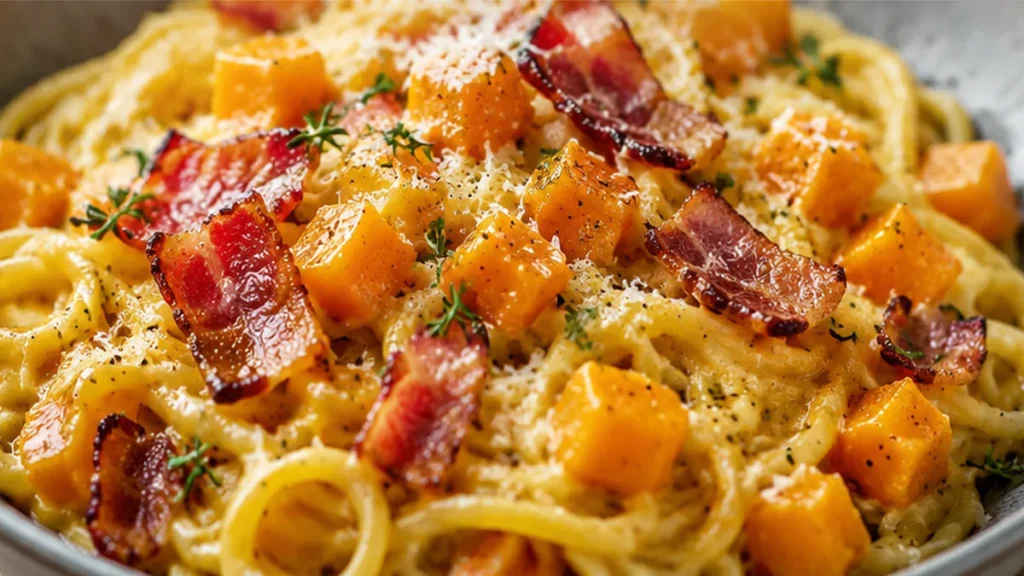
This butternut carbonara recipe combines roasted butternut squash with savory rosemary bacon and a creamy sauce. It’s a comforting pasta dish that’s simple to prepare.
Key takeaways
- Achieve a creamy, stable emulsion by tempering eggs with hot pasta water and rendered fat off the heat.
- Caramelize the butternut squash to deepen its flavor and prevent a watery sauce.
- Render bacon slowly for maximum fat yield and crispy texture.
- Balance the savory and sweet elements with a touch of honey at the end.
Creamy Butternut Carbonara: The Ultimate Fall Comfort!
Ingredients
- 1 tablespoon extra virgin olive oil
- 2 cups cubed butternut squash (about 1 small squash)
- 2 tablespoons fresh thyme leaves
- 1/2 teaspoon crushed red pepper flakes
- kosher salt and black pepper
- 2 cloves garlic, smashed
- 8 slices thick-cut bacon
- 2 tablespoon chopped fresh rosemary
- 1/2-1 teaspoon cayenne pepper
- 2 teaspoons honey
Instructions
- Preheat oven to 400 degrees F. On a baking sheet, toss together the olive oil, butternut squash, garlic, thyme, and a pinch each of crushed red pepper flakes, salt, and pepper. On a plate, rub the bacon with rosemary and cayenne, drizzle with honey. Lay the bacon over top.
- Transfer to the oven and roast for 10 minutes, flip the bacon and bake another 5-8 minutes, until the bacon is crisp, watch closely. Remove the bacon. If squash needs more time, return to the oven for another 10 minutes, or until the squash is tender.
- Transfer the squash and garlic to a food processor. Puree until smooth. Season with salt and pepper. Roughly chop the bacon, reserve for topping.
- Meanwhile, whisk together the eggs and parmesan.
- Boil the pasta until al dente. Before draining, scoop out 1 cup pasta water, then drain the pasta and add the pasta back to the hot pot. Immediately add the egg/cheese mixture, tossing quickly (to ensure the eggs do not scramble) until the eggs thicken and create a sauce. Add the butternut squash puree, and the butter, tossing to combine. Thin the sauce with the reserved pasta water until it reaches your desired consistency.
- Divide the pasta between plates. Top with bacon. Twirl the pasta up…EAT and ENJOY.
Notes
The Technique Behind the Creamy Butternut Carbonara
The magic of a truly great carbonara, even one with the addition of butternut squash, lies in creating a stable, luscious emulsion. This is achieved by tempering the eggs and cheese with the hot pasta water and rendered fat, rather than scrambling the eggs with direct heat. For this butternut variation, we introduce the squash early. Roasting or sautéing the squash cubes with olive oil, thyme, red pepper flakes, salt, and pepper until tender and slightly caramelized is crucial. This process concentrates the squash’s natural sweetness and develops a deeper flavor profile through the Maillard reaction, preventing a watery or bland result. The smashed garlic cloves, added during the squash sauté, infuse the oil with aromatic compounds without burning. Rendering the bacon slowly allows the fat to render out completely, providing the flavorful base for the sauce and crispy bacon bits for texture. When it’s time to combine, the key is to toss the hot pasta with the rendered bacon fat, squash mixture, and then gradually add the tempered egg and Pecorino Romano mixture off the heat. The residual heat from the pasta and the reserved starchy pasta water will cook the eggs gently, creating a creamy sauce that coats every strand without clumping. The addition of honey at the end balances the savory and slightly sweet notes of the squash and bacon.
Troubleshooting
- Problem: Sauce is too thick or clumpy. Fix: Gradually whisk in more reserved hot pasta water, a tablespoon at a time, off the heat until the desired creamy consistency is reached. The starch in the water helps to further emulsify the sauce.
- Problem: Sauce is too thin or watery. Fix: Ensure you’ve used enough cheese, as it acts as a binder. If still too thin, you can gently return the pan to very low heat for a moment, stirring constantly, to allow some of the liquid to evaporate, but be extremely careful not to scramble the eggs.
- Problem: Butternut squash is mushy or bland. Fix: Ensure the squash was sautéed or roasted at a sufficient temperature to allow for some caramelization. Don’t overcrowd the pan when cooking the squash, and season it well before cooking.
- Problem: Eggs have scrambled. Fix: This happens when the eggs are exposed to direct, high heat. Always add the egg and cheese mixture off the heat and toss vigorously with the hot pasta and fat. If scrambling occurs, unfortunately, the dish may need to be restarted.
Substitutions
- Butternut Squash: Acorn squash or kabocha squash can be used. The flavor will be slightly different, with kabocha offering a nuttier taste and acorn squash a milder sweetness. The cooking time may vary slightly.
- Bacon: Pancetta offers a similar cured pork flavor but is less smoky. Guanciale is a more traditional choice for carbonara and will provide a richer, more intense pork flavor. Use about 6 ounces.
- Pecorino Romano: Parmigiano-Reggiano can be substituted. It will result in a slightly less sharp and salty sauce, with a nuttier undertone. Use an equal amount.
- Thyme/Rosemary: Fresh sage is an excellent alternative, especially for a fall-themed dish. It pairs beautifully with butternut squash and bacon. Use a similar quantity.
Pro tips
- Don’t rinse your pasta after draining; the starch helps the sauce cling better. Always save some pasta water to adjust the sauce consistency. If you overcook the bacon, it can become too brittle; keep a close eye on it during the last few minutes of roasting.
- To prevent the eggs from scrambling, ensure the pasta is still very hot but remove it from direct heat before adding the egg mixture, tossing continuously and quickly. The residual heat will cook the eggs into a silky sauce. This butternut carbonara stores well in the fridge for up to 3 days; reheat gently on the stovetop with a splash of milk or water to restore creaminess.
This butternut carbonara offers a delicious twist on a classic, blending seasonal flavors with comforting textures. Try this recipe to impress your family and friends, and don’t hesitate to share your own variations!
Frequently asked questions
How do I prevent the eggs from scrambling in the sauce?
The key is to add the egg and cheese mixture off the heat. Toss the hot pasta, squash, and bacon fat vigorously, then gradually incorporate the egg mixture. The residual heat from the pasta and reserved starchy water will gently cook the eggs into a creamy sauce.
Can I make the butternut squash ahead of time?
Yes, you can roast or sauté the butternut squash mixture a day in advance. Store it in an airtight container in the refrigerator. Reheat it gently before adding it to the pasta to ensure it’s warm enough to help temper the eggs.
What kind of pasta is best for this dish?
Long pasta shapes like spaghetti, bucatini, or linguine are ideal as they hold the creamy sauce well. Ensure you cook the pasta al dente and reserve at least a cup of the starchy cooking water before draining.
Is the honey essential, or can I omit it?
The honey is used to balance the rich, savory flavors of the bacon and cheese with the natural sweetness of the butternut squash. While you can omit it, a small amount adds a pleasant complexity. If omitting, consider a tiny pinch of sugar if the squash isn’t very sweet.
More from Creamy Pasta Recipes →