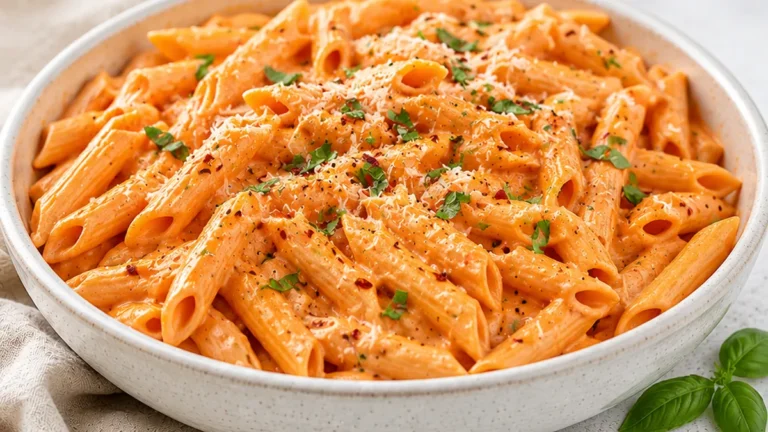
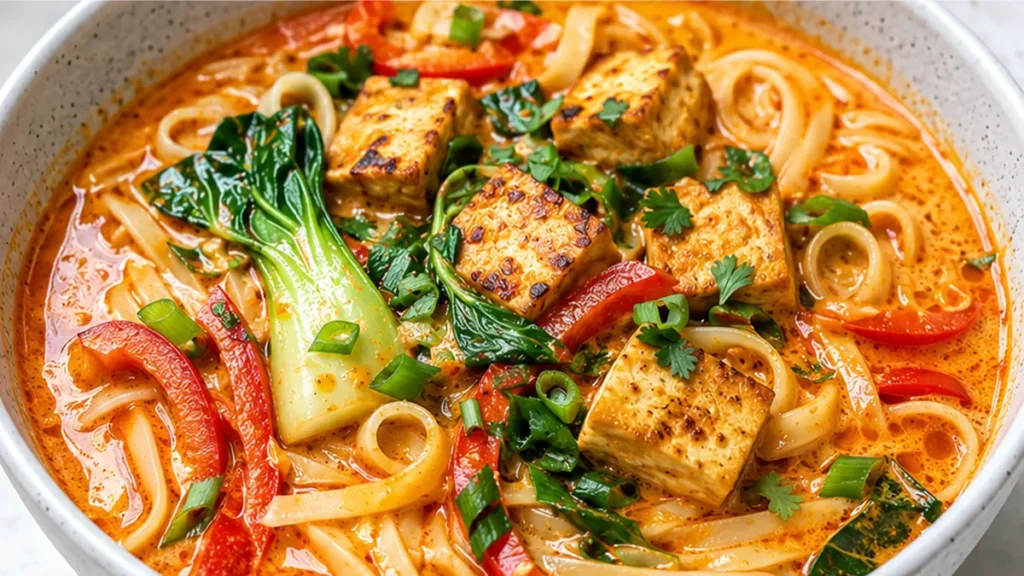
This red curry noodles recipe is a fresh and satisfying dish that brings the heat and flavor of Southeast Asia right to your kitchen. Combining tender rice noodles with a rich, spicy coconut curry sauce, crisp stir-fry vegetables, and protein-packed tofu, these curry noodles are perfect for a quick and delicious weeknight meal. Our recipe focuses on simplicity and speed, ensuring you can create an authentic-tasting curry noodle dish in under 30 minutes. The balance of spicy red curry paste, creamy coconut milk, savory soy sauce, and a touch of sweetness makes this a truly addictive flavor combination that will leave you wanting more.
Key takeaways
- Pressing tofu is key for a crispy texture.
- Bloom curry paste with aromatics for deeper flavor.
- Cook vegetables until tender-crisp, not mushy.
- Don't overcook rice noodles; they finish in the sauce.
Ultimate Red Curry Noodles: A Flavor Explosion!
Ingredients
- 8 ounces stir fry rice noodles
- 2 tablespoons olive oil
- 2 cloves garlic, minced
- 1 thumb-size piece of fresh ginger, peeled and grated
- 14 ounces extra-firm tofu, pressed and cubed
- 3 tablespoons red curry paste
- 4 cups mixed stir-fry vegetables (e.g., broccoli florets, bell pepper strips, snap peas)
- 1 (14-ounce) can full-fat coconut milk
- 2 tablespoons low-sodium soy sauce
- 2 tablespoons granulated sugar
Instructions
- Cook the rice noodles according to package directions (usually 3-5 minutes). Drain and set aside.
- Heat 2 tablespoons of olive oil in a large skillet or wok over medium heat. Add 2 cloves of minced garlic and 1 thumb-sized piece of grated ginger. Sauté until fragrant and softened, about 1-2 minutes.
- Add 14 ounces of cubed extra-firm tofu and 3 tablespoons of red curry paste to the skillet. Stir gently to coat the tofu. Add 4 cups of mixed stir-fry vegetables.
- Sauté everything for about 10 minutes, stirring occasionally, until the vegetables are tender-crisp and the tofu and curry paste begin to caramelize slightly.
- Pour in 1 (14-ounce) can of full-fat coconut milk, 2 tablespoons of low-sodium soy sauce, and 2 tablespoons of granulated sugar. Stir to combine and bring the sauce to a gentle simmer.
- Add the cooked rice noodles to the skillet with the sauce and vegetables. Toss everything together until the noodles are well coated and heated through. Serve immediately.
Notes
The technique that makes it
The success of these ultimate red curry noodles hinges on a few key techniques that build layers of flavor and achieve the perfect texture. First, properly preparing the tofu is crucial. Pressing the extra-firm tofu removes excess water, allowing it to crisp up beautifully when pan-fried, rather than becoming soggy. Cubing it uniformly ensures even cooking. Sautéing the aromatics – minced garlic and grated ginger – until fragrant before adding the red curry paste is vital. This step blooms the spices in the paste, releasing their complex aromas and flavors, preventing a raw, pungent taste. When adding the curry paste to the pan with the aromatics, cook it for a minute or two, stirring constantly. This ‘toasting’ of the paste deepens its flavor and reduces any bitterness. For the sauce, combining the coconut milk, soy sauce, and sugar separately and then simmering it gently allows the flavors to meld and the sauce to thicken slightly without scorching. Adding the vegetables at the right time is also important; stir-frying them until they are tender-crisp ensures they retain their bright color, texture, and nutritional value, rather than becoming mushy. Finally, cooking the rice noodles according to package directions until al dente prevents them from becoming overcooked and clumping together when tossed with the sauce and vegetables.
Troubleshooting
- Problem: Curry sauce is too thin. Fix: Simmer the sauce uncovered for a few extra minutes to allow some of the liquid to evaporate and thicken the sauce. Alternatively, you can create a slurry with 1 tablespoon of cornstarch mixed with 2 tablespoons of water and stir it into the simmering sauce until thickened.
- Problem: Tofu is not crispy. Fix: Ensure the tofu was pressed thoroughly to remove as much moisture as possible. Pan-fry the tofu in a single layer without overcrowding the pan, allowing it to brown on all sides. You may need to cook it in batches.
- Problem: Red curry paste tastes bitter or raw. Fix: Make sure you are sautéing the curry paste with the garlic and ginger for at least 1-2 minutes, stirring constantly, until fragrant. This ‘blooming’ process is essential for developing its full flavor profile.
- Problem: Noodles are clumpy or mushy. Fix: Cook the rice noodles just until al dente, as they will continue to cook slightly when tossed with the hot sauce. Rinse the cooked noodles briefly under cold water to stop the cooking process and prevent them from sticking together before adding them to the stir-fry.
Substitutions
- Protein: Instead of tofu, you can use thinly sliced chicken breast, shrimp, or firm white fish. Cook these proteins separately before adding them to the curry sauce to ensure they are cooked through and tender.
- Vegetables: Feel free to swap the mixed stir-fry vegetables for others like sliced carrots, zucchini, mushrooms, or baby corn. Ensure they are cut into bite-sized pieces for even cooking.
- Curry Paste: If red curry paste is unavailable, green or yellow curry paste can be used, though this will alter the flavor profile and heat level. Adjust seasoning as needed.
- Noodles: While rice noodles are traditional, you could also use udon noodles or even spaghetti for a different texture, though the dish will not be gluten-free if wheat-based pasta is used.
Pro tips
- Use a full-fat coconut milk for the creamiest sauce.
- Adjust the amount of red curry paste to control the spice level.
- Don’t overcook the noodles; they should be al dente.
- Feel free to add other proteins like chicken or shrimp.
Enjoy this delicious and easy red curry noodles recipe as a satisfying meal. Feel free to customize with your favorite vegetables or protein!
More from Creamy Pasta Recipes →
Frequently asked questions
Can I make red curry noodles ahead of time?
Yes, you can prepare the curry sauce and cook the noodles separately up to two days in advance. Store them in airtight containers in the refrigerator. When ready to serve, reheat the sauce gently and cook the noodles until al dente before combining. This method prevents the noodles from becoming mushy.
What kind of noodles are best for red curry noodles?
Rice noodles, particularly wide or flat rice noodles, are ideal as they absorb the rich curry sauce beautifully. Other good options include udon or even spaghetti if you don’t have rice noodles on hand. The key is a noodle that holds up well to the sauce’s texture and flavor.
How do I store leftover red curry noodles?
Allow the noodles to cool completely before storing them in an airtight container in the refrigerator. They will keep for up to 3 days. Reheat gently in a saucepan over medium-low heat, adding a splash of water or broth if the sauce has thickened too much. Avoid microwaving if possible to maintain noodle texture.
What can I substitute for coconut milk in red curry noodles?
If you need a dairy-free alternative, unsweetened cashew milk or oat milk can work, though they might slightly alter the creaminess and flavor. For a richer, dairy option, heavy cream or evaporated milk can be used in a pinch, but add them carefully to avoid curdling.