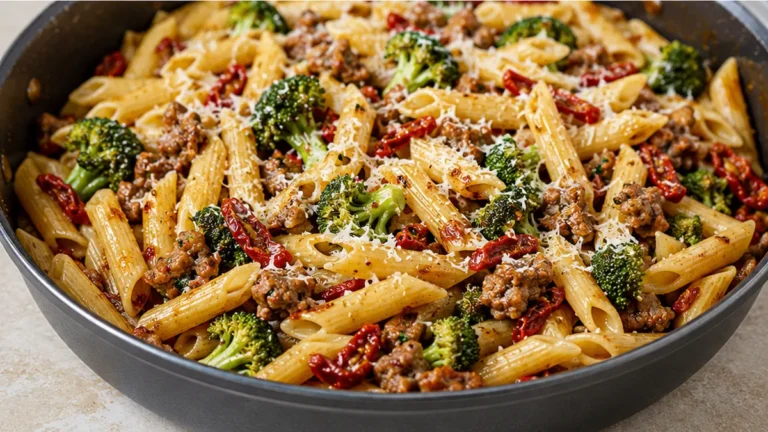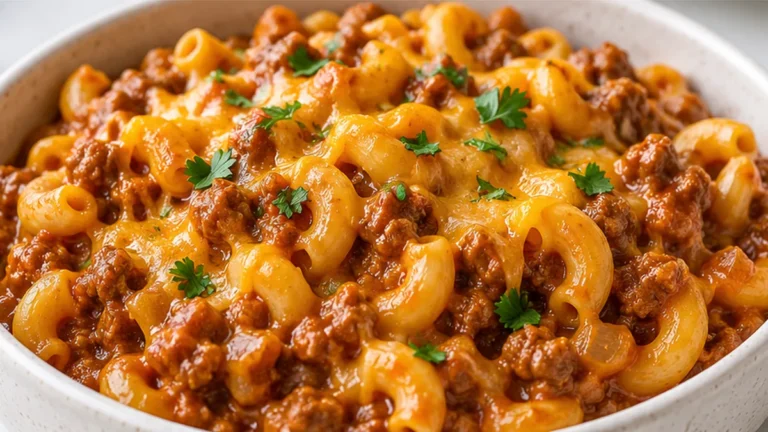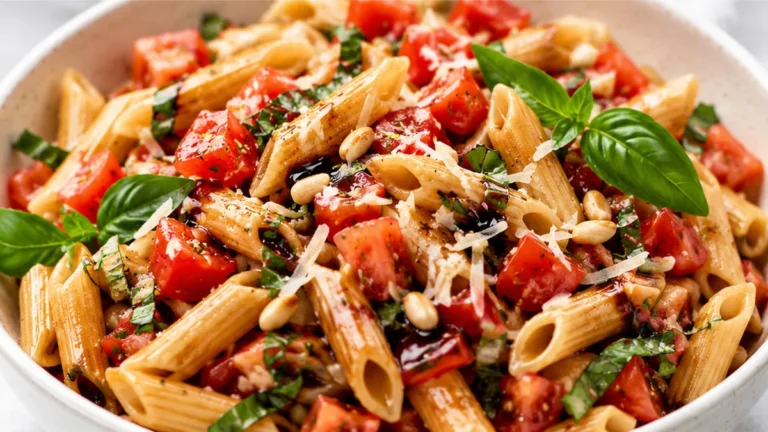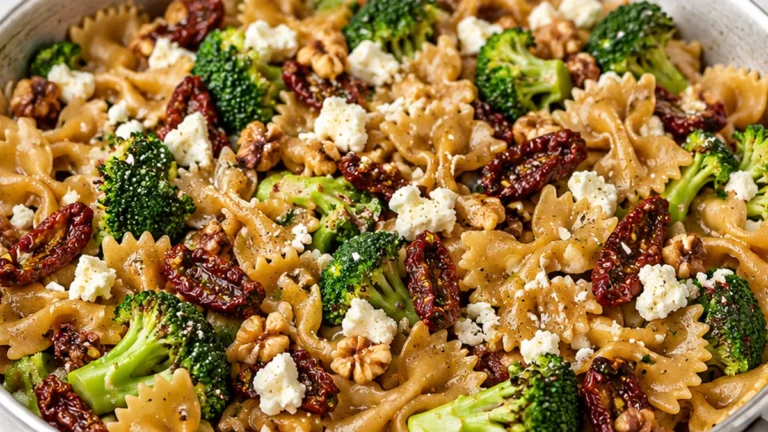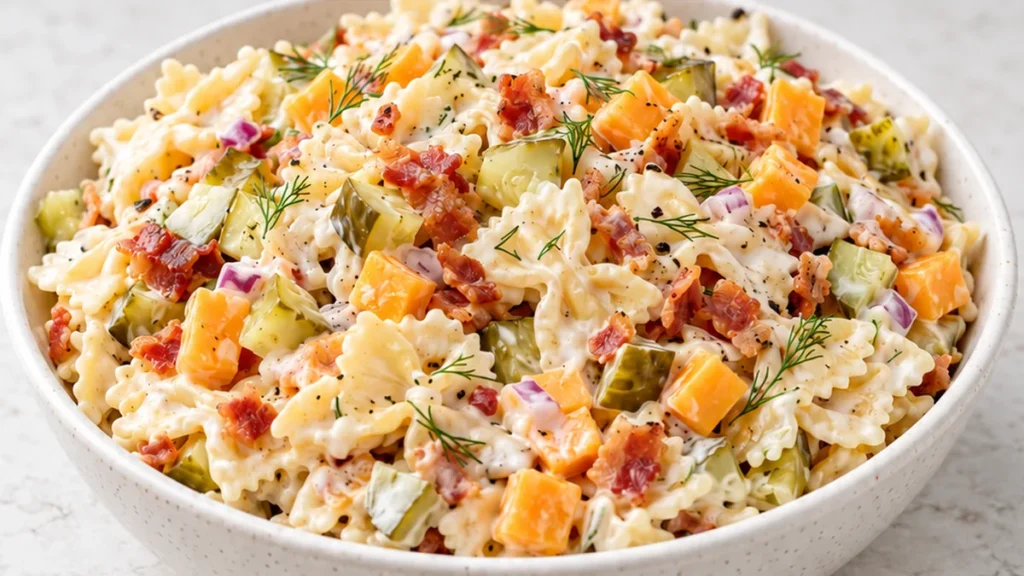
This dill pickle pasta salad features a creamy dressing and crunchy pickles. It’s a simple, tangy dish that pairs well with any meal.
Key takeaways
- Use al dente pasta to maintain the right texture.
- Balance creaminess and acidity with the right dressing ratios.
- Choose high-quality, fresh ingredients for the best flavor.
- Incorporate pickle brine into the dressing for enhanced tanginess.
Dill Pickle Pasta Salad: Tangy & Creamy!
Ingredients
- 8 oz bowtie pasta (uncooked)
- 1 cup dill pickles (chopped)
- ½ cup red onion (diced)
- 1 cup sharp cheddar cheese (diced)
- ½ cup bacon (cooked and crumbled)
- ¼ cup dill pickle juice
- ¼ cup mayonnaise
- ¼ cup Greek yogurt
- 1 tsp Dijon mustard
- ½ tsp garlic powder
Instructions
- Cook 8 oz. bowtie pasta according to package directions until al dente. Drain and rinse under cold water until completely cool.
- In a small bowl, whisk together the dill pickle juice, mayonnaise, Greek yogurt, Dijon mustard, and garlic powder until smooth.
- In a large bowl, combine the cooled pasta, chopped dill pickles, diced red onion, diced sharp cheddar cheese, and crumbled bacon.
- Pour the dressing over the pasta mixture and stir gently until everything is evenly coated.
- Taste and adjust seasonings if needed. Serve immediately or chill for at least 30 minutes for flavors to meld.
Understanding the Role of Dill Pickles in Flavor Development
Dill pickles are more than just a crunchy addition to your pasta salad; they are a key flavor component that contributes to the overall taste profile. The acidity from the pickles helps to balance the creaminess of the dressing, creating a harmonious blend. The ideal ratio of dill pickles to pasta is about 1:3, ensuring that the flavor is prominent but not overwhelming. Additionally, the brine from the pickles can be used in the dressing, enhancing the tanginess and infusing the salad with extra flavor dimensions.
Common Texture Issues and How to Achieve the Perfect Bite
A common challenge when making dill pickle pasta salad is achieving the right texture. Overcooked pasta can lead to a mushy salad, while undercooked pasta may be too firm. Aim for al dente pasta, which typically requires about 8-10 minutes of boiling, depending on the type. To prevent the pasta from sticking together, rinse it under cold water after draining. This step also cools the pasta quickly, making it ready to mix with the other ingredients. Additionally, consider the size of your pickle pieces; chopping them too finely can lead to a soggy texture, while larger chunks provide satisfying bites.
Balancing Creaminess and Acidity for Optimal Flavor
The dressing in a dill pickle pasta salad is crucial for balancing flavors. A common mistake is using too much mayonnaise, which can dominate the dish. A good ratio is about 1 part mayonnaise to 2 parts yogurt or sour cream, which adds creaminess without overwhelming the palate. Incorporate a splash of pickle juice to adjust acidity levels. This not only enhances the flavor of the salad but also keeps it from being too rich. Aim for a dressing that coats the pasta evenly without pooling at the bottom of the bowl.
Ingredient Quality and Its Impact on Overall Success
The quality of your ingredients can significantly affect the outcome of your dill pickle pasta salad. Fresh ingredients, such as high-quality pickles and fresh herbs, will provide better flavor than their processed counterparts. When selecting dill pickles, look for ones that are crisp and have a vibrant color, as these qualities often indicate freshness. Additionally, using whole grain or artisanal pasta can add a unique texture and flavor that elevates the dish. Remember, the better the ingredients, the more delicious your salad will be.
Understanding the Impact of Ingredient Quality on Flavor and Texture
The quality of your ingredients plays a crucial role in the overall success of dill pickle pasta salad. Fresh, high-quality pasta will provide a better texture and mouthfeel compared to dried or low-quality options. Similarly, using homemade or artisanal dill pickles can enhance the salad’s flavor profile significantly. The vinegar content in the pickles, along with their spices, directly affects the tanginess and complexity of the dish. When selecting ingredients, consider using organic vegetables and fresh herbs to maximize flavor. Additionally, the freshness of your cream or yogurt can impact the creaminess of the dressing, as older dairy products may impart off-flavors. Therefore, investing in high-quality ingredients is essential for achieving a vibrant and delicious dill pickle pasta salad.
Batch Scaling: Adjusting Quantities for Different Occasions
Scaling your dill pickle pasta salad recipe can be straightforward, but it’s essential to maintain the right balance of flavors. When doubling or halving the recipe, ensure that you adjust not only the quantities of pasta and pickles but also the dressing components. A common mistake when scaling recipes is to not proportionally adjust the seasoning, which can lead to an imbalanced flavor. For example, if you double the pasta but only add the same amount of dressing, the salad may become dry. A good rule of thumb is to increase the dressing by about 10% per additional serving to maintain the desired creaminess and tang. Always taste as you go to ensure the flavors remain harmonious.
Equipment Variations: How Tools Influence Your Salad’s Consistency
The equipment you use to prepare your dill pickle pasta salad can significantly affect its final texture and flavor distribution. For instance, using a food processor to chop vegetables can create a finer texture, which may lead to a more cohesive salad. Conversely, hand-chopping your ingredients results in a chunkier salad that may provide a more varied mouthfeel. Additionally, the type of bowl you use for mixing can impact how well the ingredients combine. A larger bowl allows for better mixing, ensuring that the dressing coats the pasta evenly. If you’re using a smaller bowl, consider mixing in batches to ensure an even distribution of flavors. Understanding these equipment differences can help you achieve the desired consistency in your pasta salad.
Seasonal Adjustments: Adapting Ingredients for Optimal Flavor
Seasons can greatly influence the flavor and quality of the ingredients used in dill pickle pasta salad. During warmer months, fresh vegetables like cucumbers, bell peppers, and herbs are at their peak, providing vibrant flavors that enhance the dish. In contrast, during colder months, you might consider using roasted vegetables or pickled alternatives to maintain flavor depth. Additionally, the availability of certain types of dill pickles can vary seasonally; opting for locally sourced pickles may yield a fresher taste. When adapting your recipe, keep in mind that the acidity of the dressing may need to be adjusted based on the sweetness or bitterness of the seasonal vegetables. This attentiveness to seasonal ingredients ensures your salad remains delicious year-round.
How to Enhance Flavor and Texture with Proper Ingredient Preparation
Proper ingredient preparation can significantly impact the overall flavor and texture of dill pickle pasta salad. Start by finely chopping the dill pickles; this increases the surface area, allowing their tangy flavor to infuse throughout the salad. Additionally, consider lightly salting the cucumbers before adding them to the mix. This draws out excess moisture, preventing the salad from becoming too watery. Allow the salted cucumbers to sit for about 15-20 minutes, then drain them before mixing. This technique enhances the crunchiness of the cucumbers while intensifying their flavor. Furthermore, using freshly chopped herbs rather than dried can elevate the dish, providing a vibrant taste contrast to the creamy base. Aim for a ratio of about 2 tablespoons of fresh dill for every cup of pasta to maintain a balanced flavor profile.
Understanding the Role of Acidity in Balancing Creaminess
The balance of acidity and creaminess is crucial in creating a well-rounded dill pickle pasta salad. The acidity from the dill pickles and any added vinegar or lemon juice cuts through the richness of the creamy dressing, preventing it from becoming overwhelming. To achieve this balance, consider the ratio of acidic to creamy components. A general guideline is to aim for about 1 tablespoon of vinegar or lemon juice for every cup of creamy dressing. This not only enhances flavor but also improves the overall mouthfeel of the dish. If the salad tastes too rich, a splash of pickle brine can be added for an extra zing without altering the creaminess. Remember, the goal is to create a harmonious blend where the tanginess complements the creaminess, resulting in a refreshing and satisfying dish.
Understanding the Best Storage Practices for Dill Pickle Pasta Salad
Proper storage is crucial to maintaining the freshness and flavor of dill pickle pasta salad. After preparing the salad, it can be stored in an airtight container in the refrigerator for up to three days. However, the texture of the pasta can change, becoming softer as it absorbs moisture from the dressing and pickles. To minimize this effect, consider storing the pasta and dressing separately until ready to serve. This way, the pasta retains its firmness, and the flavors remain vibrant. If you’re making it ahead of time for a gathering, prepare the salad a few hours in advance and keep it chilled until serving. This allows the flavors to meld without compromising the texture of the pasta.
Pairing Options to Elevate Your Dill Pickle Pasta Salad
Dill pickle pasta salad is versatile and can be paired with a variety of dishes to create a balanced meal. It works exceptionally well with grilled meats, such as chicken or pork, as the tangy flavor of the salad complements the savory notes of the protein. Additionally, serving it alongside a light protein, like fish or tofu, enhances the overall dining experience. For a vegetarian option, consider pairing it with a hearty vegetable platter or a fresh green salad to create a colorful spread. The acidity in the salad can also balance richer dishes, making it a great side for creamy casseroles or cheesy entrees. Experimenting with different pairings can help you discover new flavor combinations that enhance the enjoyment of this dish.
Pro tips
Pro tip: Best served immediately while hot!
Frequently asked questions
Can I make this salad ahead of time?
Yes, you can prepare dill pickle pasta salad ahead of time. It actually benefits from sitting in the refrigerator for a few hours or overnight, allowing the flavors to meld. Just make sure to store it in an airtight container to keep it fresh.
What type of pasta works best for this recipe?
Short pasta shapes like rotini, fusilli, or penne work best for dill pickle pasta salad, as they hold onto the dressing and mix well with the other ingredients. Avoid long pasta shapes, which may not integrate as well.
Can I add other vegetables to my pasta salad?
Absolutely! Feel free to add vegetables like bell peppers, cucumbers, or red onions for additional crunch and flavor. Just ensure that the vegetables complement the dill pickle taste and don’t overpower it.
How can I make this salad healthier?
To make a healthier version of dill pickle pasta salad, consider using Greek yogurt instead of mayonnaise for the dressing. You can also add more vegetables to increase the fiber content and reduce the pasta portion for a lighter dish.
More from Easy Pasta Recipes →