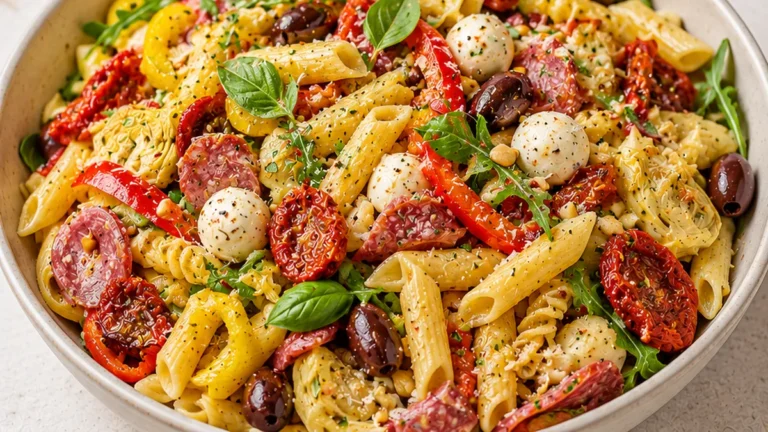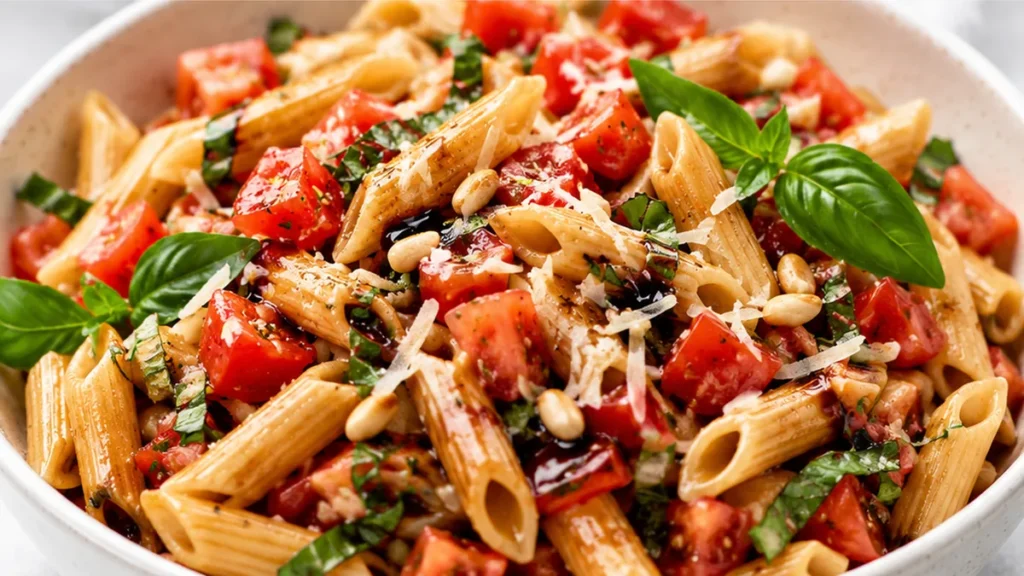
This summer pasta salad combines fresh ingredients for a light and satisfying dish. Perfect for picnics or barbecues, it’s easy to prepare and serve.
Key takeaways
- Use fresh, high-quality ingredients for the best flavor.
- Dress the salad just before serving to prevent sogginess.
- Adjust the acidity of the dressing to avoid overpowering flavors.
- Serve the salad cold or at room temperature for optimal enjoyment.
Summer Pasta Salad Bliss
Ingredients
- 500 g penne, ziti or other short pasta
- 2 tsp cooking salt / kosher salt, for cooking pasta
- 1 kg tomatoes, chopped into 1.25cm / 1/2” pieces, keep all juices
- 3/4 cup tightly packed basil leaves, finely sliced
- 1/2 cup tightly packed finely shredded parmesan
- 1/2 cup extra virgin olive oil
- 1/4 cup balsamic vinegar
- 2 garlic cloves, minced using garlic press or very finely minced using knife
Instructions
- Prepare the Dressing: Shake olive oil, balsamic vinegar, minced garlic, and 3/4 tsp salt in a jar until well combined.
- Cook the Pasta: Bring a large pot of water to a boil with 2 tsp salt. Add pasta and cook for 2 minutes longer than package directions until very soft. Drain in a colander, return to the pot.
- Flavour the Pasta: Pour 2/3 of the prepared dressing over the warm pasta. Stir well and let it sit for 15 minutes to absorb the flavors while it cools.
- Marinate the Tomatoes: In a separate bowl, combine the chopped tomatoes (with their juices) and the remaining 1/3 of the dressing. Let sit for 10 minutes.
- Combine: Pour the accumulated tomato juices into the pasta pot. Add the marinated tomatoes, finely sliced basil, and shredded parmesan. Gently toss everything together.
- Season and Serve: Add 1/2 tsp salt to the tomato mixture and toss gently. Stir it all into the pasta. Serve immediately or chill for later.
Understanding the Role of Ingredients in Summer Pasta Salad
The success of a summer pasta salad lies in the quality and balance of its ingredients. Fresh vegetables such as bell peppers, cucumbers, and cherry tomatoes not only add vibrant color but also provide essential nutrients and hydration. The choice of pasta is equally crucial; opt for whole grain or gluten-free varieties to enhance fiber content. Cooking the pasta al dente is essential, as it retains a firm texture that holds up well against the dressing and moisture from the vegetables.
Common Pitfalls in Dressing Your Pasta Salad
A common issue when preparing summer pasta salad is the over-saturation of dressing, which can lead to a soggy dish. The key is to dress the salad just before serving, allowing the pasta and vegetables to absorb the flavors without compromising texture. Another problem arises from using too much acid, such as vinegar or lemon juice, which can overpower the salad. A good rule of thumb is to start with a 3:1 ratio of oil to vinegar, adjusting to taste. Additionally, incorporating fresh herbs like basil or parsley can elevate the flavor profile without overwhelming the dish.
Enhancing Flavor with Additions and Swaps
When it comes to personalizing your summer pasta salad, consider swapping out ingredients based on seasonal availability or dietary preferences. For example, substituting traditional mozzarella with feta cheese can add a tangy twist. If you’re looking for a protein boost, grilled chicken or chickpeas can be excellent additions, enhancing both flavor and nutritional value. However, be mindful of the moisture content; if adding moist ingredients, reduce the amount of dressing to maintain balance.
Temperature and Timing: Key Factors for Perfect Pasta Salad
Temperature plays a vital role in the enjoyment of summer pasta salad. Ideally, it should be served cold or at room temperature. If the salad is prepared in advance, refrigerate it for at least an hour to allow the flavors to meld. However, avoid chilling for too long, as the pasta can become overly firm. When serving, allow the salad to sit at room temperature for about 15 minutes before serving, which can help enhance the flavors and improve overall texture.
How to Prepare Summer Pasta Salad in Advance for Optimal Flavor
Making a summer pasta salad ahead of time is a great way to enhance its flavors. To do this, cook the pasta until just al dente, then rinse it under cold water to stop the cooking process. Combine it with your chosen vegetables, herbs, and dressing, but reserve a portion of the dressing to add just before serving. This prevents the pasta from absorbing too much dressing and becoming soggy. Ideally, prepare the salad a few hours before serving, allowing the flavors to meld. If you need to store it for longer than a day, keep the dressing separate until ready to serve.
Scaling Your Summer Pasta Salad Recipe for Larger Gatherings
When scaling up your summer pasta salad recipe, it’s essential to maintain the balance of flavors and textures. A general rule of thumb is to increase the pasta by 50% for every additional 4-6 servings. For vegetables and dressing, increase them proportionally, but start with 75% of the calculated amount to avoid overpowering the dish. Remember that larger batches may require more time to chill and for flavors to develop. For example, if doubling the recipe, allow additional time in the refrigerator to ensure even cooling.
Choosing the Right Equipment for Mixing and Serving
The right equipment can significantly impact the preparation and serving of your summer pasta salad. A large mixing bowl is essential for combining ingredients without spilling. A pasta fork or tongs can help to gently toss the salad without breaking the pasta or vegetables. For serving, consider using a slotted spoon to allow excess dressing to drain off, ensuring each serving remains balanced in flavor. If you’re serving outdoors, insulated bowls can keep your salad cool longer, maintaining its freshness.
Seasonal Variations: Adapting Your Salad to Ingredient Quality
Summer pasta salad is versatile and can be adapted based on seasonal ingredient availability. During peak summer months, opt for fresh, ripe tomatoes and crisp cucumbers for a refreshing crunch. As the season changes, consider incorporating roasted vegetables or heartier greens like kale or spinach. Additionally, the quality of your ingredients can affect the final result; always choose ripe, in-season produce for the best flavor. For example, using heirloom tomatoes in summer can elevate the dish, while winter may call for roasted root vegetables for depth.
Understanding the Impact of Ingredient Quality on Your Summer Pasta Salad
The quality of ingredients in your summer pasta salad significantly influences the final dish. Fresh, seasonal vegetables not only provide vibrant color but also enhance flavor and texture. For example, ripe tomatoes will offer a sweetness that out-of-season tomatoes lack. When selecting pasta, opt for high-quality durum wheat pasta, which holds its shape better and provides a pleasing chew. Fresh herbs, like basil or parsley, should be used instead of dried for a more pronounced flavor. Additionally, the quality of olive oil can elevate the dressing; a high-grade extra virgin olive oil will impart a rich, fruity note that complements the other ingredients. Remember that the freshness of your produce and the quality of your oils and vinegars can make a remarkable difference in the overall taste of the salad.
Mastering the Art of Seasonal Pairings in Your Salad
When crafting a summer pasta salad, understanding seasonal pairings can elevate your dish. In warmer months, light and refreshing ingredients work best. Consider incorporating cucumbers, bell peppers, and radishes for crunch and hydration. As seasons change, adapt your ingredients accordingly; for instance, in late summer, add roasted corn or zucchini for a heartier texture. This not only enhances flavor but also ensures you are using ingredients at their peak freshness. Furthermore, pairing your salad with proteins like grilled chicken or shrimp can create a more balanced meal. The versatility of pasta salad allows for endless combinations, so don’t hesitate to experiment with seasonal produce to keep your dish exciting and flavorful.
Choosing the Right Serving and Storage Techniques for Maximum Freshness
Proper serving and storage techniques are essential for maintaining the freshness of your summer pasta salad. When serving, allow the salad to sit at room temperature for about 20-30 minutes before serving to enhance the flavors. If you need to prepare it in advance, store the salad in an airtight container in the refrigerator. However, keep the dressing separate until just before serving to prevent the pasta from absorbing too much moisture and becoming mushy. If you plan to make a larger batch, consider using a larger mixing bowl to ensure even distribution of ingredients. Leftovers can be stored for up to three days; however, be mindful that the texture may change as the pasta continues to absorb the dressing. For best results, consume the salad within the first couple of days.
Understanding the Importance of Ingredient Freshness in Summer Pasta Salad
The quality and freshness of ingredients play a crucial role in the overall success of a summer pasta salad. Fresh vegetables not only enhance the flavor but also contribute to the texture and nutritional value of the dish. For instance, ripe tomatoes add a sweetness that canned varieties cannot replicate, while crisp cucumbers provide a refreshing crunch. Aim to use seasonal produce, as it is often harvested at its peak flavor and nutritional content. When selecting ingredients, look for vibrant colors and firm textures. For herbs, choose those that are fragrant and vibrant, as their oils contribute significantly to the salad’s aroma and taste.
Additionally, consider the timing of your purchase. Ingredients like bell peppers and zucchini should be used shortly after purchase to ensure they retain their crispness. If you must store them, keep them in a cool, dry place and consume them within a few days. This approach not only maximizes flavor but also ensures a visually appealing dish, as wilted or overripe ingredients can detract from the overall presentation.
Scaling Your Summer Pasta Salad for Different Occasions
When it comes to scaling your summer pasta salad recipe, understanding ingredient ratios is key to maintaining flavor and texture. For larger gatherings, simply doubling or tripling the recipe may seem straightforward, but attention must be paid to the balance of ingredients. A common rule of thumb is to maintain a 2:1 ratio of pasta to vegetables. This ensures that the pasta does not overpower the other components and that the salad remains vibrant and colorful.
Moreover, consider the dressing’s volume when scaling up. For larger batches, it may be beneficial to prepare the dressing separately and add it to the salad just before serving. This prevents the pasta from absorbing too much dressing, which can lead to a soggy texture. Additionally, if you are preparing the salad in advance, keep the dressing on the side until serving time. This not only preserves the freshness of the ingredients but also allows guests to customize their servings to their taste.
Pro tips
Pro tip: Best served immediately while hot!
Frequently asked questions
Can I make summer pasta salad ahead of time?
Yes, you can prepare summer pasta salad ahead of time. However, it’s best to wait until just before serving to add the dressing to prevent the pasta from becoming soggy.
What type of pasta works best for this salad?
Short pasta shapes like fusilli, penne, or farfalle are ideal for summer pasta salad as they hold onto the dressing and mix well with vegetables.
How can I make my pasta salad more filling?
To make your summer pasta salad more filling, consider adding protein sources like grilled chicken, chickpeas, or beans. These additions will enhance the nutritional value and keep you satisfied.
What can I substitute for traditional dressing ingredients?
If you’re looking to substitute traditional dressing ingredients, try using Greek yogurt instead of mayonnaise for creaminess, or swap out vinegar for citrus juice for a lighter flavor.
More from Easy Pasta Recipes →