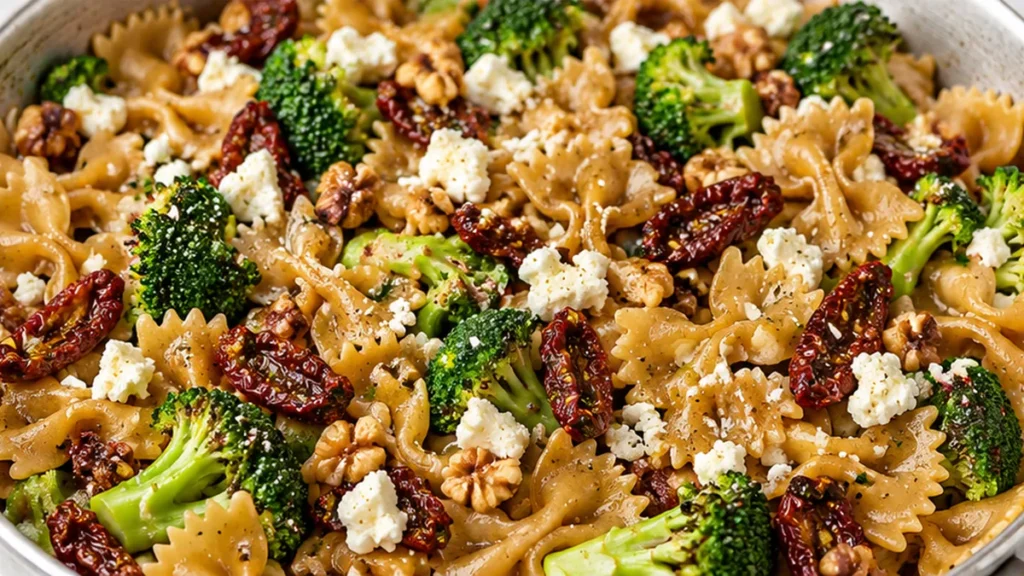
This skillet pasta with walnuts combines the rich taste of sun-dried tomatoes with a simple cooking method. It’s a quick, nutritious meal option.
Key takeaways
- Sun-dried tomatoes add concentrated flavor and acidity.
- Toasting walnuts enhances their crunch and flavor.
- Cooking pasta al dente ensures it maintains texture.
- Ingredient substitutions can significantly affect flavor and texture.
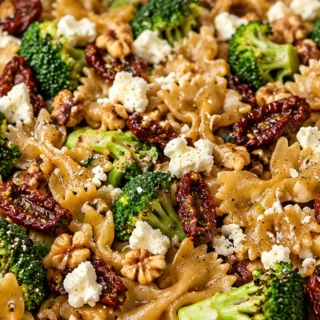
Skillet Pasta with Sun-Dried Tomatoes
Ingredients
- 1/3 cup chopped walnuts
- 1 tbsp olive oil
- 2 cloves garlic, minced
- 1/2 lb frozen broccoli florets
- 2 cups vegetable broth
- 1/3 cup sun-dried tomatoes
- 8 oz bowtie pasta
- 1 lemon, juiced and zested
- 1/4 tsp red pepper flakes
- 2 oz feta cheese, crumbled
Instructions
- Toast walnuts in a dry skillet over medium-low heat for 1-2 minutes until fragrant. Remove to a bowl.
- Add olive oil and minced garlic to the skillet. Sauté for 1 minute until fragrant. Add frozen broccoli and sauté for 2 minutes. Remove broccoli to the bowl with walnuts.
- Add bowtie pasta, vegetable broth, sun-dried tomatoes, lemon juice, and red pepper flakes to the skillet. Stir. Cover and bring to a boil over high heat. Stir, reduce heat to low, cover, and simmer for 7-10 minutes until pasta is tender and broth is absorbed. Stir occasionally.
- While pasta simmers, zest the lemon. Once pasta is cooked, return broccoli and walnuts to the skillet. Stir to combine. Top with crumbled feta and lemon zest. Serve immediately.
Understanding the Role of Sun-Dried Tomatoes in Flavor Development
Sun-dried tomatoes are a key ingredient in this skillet pasta with walnuts, delivering a concentrated burst of umami flavor. The drying process removes moisture, intensifying the natural sweetness and acidity of the tomatoes. When rehydrated in the skillet, they release their rich flavors into the dish, complementing the nuttiness of the walnuts. This interplay between the sweet-tart sun-dried tomatoes and the earthy walnuts creates a balanced flavor profile that enhances the overall dish.
Texture Dynamics: Balancing Creaminess and Crunch
The texture in skillet pasta with walnuts is crucial for an enjoyable eating experience. The creaminess from any added cheese or sauce should be balanced with the crunch of walnuts. Toasting the walnuts before adding them to the dish not only enhances their flavor but also adds a delightful crunch. The contrast between the creamy pasta and the crunchy nuts is essential; if the pasta becomes too creamy, consider adding more toasted walnuts or even a sprinkle of breadcrumbs for added texture.
Temperature Control: Achieving the Perfect Pasta Consistency
Cooking pasta al dente is vital for this dish. Al dente pasta should be firm to the bite, which ensures it holds up well when mixed with the other ingredients. To achieve this, cook the pasta in boiling salted water until it is just underdone, as it will continue to cook when combined with the other hot ingredients in the skillet. This method also helps to prevent the pasta from becoming mushy, which can happen if it is overcooked in the boiling water.
Ingredient Substitutions: Impact on Flavor and Texture
When preparing skillet pasta with walnuts, certain ingredient swaps can significantly alter the dish’s flavor and texture. For instance, replacing sun-dried tomatoes with fresh tomatoes will yield a different taste; fresh tomatoes are juicier and milder, while sun-dried tomatoes provide a concentrated flavor. Similarly, using pecans instead of walnuts will change the nutty profile, as pecans are sweeter and softer. Each substitution should be considered carefully, as it can affect the overall balance of flavors and textures in the dish.
Managing Leftovers: Best Practices for Skillet Pasta
Leftover skillet pasta can be a delight if stored properly. To maintain the integrity of the dish, allow it to cool to room temperature before transferring it to an airtight container. This helps prevent moisture buildup, which can lead to sogginess. When stored in the refrigerator, it can last for 3 to 5 days. Reheating is best done in a skillet over medium heat, adding a splash of water or broth to revive the sauce. This method ensures the pasta retains its texture and flavor. For longer storage, consider freezing the dish. Portion it into individual servings and wrap tightly. It can be frozen for up to 3 months. When ready to enjoy, thaw overnight in the fridge and reheat on the stove.
Scaling the Recipe: Adjusting Portions without Compromise
Scaling a recipe can be tricky, especially when it comes to maintaining flavor and texture. When increasing the portions of skillet pasta with sun-dried tomatoes, it’s advisable to scale the ingredients proportionally. However, be mindful of the cooking time; larger batches may require additional time to cook evenly. For instance, if doubling the recipe, consider adding an extra minute or two to the pasta cooking time to ensure it reaches the desired al dente texture. Additionally, keep an eye on the sauce’s consistency, as larger quantities may need slight adjustments in liquid ratios to prevent it from becoming too thick or dry.
Equipment Considerations: Choosing the Right Skillet for Optimal Results
The choice of skillet can greatly influence the outcome of your pasta dish. A heavy-bottomed skillet or cast-iron pan is ideal for even heat distribution, which helps prevent hotspots that can lead to uneven cooking. Non-stick skillets are also a good option, as they facilitate easy stirring and prevent the pasta from sticking. If using a stainless-steel skillet, ensure it is well-preheated before adding ingredients to avoid sticking. The size of the skillet matters too; a larger skillet allows for better evaporation of excess moisture, resulting in a more concentrated flavor. Ultimately, the right equipment can enhance the cooking process and the final dish.
Seasonal Variations: Adapting Ingredients for Freshness
Seasonality can impact the flavors and quality of the ingredients used in skillet pasta. For instance, during summer months, fresh tomatoes can replace sun-dried ones, offering a lighter, fresher taste. Similarly, incorporating seasonal vegetables like zucchini or bell peppers can add color and nutrition. In fall, consider adding roasted butternut squash for a sweet, earthy flavor. Adjusting the herbs according to the season also enhances the dish; fresh basil in summer or sage in autumn can elevate the overall profile. By adapting your ingredients to what’s in season, you not only enhance flavor but also support local agriculture.
Understanding the Impact of Ingredient Quality on Flavor
The quality of ingredients plays a crucial role in the overall taste of skillet pasta with sun-dried tomatoes. For instance, the flavor intensity of sun-dried tomatoes can vary significantly based on their origin and method of preservation. High-quality sun-dried tomatoes, preferably packed in oil, offer a more robust flavor profile compared to their lower-quality counterparts. When selecting walnuts, opt for fresh, raw varieties to ensure optimal crunch and flavor. Stale nuts can impart a rancid taste that detracts from the dish. Additionally, using fresh herbs, such as basil or parsley, can elevate the dish by adding brightness and freshness. In contrast, dried herbs may lack the vibrancy needed to complement the other ingredients effectively. For the best results, consider sourcing ingredients from local farmers’ markets or specialty stores where freshness is prioritized.
Batch Scaling Techniques for Skillet Pasta
Scaling the recipe for skillet pasta with sun-dried tomatoes is straightforward but requires attention to ingredient ratios and cooking times. When doubling or halving the recipe, maintain the same proportions of pasta to sauce to ensure the dish’s consistency remains harmonious. For example, if the original recipe calls for 200 grams of pasta, scaling it to 400 grams requires an increase in sauce ingredients proportionally. However, be mindful of cooking times; larger batches may require slightly longer to cook through, especially when it comes to achieving the desired al dente texture. Additionally, consider the size of your skillet. A larger skillet can accommodate bigger batches more evenly, while a smaller one may lead to overcrowding, resulting in uneven cooking. Always taste and adjust seasoning as needed when scaling, as flavors can concentrate differently in larger portions.
Optimal Serving Suggestions and Pairings
Serving skillet pasta with sun-dried tomatoes can be enhanced by thoughtful pairing choices. This dish pairs exceptionally well with a crisp green salad dressed in a light vinaigrette, which balances the richness of the pasta. Consider adding ingredients like arugula, cherry tomatoes, and shaved parmesan to the salad for a refreshing contrast. When it comes to beverages, a chilled white wine, such as Sauvignon Blanc or Pinot Grigio, complements the dish beautifully, enhancing the overall dining experience. For a heartier meal, serve with grilled chicken or shrimp, which can be seasoned simply with salt, pepper, and lemon juice, allowing the pasta to shine as the star of the plate. Additionally, garnishing with extra walnuts or fresh herbs just before serving can provide a delightful crunch and a burst of color, making the dish visually appealing.
Understanding the Make-Ahead Potential of Skillet Pasta
Skillet pasta with sun-dried tomatoes can be a convenient dish to prepare in advance, making it ideal for meal prep or busy weeknights. When making this dish ahead of time, consider cooking the pasta al dente, as it will continue to cook slightly when reheated. Store the skillet pasta in an airtight container in the refrigerator for up to three days. To reheat, gently warm it in a skillet over low heat, adding a splash of water or broth to prevent drying out. This method allows the flavors to meld beautifully, enhancing the overall taste. However, be cautious with the walnuts; they may lose their crunch when stored, so consider adding them fresh during reheating for optimal texture.
Optimal Pairings and Serving Suggestions for Skillet Pasta
Pairing your skillet pasta with sun-dried tomatoes can elevate the dining experience significantly. A simple green salad with a light vinaigrette complements the richness of the dish while adding freshness. For protein, grilled chicken or shrimp can be excellent additions, providing a satisfying balance to the meal. Consider serving this dish with a side of crusty bread to soak up any remaining sauce, enhancing the overall enjoyment. Additionally, a sprinkle of freshly grated Parmesan cheese just before serving can add a savory depth. For a beverage, a crisp white wine, such as Sauvignon Blanc, pairs well, cutting through the richness of the pasta and enhancing the sun-dried tomatoes’ flavors.
Pro tips
Pro tip: Best served immediately while hot!
Frequently asked questions
Can I use fresh tomatoes instead of sun-dried tomatoes?
While fresh tomatoes can be used, they will provide a milder flavor and more moisture compared to sun-dried tomatoes. This may alter the overall taste and texture of the dish.
How do I prevent my pasta from becoming mushy?
To avoid mushy pasta, cook it al dente in salted boiling water. Drain it just before it reaches the desired firmness, as it will continue to cook when combined with the skillet ingredients.
What can I use instead of walnuts?
If you’re looking for a substitute for walnuts, pecans or pine nuts can work well. However, keep in mind that these nuts will change the dish’s flavor profile, with pecans being sweeter and softer.
How can I enhance the creaminess of the dish?
To enhance creaminess, consider adding a splash of cream or a generous amount of cheese, such as Parmesan or ricotta. This will create a rich, velvety texture that complements the pasta.
More from Easy Pasta Recipes →