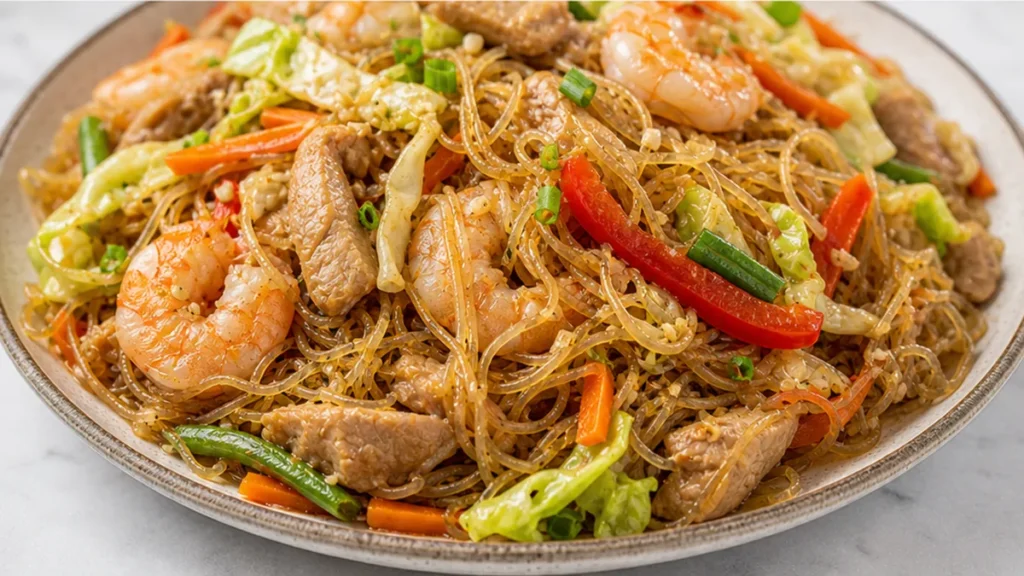
Filipino Pancit is a beloved noodle dish that offers a delightful explosion of flavors and textures. This recipe brings the authentic taste of the Philippines to your table, featuring tender vermicelli noodles, savory pork, succulent shrimp, and a medley of fresh, crisp vegetables. It’s a versatile dish perfect for weeknight dinners or festive gatherings. Our Filipino Pancit recipe is designed to be accessible, even for beginner cooks, while delivering a truly satisfying and delicious result. The combination of sweet, savory, and umami notes, along with the perfect noodle texture, makes this dish a guaranteed crowd-pleaser.
Key takeaways
- The success of Filipino Pancit hinges on properly hydrating vermicelli noodles in savory broth, not boiling them separately.
- Gentle stirring prevents mushiness while ensuring even cooking and sauce distribution.
- Add vegetables towards the end for a crisp-tender texture.
- Adjust seasoning (salt and sugar) at the end to balance flavors.
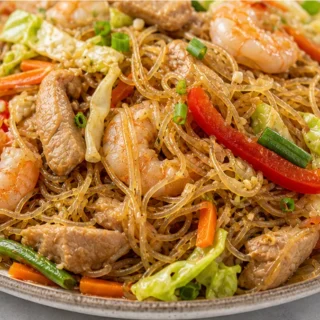
Filipino Pancit Noodles Recipe
Ingredients
- 8 oz package vermicelli noodles
- 1/4 cup vegetable oil
- 1 pound pork tenderloin, thinly sliced into small pieces
- 1/2 teaspoon salt
- 1 1/2 teaspoons sugar
- 2 shallots, minced
- 2 cups finely sliced mixed vegetables (e.g., carrots, cabbage, green beans)
- 3 cloves garlic, minced
- 1/2 pound raw shrimp, peeled and deveined
- 1 3/4 cup chicken broth
Instructions
- Soak the vermicelli noodles in warm water for 10 minutes, then drain and set aside.
- Heat vegetable oil in a large skillet or wok over medium-high heat. Add sliced pork tenderloin, minced shallots, and salt. Cook, stirring, until the pork is browned. Add sugar and cook for another 2-3 minutes until caramelized.
- Add the minced garlic and finely sliced mixed vegetables to the skillet. Sauté for 3-5 minutes until the vegetables are just starting to soften.
- Pour in the chicken broth. Add the drained vermicelli noodles and raw shrimp.
- Toss everything together gently, ensuring the noodles and shrimp are submerged in the broth.
- Simmer for 5-10 minutes, tossing occasionally, until most of the broth is absorbed and the shrimp are cooked through and pink.
Notes
The technique that makes it
The key to a successful Filipino Pancit lies in the proper cooking of the noodles and the emulsification of the sauce. Vermicelli noodles, especially the thin, brittle kind often used in pancit, can easily become mushy or clumpy if overcooked or if added to the pot too early. The ideal method involves softening them in the simmering broth rather than boiling them separately. This allows the noodles to absorb the savory liquid, becoming tender yet retaining their structure. The broth, enriched with the flavors of pork, shrimp, and aromatics, acts as the primary cooking medium. As the liquid reduces, it naturally thickens, coating the noodles in a glossy, flavorful sauce. This process is aided by the starches released from the noodles themselves. Stirring is crucial, but it should be gentle to avoid breaking the delicate strands. The vegetables are typically added towards the end to maintain their crisp-tender texture, providing a pleasant contrast to the soft noodles. Properly sautéing the aromatics (shallots and garlic) before adding the liquids builds a foundational layer of flavor.
Troubleshooting
- Problem: Noodles are mushy and clumped together.
Fix: This usually happens from overcooking or adding too much liquid initially. Ensure the broth is simmering, not boiling, when noodles are added, and stir gently only as needed. If the mixture becomes too dry before noodles are tender, add a splash more broth. - Problem: Pancit is too dry and bland.
Fix: Insufficient liquid or inadequate seasoning are the culprits. Ensure you use the full amount of chicken broth. Taste and adjust salt and sugar towards the end of cooking; a touch more sugar can enhance the savory notes. - Problem: Noodles are unevenly cooked (some soft, some hard).
Fix: This indicates uneven distribution of liquid or insufficient stirring. Ensure the noodles are submerged in the broth as much as possible and stir gently to distribute them evenly throughout the pan. - Problem: Vegetables are overcooked and limp.
Fix: Add the vegetables during the last 5-7 minutes of cooking. They should be stirred in just long enough to become tender-crisp, retaining their bright color and bite.
Substitutions
- Noodles: If vermicelli is unavailable, thin spaghetti or angel hair pasta can be used. They will require a similar cooking time, absorbing the sauce as they soften. The texture might be slightly chewier.
- Pork Tenderloin: Chicken thigh or breast, thinly sliced, can replace pork. It will cook faster and absorb flavors well. Firm tofu, cubed and pan-fried beforehand, is a good vegetarian alternative.
- Shrimp: Scallops or thinly sliced firm fish like tilapia can be used. For a vegetarian option, omit the shrimp or add more firm tofu.
- Chicken Broth: Vegetable broth is a suitable substitute for chicken broth, especially if using tofu or other vegetables as the primary protein. Ensure it is low-sodium to control the overall saltiness.
Pro tips
- Use good quality vermicelli noodles for the best texture.
- Don’t overcrowd the pan when cooking the pork to ensure proper browning.
- Adjust the amount of sugar and salt to your personal preference.
- Add a splash of soy sauce or oyster sauce for extra umami.
Enjoy this flavorful and satisfying Filipino Pancit, a true taste of the Philippines that’s sure to become a family favorite. Serve it with a wedge of calamansi or a dash of hot sauce for an extra kick!
More from Chicken Pasta Recipes →
Read also on TastyBend: Ground Turkey Nutrition Facts: Complete Scientific Analysis.
Frequently asked questions
What kind of noodles are used for Filipino pancit?
The most common noodles for pancit are thin, wheat-based egg noodles called ‘miki’. However, you can also use rice noodles like ‘bihon’ (thin rice vermicelli) or ‘canton’ (thicker, flat wheat noodles). The choice often depends on the specific regional variation of pancit you are making.
Can I make pancit noodles ahead of time?
Yes, pancit is a great make-ahead dish. You can prepare the noodle stir-fry up to a day in advance and refrigerate it. For best results, reheat gently on the stovetop with a little extra broth or water to loosen the noodles. Alternatively, you can cook the components separately and assemble just before serving.
How do I prevent pancit noodles from sticking together?
To prevent sticking, ensure your wok or pan is hot before adding the noodles. Stir-fry them quickly and toss them with the sauce and other ingredients immediately. Rinsing cooked noodles briefly under cold water can also help, but be sure to drain them thoroughly. Adding a bit of oil to the noodles after cooking also helps.
What vegetables can I substitute in pancit?
Feel free to substitute vegetables based on what you have. Common additions include cabbage (shredded), carrots (julienned), snow peas, green beans, bell peppers, and celery. You can also add mushrooms, broccoli florets, or bok choy. The key is to cut them into bite-sized pieces for even cooking.