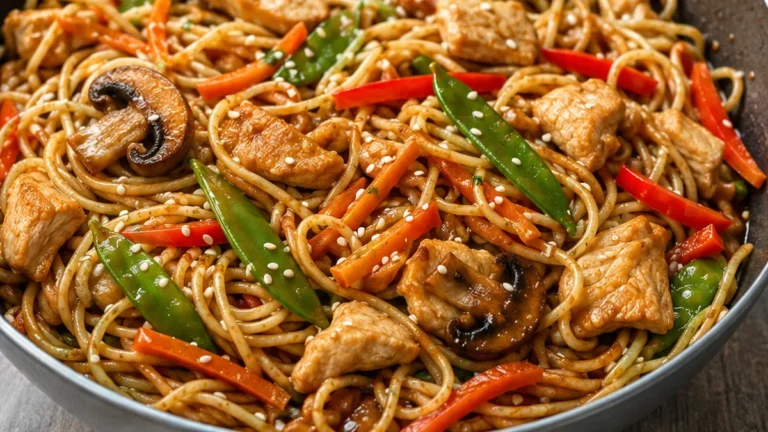
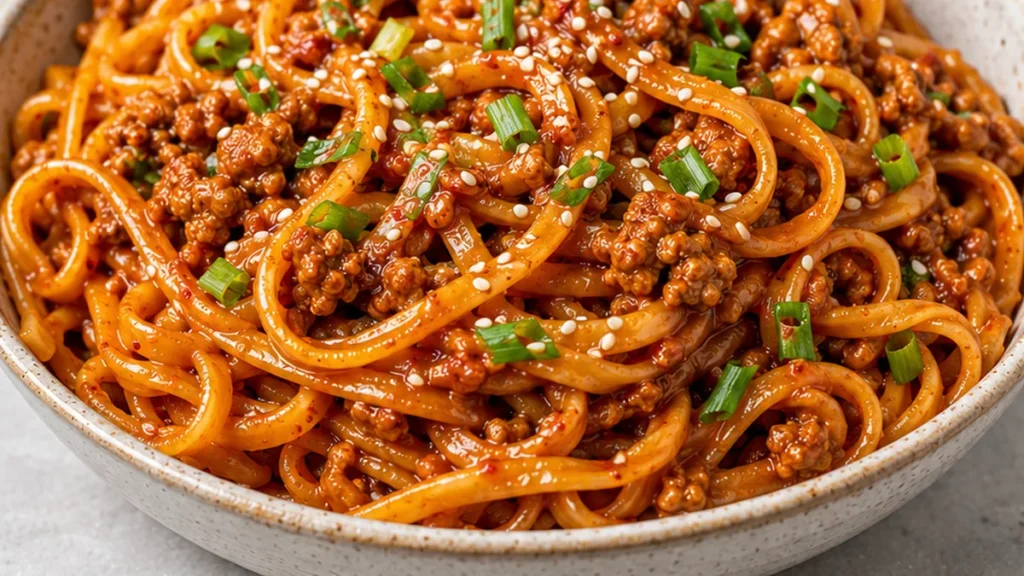
These gochujang noodles are set to become your new favorite weeknight meal. This recipe combines the spicy, savory kick of gochujang with tender chicken and perfectly cooked noodles for a dish that’s both comforting and exciting. Prepare to be amazed by the depth of flavor achieved in such a short amount of time. The star of this dish, gochujang, is a Korean fermented chili paste that brings a unique umami and heat. When paired with the other sauce ingredients, it creates a glaze that coats every strand of noodle and piece of chicken, making these gochujang noodles truly irresistible.
Key takeaways
- The sauce's creamy texture comes from peanut butter acting as an emulsifier.
- Cook the ground chicken first and build the sauce in the same pan to incorporate fond.
- Adjust sauce consistency with broth or water, simmering to thicken if needed.
- Peanut butter, brown sugar, and gochujang can be substituted with similar ingredients, altering the final flavor profile.
Gochujang Noodles: Viral Sensation Recipe
Ingredients
- 3 tablespoons soy sauce
- 2-3 tablespoons gochujang sauce
- 2 tablespoons tomato paste
- 2 tablespoons peanut butter
- 2 tablespoons water
- 1-2 tablespoons brown sugar
- 1 tablespoon sesame oil
- 1 clove minced garlic
- 1-2 cups broth or water for thinning the sauce
- 1 pound ground chicken
Instructions
- Whisk the soy sauce, gochujang sauce, tomato paste, peanut butter, water, brown sugar, sesame oil, and minced garlic in a small bowl or shake together in a jar until it forms a thick sauce.
- Cook the ground chicken in a large skillet over medium-high heat until browned. Season generously.
- Boil noodles according to package directions until just softened. Drain and set aside.
- Add the cooked chicken, cooked noodles, and the prepared sauce to the skillet. Toss to combine over medium-high heat until the noodles are heated through.
- Add broth or water, a little at a time, to thin the sauce to your desired sauciness. Toss well to coat everything evenly.
- Serve immediately, topped with your favorite fresh herbs, scallions, chili oil, or sesame seeds for extra flavor and texture.
Notes
The technique that makes it
The magic behind these viral gochujang noodles lies in the emulsification and layering of flavors. The sauce is a careful balance of salty (soy sauce), spicy and fermented (gochujang), sweet (brown sugar), and savory (tomato paste and garlic). Peanut butter acts as a crucial emulsifier, binding the fats and water-based ingredients together, creating a smooth, cohesive sauce that clings beautifully to the noodles. This prevents the sauce from separating and becoming oily or watery. The ground chicken, when browned and cooked through, provides a hearty base and absorbs the sauce’s complex flavors, adding another layer of texture and taste. The key is to cook the chicken first, then build the sauce in the same pan, allowing the browned bits (fond) from the chicken to dissolve into the sauce, amplifying its depth. Finally, the broth or water is added gradually to achieve the desired sauce consistency – thick enough to coat but not so thick it’s cloying.
Troubleshooting
- Sauce is too thick: Gradually whisk in more broth or water, a tablespoon at a time, until the desired consistency is reached. Ensure it’s heated through to maintain flavor.
- Sauce is too thin: Simmer the sauce uncovered over low heat for a few minutes, stirring occasionally, to allow excess liquid to evaporate. Be careful not to scorch it.
- Sauce is too salty: Add a touch more brown sugar or a small amount of unsweetened applesauce to balance the saltiness. A squeeze of lime can also help.
- Chicken is dry: Ensure the chicken is not overcooked. Browning it quickly over medium-high heat and then simmering it gently in the sauce will help retain moisture.
Substitutions
- Gochujang Sauce: If unavailable, a mix of sriracha and a teaspoon of miso paste can offer a similar spicy-fermented profile, though the depth will differ.
- Peanut Butter: Almond butter or tahini can be used as emulsifiers. Tahini will impart a nuttier, slightly more bitter flavor.
- Brown Sugar: Maple syrup or honey can be substituted, but adjust the quantity as they are sweeter and have different flavor notes.
- Ground Chicken: Ground turkey, pork, or even firm tofu (crumbled and pan-fried) can be used for a different protein or vegetarian option.
Pro tips
- For an extra kick, add a pinch of red pepper flakes with the gochujang.
- Use chicken thighs for a more tender and flavorful result.
- Garnish with toasted sesame seeds, sliced scallions, and a drizzle of chili oil for texture and visual appeal.
- Adjust the amount of broth or water to achieve your preferred sauce consistency.
Experience the explosion of flavor with these viral gochujang noodles. This recipe is a guaranteed hit for any meal occasion.
More from Chicken Pasta Recipes →
Frequently asked questions
Can I make gochujang noodles ahead of time?
Yes, you can prepare the sauce and cook the noodles separately up to 2 days in advance. Store them in airtight containers in the refrigerator. When ready to serve, reheat the sauce gently and toss with freshly cooked or reheated noodles. This ensures the best texture and flavor for your viral sensation.
What can I substitute for gochujang if I don’t have it?
If gochujang is unavailable, you can create a substitute by mixing gochugaru (Korean chili flakes) with a bit of doenjang (Korean soybean paste) and a touch of honey or sugar for sweetness. Aim for a similar consistency and heat level. This alternative will still provide a delicious spicy kick to your noodles.
How do I know when the noodles are perfectly cooked?
Noodles should be cooked to al dente, meaning they are tender but still have a slight bite. Taste a strand periodically during the cooking process. Overcooked noodles will become mushy and lose their appeal. Aim for a firm yet yielding texture for the best eating experience.
What are good toppings for gochujang noodles?
Excellent toppings include a fried or soft-boiled egg, chopped scallions, toasted sesame seeds, and a sprinkle of furikake. For added texture and flavor, consider adding some pan-fried tofu, grilled chicken, or fresh cucumber matchsticks. These additions complement the spicy sauce beautifully.