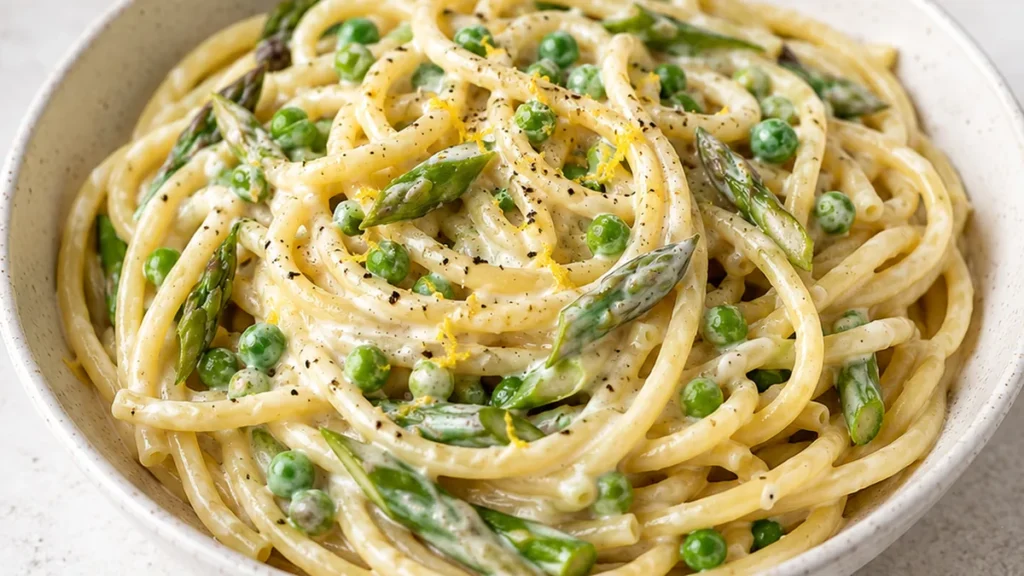
This garlic bucatini with peas and asparagus is the ultimate weeknight pasta dish, offering incredible flavor with minimal effort. Prepare this creamy delight in under 30 minutes using simple, fresh ingredients. Perfect for busy evenings, this garlic bucatini recipe balances rich creaminess with the fresh crunch of asparagus and sweetness of peas, all tied together with a bright lemon finish. It’s a satisfying meal that feels restaurant-quality.
Key takeaways
- The key to a smooth, rich sauce is proper emulsification and avoiding burnt garlic.
- Add delicate ingredients like peas and lemon zest at the end for freshness.
- Adjust sauce consistency with broth, cream, or a cornstarch slurry.
- Bucatini's unique shape holds sauce well, but other long pasta shapes are suitable substitutes.

Creamy Bucatini Dream! Easy Dinner
Ingredients
- 1/2 pound DeLallo Bucatini Pasta
- 2 tablespoons butter
- half a bunch of asparagus, ends trimmed and sliced diagonally (about 1 1/2 cups once cut)
- 4 cloves garlic, grated
- 3/4 cup chicken or vegetable broth
- 1 cup heavy cream
- half of a bag of frozen peas (about a heaping cup)
- zest of one lemon
- lemon juice to taste
- salt and pepper to taste
Instructions
- Cook pasta to al dente according to package directions.
- Melt butter over medium heat. Add asparagus and cook for 5 minutes, until soft and bright green.
- Add garlic and sauté for 1-2 minutes, until fragrant.
- Add broth and heavy cream; bring to a low simmer. Once it thickens into more of a sauce, add in the frozen peas for the final few minutes of cooking.
- Season with the lemon juice, lemon zest, salt, and pepper.
- Toss the sauce with the pasta; keep it all over low heat for a few minutes so the pasta and the sauce really come together. Let stand for a few minutes if necessary for everything to thicken and the sauce to really cling on to the pasta.
Notes
The technique that makes it
What makes this creamy bucatini dish work is the emulsification of the sauce and the careful timing of ingredient additions. We start by building a flavorful base with butter and sautéed asparagus. The key to the sauce’s richness and smooth texture is the combination of chicken or vegetable broth and heavy cream. When heated, the cream reduces, thickening the sauce and coating the bucatini beautifully. Crucially, the garlic is grated rather than minced or crushed. Grating releases the garlic’s flavor more gently and evenly, preventing it from burning and becoming bitter, which is a common pitfall when cooking garlic quickly. Adding the frozen peas and lemon zest towards the end ensures they retain their bright color and fresh flavor, preventing them from becoming mushy or losing their brightness. The lemon juice is added last, providing a final lift of acidity that cuts through the richness of the cream and balances the overall flavor profile.
Troubleshooting
- Sauce is too thin: If your sauce hasn’t thickened sufficiently after simmering, you can create a slurry by whisking together 1 tablespoon of cornstarch with 2 tablespoons of cold water. Stir this slurry into the simmering sauce and cook for another 1-2 minutes until thickened. Alternatively, continue to simmer the sauce uncovered for a few more minutes, allowing more liquid to evaporate.
- Sauce is too thick: If the sauce becomes too reduced and is unpleasantly thick, you can thin it out by adding a splash more chicken or vegetable broth or a little extra heavy cream, stirring until the desired consistency is reached.
- Garlic is bitter: This usually happens if the garlic was cooked at too high a heat or for too long. To avoid this, ensure your heat is medium-low when adding the garlic, and sauté it only until fragrant, about 30-60 seconds, before adding the broth.
- Pasta is sticky: Ensure you are cooking your bucatini in plenty of well-salted boiling water. Do not overcrowd the pot. Reserve about a cup of the starchy pasta water before draining; this can be used to adjust the sauce consistency if needed, as the starch helps emulsify and bind the sauce to the pasta.
Substitutions
- Bucatini: Spaghetti, linguine, or even fettuccine can be used in place of bucatini. The cooking time will vary, so follow package directions. The sauce will coat these shapes well, though bucatini’s hollow center is unique.
- Asparagus: Broccoli florets, green beans, or even spinach can be substituted. If using heartier vegetables like broccoli or green beans, you may need to blanch them briefly before adding to ensure they are tender when the pasta is cooked.
- Heavy Cream: Half-and-half can be used, but the sauce will be less rich and may require a bit more simmering to thicken. For a dairy-free option, full-fat coconut milk (the kind in a can) can work, though it will impart a subtle coconut flavor.
- Lemon Zest/Juice: A touch of white wine vinegar or a small amount of Dijon mustard can provide acidity if lemon is unavailable, though the flavor profile will be different.
Pro tips
- Use fresh, good-quality bucatini for the best texture.
- Don’t overcook the asparagus; it should retain a slight crispness.
- Adjust lemon juice and zest to your personal preference for brightness.
- For a richer sauce, ensure the heavy cream is reduced slightly.
Enjoy this flavorful and satisfying garlic bucatini. It’s a simple yet elegant dish that’s sure to become a family favorite. Serve with your favorite protein or enjoy as is!
More from Chicken Pasta Recipes →
Read also on TastyBend: Arroz con Pollo EXPRESS en Minutos.
Frequently asked questions
How to make bucatini not mushy?
To prevent mushy bucatini, cook it to al dente. Boil plenty of salted water and add the pasta only when it’s at a rolling boil. Stir occasionally. Taste a strand a minute or two before the package directions suggest. It should be tender but still have a slight bite. Drain immediately.
Can I use spaghetti instead of bucatini?
Absolutely! If you don’t have bucatini, spaghetti is a great substitute for this creamy sauce. The sauce will cling well to spaghetti strands. Other long pasta shapes like linguine or fettuccine will also work beautifully. Just cook them according to package directions until al dente.
How to store leftover Creamy Bucatini Dream?
Let the pasta cool completely before storing. Transfer to an airtight container. Refrigerate for up to 3 days. When reheating, add a splash of milk or cream and stir gently over low heat to loosen the sauce and prevent it from becoming dry or clumpy.
What can I add to creamy bucatini for extra flavor?
Enhance the flavor with additions like sautéed mushrooms, wilted spinach, or sun-dried tomatoes. For a protein boost, add cooked chicken, shrimp, or crispy pancetta. A pinch of red pepper flakes can add a subtle heat. Freshly grated Parmesan cheese and a sprinkle of parsley are excellent finishing touches.