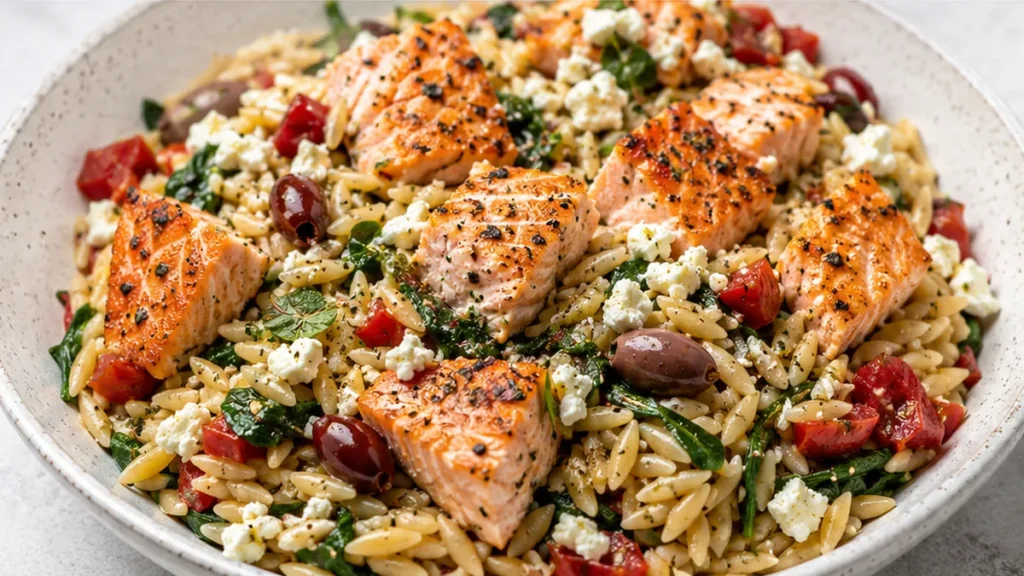
Greek salmon, especially when paired with a zesty lemon feta orzo salad, is a testament to fresh, vibrant Mediterranean flavors. This dish is perfect for a light yet satisfying dinner, combining succulent, seasoned salmon with a bright, herb-filled salad. Salmon grilled with lemon slices directly on the grate picks up the citrus aroma, and that makes all the difference. This recipe highlights simplicity and fresh ingredients, making it an ideal choice for a healthy weeknight meal or a casual summer gathering. It’s designed for anyone looking to bring a taste of the Aegean to their table with minimal fuss.
Key takeaways
- Pat salmon completely dry for a proper sear.
- Cook orzo until al dente to avoid mushiness.
- Sauté aromatics before adding orzo for deeper flavor.
- Adjust lemon and seasoning at the end to taste.
Zesty Greek Salmon & Feta Orzo
Ingredients
- 4 (5-6 ounce) salmon fillets
- 1 tablespoon balsamic vinegar
- 2 teaspoons smoked paprika
- 2 tablespoons chopped fresh oregano
- 1 shallot, chopped
- 4 cloves garlic, minced or grated
- red pepper flakes
- kosher salt
- black pepper
- 6 tablespoons extra virgin olive oil
- 1-2 lemons, sliced and seeds removed
- 8 ounces feta cheese, crumbled
- 8 ounces orzo pasta
- 1 (15-ounce) can chickpeas, rinsed and drained
- 1 red bell pepper, diced
- 1 cup cherry tomatoes, halved
- 1/2 cup Kalamata olives, pitted and halved
- 1 avocado, diced
Instructions
- Place the salmon in a 9×13 inch baking dish. Add 3 tablespoons olive oil, the balsamic vinegar, paprika, oregano, shallot, garlic, and a pinch each of crushed red pepper, salt, and pepper. Rub the seasonings and oil evenly into flesh. Toss the lemon slices into the oil.
- Cook the orzo according to package directions. Drain and set aside.
- To make the salad. Add the cooked orzo, 3 tablespoons olive oil, juice of 1 lemon, herbs, and a pinch each of crushed red pepper flakes, salt, and pepper to a large serving bowl. Add the chickpeas, red peppers, tomatoes, olives, and avocado, toss to combine.
- Heat your grill, grill pan, or skillet to medium high heat. Place the salmon on the grill, skin side down. Add the lemon slices. Cover and cook until skin is lightly charred, 4-5 minutes, flip the salmon and lemons, grill another 3-4 minutes until opaque. Remove everything from the grill.
- Finely chop the grilled lemon slices and mix them with the herbs, crumbled feta, and 3 tablespoons olive oil. Add a couple of spoonfuls of the feta to the orzo salad.
- Divide the salad between plates. Add the salmon and sprinkle with lemon feta. Top with lots of fresh herbs, and an extra squeeze of lemon, if desired. Enjoy!
Notes
The Technique That Makes It: Achieving Perfectly Cooked Salmon and Vibrant Orzo
This recipe hinges on two key techniques: achieving a beautiful sear on the salmon and perfectly cooking the orzo while infusing it with flavor. For the salmon, the Maillard reaction is crucial. Ensure your salmon fillets are patted thoroughly dry before seasoning. This removes surface moisture, allowing the proteins and sugars to caramelize when they hit the hot pan. Use a skillet that heats evenly, and don’t overcrowd the pan; cook in batches if necessary. A medium-high heat is ideal, searing each side for about 3-4 minutes until a golden-brown crust forms, while the inside remains flaky and moist. Avoid overcooking, as salmon can become dry quickly.
The orzo is cooked in a flavorful base, not just plain water. Sautéing the shallots and garlic in olive oil before adding the orzo toasts the pasta slightly, enhancing its nutty flavor and preventing it from becoming gummy. Deglazing the pan with a splash of liquid (if any is left from cooking the salmon, or a little extra olive oil/broth) after sautéing the aromatics helps lift any browned bits, incorporating them into the orzo for added depth. Cooking the orzo until al dente ensures a pleasant texture, and finishing it with the lemon juice, feta, chickpeas, bell pepper, tomatoes, and olives allows these ingredients to meld without becoming mushy.
Troubleshooting
- Problem: Salmon is dry and overcooked.
Fix: Ensure you are not overcooking the salmon. Use a thermometer to check for an internal temperature of 125-130°F (52-54°C) for medium-rare, or 135-140°F (57-60°C) for medium. Patting the salmon very dry before searing also helps achieve a better crust and cook more evenly. - Problem: Orzo is mushy or clumpy.
Fix: Avoid adding too much liquid at once when cooking the orzo. Stir it occasionally to prevent sticking, but don’t over-stir, which can break down the starches. Cook until just al dente, as it will continue to soften slightly when mixed with the other ingredients. - Problem: The dish lacks zest or flavor.
Fix: Don’t skimp on the lemon juice and fresh oregano. Taste and adjust seasoning (salt, pepper, red pepper flakes) at the end. The quality of your olive oil and feta will also significantly impact the final flavor profile. - Problem: Feta cheese melts completely into the orzo.
Fix: Add the feta towards the very end of the cooking process, or even after removing the orzo from the heat. Gently fold it in, allowing it to soften and slightly melt without dissolving entirely.
Substitutions
- Salmon: Substitute with cod, halibut, or even chicken breast. Adjust cooking time accordingly; thicker cuts of fish or chicken will require longer searing and potentially finishing in the oven. The flavor profile will be slightly different but still delicious.
- Orzo: Use other small pasta shapes like ditalini, small shells, or even couscous. Adjust cooking time based on package directions. The texture will vary, but the flavor absorption will be similar.
- Feta Cheese: Goat cheese or even small cubes of halloumi (pan-fried separately) can be used. Goat cheese will offer a tangier flavor, while halloumi will provide a saltier, firmer bite.
- Oregano: Fresh dill or parsley can be used for a different herbaceous note. Dried oregano can be substituted at a ratio of 1 teaspoon dried to 1 tablespoon fresh, but add it earlier with the aromatics to allow its flavor to bloom.
Pro tips
- For perfectly moist salmon, don’t overcook it. The internal temperature should reach 145°F (63°C) at its thickest part.
- To enhance the citrus flavor, zest one of the lemons into the marinade before slicing.
- Storage: Leftover salmon can be refrigerated in an airtight container for up to 2 days. The orzo salad will keep for 3-4 days.
- Reheating: Gently warm salmon in a skillet over low heat or microwave for 1 minute to avoid drying it out.
This Greek salmon recipe offers a delightful blend of fresh flavors and healthy ingredients, perfect for any occasion. Give it a try and savor the taste of the Mediterranean in your own kitchen!
Frequently asked questions
How can I ensure the salmon skin gets crispy?
To achieve crispy salmon skin, ensure the fillets are completely dry before seasoning and searing. Use a hot skillet with a good amount of olive oil. Place the salmon skin-side down first and resist the urge to move it for the first few minutes, allowing the skin to render and crisp up.
Can I prepare some components ahead of time?
Yes, you can chop the vegetables (shallot, garlic, bell pepper) and measure out the spices in advance. The orzo can also be cooked and cooled, then reheated gently before adding the other ingredients. However, it’s best to sear the salmon just before serving for optimal texture.
What can I use if I don’t have shallots?
If you don’t have shallots, a small yellow onion or even the white part of a leek can be used as a substitute. Finely chop them and sauté them in the olive oil until softened, just as you would with shallots, to build the flavor base for the orzo.
Is it possible to make this dish vegetarian?
To make this dish vegetarian, omit the salmon entirely. You can increase the amount of chickpeas or add other vegetables like zucchini or eggplant, sautéing them with the bell pepper. Ensure you still build the flavor base for the orzo with shallots and garlic.
More from Healthy Pasta Recipes →