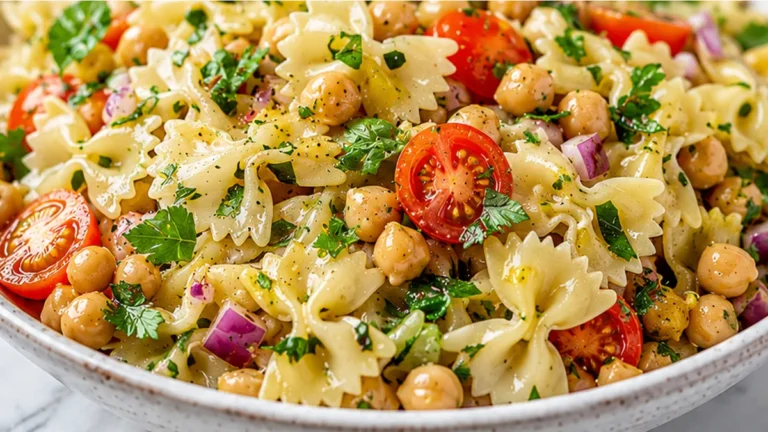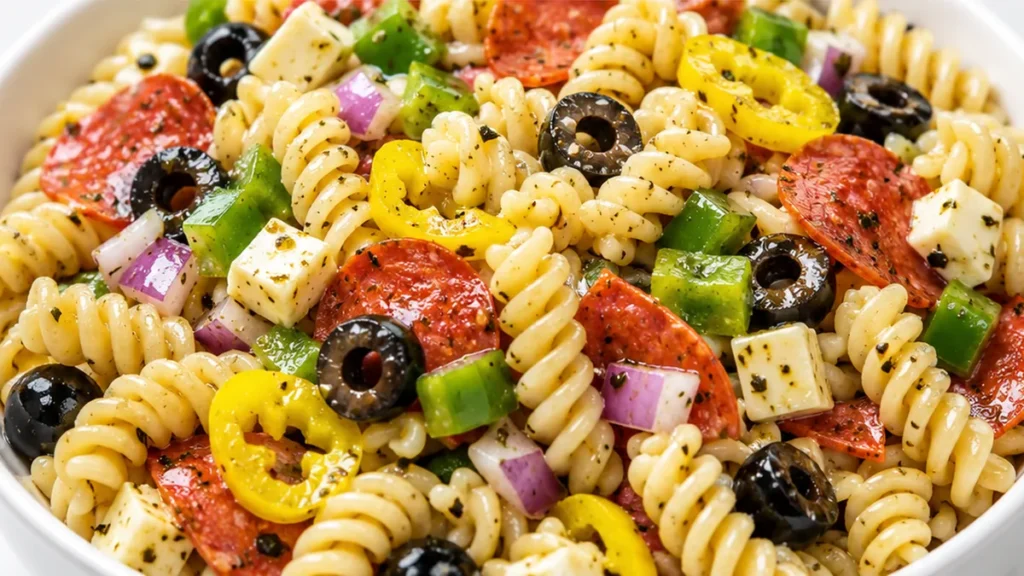
This italian pizza pasta salad features pasta, fresh mozzarella, and a mix of vegetables. It’s a quick and easy dish ideal for gatherings.
Key takeaways
- Use al dente pasta for the best texture.
- Marinate the pasta in dressing for enhanced flavor.
- Consider ingredient substitutions carefully to maintain texture.
- Incorporate fresh herbs for authenticity and flavor.
Italian Pizza Pasta Salad
Ingredients
- 1/2 cup olive oil
- 1/4 cup red wine vinegar
- 1 tsp Dijon mustard
- 1/4 tsp garlic powder
- 1 tbsp Italian seasoning
- 1/2 tsp salt
- 1/4 tsp pepper
- 2 tbsp grated Parmesan
- 1 lb rotini pasta
- 3 oz pepperoni
Instructions
- Make the Italian dressing first. Combine olive oil, red wine vinegar, Dijon mustard, garlic powder, Italian seasoning, salt, pepper, and Parmesan in a bowl. Whisk until combined.
- Cook the rotini according to package directions (7-10 minutes), then drain and rinse with cool water.
- While the pasta cooks, cut the pepperoni and chop the mozzarella, bell pepper, and red onion.
- Once the pasta is cooled, transfer to a large bowl. Add pepperoni, mozzarella, bell pepper, red onion, banana peppers, and black olives. Toss to combine.
- Shake the dressing again and drizzle it over the pasta salad. Toss to coat.
Understanding the Balance of Flavors in Italian Pizza Pasta Salad
The essence of Italian pizza pasta salad lies in achieving a harmonious balance between its ingredients. The combination of tangy dressings, savory cheeses, and fresh vegetables creates a complex flavor profile. The acidity from ingredients like olives and tomatoes can enhance the overall taste, while the richness of mozzarella adds depth. For optimal flavor distribution, consider marinating the pasta in the dressing for at least 30 minutes before serving, allowing the noodles to absorb the flavors fully.
Common Mistakes When Preparing Pasta for Salads
One frequent error in making pasta salads is overcooking the pasta. Pasta should be cooked al dente, which means it should retain a slight firmness when bitten. Overcooked pasta becomes mushy and can negatively affect the texture of the salad. To prevent this, follow the cooking instructions on the package, and consider rinsing the pasta under cold water immediately after draining to halt the cooking process. Additionally, ensure you use enough water and salt during cooking to enhance the pasta’s flavor.
Ingredient Substitutions and Their Impact on Texture
While traditional Italian pizza pasta salad recipes call for specific ingredients, substitutions can be made to cater to dietary preferences or availability. For instance, using whole wheat pasta instead of regular pasta will add a nuttier flavor and increase fiber content. However, this can also result in a denser texture. Similarly, swapping out mozzarella for feta cheese will introduce a tangy flavor but may alter the creaminess of the salad. Always consider how these changes affect the overall dish’s texture and flavor.
Unique Elements That Set This Salad Apart
What distinguishes Italian pizza pasta salad from other pasta salads is its incorporation of classic pizza toppings, such as pepperoni and bell peppers, combined with pasta. This fusion not only reflects the beloved flavors of pizza but also adds visual appeal and variety in texture. The salad’s versatility allows it to be served as a side dish or a main course, making it suitable for various occasions. The use of fresh herbs like basil or oregano can further enhance the dish, contributing to its authentic Italian essence.
How to Properly Store Italian Pizza Pasta Salad for Maximum Freshness
Storing Italian pizza pasta salad correctly is essential to maintain its flavor and texture. To ensure optimal freshness, store the salad in an airtight container in the refrigerator. It can last up to three days if properly stored. However, the quality may decline after the first day, as the pasta can absorb moisture and the vegetables may become soggy. To extend shelf life, consider storing the dressing separately and adding it just before serving. This prevents the pasta from becoming overly saturated and helps retain the crispness of the vegetables.
Scaling Your Recipe: Adjusting Ingredients for Larger or Smaller Batches
When scaling the Italian pizza pasta salad recipe, it’s important to maintain the ratios of ingredients for consistent flavor and texture. For larger batches, increase each ingredient proportionally, keeping the same proportions to ensure balance. For example, if doubling the recipe, use twice the amount of pasta, vegetables, and dressing. Conversely, for smaller batches, simply halve the quantities. Be mindful of the dressing, as it can be adjusted slightly based on personal preference. Always taste and adjust seasoning as needed, especially when altering batch sizes.
Choosing the Right Equipment for Preparing Your Salad
The equipment you use can significantly impact the preparation of Italian pizza pasta salad. A large mixing bowl is essential for combining the ingredients thoroughly. Using a pasta pot with a colander insert simplifies cooking and draining the pasta. A sharp knife is necessary for chopping vegetables evenly, which ensures consistent texture in each bite. Additionally, consider using a whisk for emulsifying the dressing, which helps to blend the ingredients smoothly. Having the right tools not only makes the process easier but also enhances the overall quality of the salad.
Seasonal Variations: Adapting Ingredients Based on Availability
Italian pizza pasta salad is versatile and can be adapted according to seasonal ingredients. In summer, fresh tomatoes, cucumbers, and bell peppers are abundant and add vibrant flavors. In fall, consider incorporating roasted vegetables like zucchini or squash for a heartier version. Winter salads can benefit from the addition of hearty greens like kale or spinach. Additionally, using seasonal herbs such as basil in summer or rosemary in winter can enhance the dish’s flavor profile. Adapting to seasonal produce not only improves taste but also supports local agriculture.
Understanding the Role of Pasta in Your Salad
The choice of pasta is crucial in achieving the desired texture and flavor in your Italian pizza pasta salad. Opt for pasta shapes that hold onto the dressing and ingredients well, such as fusilli or penne. Cooking pasta to al dente, typically around 8-10 minutes in boiling salted water, ensures it maintains its structure and does not become mushy when mixed with other components. Additionally, rinsing the pasta in cold water after cooking halts the cooking process and helps prevent clumping, allowing for a more enjoyable salad experience.
Making Your Salad Ahead of Time: Best Practices
If you’re planning to prepare your Italian pizza pasta salad in advance, consider the timing of when to add certain ingredients. For example, fresh vegetables like bell peppers and cherry tomatoes should be added shortly before serving to maintain their crunch and vibrant color. Conversely, ingredients like olives and cheese can be mixed in ahead of time, as they enhance their flavors when allowed to marinate. Store the salad in an airtight container in the refrigerator, and for optimal freshness, consume it within 2-3 days. Be aware that the salad may absorb some of the dressing over time, so you might want to reserve a portion of the dressing to add just before serving.
Pairing Your Salad with Complementary Dishes
Italian pizza pasta salad is versatile and pairs wonderfully with a variety of dishes. For a complete meal, consider serving it alongside grilled chicken or shrimp, which adds protein and complements the Mediterranean flavors. Additionally, a light vinaigrette drizzled over the salad can enhance its taste without overpowering it. If you’re looking for a vegetarian option, serve it with a side of garlic bread or a simple arugula salad dressed with lemon. The key is to balance the flavors and textures, ensuring that your pasta salad stands out while also harmonizing with the other elements on the plate.
Understanding the Importance of Pasta Selection in Italian Pizza Pasta Salad
The type of pasta you choose for your Italian pizza pasta salad can significantly impact the overall texture and flavor of the dish. For optimal results, select pasta shapes that can hold onto the dressing and ingredients well. Short pasta varieties like fusilli, penne, or rotini are excellent choices because their nooks and crannies trap the dressing and other components, enhancing each bite. Cooking the pasta to al dente is crucial; this means it should be firm to the bite, usually achieved by boiling for 8-10 minutes, depending on the type. Overcooked pasta can become mushy and fail to provide the desired texture contrast in your salad. Additionally, consider the pasta’s surface area; a ridged or spiral shape will cling better to sauces compared to smooth pasta. This attention to detail in pasta selection not only elevates the dish but also ensures that every forkful is bursting with flavor.
Enhancing Flavor with Fresh Ingredients and Proper Seasoning
For an Italian pizza pasta salad, the quality and freshness of your ingredients play a pivotal role in the final taste. Use ripe, seasonal vegetables such as cherry tomatoes, bell peppers, and red onions, as they provide vibrant flavors and textures. Fresh herbs like basil or parsley can add aromatic notes that enhance the overall dish. When it comes to seasoning, a well-balanced dressing is essential. A simple vinaigrette made from olive oil, red wine vinegar, salt, and pepper can elevate the salad. Aim for a ratio of 3:1 oil to vinegar for the right balance. Taste as you go, adjusting the seasoning to your preference. Additionally, consider adding a pinch of sugar to balance acidity or a sprinkle of red pepper flakes for a hint of heat. These elements combined will create a harmonious blend of flavors that truly represents the essence of Italian cuisine.
Pro tips
Pro tip: Best served immediately while hot!
Frequently asked questions
Can I make Italian pizza pasta salad ahead of time?
Yes, you can prepare Italian pizza pasta salad ahead of time. It actually tastes better after sitting for a few hours or overnight as the flavors meld together. Just be sure to store it in an airtight container in the refrigerator.
What types of pasta work best for this salad?
Short pasta shapes like rotini, penne, or fusilli are ideal for Italian pizza pasta salad. These shapes hold onto the dressing and mix well with the other ingredients, ensuring a balanced bite in every serving.
How can I add protein to Italian pizza pasta salad?
You can easily add protein by incorporating cooked chicken, salami, or even chickpeas. These additions will not only enhance the nutritional value but also make the salad more filling and satisfying.
Is it necessary to use fresh herbs in this recipe?
While it’s not strictly necessary, using fresh herbs like basil or oregano can significantly elevate the flavor of your Italian pizza pasta salad. Fresh herbs add brightness and authenticity, making the dish more aromatic and delicious.
More from Easy Pasta Recipes →