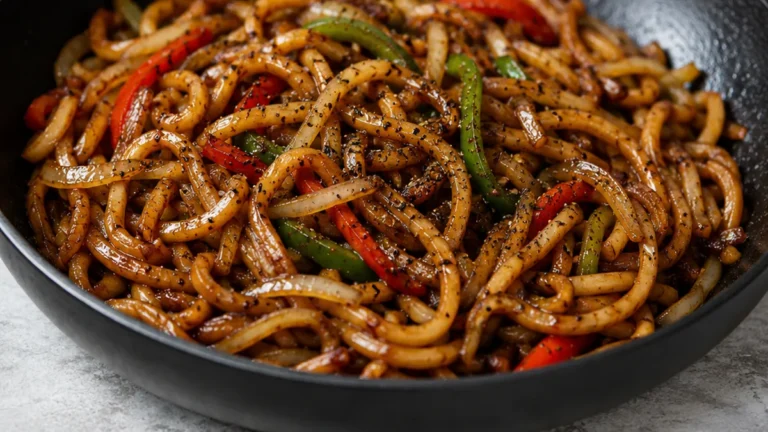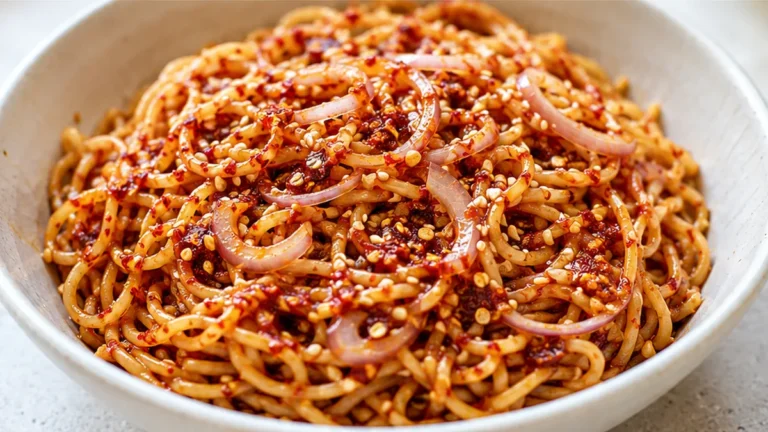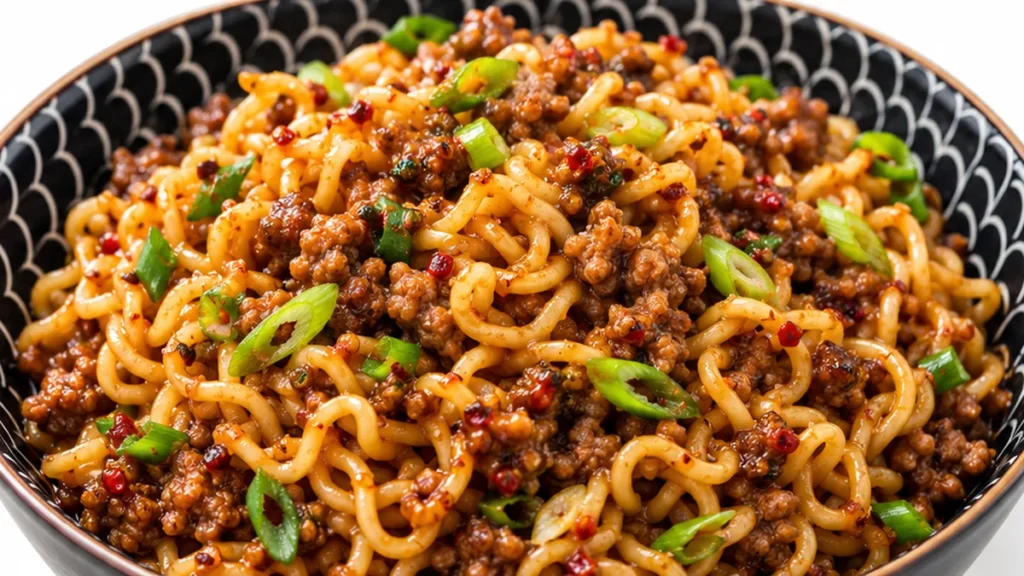
These spicy pork peanut noodles are a quick and satisfying meal. The combination of tender pork and creamy peanut sauce creates a flavorful dish.
Key takeaways
- Use fresh ingredients for the best flavor.
- Balance the heat with sweetness and acidity.
- Cook the pork to the right temperature to avoid dryness.
- Experiment with ingredient swaps for different textures and flavors.
Spicy Pork & Peanut Noodles
Ingredients
- 1/4 cup chili garlic sauce
- 1/4 cup soy sauce
- 1/4 cup brown sugar
- 1/2 lb ground pork
- 3 oz ramen noodles
- 3 green onions, sliced
- 1/4 cup unsalted peanuts, chopped
Instructions
- Combine the chili garlic sauce, soy sauce, and brown sugar in a bowl.
- Add the ground pork to a skillet and cook over medium heat until fully browned.
- Once browned, add the prepared sauce and chopped peanuts, simmer for 5 minutes.
- Boil water for noodles, add noodles, and cook according to package directions.
- Drain the noodles and add them to the skillet, tossing to combine.
- Top with sliced green onions and serve.
Understanding the Role of Ingredients in Spicy Pork & Peanut Noodles
The balance of flavors in spicy pork and peanut noodles is crucial for achieving a harmonious dish. The pork provides a savory base, while the peanuts add a rich creaminess and crunch. The heat from chili paste or fresh chilies should complement, not overpower, the other flavors. For instance, using 500 grams of pork shoulder ensures a juicy texture, while 100 grams of peanuts can provide a satisfying contrast. The choice of noodles also matters; rice noodles absorb flavors well and create a light, satisfying texture.
Common Mistakes and How to Avoid Them
One common mistake is overcooking the pork, which can lead to a dry texture. To avoid this, cook the pork until it reaches an internal temperature of 70°C (160°F) and allow it to rest for a few minutes before slicing. Another issue is not balancing the sauce. If the dish is too salty, consider adding a splash of vinegar to brighten the flavors. If the noodles are sticky, ensure they are rinsed under cold water after cooking to prevent clumping.
Ingredient Swaps and Their Impacts
Swapping ingredients can alter the flavor and texture significantly. For example, using ground turkey instead of pork will reduce the fat content, resulting in a leaner dish but sacrificing some richness. If you substitute soy sauce with tamari, the dish becomes gluten-free, maintaining the umami flavor but with a slightly different profile. Additionally, replacing rice noodles with whole wheat noodles increases fiber but may change the texture and cooking time.
Unique Characteristics of This Dish
Spicy pork and peanut noodles stand out due to the combination of heat, creaminess, and crunch. Unlike many noodle dishes, the incorporation of peanuts adds a distinct nuttiness that enhances the overall flavor profile. This dish also allows for versatility in presentation; serving it cold as a salad can provide a refreshing alternative during warm months. The balance of protein, fats, and carbohydrates makes it a well-rounded meal, suitable for various dietary needs.
How to Make Spicy Pork & Peanut Noodles Ahead of Time
Preparing Spicy Pork & Peanut Noodles in advance can save time and enhance flavors. The pork can be marinated the night before, allowing the spices to penetrate deeper. Cooked noodles can be stored in an airtight container in the refrigerator for up to three days, but it’s best to keep the sauce separate to prevent the noodles from becoming soggy. When ready to serve, reheat the pork and sauce on low heat, adding a splash of water or broth to loosen the sauce if necessary. This method not only maintains the dish’s integrity but also allows for a quick meal on busy days.
Understanding Equipment Variations for Optimal Results
The equipment used can significantly impact the outcome of Spicy Pork & Peanut Noodles. A heavy-bottomed pan or wok is ideal for even heat distribution when cooking the pork, promoting a nice sear and preventing sticking. If using a non-stick skillet, ensure the heat is moderate to avoid damaging the coating. For boiling noodles, a large pot with plenty of water allows for better movement of the noodles, preventing clumping. Additionally, using a high-quality peanut butter can enhance the sauce’s texture and flavor; natural, unsweetened peanut butter is preferred for a richer taste.
Scaling Your Recipe: Adjusting Portions for Different Needs
Scaling the Spicy Pork & Peanut Noodles recipe is straightforward, making it suitable for various occasions. To double the recipe, simply double all ingredients, maintaining the same cooking times. However, be mindful that larger quantities may require a larger pan to ensure even cooking. For smaller batches, reducing the recipe by half is also effective, but ensure that you adjust the seasoning to taste, as flavors can become more concentrated. This adaptability makes the dish perfect for both intimate dinners and larger gatherings.
Seasonal Ingredients and Their Impact on Flavor
Using seasonal ingredients can elevate the flavor profile of Spicy Pork & Peanut Noodles. For example, fresh spring vegetables like snap peas or asparagus can add a crisp texture and vibrant color to the dish. In contrast, winter months may call for heartier vegetables like bok choy or cabbage, which can withstand longer cooking times. Additionally, the quality of the pork can vary with seasons; opting for locally sourced, grass-fed pork can enhance the dish’s overall taste and nutritional value. Adjusting ingredients based on seasonality not only enhances flavor but also supports sustainable eating practices.
Understanding the Importance of Noodle Texture in Spicy Pork Peanut Noodles
The texture of the noodles plays a crucial role in the overall enjoyment of spicy pork peanut noodles. Ideally, the noodles should be cooked to the perfect al dente texture, which means they are firm to the bite yet tender. Overcooking can lead to mushy noodles that fail to hold the sauce effectively. For optimal results, cook the noodles according to package instructions, typically around 6-8 minutes for dried noodles, and ensure to rinse them under cold water immediately after cooking to stop the cooking process. This helps maintain their texture and prevents clumping. A ratio of about 100 grams of dried noodles per serving is a good guideline, ensuring that each bite is satisfying and complements the rich flavors of the sauce.
Balancing Flavors: How to Achieve the Right Heat and Sweetness
Finding the right balance between spiciness and sweetness is essential in creating a well-rounded dish. The heat from the spices should not overpower the natural sweetness of the peanut sauce. A common approach is to start with a base of 2 tablespoons of peanut butter and gradually add chili paste or sriracha to taste. Aim for a heat level that can be adjusted based on personal preference, typically between 1-3 tablespoons of chili paste. Additionally, incorporating a teaspoon of sugar or honey can enhance the sweetness without overwhelming the dish. Taste as you go, allowing the flavors to meld together, and adjust accordingly to ensure a harmonious blend.
Pairing and Serving Suggestions for Spicy Pork Peanut Noodles
When serving spicy pork peanut noodles, consider complementary dishes that enhance the overall dining experience. Fresh vegetables such as cucumber, carrots, or bell peppers can provide a refreshing contrast to the rich, spicy noodles. Additionally, a side of steamed bok choy or a crisp salad can add a lightness that balances the meal. For beverages, pairing with a cold lager or a sweet iced tea can help cool the palate. Garnishing with chopped peanuts, cilantro, or green onions not only adds visual appeal but also contributes additional texture and flavor. These elements come together to create a well-rounded meal that is both satisfying and enjoyable.
Understanding the Importance of Fresh Ingredients in Spicy Pork Peanut Noodles
The quality of ingredients significantly affects the flavor and texture of spicy pork peanut noodles. Fresh vegetables, particularly greens like bok choy or scallions, add a crisp texture and vibrant flavor that dried or wilting vegetables cannot replicate. Fresh pork should be used for optimal tenderness; older meat can become tough and chewy when cooked. Moreover, the freshness of peanuts plays a crucial role in the dish’s nutty flavor. Stale peanuts can impart a rancid taste, overshadowing the other flavors. For the best results, always opt for fresh, high-quality ingredients, ideally sourced from local markets when in season. This not only enhances the dish but also supports local agriculture.
How to Adjust Spicy Pork Peanut Noodles for Dietary Preferences
Adapting spicy pork peanut noodles to accommodate dietary preferences can be straightforward with careful ingredient swaps. For a gluten-free version, use rice noodles instead of wheat-based varieties. If you’re looking to reduce calories or fat, consider using leaner cuts of pork or substituting the pork entirely with tofu or tempeh for a plant-based option. Additionally, you can reduce the amount of peanut butter to lower the calorie count while still maintaining a nutty flavor by adding a splash of toasted sesame oil. Each swap may alter the overall taste and texture slightly, but they can make the dish more accessible to a wider audience without sacrificing its core appeal.
Pro tips
Pro tip: Best served immediately while hot!
Frequently asked questions
Can I use a different type of meat for this recipe?
Yes, you can substitute pork with chicken, beef, or even tofu for a vegetarian option. Each protein will impart a different flavor and texture, so adjust cooking times accordingly.
How can I adjust the spiciness of the dish?
To reduce spiciness, use less chili paste or opt for a milder variety. Conversely, to increase heat, add more chili paste or fresh chilies according to your taste preference.
What type of noodles work best for this recipe?
Rice noodles are ideal due to their ability to absorb flavors and their light texture. However, you can also use whole wheat noodles or egg noodles based on your dietary preferences.
Can I prepare the dish in advance?
Yes, you can prepare the components in advance. Store the cooked pork and noodles separately and combine them just before serving to maintain the best texture and flavor.
More from Easy Pasta Recipes →