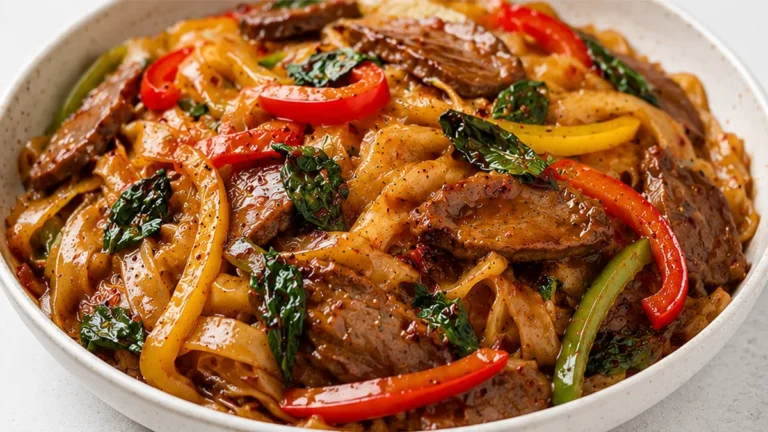
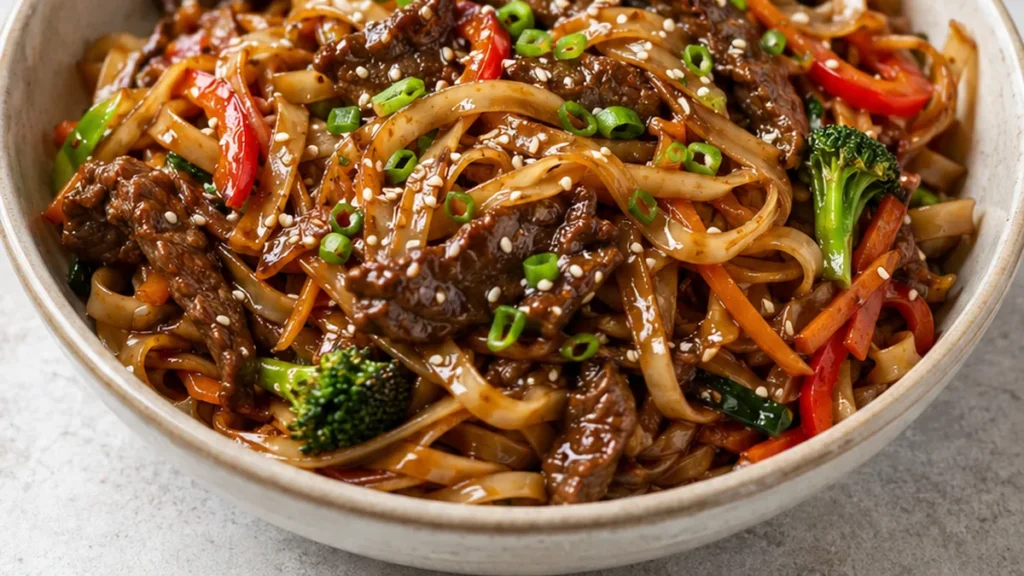
Korean Beef Noodles are a fantastic way to bring bold, savory, and slightly spicy flavors to your dinner table in record time. This recipe delivers a satisfying meal with tender beef, chewy noodles, and vibrant vegetables, all coated in a rich Gochujang-spiked sauce. What truly makes these Korean Beef Noodles special is the balance of convenience and authentic taste. It’s designed for busy weeknights when you crave something exciting without spending hours in the kitchen, proving that quick meals don’t have to compromise on flavor.
Key takeaways
- Achieve tender beef by slicing thinly against the grain and searing quickly over high heat.
- Ensure a balanced sauce by whisking ingredients thoroughly and adding sesame oil last.
- Maintain crisp-tender vegetables by stir-frying them over high heat in batches.
- Cook noodles precisely to al dente and rinse to prevent sticking before saucing.
Speedy Korean Beef Sesame Noodles
Ingredients
- 4 cloves garlic, chopped
- 1 tablespoon chopped fresh ginger
- 1/2 cup tamari or soy sauce
- 1/4 cup honey
- 2 tablespoons rice vinegar
- 2-3 tablespoons Gochujang (Korean chili paste)
- 1 tablespoon toasted sesame oil (for sauce)
- 8 ounces brown rice noodles
- 2 tablespoons sesame oil (for cooking)
- 3 cups mixed stir-fry vegetables (such as bell peppers, carrots, snap peas)
Instructions
- To make the sauce: Combine chopped garlic, chopped fresh ginger, tamari or soy sauce, honey, rice vinegar, Gochujang, and 1 tablespoon toasted sesame oil in a glass jar. Shake or whisk well to combine.
- Cook the brown rice noodles according to package directions until al dente. Drain thoroughly and rinse under cold water to prevent sticking.
- Heat 1 tablespoon of the sesame oil (for cooking) in a large skillet over high heat. Add the mixed stir-fry vegetables and cook, stirring frequently, until they are crisp-tender and slightly wilted, about 2-3 minutes. Stir in 2 tablespoons of the prepared sauce. Cook for another minute until the sauce coats the veggies. Remove the vegetables from the pan and set aside.
- In the same skillet, add the remaining 1 tablespoon of sesame oil (for cooking). Once shimmering, add the sliced beef and cook, without disturbing, for 2 minutes until deeply seared and browned on one side. Toss the meat, then pour in the remaining sauce. Bring to a simmer and cook for 1 minute, allowing the sauce to thicken slightly. Stir in the cooked noodles and the reserved vegetables. Cook for an additional 2-3 minutes, tossing constantly, until the sauce evenly coats the noodles and all ingredients are heated through.
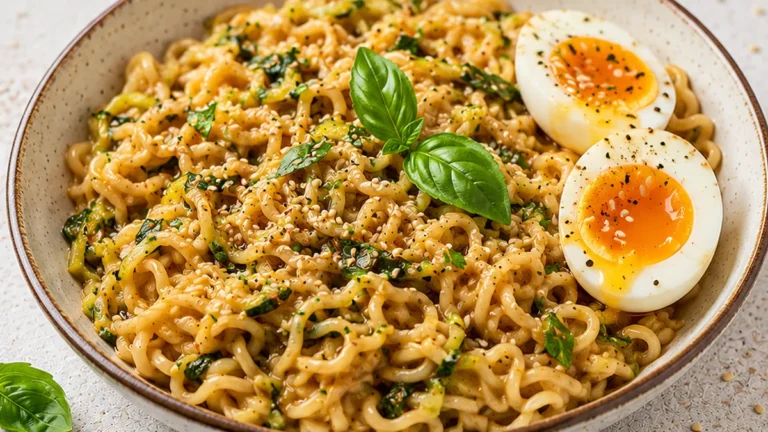
- Remove the skillet from the heat. Stir in fresh basil leaves and a sprinkle of sesame seeds. Serve immediately, topped with extra fresh basil if desired.
Notes
The technique that makes it
The key to this speedy Korean Beef Sesame Noodles recipe lies in the efficient development of flavor and texture through careful heat management and ingredient preparation. The sauce relies on the emulsification of its components. When the tamari, honey, rice vinegar, and gochujang are combined and heated, the honey and tamari create a base that the vinegar and gochujang can meld into. Whisking ensures these liquids combine smoothly. Adding the toasted sesame oil at the end preserves its delicate aroma and flavor, as prolonged high heat can diminish it. For the beef, a quick sear is crucial. While not explicitly detailed for searing in this recipe, the principle applies: high heat for a short duration allows the Maillard reaction to occur on the beef’s surface, creating savory, complex flavors and a desirable crust without overcooking the interior. This means the beef cooks through from residual heat once removed from the pan, remaining tender. The noodles, likely brown rice noodles, require precise cooking to al dente; overcooking leads to a mushy texture that will not hold up to the sauce and vegetables. Stir-frying the vegetables quickly over high heat ensures they retain their crispness and vibrant color, preventing them from becoming waterlogged and detracting from the dish’s overall texture.
Troubleshooting
- Problem: Sauce is too thin. Fix: Simmer the sauce gently for a few extra minutes, stirring constantly, until it thickens slightly. Alternatively, create a slurry with 1 teaspoon of cornstarch mixed with 2 teaspoons of cold water, then whisk it into the simmering sauce until thickened.
- Problem: Beef is tough. Fix: Ensure the beef was sliced thinly against the grain. Use high heat for searing and cook in batches if necessary to avoid overcrowding the pan, which steams the beef instead of searing it. Do not overcook.
- Problem: Noodles are sticky or clumped. Fix: Rinse the cooked noodles under cold water immediately after draining to remove excess starch. Toss them with a small amount of the cooking sesame oil (1 teaspoon) before adding the sauce.
- Problem: Vegetables are soggy. Fix: Stir-fry vegetables in batches over high heat, ensuring the pan is hot before adding them. Cook for only a few minutes until tender-crisp, then remove from the pan and add back at the end.
Substitutions
- Tamari or Soy Sauce: Coconut aminos can be used for a gluten-free and slightly sweeter alternative. The flavor will be less intensely savory.
- Honey: Maple syrup or agave nectar can substitute for honey. The final sauce sweetness and flavor profile will be subtly altered.
- Gochujang: Sriracha or Sambal Oelek can be used, but adjust the quantity as their heat levels and flavor profiles differ. The dish will be spicier and may lack the fermented depth of gochujang.
- Brown Rice Noodles: Udon noodles or spaghetti can be used. Brown rice noodles offer a chewier texture; udon will be softer, and spaghetti will be more standard. Adjust cooking times accordingly.
Pro tips
- For extra flavor, marinate the beef in 1-2 tablespoons of the prepared sauce for at least 15 minutes before cooking. This deepens the savory notes.
- If you prefer a spicier dish, increase the Gochujang to 4 tablespoons. For less heat, start with 1 tablespoon and taste before adding more.
- To ensure the beef cooks evenly and sears beautifully, make sure your skillet is very hot and avoid overcrowding the pan. Cook in batches if necessary.
This Korean Beef Noodles recipe is a testament to how quickly you can create a truly memorable meal. Experiment with different stir-fry vegetables or add a fried egg on top for extra richness. Enjoy your delicious creation!
Frequently asked questions
What is the best way to slice the beef for tenderness?
Slice the beef thinly against the grain. This technique shortens the muscle fibers, making the meat significantly more tender when cooked quickly over high heat, preventing toughness in the final dish.
Can I make the sauce ahead of time?
Yes, the sauce can be made ahead and stored in the refrigerator. Whisk it well before adding it to the noodles and other ingredients, as the honey may cause some separation upon chilling.
How can I make this dish spicier or milder?
Adjust the amount of gochujang to control the spice level. For more heat, add more gochujang or a dash of sriracha. For less heat, use less gochujang or omit it and add a touch more honey for sweetness.
What if I don’t have brown rice noodles?
You can substitute other noodles like udon, soba, or even spaghetti. Ensure you cook them according to package directions until al dente, as cooking times will vary significantly from brown rice noodles.
More from Easy Pasta Recipes →