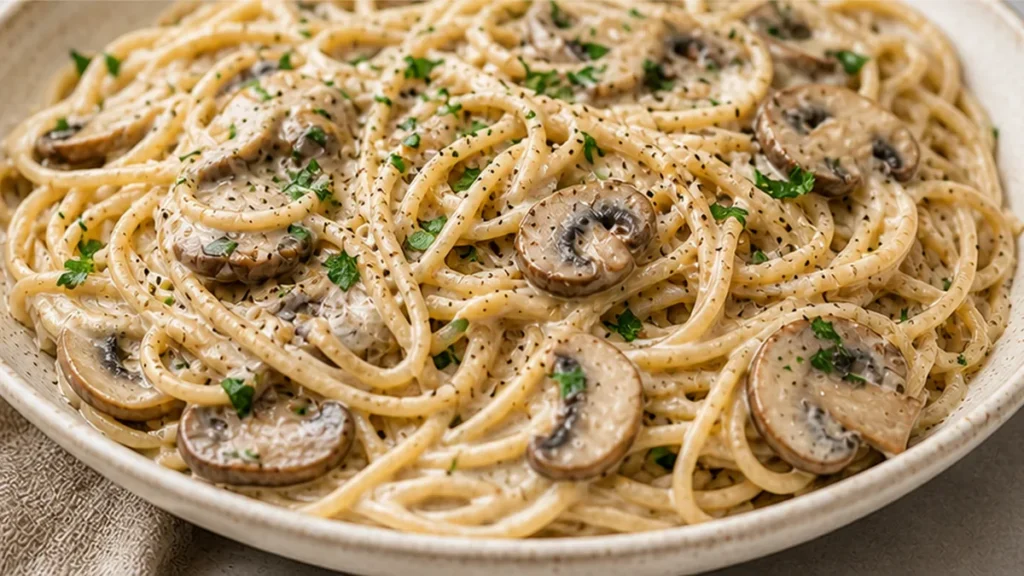
This creamy garlic herb mushroom spaghetti is a dish that transforms simple ingredients into an unforgettable dish. Designed for both quick weeknight dinners and impressive weekend meals, it offers a comforting blend of savory mushrooms, aromatic garlic, and delicate herbs enveloped in a rich, velvety sauce. Prepare to improve your pasta game with this sensational recipe. this mushroom spaghetti recipe is approachable and rewarding. The combination of whole wheat pasta, fresh mushrooms, and a luscious cream sauce ensures a satisfying meal that appeals to all palates.
Key takeaways
- Properly sautéing mushrooms develops deep flavor.
- Building a smooth sauce requires cooking the roux and gradually adding liquid.
- Don't overcrowd the pan for best mushroom browning.
- Adjust seasonings and sauce consistency as needed.
Creamy Garlic Herb Mushroom Spaghetti Recipe
Ingredients
- 8 ounces whole wheat pasta (spaghetti, linguine, etc.) – I like DeLallo brand
- 4 tablespoons butter, divided
- 3 cloves garlic, minced, divided
- 16 ounces fresh mushrooms, sliced
- 2 tablespoons flour (or whole wheat flour)
- 1 teaspoon herbes de provence
- 1 1/2 cups milk
- salt and pepper to taste
- 3 tablespoons olive oil
- additional 1/4 cup water, broth, milk or cream (optional)
Instructions
- Cook the pasta according to package directions. Set aside and toss with a little oil to prevent sticking.
- Melt 2 tablespoons of butter over medium high heat. Add one clove of the garlic and sauté for 1 minute until fragrant. Add the mushrooms and sauté for 5-10 minutes, until golden brown and softened. Set aside.
- Add the remaining 2 tablespoons of butter to the pan and melt again over medium high heat. Add the remaining garlic and sauté for 1 minute until fragrant.
- Add the flour and herbes de provence. Stir fry for 1 minute to cook out the flour taste.
- Add the milk slowly, whisking to incorporate. Let the mixture simmer until thickened. Season with salt and pepper.
- Toss the sauce, pasta, and mushrooms together. Add the olive oil and optional liquid as needed to keep the sauce from getting too thick. Stir in the parsley just before serving.
Notes
The technique that makes it
The success of this creamy garlic herb mushroom spaghetti hinges on two key techniques: properly sautéing the mushrooms and building a smooth, lump-free sauce. When sautéing the mushrooms, it’s crucial to use enough heat and not overcrowd the pan. This allows the mushrooms to release their moisture and then begin to brown, developing a rich, savory flavor through the Maillard reaction. Overcrowding or insufficient heat will steam the mushrooms, resulting in a watery, less flavorful dish. Ensure you’re using a large enough skillet or, if necessary, cook the mushrooms in batches. The second technique is creating the sauce. After sautéing the mushrooms, the aromatics (garlic) are added. Then, flour is whisked in to create a roux. Cooking the roux for a minute or two before adding liquid is essential to cook out the raw flour taste. Gradually whisking in the milk, and continuing to whisk as it heats, prevents lumps from forming. The starch in the flour will absorb the liquid and thicken the sauce. The herbes de Provence add a complex aromatic layer that infuses beautifully into the creamy sauce as it simmers.
Troubleshooting
- Sauce is too thin: If your sauce isn’t thickening enough, you can create a slurry by whisking 1 tablespoon of cornstarch or flour with 2 tablespoons of cold water or milk. Stir this slurry into the simmering sauce and cook for another 1-2 minutes until thickened.
- Sauce is lumpy: Lumps typically form when liquid is added too quickly to the flour mixture. To fix this, you can try to whisk vigorously to break them up. If that doesn’t work, carefully strain the sauce through a fine-mesh sieve.
- Mushrooms are watery and bland: This usually happens from overcrowding the pan or not using high enough heat. To salvage, remove the mushrooms from the pan and increase the heat. Once hot, return the mushrooms to the pan to allow them to brown properly.
- Flavor is too mild: The flavor can be enhanced by adding more garlic, herbs, or a pinch of red pepper flakes for a subtle heat. A splash of lemon juice at the end can also brighten the overall taste.
Substitutions
- Pasta: While spaghetti or linguine are classic, other long pasta shapes like fettuccine or bucatini work well. For a gluten-free option, use your favorite gluten-free spaghetti. The cooking time may vary.
- Mushrooms: A mix of mushrooms like cremini, shiitake, and oyster mushrooms will add depth of flavor and texture. If fresh mushrooms are unavailable, you can use about 10-12 ounces of drained canned mushrooms (like sliced button mushrooms), though the texture and flavor will be less intense.
- Herbes de Provence: If you don’t have herbes de provence, you can create a similar flavor profile by using a blend of dried thyme, rosemary, oregano, and a pinch of lavender (optional). A single herb like thyme or rosemary can also be used.
- Milk: For a richer sauce, you can substitute half-and-half or heavy cream for some or all of the milk. For a dairy-free option, use unsweetened plain almond milk, soy milk, or oat milk. Note that non-dairy milks may result in a slightly thinner sauce.
Pro tips
- Use fresh, high-quality mushrooms for the best flavor.
- Don’t overcrowd the pan when sautéing mushrooms; cook in batches if necessary for browning.
- Whisk the flour into the butter before adding milk to create a smooth roux and prevent lumps.
- Adjust the consistency of the sauce with extra milk, water, or broth as needed.
Experience the rich flavors and comforting textures of this exceptional mushroom spaghetti. A truly delightful dish that’s sure to become a family favorite. Enjoy!
More from Healthy Pasta Recipes →
Read also on TastyBend: Ground Turkey Nutrition Facts: Complete Scientific Analysis.
Frequently asked questions
Can I use different mushrooms for this creamy garlic herb spaghetti?
Absolutely! While cremini mushrooms are excellent, feel free to experiment with shiitake, oyster, or even a mix of wild mushrooms for varied flavor and texture. Just ensure they are cleaned and sliced similarly for even cooking. The earthy notes will complement the creamy sauce beautifully.
How do I make this spaghetti recipe ahead of time?
You can prepare the sauce components and cook the pasta separately up to a day in advance. Store them in airtight containers in the refrigerator. When ready to serve, reheat the sauce gently, then toss with freshly cooked or reheated pasta. Add a splash of pasta water or cream to loosen the sauce if needed.
What can I serve with creamy garlic herb mushroom spaghetti?
This rich spaghetti pairs wonderfully with a simple side salad dressed with a light vinaigrette to cut through the creaminess. Crusty bread is perfect for soaking up any extra sauce. For a heartier meal, consider grilled chicken breast or pan-seared shrimp as a protein addition.
How do I store leftover mushroom spaghetti?
Store any leftovers in an airtight container in the refrigerator for up to 3 days. Reheat gently on the stovetop over low heat, adding a tablespoon or two of water or milk to help restore the sauce’s creamy consistency. Avoid reheating in the microwave, as it can make the pasta mushy.