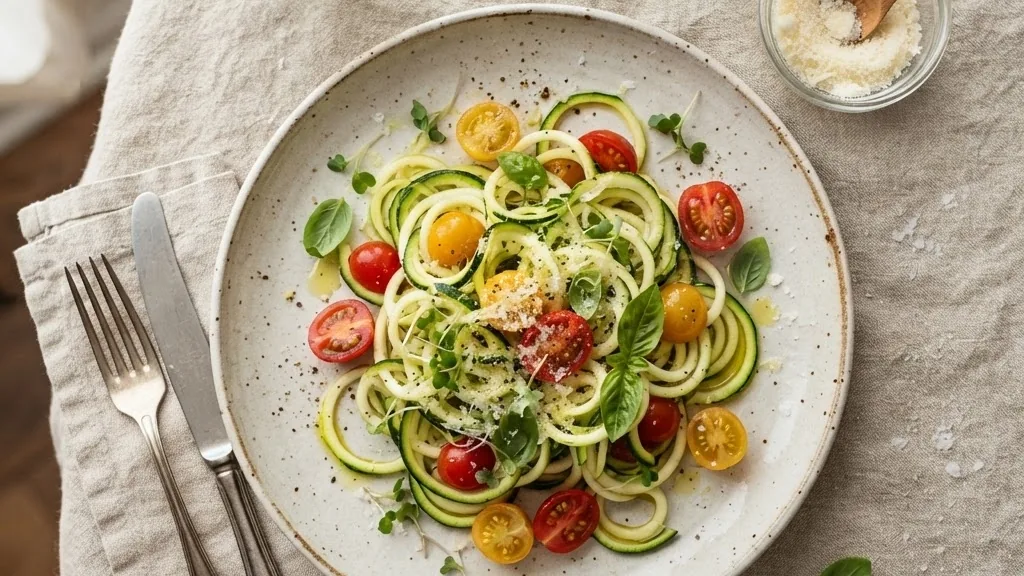
Finding a low calorie pasta replacement that you will actually keep eating is harder than the food blogs make it sound. The trouble is not that the alternatives do not exist. It is that most of them fail on the second night, when the novelty wears off and you just want noodles that satisfy. So this guide is not a cheerful list of miracle foods. It is a working cook’s ranking of what trades calories for the least disappointment.
The goal here is the same weeknight comfort of pasta without the same weekly calorie load. The options range from spiralizers and squash to strange little pouches that smell like a fish tank when you open them. Some of it was a revelation, some went straight in the bin. Below is each swap with the real numbers next to it, so you can decide for yourself.
Every calorie count, cook time, and nutrition figure below was checked this month against the USDA database and package labels, not from memory.
Quick answer: If you want the biggest calorie cut, reach for a vegetable-based swap: shirataki noodles at about 10 calories a serving, zucchini noodles at about 20 calories a cup, hearts of palm pasta at about 20 calories, or spaghetti squash at about 42 calories a cup, all against roughly 200 calories for a 2 ounce dry serving of regular pasta. If you would rather keep calories close to normal but load up on protein and fiber so a smaller bowl fills you, reach for a legume pasta like chickpea, red lentil, or edamame. The vegetable swaps cut the most; the legume swaps satisfy the most. Match the tool to the goal and you will not feel cheated.
What a low calorie pasta replacement actually has to do
Before the list, it helps to be honest about what you are really trying to solve, because the word replacement hides two very different goals. The first goal is raw calorie reduction: you want a plate that looks and eats like pasta but carries a fraction of the energy, usually because you are managing weight or building a lighter dinner around a rich sauce. The second goal is nutritional upgrade: you are less worried about the calorie number and more interested in more protein, more fiber, and a gentler effect on your blood sugar, so you feel full longer on the same or fewer calories.
Those two goals point at completely different foods, and this is where most people go wrong. They grab a box of chickpea pasta expecting a near-zero calorie miracle, then feel let down when it sits right next to regular pasta on calories. Chickpea pasta was never the low calorie play; it is the high protein play. Meanwhile someone else buys shirataki hoping for a hearty dinner and gets near-flavorless strands that never satisfy on their own. Neither food failed. The eater picked the wrong tool for the goal in their head.
So as you read, keep asking one question: am I trying to cut the calorie count, or eat better on the same count? This guide is organized around that split, vegetable swaps first for pure calorie cutting, then legume pastas for the nutrition upgrade. If you are new to how pasta is built in the first place, the primer on what pasta is made of is a good detour, because the semolina-and-water baseline is what makes every swap below make sense.
The regular pasta baseline you are measuring against
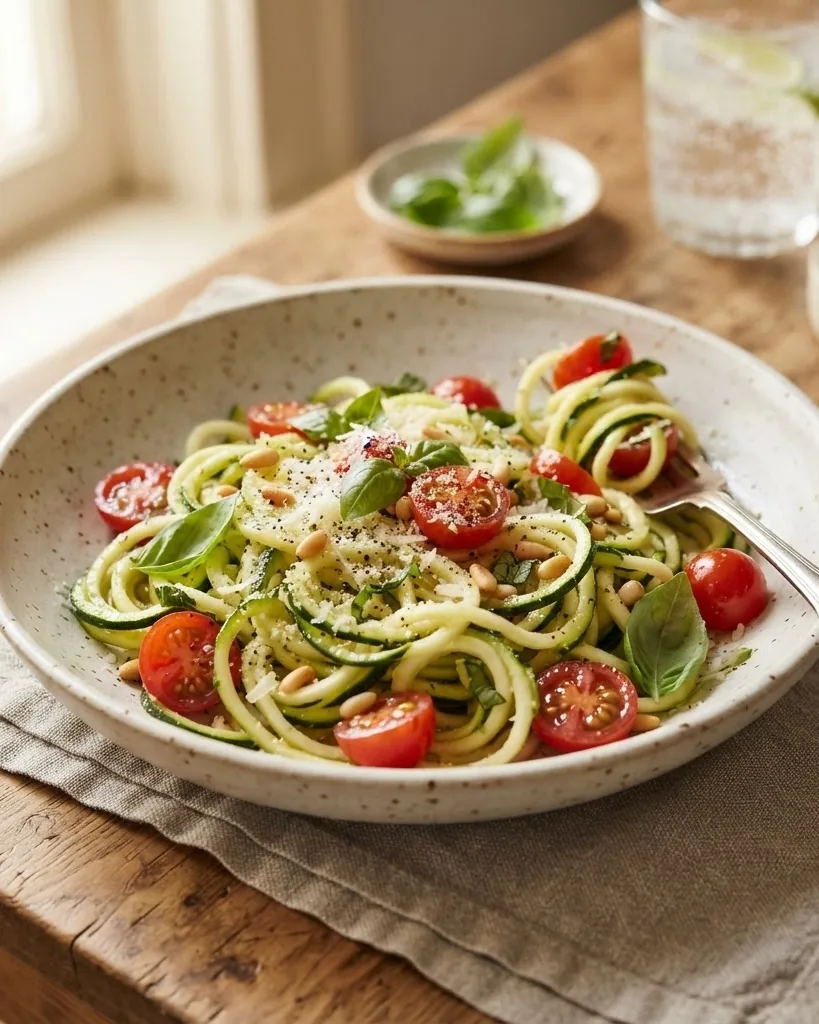
You cannot judge a replacement without a clear picture of what it replaces, and the numbers here surprise people because pasta is not the calorie bomb its reputation suggests. A standard 2 ounce, or 56 gram, dry serving of enriched wheat pasta runs about 200 calories, roughly 42 grams of carbohydrate, and 7 to 8 grams of protein. Cook that same 56 grams and it climbs to around 221 calories with just over 8 grams of protein, and it fills about 1 to 1.5 cups on the plate. Fiber is the weak spot, usually only 2 to 3 grams per serving.
Two things jump out. First, 200 calories for a satisfying base is not outrageous; the calorie problem with pasta usually comes from the portion and the rich sauce on top, not the noodle. Second, the fiber and protein are modest, which is exactly the gap the legume pastas below are built to fill. Weigh dry pasta honestly at 2 ounces and it becomes clear the enemy was never the noodle, it was the heaping bowl served without measuring.
That matters for how you use this guide. If you eat three servings in one sitting, no replacement fixes the habit, and a kitchen scale might do more than any swap. But if your portions are honest and you still want the numbers lower, the swaps below deliver in a way portion control alone cannot. The government keeps the primary figures public, and the numbers here are cross-checked against the entries at USDA FoodData Central rather than a random label, since brands drift the numbers a little.
The near-zero vegetable swaps that cut the most calories
This is the group people mean when they picture a dramatic low calorie pasta replacement, and the cuts here are genuinely huge, on the order of 80 to 95 percent versus wheat pasta. The trade is that these are vegetables pretending to be noodles, so they bring their own water, texture, and quirks. Cooked with respect they are wonderful. Cooked carelessly they turn to watery mush, and that single failure is why so many people give up on them.
Shirataki noodles, also sold as konjac noodles, are the extreme end of the scale at only about 10 to 15 calories a serving with less than 1 gram of net carbohydrate. They are roughly 97 percent water and 3 percent glucomannan, a soluble fiber that gives about 3 grams of fiber per serving and almost nothing else. That near-nothing profile is their whole appeal and their whole weakness: they add almost no calories, but they also add almost no flavor and can feel rubbery if you skip the prep. Healthline has a thorough rundown of the science on these at their shirataki guide.
Zucchini noodles, the zoodles everyone spiralized to death a few years back, land at about 20 calories a cup, with roughly 3.5 grams of carbohydrate, 1.5 grams of protein, and 1 gram of fiber, and they are about 95 percent water. They bring an actual fresh vegetable flavor and a light bite, which makes them far more pleasant than shirataki as a standalone. Hearts of palm pasta, sold in pouches under names like Palmini, sits close by at about 20 calories a serving, 4 grams of carbohydrate, 2 grams of protein, and 3 grams of fiber, with a pleasantly firm, slightly tangy strand that holds up better to a real sauce than zucchini does. Consumer Reports did a level-headed writeup on this one.
Spaghetti squash is the outlier in this group and the standout, because it is a real roasted vegetable rather than a processed noodle. A cup of the cooked strands is about 42 calories with roughly 10 grams of carbohydrate, 2.2 grams of fiber, and 1 gram of protein, plus a decent hit of vitamin C and manganese. It carries more calories than shirataki or zoodles, but it eats like actual food, with a gentle sweetness and a strand that catches sauce. Here is a quick gut-check on when each vegetable swap earns its place:
- Want the absolute lowest number and do not mind bland, go shirataki, because at about 10 calories it is essentially free.
- Want fresh flavor in a cold or barely cooked dish, go zucchini noodles, because they shine raw or lightly warmed.
- Want a strand that stands up to a proper sauce, go hearts of palm, because it holds firm where zoodles go limp.
- Want something that eats like real comfort food, go spaghetti squash, because roasting gives it body and a little sweetness.
- Cooking for skeptics who think all swaps are sad, start them on spaghetti squash, because it wins the most converts.
The higher-protein legume swaps that keep you full
Now flip goals. Legume pastas are not really a low calorie play, and it is worth saying that plainly, because the packaging can imply otherwise. A 140 gram cooked cup of chickpea pasta is about 185 calories, only modestly below the roughly 221 for the same cup of wheat pasta. The magic is not in the calorie column. It is that chickpea pasta carries far more protein, around 11 to 14 grams depending on brand, and up to 8 grams of fiber against the 2 to 3 grams in wheat pasta, with lower net carbs. That protein and fiber are filling, so a smaller portion satisfies, and the calories you do eat work harder for you.
Red lentil pasta plays a similar hand. A 2 ounce dry serving is about 199 calories, right in line with regular pasta on calories, but it brings about 14 grams of protein and 6 grams of fiber, plus meaningful iron and folate. It has a slightly earthy flavor and a softer bite than wheat, and it is naturally gluten-free, which makes it a genuine option for people who cannot eat wheat at all. If you are the sort of cook who already thinks about noodle nutrition, you may enjoy how it stacks up against the classics in the comparison of egg noodles versus pasta, since the protein story is a running theme.
Edamame pasta is the protein champion of the guide. At roughly 180 to 200 calories per 2 ounce dry serving it is not low calorie either, but some brands pack an eye-opening 24 grams of protein and 11 to 13 grams of fiber into that serving, more than three times the protein of wheat pasta. It is bright green, which throws some people, with a firm, almost beany bite that works best under a bold sauce. The pattern is simple: to lighten a meal, reach for a vegetable swap, and to make a normal-calorie meal more filling, reach for a legume pasta. They are not competitors. They solve different problems.
The numbers side by side
Here is the whole field on one card, so you can see why the vegetable swaps and the legume pastas belong in separate conversations. A version of this is worth taping inside the pantry door, because the split it shows, huge calorie cuts on top, big protein gains on the bottom, is the most useful thing to remember at the store.
| Option | Approx calories | Standout stat | Best goal |
|---|---|---|---|
| Regular wheat pasta | About 200 per 2 oz dry | 42 g carbs, 7-8 g protein | The baseline |
| Shirataki / konjac | About 10 per serving | 97 percent water, 3 g fiber | Lowest possible calories |
| Zucchini noodles | About 20 per cup | 95 percent water, fresh taste | Light, fresh dishes |
| Hearts of palm | About 20 per serving | 3 g fiber, firm strand | Holds a real sauce |
| Spaghetti squash | About 42 per cup | 2.2 g fiber, eats like food | Comfort with low calories |
| Chickpea pasta | About 185 per cooked cup | 11-14 g protein, up to 8 g fiber | Filling, higher protein |
| Red lentil pasta | About 199 per 2 oz dry | 14 g protein, 6 g fiber | Protein plus gluten-free |
| Edamame pasta | About 180-200 per 2 oz dry | Up to 24 g protein | Maximum protein |
Notice what the table is really telling you. The top four cut calories by 80 to 95 percent but add almost nothing beyond a little fiber. The bottom three barely move the calorie number but transform the protein and fiber. There is no single winner, which is why every ranking that pretends there is one falls apart the moment you cook from it. Pick your row by your goal, not by which brand shouted loudest.
How to cook each swap so it does not disappoint
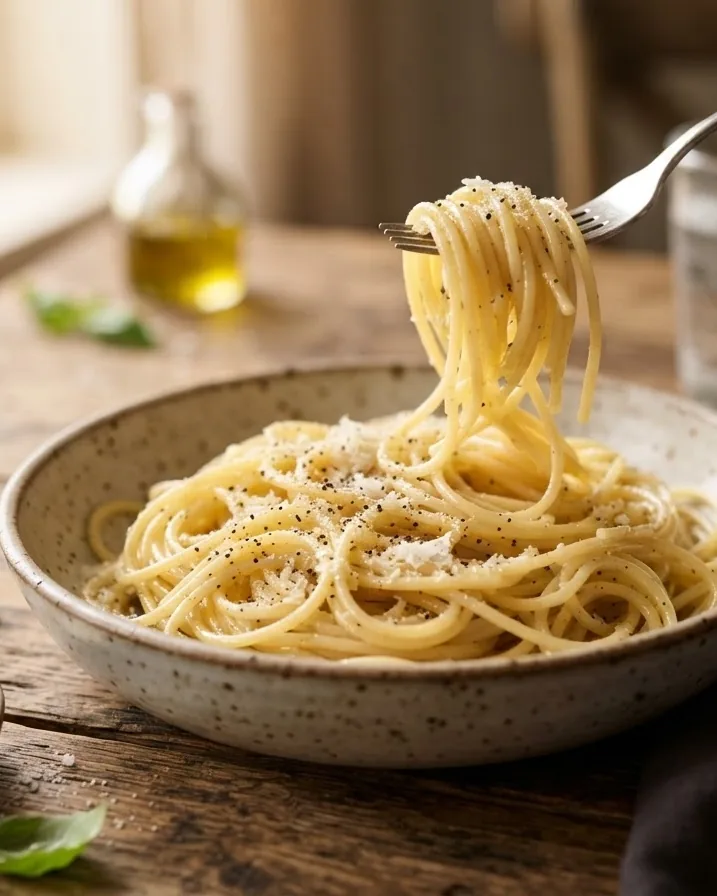
Nearly every failure with these swaps traces back to prep, not to the food itself, so this is the section that actually saves your dinner. The vegetable swaps in particular carry a lot of water, and water is the enemy of anything that wants to eat like pasta. Get the water out and these go from sad to genuinely good. Here is the exact order to follow for the trickiest ones.
- Step 1 – For shirataki, rinse the noodles in a colander under cold water for at least 30 seconds to wash off the packing liquid and its smell, because that first rinse is what makes them edible.
- Step 2 – Boil the rinsed shirataki for 2 to 3 minutes, then drain completely, since a hot bath firms the strands and cuts the last of the odor.
- Step 3 – Dry-fry the drained shirataki in a hot, empty pan for 3 to 4 minutes until they squeak and stop steaming, because this moisture-driving step is the difference between rubbery and pleasant.
- Step 4 – For zucchini noodles, do not boil them; saute 2 to 3 minutes at most, or serve raw, and salt them first and blot the water so they do not flood your sauce.
Spaghetti squash rewards patience. Halve it, scoop the seeds, and roast it cut-side down at about 400 degrees for roughly 40 minutes until a fork slides in easily, then drag the fork through to release the strands. Do not undercook it or the strands stay stiff, and do not sauce it while it sits in its own steam, because trapped moisture waters everything down. Hearts of palm pasta just needs a rinse and a brief soak or short boil to mellow its canned tang before the sauce.
The legume pastas are easier but have one trap: they overcook fast and turn to mush. Chickpea and red lentil pasta reach their best bite in about 7 to 9 minutes, so taste a piece 2 minutes before the box time and pull the pot the moment it is firm-tender. A splash of starchy cooking water helps a legume pasta grip its sauce just as it does wheat pasta. Because these swaps often go cold into salads, the notes on what goes with pasta salad apply directly, especially for hearts of palm and chickpea shapes that hold up beautifully chilled.
Which replacement to pick for your goal
There is no single best product to buy, because it depends on the night in front of you. If you are building a rich, saucy dish and want the plate light, go with spaghetti squash or hearts of palm, because they hold sauce and keep the calories near the floor. For a fast, fresh, barely-cooked summer bowl, zucchini noodles are the move. And if you are chasing the absolute lowest number for a heavy sauce night, shirataki does the job as long as you commit to the rinse-boil-dry-fry ritual.
If your real goal is eating better rather than lighter, ignore the vegetables and go legume. For everyday dinners where you want to stay full and nudge up your protein, chickpea or red lentil pasta swaps in for wheat with barely a change to your routine. When you want to hit a protein target around a workout, edamame pasta and its 24 or so grams per serving is the strongest tool in the drawer. A common mistake is buying one box and expecting it to do every job. It will not. Keep two or three on hand and pick by the night; that single habit is what turns these swaps from a passing fad into part of a regular routine.
What most guides skip, and it is the whole game, is that a replacement only works if you would happily eat it a second and third time. A swap that cuts 180 calories but that you dread is a worse tool than one that cuts 100 and that you enjoy, because the first you quit and the second you keep. Pick for pleasure as much as for numbers, and you will actually stick with it.
Frequently asked questions
What is the lowest calorie pasta replacement?
Shirataki, also called konjac noodles, is the lowest at about 10 to 15 calories per serving with under 1 gram of net carbohydrate. They are roughly 97 percent water and 3 percent glucomannan fiber, which is why they carry almost no calories. The catch is they bring almost no flavor either, so they work best carrying a bold sauce and only after you rinse, boil, and dry-fry them for a decent texture.
Is chickpea pasta actually low in calories?
Not really, and this trips people up. A cooked cup of chickpea pasta is about 185 calories, only a little under the roughly 221 calories in the same cup of wheat pasta. Its advantage is not calories, it is nutrition: it packs far more protein, around 11 to 14 grams, and up to 8 grams of fiber, with lower net carbs. That keeps you full longer, so a smaller portion satisfies, but it is a protein upgrade, not a calorie cut.
How many calories does a low calorie pasta replacement save?
It depends which one. Vegetable swaps like shirataki, zucchini noodles, hearts of palm, and spaghetti squash run about 10 to 42 calories per serving versus roughly 200 calories for a 2 ounce dry serving of wheat pasta, a cut of about 80 to 95 percent. Legume pastas like chickpea, red lentil, and edamame save far less on calories, often only 20 to 40 per serving, but add a lot of protein and fiber in exchange.
Do zucchini noodles taste like real pasta?
No, and it is better to expect that going in. Zucchini noodles at about 20 calories a cup taste like fresh zucchini, with a light bite and a bit of their own moisture, which is lovely in a summer bowl but nothing like a chewy wheat strand. They are about 95 percent water, so salt and blot them first and cook them only 2 to 3 minutes, or serve them raw, to keep them from watering down your sauce.
Which pasta replacement has the most protein?
Edamame pasta wins by a wide margin. A 2 ounce dry serving lands around 180 to 200 calories but delivers up to 24 grams of protein and 11 to 13 grams of fiber, which is more than three times the protein of wheat pasta. Red lentil pasta is a strong runner-up at about 14 grams of protein per serving, and chickpea pasta follows with roughly 11 to 14 grams. All three are naturally gluten-free as a bonus.
How do I make shirataki noodles taste good?
Prep is everything. Rinse them under cold water for at least 30 seconds to remove the packing smell, boil them 2 to 3 minutes, drain completely, then dry-fry them in a hot empty pan for 3 to 4 minutes until they squeak and stop steaming. That drives out the water that makes them rubbery. After that they soak up whatever sauce you give them, so lean on a bold, well-seasoned sauce since the noodles bring no flavor of their own.
The bottom line
There is no single best low calorie pasta replacement, and any guide that names one is selling you something. The vegetable swaps, shirataki at about 10 calories, zucchini noodles and hearts of palm at about 20, and spaghetti squash at about 42 a cup, cut calories by roughly 80 to 95 percent versus the 200 calorie wheat baseline, but they add little beyond fiber and they live or die by prep. The legume pastas, chickpea near 185 calories a cup, red lentil near 199, and edamame with up to 24 grams of protein, barely move the calorie number but transform the protein and fiber, so a smaller bowl fills you. Decide which goal you are chasing, cutting calories or eating better, pick the row that matches, cook it with the water driven out and the timing respected, and you will land a plate that keeps you coming back rather than one you abandon by the second night.