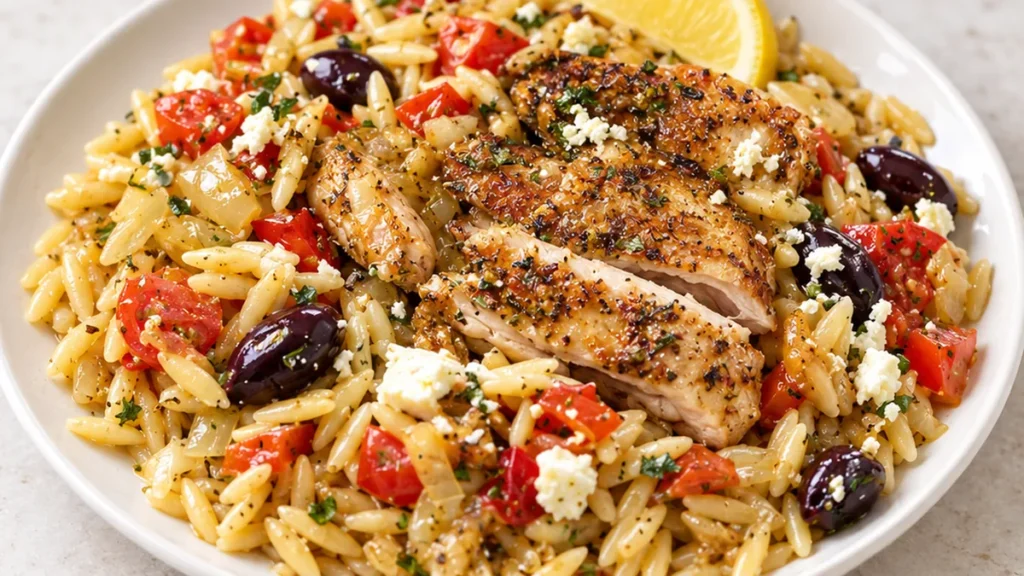
This one pan greek chicken orzo is a simple yet flavorful dish. It combines chicken and orzo in one pan for easy preparation and cleanup.
Key takeaways
- The right liquid-to-orzo ratio is crucial for proper cooking.
- Searing chicken at high heat enhances flavor through the Maillard reaction.
- Uniform chicken sizes ensure even cooking throughout the dish.
- Adding a splash of acidity before serving brightens the overall flavor.
One-Pan Greek Chicken & Orzo
Ingredients
- 1 tsp paprika
- ½ tsp dried thyme
- ½ tsp garlic powder
- 1 ½ tsp dried oregano, divided
- 1 tsp salt, divided
- ½ tsp freshly cracked black pepper, divided
- 4 boneless, skinless chicken thighs (about 1.3 lbs.)
- 1 tbsp olive oil
- 1 tbsp butter
- 1 small yellow onion, diced
Instructions
- In a small bowl, combine the paprika, dried thyme, garlic powder, 1 tsp dried oregano, ¾ tsp salt, and ¼ tsp black pepper.
- Blot the chicken thighs dry with a paper towel, then season both sides liberally with the seasoning blend.
- Heat the olive oil and butter in a large deep skillet over medium heat. Once the skillet is hot, add the chicken and cook on each side until golden brown and cooked through (about 5 minutes per side). Remove the chicken from the skillet and transfer to a clean plate. Cover with aluminum foil to keep warm.
- In the same skillet, add the diced onion, diced bell pepper, and minced garlic. Sauté for 3-4 minutes until onions are translucent.
Understanding the Role of Orzo in This Dish
Orzo, a type of pasta shaped like rice, plays a pivotal role in this one-pan Greek chicken and orzo recipe. The cooking method allows the orzo to absorb the flavors of the broth and spices, enhancing its taste and texture. It is crucial to maintain the right liquid-to-orzo ratio, typically about 1.5 to 2 cups of liquid for every cup of orzo. This ensures that the pasta cooks evenly and achieves the desired al dente texture. Cooking orzo in the same pan as the chicken not only simplifies the process but also allows for a cohesive blend of flavors.
Key Techniques for Perfectly Cooked Chicken
The chicken in this recipe should be seared to create a golden-brown crust, which adds depth of flavor through the Maillard reaction. This process occurs when proteins and sugars in the chicken are exposed to high heat, leading to complex flavor development. Aim for a sear at around 200°C (400°F) for approximately 5-7 minutes per side. This initial high heat seals in moisture, ensuring juicy chicken. Additionally, using a meat thermometer to check for doneness is recommended; chicken should reach an internal temperature of 75°C (165°F).
Addressing Common Issues with One-Pan Cooking
One common issue with one-pan meals is uneven cooking. To prevent this, ensure that chicken pieces are of similar size, allowing for uniform cooking. If the chicken is too thick, it may take longer to cook, leading to overcooked orzo. If you find that the orzo is absorbing too much liquid before the chicken is fully cooked, consider adding a splash of broth or water to maintain the right consistency. Additionally, stirring the orzo occasionally can prevent it from sticking to the bottom of the pan.
Flavor Enhancements and Ingredient Alternatives
While the traditional ingredients in this recipe provide a robust flavor profile, there are several alternatives that can enhance or modify the dish. For example, substituting chicken thighs for breasts can lead to a richer taste due to the higher fat content. If you want to add a touch of acidity, consider incorporating a splash of lemon juice or vinegar just before serving. This brightens the flavors and balances the richness of the chicken and orzo. Additionally, fresh herbs like dill or parsley can be added at the end of cooking for a fresh, aromatic finish.
Understanding the Impact of Ingredient Quality on Flavor
The quality of ingredients plays a significant role in the overall flavor profile of One-Pan Greek Chicken & Orzo. Fresh herbs, such as oregano and parsley, contribute vibrant aromas and taste, while high-quality olive oil enhances the dish’s richness. When using chicken, opting for organic or free-range options can yield a more succulent and flavorful result. Additionally, the freshness of vegetables, particularly tomatoes and bell peppers, can affect sweetness and acidity levels in the dish. For best results, source seasonal ingredients whenever possible, as they tend to be more flavorful and nutrient-dense.
Adapting Cooking Times for Different Equipment
Different cooking equipment can significantly influence the preparation time and final outcome of One-Pan Greek Chicken & Orzo. For instance, using a cast-iron skillet may require slightly longer cooking times due to its heat retention properties compared to a non-stick pan. If using an electric stovetop, the settings may vary in temperature output, necessitating adjustments in cooking duration. A pressure cooker can expedite the process, allowing the orzo to cook quickly while infusing flavors from the chicken and vegetables. Understanding your equipment’s characteristics can help achieve consistent results.
Batch Scaling for Gatherings and Meal Prep
Scaling the recipe for larger gatherings or meal prep requires careful consideration of ingredient proportions and cooking times. When doubling or tripling the One-Pan Greek Chicken & Orzo recipe, ensure that the pan size accommodates the increased volume without overcrowding, which can lead to uneven cooking. Adjusting the liquid ratios is also crucial; for every additional serving, consider adding an extra 100-150 ml of broth to maintain the desired creaminess. Additionally, cooking in batches may be necessary to ensure that the chicken browns properly and the orzo cooks evenly.
Serving Suggestions and Pairing Options
Pairing One-Pan Greek Chicken & Orzo with complementary side dishes can elevate the meal experience. A simple Greek salad, with crisp cucumbers, ripe tomatoes, red onions, and feta cheese, provides a refreshing contrast to the warm, savory orzo. For a heartier option, consider serving with roasted vegetables, which can be prepared simultaneously in the oven. Additionally, a glass of chilled white wine, such as a Sauvignon Blanc or a Greek Assyrtiko, enhances the dish’s flavors. Garnishing with fresh lemon wedges can also add a zesty brightness to the plate.
Maximizing Flavor through Ingredient Quality and Seasonality
The quality of the ingredients used in One-Pan Greek Chicken & Orzo significantly impacts the overall flavor profile of the dish. Fresh herbs, such as oregano and parsley, should be used when possible, as dried herbs can lose potency over time. Seasonal vegetables like zucchini and bell peppers not only enhance the dish visually but also contribute to a more vibrant taste. For instance, using ripe tomatoes during their peak season can elevate the sauce’s flavor, while out-of-season tomatoes may taste bland. Additionally, sourcing high-quality chicken, preferably free-range or organic, ensures a more robust flavor and better texture. Understanding the seasonality of ingredients allows for substitutions that maintain the dish’s integrity while enhancing taste.
Batch Scaling and Meal Prep Strategies
Scaling the One-Pan Greek Chicken & Orzo recipe for larger gatherings or meal prep requires careful consideration of ingredient ratios and cooking times. When doubling or tripling the recipe, ensure that the pan size is adequate to accommodate the increased volume without overcrowding, which can lead to uneven cooking. It’s advisable to use a larger sauté pan or a Dutch oven. Cooking times may remain similar, but monitoring the internal temperature of the chicken is crucial to ensure it reaches 75°C (165°F) throughout. For meal prep, consider cooking the chicken and orzo separately and combining them when ready to serve. This method helps maintain the chicken’s juiciness and prevents the orzo from becoming mushy during storage.
Serving Suggestions and Pairing Options
One-Pan Greek Chicken & Orzo is versatile in terms of serving and pairing options. For a refreshing contrast, serve the dish with a simple Greek salad composed of cucumbers, tomatoes, red onion, and feta cheese, dressed with olive oil and lemon juice. This balance of flavors enhances the Mediterranean experience. Additionally, consider pairing the dish with crusty bread or pita to soak up the flavorful juices. Wine pairing can elevate the meal; a crisp white wine, such as a Sauvignon Blanc or Assyrtiko, complements the dish’s flavors beautifully. For a more casual approach, serving the dish in bowls topped with fresh herbs and a sprinkle of feta can create an inviting presentation.
Understanding the Role of Orzo in Texture and Flavor
Orzo is a unique pasta shape that plays a crucial role in the overall texture and flavor profile of the dish. Unlike traditional pasta, orzo is small and rice-shaped, allowing it to absorb flavors more effectively. When cooked in a one-pan dish, orzo releases starch, which helps create a creamy sauce that enhances the overall mouthfeel. The key to achieving the perfect texture lies in the cooking time and liquid ratio. Typically, orzo should be cooked in a 1:2 ratio of orzo to liquid (e.g., broth or water) for about 10-12 minutes, but this can vary based on the specific brand and thickness of the orzo. Monitoring the cooking process closely is essential to prevent overcooking, which can lead to a mushy consistency.
Additionally, the quality of the liquid used can significantly impact the flavor. Using homemade chicken broth instead of water can elevate the dish, imparting depth and richness. Furthermore, incorporating herbs and spices during the cooking process can infuse the orzo with additional flavors, making it a standout component of the dish.
Batch Scaling for One-Pan Greek Chicken & Orzo
Scaling this recipe can be a practical solution for meal prepping or serving larger gatherings. When increasing the batch size, it is essential to maintain the same ratios of ingredients to ensure consistent flavor and texture. For instance, if doubling the recipe, use two parts of orzo to four parts of liquid, and adjust the amount of chicken and vegetables accordingly. However, be cautious not to overcrowd the pan, as this can lead to uneven cooking and steaming rather than searing.
When scaling up, consider using a larger pan or Dutch oven to accommodate the increased volume. Cooking times may also need slight adjustments; larger quantities may require additional time to reach the desired doneness, especially for the chicken. Always use a meat thermometer to check that the chicken reaches an internal temperature of 75°C (165°F) to ensure food safety. Proper planning and adjustments during the cooking process will yield a successful one-pan meal, regardless of the serving size.
Pro tips
Pro tip: Best served immediately while hot!
Frequently asked questions
What can I do if my orzo is too sticky?
If your orzo becomes sticky, it may be due to insufficient liquid or overcooking. Ensure you use the right liquid-to-orzo ratio and stir occasionally while it cooks. If it’s already cooked, adding a little olive oil or butter can help separate the grains.
How can I tell when the chicken is fully cooked?
The best way to check for doneness is to use a meat thermometer. Chicken should reach an internal temperature of 75°C (165°F). Alternatively, you can cut into the thickest part of the chicken; the juices should run clear, and the meat should no longer be pink.
Can I use other types of pasta instead of orzo?
Yes, you can substitute orzo with other small pasta shapes like ditalini or couscous. However, cooking times and liquid ratios may vary, so adjust accordingly to ensure proper texture.
What should I do if my dish is too dry?
If your dish turns out too dry, you can add a bit more broth or water to the pan and cover it for a few minutes to steam and rehydrate the ingredients. This will help to bring back moisture and flavor to the dish.
More from Chicken Pasta Recipes →