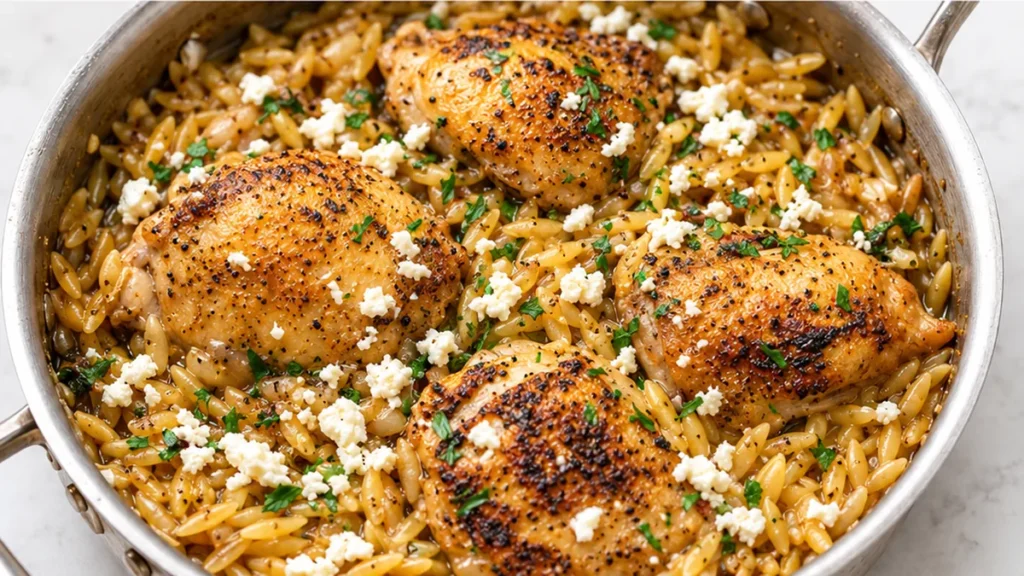
This one pot lemon pepper chicken recipe is simple and efficient. Cook chicken and orzo together for a flavorful meal that saves time on cleanup.
Key takeaways
- Ensure even cooking by adding chicken at the right time.
- Use sufficient broth to cook the orzo properly.
- Consider ingredient swaps to customize flavor and texture.
- The lemon adds brightness and tenderness to the chicken.

One-Pot Lemon Pepper Chicken & Orzo
Ingredients
- 4 chicken thighs
- 2 tbsp lemon pepper seasoning
- 1 tbsp cooking oil
- 2 cloves garlic
- 2 cups chicken broth
- 1/4 cup chopped parsley
- 1.5 cups orzo
- 2 oz crumbled feta
Instructions
- Blot chicken thighs dry and season liberally with 2 Tbsp lemon pepper seasoning.
- Heat oil in a large skillet over medium heat. Brown chicken thighs skin-side down for 6-8 minutes, then flip and brown the other side. Remove chicken.
- Sauté minced garlic in residual fat for about a minute. Add 2 cups chicken broth and stir to dissolve browned bits.
- Add orzo and half of the parsley. Return chicken to the skillet, skin side up. Cover and bring to a boil on high heat.
- Reduce heat to low and simmer for about 15 minutes, or until most broth is absorbed and orzo is tender.
- Fluff orzo with a fork, then top with remaining parsley and crumbled feta. Serve and enjoy!
The Science Behind One-Pot Cooking
One-pot cooking, particularly with dishes like lemon pepper chicken and orzo, relies heavily on the principles of heat transfer and moisture retention. When cooking in a single pot, the heat is evenly distributed, allowing proteins like chicken to cook thoroughly while absorbing flavors from the aromatic ingredients. The moisture from the chicken and the added broth creates a steam environment that helps cook the orzo without the need for separate boiling. This method not only enhances flavor but also ensures a tender texture, as the chicken remains juicy while the orzo absorbs the delicious broth.
Common Pitfalls and How to Avoid Them
Cooking one-pot meals can be straightforward, but several common issues may arise:
- Overcooked Chicken: If the chicken is added too early, it can become dry. To avoid this, add the chicken only when the orzo is nearly cooked.
- Undercooked Orzo: If not enough liquid is used, the orzo may remain hard. Always ensure there is sufficient broth to cover the pasta.
- Unbalanced Flavors: If the seasoning is not well-distributed, some bites may be bland. Stirring the ingredients thoroughly before serving can help blend the flavors.
- Sticking to the Pot: Using a pot that isn’t non-stick can lead to sticking. A well-seasoned cast iron or a high-quality non-stick pot can mitigate this issue.
Ingredient Swaps and Their Effects
Consider these ingredient swaps to customize your dish while understanding the potential trade-offs:
- Chicken Thighs Instead of Breasts: Thighs are juicier and more forgiving to cook, but they may add a richer flavor.
- Quinoa Instead of Orzo: Quinoa is a protein-packed substitute, but it will alter the dish’s texture and absorb more liquid.
- Vegetable Broth Instead of Chicken Broth: This swap is great for vegetarians, though it may result in a milder flavor profile.
- Fresh Herbs Instead of Dried: Using fresh herbs will enhance the flavor more than dried, but they should be added towards the end of cooking to retain their potency.
Unique Characteristics of Lemon Pepper Chicken and Orzo
This dish stands out due to its bright, zesty flavor profile brought by the lemon and the aromatic pepper. Unlike many one-pot meals that can be heavy, this dish remains light and refreshing, making it suitable for various occasions. The acidity from the lemon not only enhances the chicken’s flavor but also helps in tenderizing the meat, making each bite flavorful and juicy.
Understanding the Impact of Ingredient Quality on Flavor
The quality of your ingredients plays a crucial role in achieving the best flavor in one-pot lemon pepper chicken and orzo. Fresh, high-quality chicken will yield a more succulent and flavorful dish compared to lower-quality cuts. Similarly, using fresh lemon juice instead of bottled juice ensures a brighter and more vibrant taste. The same goes for the spices; whole peppercorns freshly ground will provide a more robust flavor than pre-ground pepper. Aim for organic or locally sourced ingredients when possible, as they often have superior flavor profiles.
Batch Scaling: Adjusting Ingredients for Larger Portions
Scaling your one-pot lemon pepper chicken and orzo recipe for larger gatherings requires careful adjustments to maintain flavor and texture. When doubling the recipe, ensure that your pot is large enough to accommodate the increased volume without overcrowding. Overcrowding can lead to uneven cooking. Additionally, consider increasing the seasoning proportionately, but taste as you go; sometimes, a little extra seasoning can enhance the dish without overwhelming it. Keep in mind that cooking time may need to be adjusted slightly, as larger quantities may take longer to reach the desired doneness.
Optimal Equipment for Cooking One-Pot Dishes
The choice of equipment can significantly affect the outcome of your one-pot lemon pepper chicken and orzo. A heavy-bottomed pot or Dutch oven is ideal for even heat distribution, preventing hot spots that can lead to burning. Non-stick options can make for easier cleanup, but they may not develop the same depth of flavor as stainless steel or cast iron. If using an electric pressure cooker, be aware that cooking times will differ, and you may need to adjust liquid quantities accordingly. Always refer to your equipment’s guidelines for best practices.
Seasonal Adjustments for Freshness and Flavor
Seasonality affects the freshness and flavor of ingredients used in one-pot lemon pepper chicken and orzo. In spring and summer, consider incorporating seasonal vegetables such as asparagus or zucchini, which can add color and freshness. In the fall, root vegetables like carrots or sweet potatoes can provide heartiness. The lemon flavor can be enhanced with the addition of seasonal herbs like basil or parsley, which thrive in warmer months. Adjusting your recipe to include seasonal produce not only elevates the dish but also makes it more economical and environmentally friendly.
How to Prepare Lemon Pepper Chicken for Optimal Flavor
The key to achieving a flavorful one pot lemon pepper chicken lies in the marination process. Allowing the chicken to marinate for at least 30 minutes, or ideally up to 2 hours, helps the flavors penetrate the meat. A mixture of lemon juice, olive oil, garlic, and freshly cracked black pepper serves as an excellent marinade. The acidity from the lemon juice not only adds flavor but also tenderizes the chicken. For a more pronounced lemon flavor, consider adding lemon zest to the marinade. This technique enhances the overall taste profile and ensures that each bite is bursting with flavor. Additionally, using chicken thighs instead of breasts can yield a juicier result due to their higher fat content, which helps retain moisture during cooking.
Choosing the Right Orzo for Cooking
While orzo is a versatile pasta, the type you choose can affect the final dish. Opt for high-quality durum wheat orzo, as it holds its shape better during cooking and absorbs flavors more effectively. Cooking the orzo directly in the pot with the chicken allows it to soak up the chicken juices and lemony broth, enhancing its flavor. Be mindful of the cooking time; overcooked orzo can become mushy, so aim for al dente. Typically, orzo takes about 8-10 minutes to cook, so add it to the pot at the right moment to ensure it retains a pleasant texture. If you prefer a gluten-free option, look for rice-based orzo, but be aware that cooking times may vary.
Perfect Pairings for a Complete Meal
To elevate your one pot lemon pepper chicken and orzo meal, consider pairing it with complementary sides and beverages. A fresh green salad with a light vinaigrette can provide a refreshing contrast to the richness of the chicken. Additionally, roasted or steamed vegetables such as asparagus or broccoli can add color and nutrients to your plate. For a beverage, a crisp white wine like Sauvignon Blanc or a sparkling water with lemon can enhance the meal’s bright flavors. If serving this dish for a special occasion, consider garnishing with fresh herbs like parsley or basil to add a pop of color and freshness. These pairings not only enhance the dining experience but also balance the overall flavors of the dish.
Understanding the Best Practices for Make-Ahead Lemon Pepper Chicken & Orzo
When preparing one-pot dishes like lemon pepper chicken and orzo, make-ahead strategies can enhance your cooking experience. To ensure optimal flavor and texture, consider marinating the chicken ahead of time. A marinade of lemon juice, olive oil, and pepper not only tenderizes the meat but also infuses it with flavor. Ideally, let the chicken marinate for at least 30 minutes, but for best results, allow it to sit in the refrigerator for up to 24 hours.
For the orzo, cooking it slightly under al dente can be beneficial if you plan to reheat the dish later. This prevents the pasta from becoming mushy during storage and reheating. Once cooked, let the dish cool completely before transferring it to an airtight container. Proper storage in the refrigerator can keep the dish fresh for up to three days. When reheating, add a splash of chicken broth or water to restore moisture and prevent sticking.
Batch Scaling for One-Pot Lemon Pepper Chicken
Scaling a recipe effectively requires understanding the dynamics of ingredient ratios and cooking times. For lemon pepper chicken and orzo, doubling the recipe can be straightforward, but adjustments in cooking time and pot size must be considered. Generally, when increasing the batch size, use a larger pot to ensure even cooking and to prevent overcrowding, which can lead to uneven heat distribution.
When scaling, maintain the same ratios of chicken to orzo (approximately 1:1) and adjust the liquid accordingly, ensuring there’s enough broth to cook the pasta. A good rule of thumb is to increase the liquid by about 20% when doubling the recipe. Additionally, cooking times may vary; monitor the dish closely, as larger batches may take longer to reach the desired doneness. Always check the chicken’s internal temperature, which should reach 75°C (165°F) for safe consumption.
Pro tips
Pro tip: Best served immediately while hot!
Frequently asked questions
Can I use other types of pasta instead of orzo?
Yes, you can substitute orzo with other small pasta shapes like ditalini or even rice. Keep in mind that cooking times may vary, so adjust the liquid and timing accordingly.
What can I do if the orzo is too sticky?
If the orzo becomes sticky, it might be overcooked or lacking sufficient liquid. To prevent this, ensure you stir it well during cooking and add a bit more broth if needed.
How can I make this dish spicier?
To add heat, consider incorporating crushed red pepper flakes or a dash of hot sauce. Adding these ingredients at the beginning of cooking will help infuse the dish with spiciness.
Can I prepare this dish ahead of time?
Yes, you can prepare the ingredients in advance and store them separately. However, it’s best to cook the dish fresh to maintain the texture of the chicken and orzo.
More from Chicken Pasta Recipes →