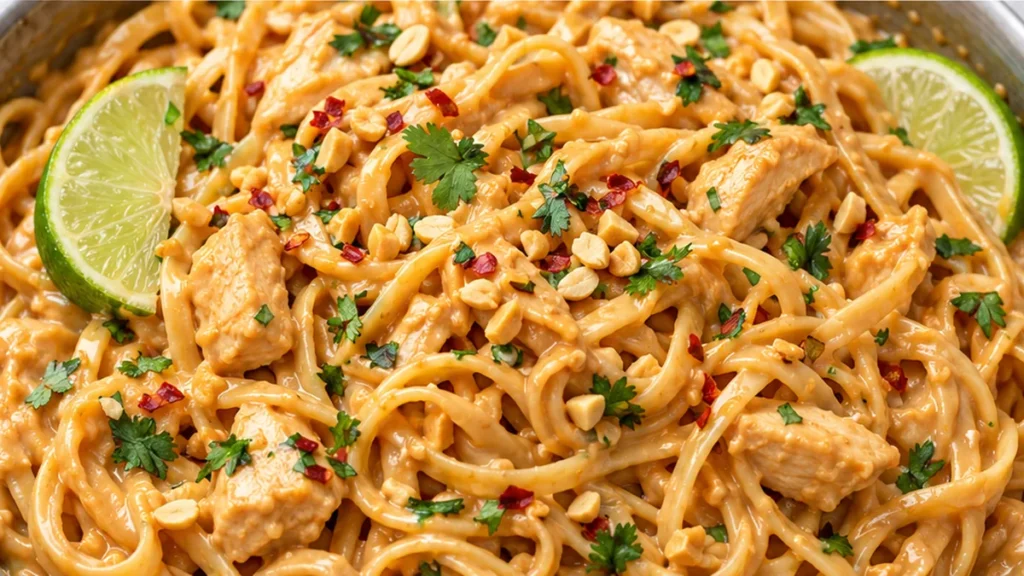
This recipe for peanut noodles with sriracha combines tender chicken with a rich, spicy sauce. It’s a straightforward dish that delivers on flavor.
Key takeaways
- Balance flavors by adjusting sweet, salty, and spicy ingredients in the sauce.
- Cook noodles al dente and rinse them to prevent stickiness.
- Marinate chicken to enhance juiciness and ensure proper cooking temperature.
- Incorporate fresh vegetables and herbs for added texture and flavor.
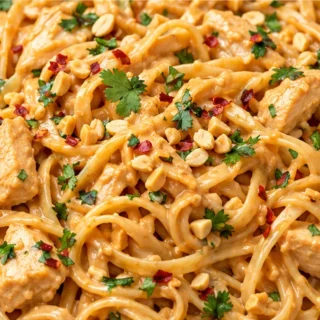
Peanut Noodles with Chicken
Ingredients
- 1/3 cup smooth natural-style peanut butter
- 2 tbsp sriracha
- 2 tbsp brown sugar
- 1 fresh lime (2 Tbsp juice)
- 1 tbsp soy sauce
- 1 clove garlic, minced
- 1 tsp grated fresh ginger
- 1 13.5 oz. can coconut milk
- 1 boneless, skinless chicken breast (about ⅔ lb.)
- 1 tbsp cooking oil
Instructions
- Prepare the peanut sauce first. In a medium bowl, whisk together the peanut butter, sriracha, brown sugar, soy sauce, lime juice, minced garlic, and grated ginger.
- Add the coconut milk to the peanut sauce and whisk until smooth again.
- Cut the chicken breast into small ½ to 1-inch sized pieces.
- Heat a large skillet over medium-high. Once hot, add the cooking oil and swirl to coat the surface of the skillet. Add the chicken and cook until browned on all sides.
- Add the prepared peanut sauce into the skillet, turn the heat down to medium-low, and stir to dissolve any browned bits off the bottom of the skillet. Let the chicken simmer in the sauce over low, stirring occasionally, while you cook the noodles.
- Cook your noodles according to the package directions, then drain in a colander.
- Add the cooked and drained noodles to the skillet with the peanut sauce and chicken. Toss until everything is evenly mixed and coated in sauce.
- Top the noodles with chopped peanuts and cilantro, then enjoy!
Understanding the Balance of Flavors in Peanut Sauce
The key to a successful peanut sauce lies in achieving a harmonious balance between sweetness, spiciness, and acidity. The peanut butter provides creaminess and richness, while ingredients like soy sauce and lime juice contribute saltiness and tang. For optimal flavor, maintain a ratio of about 3:1 for peanut butter to soy sauce, and adjust the sriracha to taste, starting with a teaspoon and increasing as desired. This balance not only enhances the taste but also elevates the overall dish.
Common Texture Issues: Achieving the Perfect Noodle Consistency
Texture is crucial in peanut noodles. Overcooking the noodles can lead to a mushy consistency, while undercooking can result in a chewy texture. Aim for al dente, which typically means cooking the noodles for about 2-3 minutes less than the package instructions suggest. Additionally, rinsing the noodles under cold water after cooking helps stop the cooking process and removes excess starch, preventing them from sticking together.
How to Properly Incorporate Chicken for Maximum Juiciness
Chicken can easily dry out if not cooked properly. To ensure juiciness, consider marinating the chicken for at least 30 minutes in a mixture of soy sauce, garlic, and a bit of sesame oil. Cooking the chicken over medium-high heat for about 6-7 minutes on each side, or until it reaches an internal temperature of 75°C (165°F), will help retain moisture. Letting the chicken rest for a few minutes before slicing also allows the juices to redistribute.
Enhancing the Dish with Fresh Ingredients and Garnishes
Fresh ingredients can elevate peanut noodles significantly. Incorporating vegetables like bell peppers, carrots, and cucumbers not only adds color but also crunch. Consider adding fresh herbs such as cilantro or basil for a burst of flavor. Garnishing with chopped peanuts and a squeeze of lime just before serving adds texture and brightness, making the dish more appealing and enjoyable.
Understanding the Impact of Ingredient Quality on Flavor
The quality of ingredients used in peanut noodles with chicken can significantly influence the overall flavor profile of the dish. For instance, opting for fresh, high-quality chicken breast rather than frozen can enhance the texture and juiciness of the meat. Similarly, using natural peanut butter over processed varieties can contribute to a richer and more authentic taste. Additionally, the freshness of vegetables, such as scallions and bell peppers, can elevate the dish’s flavor and nutritional value. A study from the University of California found that fresh produce retains more nutrients and flavor compounds, which can alter the final taste of your dish.
Scaling the Recipe for Larger Gatherings
When preparing peanut noodles with chicken for larger gatherings, it’s essential to adjust the ingredient quantities while maintaining the flavor balance. A common scaling ratio is to increase each ingredient by 1.5 to 2 times depending on the number of servings needed. However, be cautious with the peanut sauce; it’s often best to prepare it in smaller batches to ensure the right consistency and flavor. For instance, if the original recipe calls for 120 grams of peanut butter, scaling up to 240 grams may require additional adjustments in the other ingredients to avoid overwhelming the dish with peanut flavor. It’s wise to taste as you go to maintain the desired balance.
Optimal Equipment for Cooking and Serving
The equipment you use can greatly affect the preparation and presentation of peanut noodles with chicken. A large pot is essential for boiling the noodles efficiently, while a non-stick skillet or wok is ideal for stir-frying the chicken and vegetables, ensuring even cooking and easy cleanup. For serving, consider using a large platter or individual bowls to present the dish attractively. The use of a food processor can also streamline the process of making the peanut sauce, ensuring a smooth and creamy texture. Moreover, using a thermometer to check the chicken’s doneness can prevent overcooking, maintaining its juiciness.
Make-Ahead Strategies for Easy Meal Prep
Preparing peanut noodles with chicken in advance can save time and enhance convenience during busy weeknights. The noodles can be cooked and stored in the refrigerator for up to three days, while the peanut sauce can be made ahead and stored in an airtight container. When reheating, add a splash of water to the noodles to restore moisture. However, it’s advisable to cook the chicken fresh to ensure it retains its juiciness and flavor. If you plan to assemble the dish later, keep the components separate until serving to maintain texture and freshness. This method allows for a quick meal without compromising quality.
Understanding the Role of Peanut Sauce in Flavor Balance
The peanut sauce is the heart of peanut noodles with chicken, providing a rich, creamy texture and a nutty flavor that ties the dish together. Achieving the right balance in your sauce is crucial; too much sweetness can overpower the dish, while too much acidity can make it unpalatable. A typical ratio for a balanced peanut sauce involves 1 part peanut butter to 1 part soy sauce, and a splash of rice vinegar. For additional depth, consider adding a teaspoon of sesame oil and a pinch of sugar. The sauce should be thick enough to coat the noodles without being overly cloying. Adjusting the viscosity can be done by adding warm water or broth until the desired consistency is achieved. Remember, the sauce should complement the chicken and noodles, enhancing their flavors without overshadowing them.
Batch Scaling: Adjusting Ingredients for Larger Portions
When scaling the recipe for larger gatherings, it’s important to maintain the proportions of the ingredients to ensure consistent flavor and texture. For instance, if doubling the recipe, keep the ratio of peanut butter to soy sauce and other ingredients the same. However, be mindful that cooking times may vary. Larger batches may require longer cooking times to heat through, especially when it comes to the chicken. Additionally, if preparing a large batch, consider cooking the noodles in multiple pots to prevent them from sticking together. For storage, ensure the noodles are coated in the sauce to prevent them from clumping. Once cooled, store in airtight containers; they can last in the refrigerator for up to three days.
Serving Suggestions: Pairing with Sides and Garnishes
Serving peanut noodles with chicken can be elevated by thoughtful pairing with sides and garnishes. Fresh vegetables, such as cucumber, bell peppers, or carrots, add a refreshing crunch that contrasts with the creamy noodles. Consider serving the dish with a side of steamed bok choy or a light Asian slaw to enhance the meal’s texture and flavor profile. For garnishing, chopped peanuts, cilantro, and a drizzle of sriracha not only add visual appeal but also enhance the overall taste experience. The heat from sriracha complements the richness of the peanut sauce, creating a delightful balance. Additionally, serving the dish at room temperature can enhance the flavors, making it a great option for potlucks or picnics.
Understanding the Role of Sriracha in Peanut Noodles
Incorporating sriracha into peanut noodles not only adds heat but also enhances the overall flavor profile of the dish. Sriracha, with its balance of spice and sweetness, complements the creamy texture of the peanut sauce. The key is to adjust the amount based on personal tolerance for heat; starting with a teaspoon can provide a subtle kick, while larger quantities can transform the dish into a spicy delight. When using sriracha, consider the other ingredients in the peanut sauce—like soy sauce and lime juice—as they can also influence the perceived spiciness. A well-balanced peanut sauce with sriracha should have a harmonious blend of heat, acidity, and richness, ensuring that no single flavor overpowers the others.
Choosing the Right Noodles for Optimal Texture
The type of noodles used in peanut noodles can significantly affect the dish’s texture and overall enjoyment. Traditional recipes often call for rice noodles, which are gluten-free and have a delicate texture that pairs well with the creamy peanut sauce. However, you can also use whole wheat noodles for a heartier option or even soba noodles for a unique flavor twist. When cooking noodles, it is crucial to follow the package instructions closely, as overcooking can lead to mushy noodles that won’t hold the sauce well. Aim for al dente noodles, which provide a pleasant chew and better absorb the sauce. Additionally, rinsing the noodles under cold water after cooking helps to stop the cooking process and prevents them from sticking together, ensuring a perfect serving every time.
Pro tips
Pro tip: Best served immediately while hot!
Frequently asked questions
What type of noodles work best for peanut noodles?
For peanut noodles, thin rice noodles or wheat-based noodles like spaghetti work best. Rice noodles are gluten-free and absorb the sauce well, while wheat noodles provide a chewy texture. Choose based on your dietary preference.
Can I make the peanut sauce ahead of time?
Yes, you can prepare the peanut sauce ahead of time. Store it in an airtight container in the refrigerator for up to a week. Just give it a good stir before using, as it may thicken when chilled.
How can I adjust the spiciness of the dish?
To adjust the spiciness, start with a small amount of sriracha and taste as you go. You can always add more, but it’s harder to reduce heat once it’s in. If it becomes too spicy, adding a bit more peanut butter or coconut milk can help mellow the flavor.
What can I substitute for chicken in this recipe?
If you’re looking for a substitute for chicken, tofu or tempeh are excellent options for a vegetarian version. Both can be marinated and cooked similarly, providing a good source of protein while absorbing the flavors of the sauce.
More from Chicken Pasta Recipes →