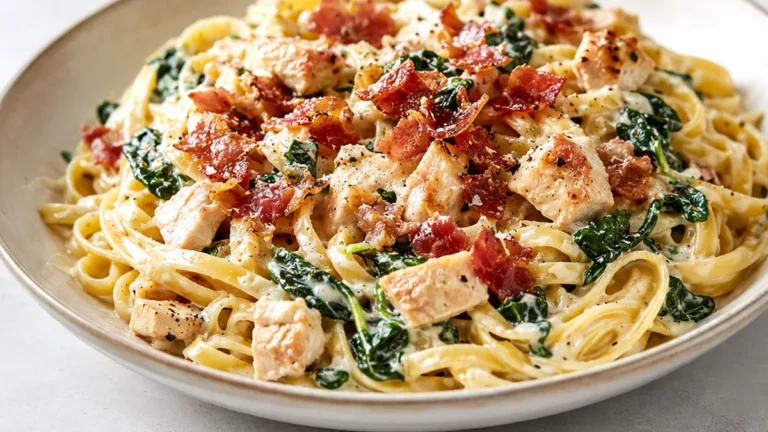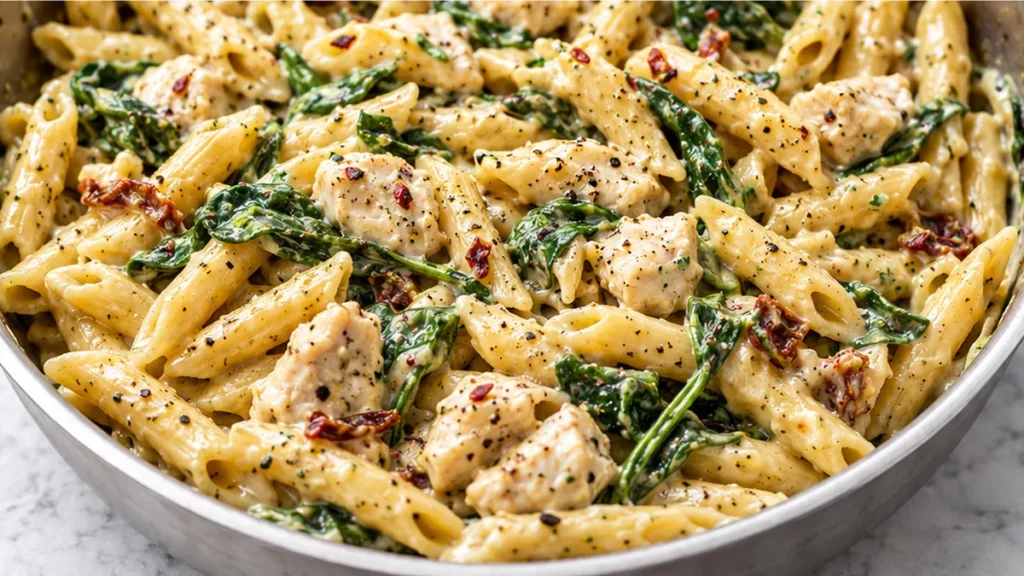
One pot creamy pesto chicken brings together chicken, spinach, and sun-dried tomatoes in a creamy pesto sauce. This recipe is simple and efficient.
Key takeaways
- Properly balance the creamy pesto with the right cream-to-pesto ratio.
- Cook pasta al dente to maintain texture.
- Gradually mix pesto into the cream to prevent separation.
- Experiment with ingredient swaps for unique flavors.
Ultimate One Pot Creamy Pesto Chicken Pasta!
Ingredients
- 1 lb boneless, skinless chicken breast
- 2 tbsp butter
- 2 cloves garlic
- 1/2 lb penne pasta
- 1.5 cups chicken broth
- 1 cup milk
- 3 oz cream cheese
- 1/3 cup basil pesto
- 1/4 cup grated Parmesan
- freshly cracked pepper
Instructions
- Cut the chicken breast into 1-inch pieces. Add the butter to a deep skillet and melt over medium heat. Add the chicken and cook until slightly browned.
- Mince the garlic and add it to the skillet with the chicken. Sauté for one more minute.
- Add uncooked pasta and chicken broth. Stir to dissolve browned bits from the bottom, then cover and bring to a boil.
- Once boiling, stir the pasta, lower heat to medium-low, and simmer for about 8 minutes, stirring briefly every two minutes.
- When pasta is tender and broth absorbed, add milk, cream cheese, and pesto. Stir and cook until cream cheese melts into the sauce.
- Add fresh spinach and sun-dried tomatoes if desired, stirring until spinach wilts. Season with cracked pepper and serve!
Understanding the Creamy Pesto Sauce
The key to a successful one pot creamy pesto chicken pasta lies in the preparation of the creamy pesto sauce. The traditional pesto is made from basil, garlic, pine nuts, Parmesan cheese, and olive oil. When creating a creamy version, the addition of heavy cream or cream cheese can enhance the texture and flavor. The ideal ratio for a creamy pesto is approximately 1 part pesto to 2 parts cream, which ensures a balanced flavor without overwhelming the dish. Heating the cream gently before mixing it with the pesto can help create a smooth emulsion.
Common Mistakes and How to Avoid Them
One common mistake when making this dish is overcooking the pasta. Pasta should be cooked until al dente, which means it retains a slight bite. Cooking it too long can lead to mushy pasta that doesn’t hold up well in the sauce. To avoid this, check the pasta a minute or two before the package instructions suggest. Another issue can arise from not properly incorporating the pesto into the sauce. If added too quickly or at too high a temperature, the sauce can separate. Gradually mixing the pesto into the cream while stirring continuously helps maintain a cohesive sauce.
Ingredient Swaps and Their Impact
Swapping ingredients can yield different flavors and textures in your one pot creamy pesto chicken pasta. For instance, using sun-dried tomatoes instead of fresh tomatoes adds a concentrated sweetness and a chewy texture. If you prefer a lighter version, substituting Greek yogurt for heavy cream will reduce calories but may alter the creaminess. Additionally, using different nuts, such as walnuts or cashews, in the pesto can change the flavor profile significantly. Walnuts provide a more earthy taste, while cashews add creaminess without the need for additional dairy.
Unique Characteristics of This Dish
This one pot creamy pesto chicken pasta stands out due to its simplicity and the convenience of cooking everything in one pot, which minimizes cleanup. The combination of protein from the chicken and the carbohydrates from the pasta makes it a well-rounded meal. Unlike traditional pesto dishes that often serve as a sauce over plain pasta, this recipe integrates the pesto directly into the cooking process, allowing the flavors to meld beautifully. The result is a dish that is not only flavorful but also visually appealing with vibrant green hues from the pesto.
Understanding the Impact of Ingredient Quality on Flavor
The quality of ingredients plays a crucial role in the flavor profile of your one pot creamy pesto chicken pasta. Freshly made pesto, for instance, can elevate the dish significantly compared to store-bought versions. When using fresh basil, the vibrant green color and aromatic oils provide a more intense flavor. Similarly, the freshness of chicken breasts affects the overall taste and texture. Aim for organic or free-range chicken whenever possible, as these options often yield a more succulent result. Additionally, using high-quality pasta, such as durum wheat pasta, can enhance the dish’s texture, allowing it to hold the creamy sauce better.
Batch Scaling: Adjusting for Different Portions
When scaling the recipe for larger or smaller portions, it’s essential to maintain the proportions of ingredients for consistent flavor and texture. For instance, if you’re doubling the recipe, consider increasing the cooking time slightly to ensure that the pasta cooks evenly. Conversely, if halving the recipe, reduce the liquid slightly to prevent the sauce from becoming too watery. It’s also helpful to use a larger pot when increasing the batch size to allow for better heat distribution and prevent overcrowding, which can lead to uneven cooking.
Choosing the Right Equipment for Optimal Results
The equipment you use can significantly affect the outcome of your one pot creamy pesto chicken pasta. A heavy-bottomed pot is ideal for even heat distribution, preventing hot spots that can scorch the ingredients. Non-stick cookware can also be beneficial, making it easier to stir and preventing the pasta from sticking. If you have an immersion blender, consider using it to blend the pesto directly in the pot, ensuring a smooth and creamy texture without transferring to a separate container. Additionally, a lid is essential for maintaining moisture and heat during the cooking process, ensuring the pasta cooks perfectly.
Serving Suggestions and Pairing Options
How you serve your one pot creamy pesto chicken pasta can enhance the overall dining experience. Garnishing with freshly grated Parmesan cheese and a sprinkle of toasted pine nuts adds texture and flavor. Pairing the dish with a crisp green salad dressed in lemon vinaigrette can provide a refreshing contrast to the rich pasta. For beverage options, a light white wine, such as Pinot Grigio or Sauvignon Blanc, complements the dish beautifully. Additionally, consider offering crusty bread on the side to soak up any leftover creamy sauce, making for a satisfying meal.
Understanding the Make-Ahead and Storage Options for One Pot Creamy Pesto Chicken
One Pot Creamy Pesto Chicken Pasta is a dish that can be prepared ahead of time, making it a convenient option for meal prep. When making this dish in advance, it’s best to store it in an airtight container in the refrigerator for up to 3 days. However, the creamy texture of the sauce may change slightly upon reheating. To reheat, add a splash of chicken broth or water to restore creaminess. If you plan to freeze the dish, consider omitting the cream before freezing, as dairy can separate when thawed. Freeze in portions for easier reheating, and consume within 2 months for optimal flavor and texture.
Scaling the Recipe for Different Portions
This recipe is versatile and can easily be scaled up or down depending on the number of servings needed. When adjusting the portion sizes, maintain the same ratio of ingredients to ensure consistent flavor and texture. For example, if doubling the recipe, use twice the amount of pasta, chicken, and pesto, but be mindful of the cooking time. Larger quantities may require a longer simmering time to ensure the pasta cooks evenly. Conversely, if reducing the recipe, consider using a smaller pot to maintain heat and cooking efficiency. This ensures that the sauce adequately coats the pasta and retains its creamy consistency.
Choosing the Right Equipment for Optimal Results
The equipment used in preparing One Pot Creamy Pesto Chicken Pasta can significantly affect the outcome of the dish. A heavy-bottomed pot or Dutch oven is recommended for even heat distribution, which prevents the pasta from sticking and ensures a creamy sauce. Non-stick cookware can also be beneficial, as it minimizes the chances of the pasta adhering to the bottom. Additionally, using a lid while cooking helps to trap steam, cooking the pasta evenly and allowing the flavors to meld. If using a larger pot, ensure that there is enough liquid to accommodate the increased volume of pasta and chicken, adjusting the broth accordingly.
Understanding the Role of Emulsification in Creamy Pesto Chicken Pasta
Emulsification is crucial in achieving the creamy texture of the pesto sauce in this dish. When combining oil and water-based ingredients, such as the pesto and cream, it’s essential to create a stable emulsion. This can be achieved by gradually adding the oil to the other ingredients while whisking vigorously. The ideal temperature for emulsification is around 70°C (160°F), as this helps the fats to incorporate smoothly without separating. If the emulsion breaks, the sauce may become oily and unappealing. To prevent this, ensure that the ingredients are at a similar temperature before mixing, and consider adding a stabilizer like Parmesan cheese to help bind the mixture.
Batch Scaling: Adjusting for Different Portions and Ingredient Quality
When scaling the recipe for different serving sizes, it’s essential to maintain the ratio of pasta to sauce to ensure a balanced dish. For example, if doubling the recipe, use 300 grams of pasta to 500 milliliters of sauce for optimal creaminess. Additionally, the quality of ingredients can significantly impact the final flavor; using fresh basil and high-quality olive oil will enhance the dish’s taste. If using dried basil or lower-quality oils, expect a less vibrant flavor profile. Always taste and adjust seasoning when scaling, as larger batches may require more salt or seasoning to achieve the desired flavor balance.
Pro tips
Pro tip: Best served immediately while hot!
Frequently asked questions
Can I use store-bought pesto for this recipe?
Yes, store-bought pesto can be used for convenience. However, homemade pesto typically has a fresher taste and allows for customization in flavors and ingredients.
What can I substitute for chicken in this recipe?
You can use tofu or chickpeas as a vegetarian alternative to chicken. Both options will absorb the flavors of the creamy pesto and provide protein.
How can I make this dish spicier?
To add some heat, consider incorporating red pepper flakes or diced jalapeños into the sauce. Adjust the amount based on your spice tolerance.
Can I prepare this dish in advance?
Yes, you can prepare the components in advance, but it’s best to combine them just before serving to maintain the texture of the pasta and the freshness of the sauce.
More from Chicken Pasta Recipes →