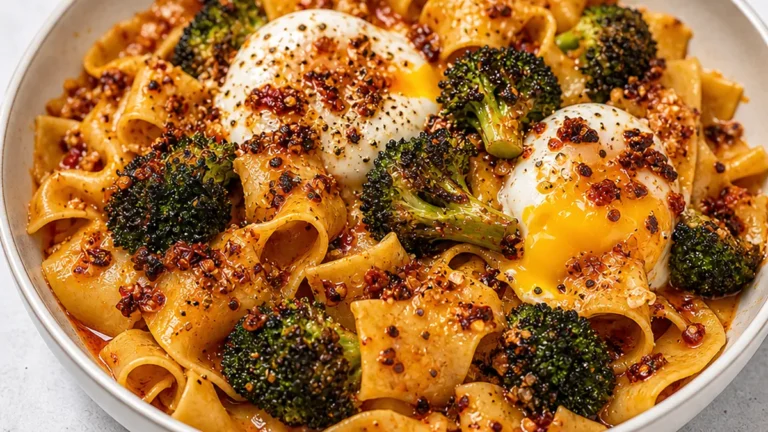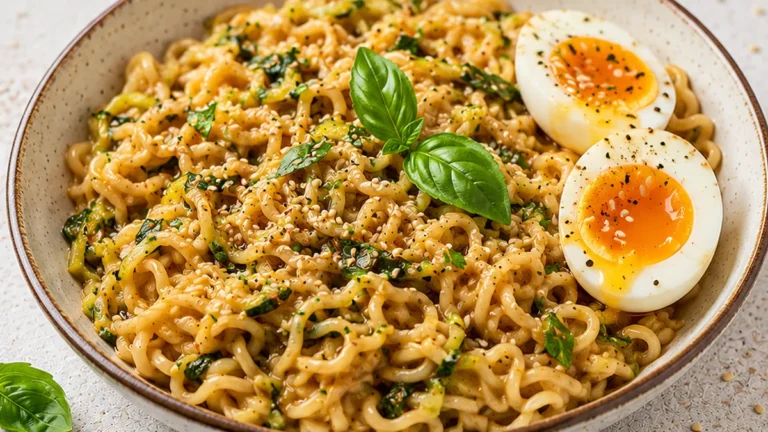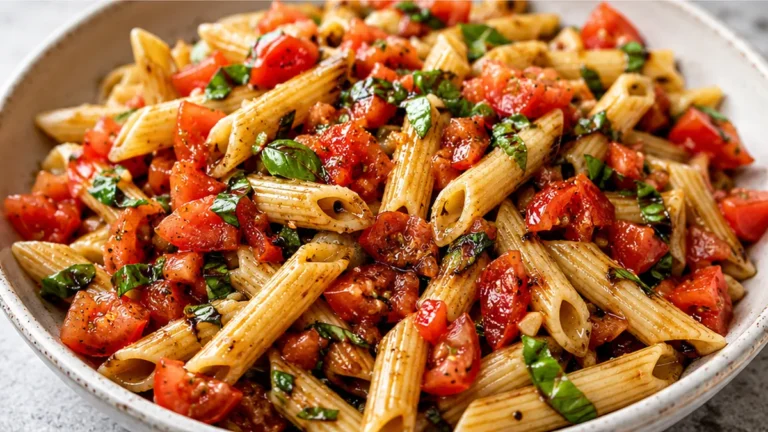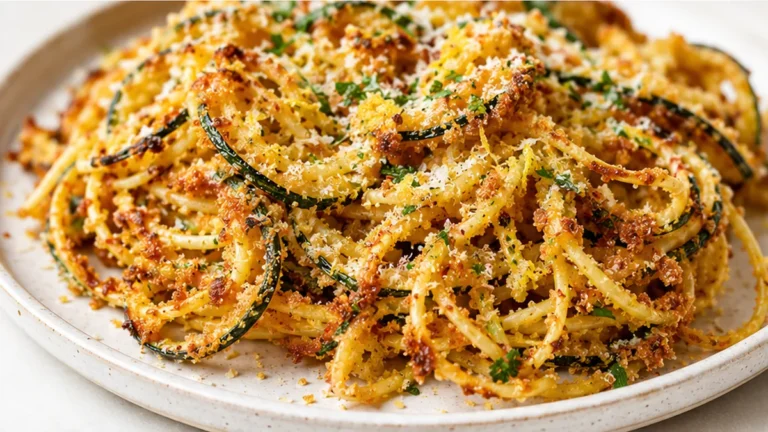
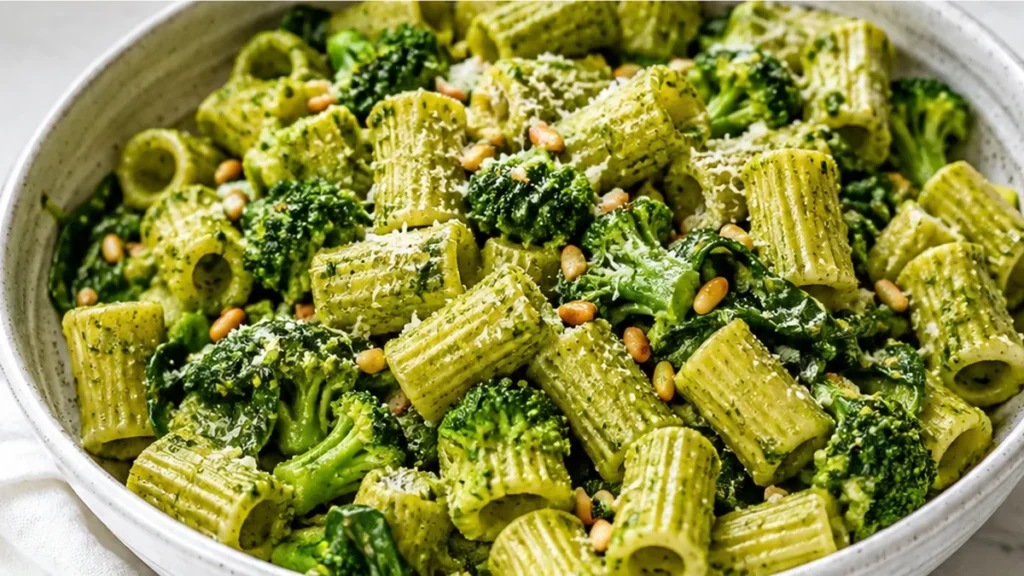
Pesto pasta can be a bright and zesty meal when fresh ingredients are balanced with just the right amount of acidity. This Lemony Broccoli Pesto Pasta recipe achieves that, transforming simple ingredients into a satisfying dish. It’s a weeknight dinner that doesn’t skimp on taste or visual appeal. This pesto pasta focuses on fresh basil, tender broccoli florets, and a crucial kick of lemon. The method ensures a creamy, emulsified sauce that coats every piece of pasta beautifully, proving that weeknight meals can be both quick and exceptionally delicious.
Key takeaways
- Use mezze rigatoni for better sauce adherence.
- Blend pesto ingredients slowly to create a smooth emulsion.
- Blanch broccoli for optimal color and texture.
- Adjust seasoning with salt and lemon for flavor balance.
Pesto Pasta Perfection: Your New Weeknight Obsession!
Ingredients
- 1 pound uncooked pasta (I used mezze rigatoni)
- 2 1/2 cups (8 ounces) broccoli florets
- 1 cup (1 ounce) fresh basil leaves (tightly packed)
- 1 cup (1 ounce) freshly-grated Parmesan cheese
- 1/3 cup toasted pine nuts or slivered almonds
- 1 large handful (2 ounces) fresh baby spinach
- 2 large cloves garlic
- 1 large lemon (zest and juice)
- 1/2 teaspoon each: fine sea salt and freshly-ground black pepper
- 1/2 cup extra-virgin olive oil
Instructions
- Boil the water. Bring a large stockpot of generously-salted water to a boil over high heat.
- Cook the broccoli. Once the water is boiling, add the broccoli and stir to combine. Cook for 3 minutes or until tender. Use a spider strainer or a slotted spoon to transfer the broccoli to a food processor, leaving the remaining water boiling in the stockpot.
- Cook the pasta. Add the pasta to the stockpot and cook until *just* al dente.
- Prepare the pesto. Add the basil, Parmesan, pine nuts, spinach, garlic, lemon zest, lemon juice, salt and pepper to the food processor. Pulse to blend while slowly drizzling in the olive oil until the mixture is smooth. Scoop out ¼ cup of the starchy boiling pasta water and add it to the pesto. Pulse until super-smooth and creamy. (If needed, add extra pasta water to achieve that super-smooth consistency.)
- Toss. Once the pasta is al dente, scoop out an additional 1/2 cup of the starchy boiling pasta water and set it aside. Strain the pasta and return it to the stockpot. Add the broccoli pesto and toss to combine. If the pesto seems at all dry, add in a bit of the starchy water and toss to combine.
- Serve. Serve warm, garnished with extra Parmesan and a twist of black pepper, and enjoy!
Notes
Choosing the Right Pasta for Pesto Pasta
The choice of pasta can significantly affect the overall texture and flavor of your pesto pasta. Mezze rigatoni, with its ridges and hollow shape, captures the pesto sauce beautifully, ensuring each bite is flavorful. Cooking the pasta al dente, typically around 8-10 minutes in boiling salted water, will provide the perfect bite and prevent mushiness.
Creating the Perfect Pesto Emulsion
The key to a creamy pesto lies in the emulsion of the ingredients. Start by blending fresh basil, garlic, toasted pine nuts (or slivered almonds), and Parmesan cheese in a food processor. Gradually add the olive oil while the processor is running. This technique ensures that the oil integrates smoothly with the other ingredients, creating a cohesive sauce. Aim for a ratio of 1/3 cup of oil to every 1 cup of solids for optimal consistency.
Why Broccoli is Essential for Texture and Nutrition
Incorporating broccoli florets not only adds a vibrant color but also contributes to the dish’s nutritional profile. Blanching the broccoli for about 2-3 minutes before adding it to the pasta ensures it retains its bright green color and crunch. This method also helps to soften the florets slightly, making them easier to combine with the pasta and pesto.
Common Mistakes and How to Fix Them
- Too Thick Pesto: If your pesto is too thick, add a tablespoon of pasta cooking water to loosen it. This water contains starch, which helps bind the sauce to the pasta.
- Overcooked Broccoli: If the broccoli is mushy, it was likely boiled too long. Aim for a quick blanching to maintain its texture.
- Pasta Sticking Together: If your pasta clumps, make sure to stir it frequently during cooking and add a splash of olive oil after draining.
- Flavorless Dish: If the dish lacks flavor, it may need more salt or lemon juice. Start with an additional pinch of salt or a squeeze of lemon to enhance the overall taste.
Ingredient Swaps and Their Impact
- Pine Nuts vs. Almonds: Using slivered almonds instead of pine nuts will give a nuttier flavor but may lack the buttery richness of pine nuts.
- Spinach Addition: Adding spinach increases the nutritional value but may dilute the basil flavor. Use it sparingly for a balanced taste.
- Parmesan Alternatives: Pecorino Romano can be used for a sharper taste, but it may overpower the other flavors.
- Fresh Lemon vs. Bottled Juice: Fresh lemon juice provides a brighter flavor compared to bottled juice, which can taste muted.
How to Make Pesto Pasta Ahead of Time
Preparing pesto pasta in advance can save time during busy weeknights. To make this dish ahead, cook the pasta until al dente, then cool it quickly under cold water to stop the cooking process. Prepare the pesto sauce separately, blending the basil, garlic, nuts, cheese, lemon juice, and olive oil until smooth. Store the pasta and pesto in airtight containers in the refrigerator for up to 3 days. When ready to serve, combine the pasta and pesto in a skillet over medium heat, adding a splash of reserved pasta water to achieve the desired consistency.
Scaling the Recipe for Larger Gatherings
This pesto pasta recipe is easily scalable for larger gatherings. To double the recipe, simply increase all ingredients proportionally. However, keep in mind that blending a larger batch of pesto may require a more powerful blender or food processor to ensure a smooth consistency. Additionally, when cooking pasta, use a larger pot to maintain water temperature and prevent the pasta from sticking together. Cooking time may remain the same, but monitor the pasta closely to ensure it reaches al dente.
Choosing the Right Equipment for Pesto Pasta
The equipment you use can significantly impact the quality of your pesto pasta. A high-speed blender or food processor is essential for creating a smooth pesto, as it can effectively emulsify the oil and other ingredients. If using a mortar and pestle, be prepared for a more rustic texture. For cooking pasta, a large pot is ideal to provide enough space for the pasta to move freely, ensuring even cooking. A colander is also necessary for draining the pasta efficiently.
Seasonal Adjustments for Fresh Ingredients
Seasonality plays a crucial role in the flavor of your pesto pasta. Fresh basil is at its peak in summer, offering a vibrant flavor that can transform your dish. In the off-season, consider using a mix of herbs like parsley or arugula for a different taste profile. Additionally, when broccoli is in season, it tends to be sweeter and more tender, enhancing the overall dish. Adjust the lemon juice according to the season; summer lemons are juicier and more aromatic, while winter lemons may require a bit more zest to achieve the same brightness.
Understanding the Impact of Ingredient Quality on Pesto Pasta
The quality of the ingredients used can significantly influence the flavor and texture of your pesto pasta. Fresh basil is essential; it should be vibrant green and fragrant. Opt for high-quality extra-virgin olive oil, as it provides a rich, robust flavor that enhances the dish. For the cheese, freshly grated Parmesan is preferred over pre-packaged varieties, which may contain anti-caking agents that affect meltability and flavor. The freshness of garlic also plays a crucial role; use firm cloves that are free from sprouting. If using frozen broccoli, be aware that it may release excess moisture, potentially altering the texture of the final dish.
How to Scale Your Pesto Pasta for Larger Gatherings
Scaling your pesto pasta recipe is straightforward but requires attention to detail. When increasing the quantity, maintain the same ratios of pasta, pesto, and other ingredients to ensure consistent flavor. For every additional pound of pasta, increase the pesto by approximately 1 cup. Consider the cooking time; larger batches may take longer to boil, so check the pasta for doneness a minute or two earlier than the package instructions suggest. Additionally, ensure you have a large enough pot to accommodate the increased volume without overcrowding, which can result in uneven cooking.
Serving Suggestions for Pesto Pasta Perfection
Serving your pesto pasta with complementary ingredients can elevate the dish. Consider adding grilled chicken, shrimp, or sautéed mushrooms for protein. A sprinkle of lemon zest on top enhances the citrus notes from the lemon juice in the pesto. For added texture, toasted breadcrumbs or additional pine nuts can provide a delightful crunch. Pair the dish with a side salad dressed in a light vinaigrette to balance the richness of the pesto. Selecting a crisp white wine, such as Sauvignon Blanc, can also enhance the overall dining experience, highlighting the fresh flavors of the dish.
How to Properly Store Pesto Pasta for Maximum Freshness
To maintain the freshness and flavor of your pesto pasta, proper storage is essential. If you have leftovers, let the pasta cool to room temperature before transferring it to an airtight container. Store in the refrigerator for up to 3 days. For longer storage, consider freezing the dish. When freezing, portion the pasta into smaller containers to make reheating easier. Note that the texture of the broccoli may change slightly upon thawing, but the flavor will remain intact. When reheating, add a splash of water or olive oil to help rehydrate the pasta and prevent it from drying out.
Scaling Up Your Pesto Pasta Recipe Without Compromising Quality
When scaling up your pesto pasta recipe for a larger gathering, it’s crucial to maintain the balance of flavors and textures. For every additional pound of pasta, increase the pesto ingredients proportionally, but consider the following: the ratio of pasta to sauce should remain around 4:1, ensuring the pasta is well-coated without being overwhelmed. Additionally, if using a larger pot, ensure it is filled with enough water to maintain a rolling boil, which helps prevent the pasta from becoming gummy. Finally, taste and adjust seasoning as needed, as larger quantities may require slight adjustments in salt and acidity.
Pro tips
- Save that starchy pasta water! It’s liquid gold for emulsifying your pesto and achieving a silky smooth sauce.
- Don’t overcook the broccoli; a slight tenderness is perfect for blending into the pesto.
- For a richer pesto, toast your pine nuts until fragrant before adding them. Be careful not to burn them.
- If you don’t have basil, spinach can be used as a base, though the flavor will be milder.
Enjoy this bright and flavorful Lemony Broccoli Pesto Pasta! It’s a versatile dish that’s perfect for busy evenings or a light, satisfying lunch. Serve with extra Parmesan and a sprinkle of red pepper flakes for a little heat.
Frequently asked questions
Can I use other vegetables in pesto pasta?
Yes, you can incorporate other vegetables like asparagus, peas, or zucchini. Just ensure they are cooked properly to maintain their texture and flavor.
What can I substitute for pine nuts?
Slivered almonds or walnuts can be used as substitutes for pine nuts, offering a different flavor profile while still providing a nutty taste to the pesto.
How do I store leftover pesto pasta?
Store leftover pesto pasta in an airtight container in the refrigerator for up to 3 days. Reheat gently to avoid overcooking the pasta.
Can I make the pesto ahead of time?
Yes, pesto can be made ahead of time and stored in the refrigerator for up to a week. For longer storage, consider freezing it in ice cube trays for easy portioning.
More from Baked Pasta Recipes →