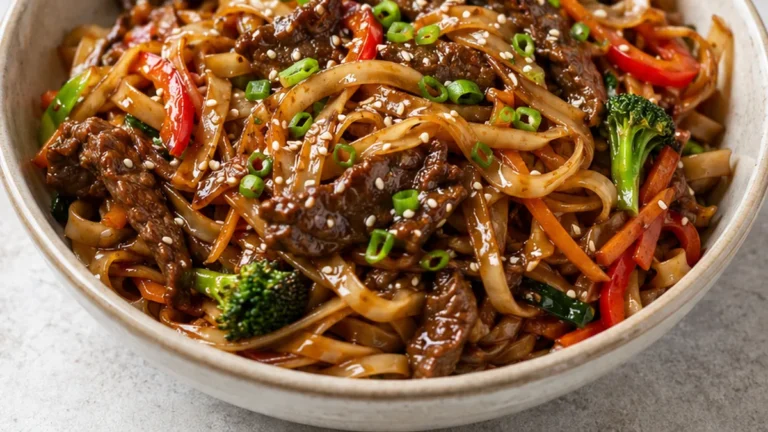
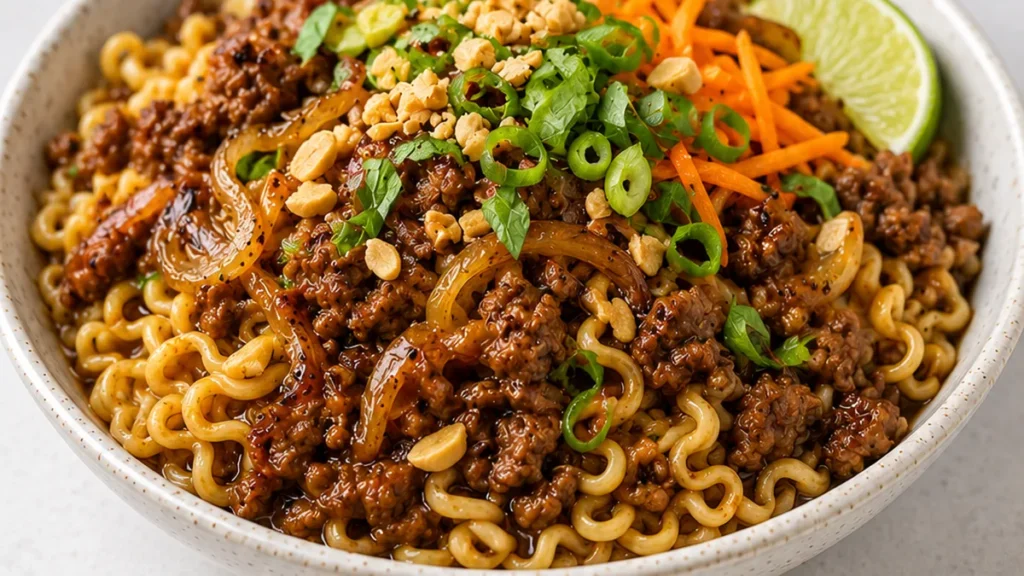
Caramelized shallot beef ramen offers a deeply savory and satisfying meal in under 30 minutes. This recipe improves simple ground beef with the sweet, complex flavor of slow-cooked shallots.
Key takeaways
- Achieve deep flavor by slow-caramelizing thinly sliced shallots until golden brown.
- Ensure rich taste by properly browning the ground meat to maximize the Maillard reaction.
- Balance the sauce with a combination of sweet (honey), savory (soy sauce, fish sauce), and acidic (rice vinegar) elements.
- Cook ramen noodles al dente to prevent mushiness when combined with the hot broth.
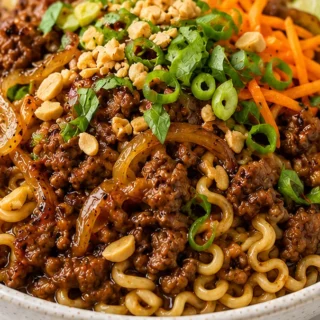
30-Minute Caramelized Shallot Beef Ramen
Ingredients
- 2 tablespoons sesame oil, or extra virgin olive oil
- 4 shallots, thinly sliced
- 1 pound ground beef, chicken, or pork
- 4 cloves garlic, minced or grated
- 1 inch fresh ginger, grated
- 1/4 teaspoon ground cinnamon (optional)
- 1 teaspoon black pepper
- 1/2 cup low sodium soy sauce or tamari
- 2 tablespoons rice vinegar
- 2 tablespoons fish sauce (optional)
- 2 tablespoons honey
- 1 tablespoon chili paste
- 8 ounces ramen noodles
- 2 tablespoons unsalted butter
- 1/4 cup fresh basil, chopped
- 1/4 cup chopped peanuts or sesame seeds
- 1/4 cup shredded carrots
- 2 green onions, sliced
- 1 fresh lime, cut into wedges
Instructions
- Heat the oil in a large skillet over medium heat. When the oil shimmers, add the shallots and cook until they begin to caramelize, about 5 minutes. Stir in the beef, garlic, ginger, cinnamon (if using), and pepper. Brown all over, breaking the beef up as it cooks, about 5 minutes.
- Pour in the soy sauce, vinegar, fish sauce, honey, and chili paste. Bring the sauce to a boil over medium-high heat and cook until the sauce coats the beef, about 5-8 minutes.
- Meanwhile, cook the ramen noodles. Bring a large pot of water to a boil. Boil the ramen according to package directions, until al dente. Before draining, scoop out about 1/2 cup of the cooking water, then drain the noodles.
- Add the noodles and 1/4 cup of the reserved water to the beef mixture. Add the butter and basil, tossing to combine thoroughly.
- Divide the noodles between plates. Top with peanuts (or sesame seeds), carrots, green onions, and fresh limes. Enjoy immediately!
Notes
The Technique That Makes It: Caramelization and Maillard Reaction
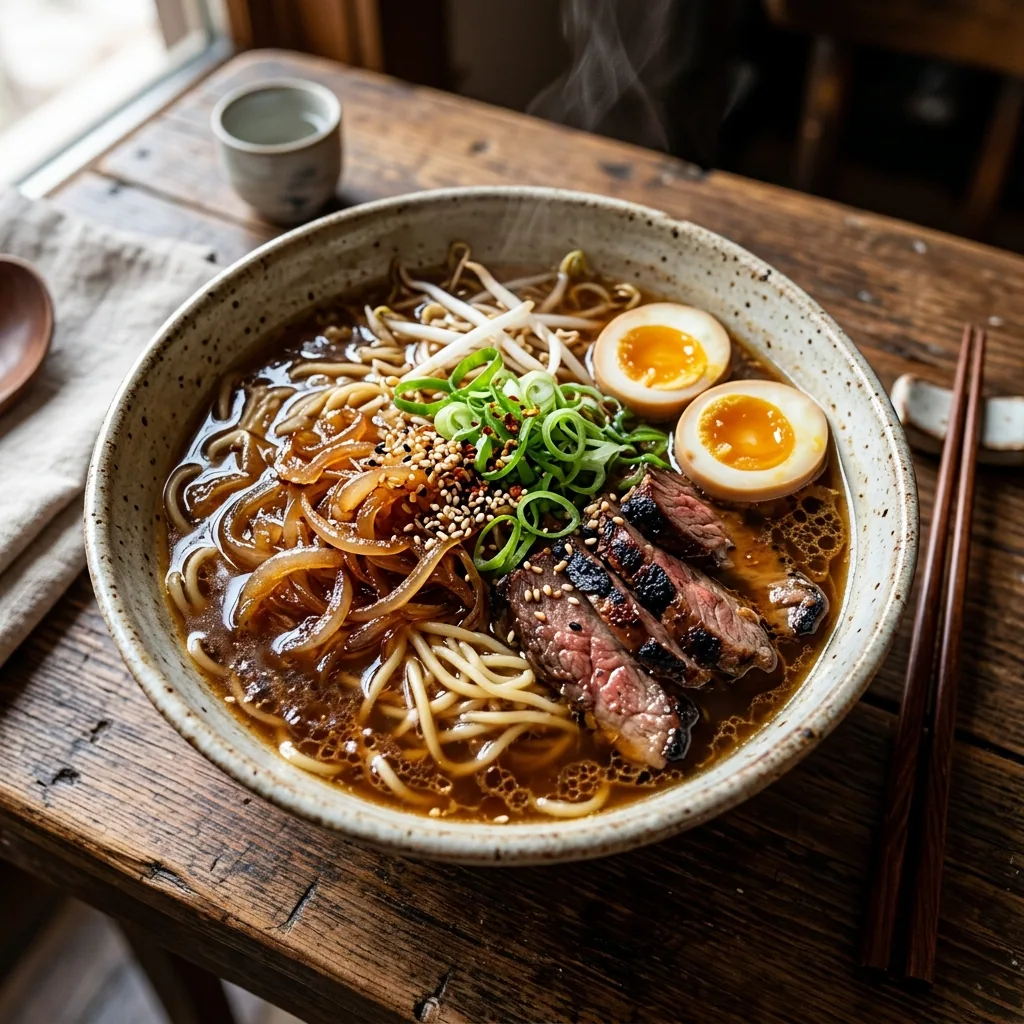
The trick to this 30-Minute Caramelized Shallot Beef Ramen lies in two key culinary processes: the deep caramelization of the shallots and the Maillard reaction of the ground meat. Shallots, with their higher sugar content compared to onions, are ideal for caramelization. When sliced thinly and cooked slowly in sesame oil over medium-low heat, their sugars break down and brown, developing a complex, sweet, and savory depth. This isn’t just about softening; it’s about transforming their flavor profile. The key is patience – allowing them to soften and gradually turn golden brown without burning. This process concentrates their natural sweetness and adds a rich, almost jammy quality to the sauce base.
Simultaneously, the ground beef (or other protein) undergoes the Maillard reaction when browned. This is the chemical process responsible for the browning of food, and it occurs when amino acids and reducing sugars react at elevated temperatures. Proper browning is crucial for developing the characteristic savory, meaty flavor that forms the backbone of the ramen broth. Avoid overcrowding the pan when browning the meat; cook it in batches if necessary. This ensures each piece sears properly, developing a flavorful crust rather than steaming. The rendered fat from the meat also contributes significantly to the overall flavor and mouthfeel of the dish.
The combination of deeply caramelized shallots and well-seared meat creates an intensely flavorful foundation for the ramen broth, which is then enhanced by the soy sauce, rice vinegar, honey, and chili paste. The final addition of butter emulsifies slightly into the sauce, adding a luxurious sheen and richness, while fresh basil and lime provide brightness to cut through the richness.
Troubleshooting
- Problem: Shallots are burnt or bitter. Fix: Reduce heat to low immediately and stir constantly. If significantly burnt, they may need to be discarded and started again, ensuring a lower heat and more frequent stirring.
- Problem: Ground beef is grey and lacks flavor. Fix: Ensure the pan is hot before adding the beef and cook in batches to avoid overcrowding. This promotes searing and the Maillard reaction, rather than steaming.
- Problem: Sauce is too salty. Fix: Add a bit more honey or a splash of water to balance the saltiness. Rice vinegar can also help cut through excessive salt.
- Problem: Ramen noodles are mushy. Fix: Cook ramen noodles according to package directions, but err on the side of slightly undercooking (al dente). They will continue to cook slightly when added to the hot broth.
Substitutions
- Shallots: Use yellow onions, thinly sliced. The flavor will be slightly sharper and less sweet, requiring potentially a touch more honey to balance.
- Ground Beef: Ground chicken, turkey, or pork can be used. Each will offer a slightly different flavor profile but will brown similarly. For a vegetarian option, use crumbled firm tofu or plant-based ground meat.
- Soy Sauce: Tamari is a gluten-free alternative. Coconut aminos can be used for a soy-free option, though the flavor will be less intense and slightly sweeter.
- Honey: Maple syrup or agave nectar can be used as sweeteners. Adjust quantity based on desired sweetness.
Pro tips
- Don’t rush the shallots: Allow them to properly caramelize until golden brown and sweet. This process is key to the depth of flavor in your beef ramen.
- Internal temperature for beef: Ensure your ground beef reaches an internal temperature of 160°F (71°C) for food safety.
- Storage and reheating: Leftover beef ramen can be stored in an airtight container in the refrigerator for up to 3 days. Reheat gently on the stovetop with a splash of water or broth to loosen the noodles and sauce.
This caramelized shallot beef ramen is a true testament to how much flavor you can achieve in minimal time. Give this recipe a try and transform your weeknight dinner into a dish!
Frequently asked questions
Can I make the sauce ahead of time?
Yes, the caramelized shallot and sauce base can be made a day in advance. Store it in an airtight container in the refrigerator. Reheat gently on the stovetop before proceeding with cooking the noodles and assembling the ramen.
What kind of ramen noodles should I use?
Fresh or dried ramen noodles work best. Look for packages specifically labeled ‘ramen noodles’. Avoid instant ramen noodle bricks that come with seasoning packets, as the noodles are often thin and may overcook easily.
Is the fish sauce essential?
Fish sauce adds a layer of umami and depth that is characteristic of many Southeast Asian broths. While optional, it significantly enhances the savory complexity. If omitting, ensure you use a good quality soy sauce or tamari.
How can I make this spicier?
Increase the amount of chili paste used in the sauce. You can also add a pinch of red pepper flakes along with the garlic and ginger, or serve with sriracha or other hot sauce on the side for individual customization.
More from Easy Pasta Recipes →