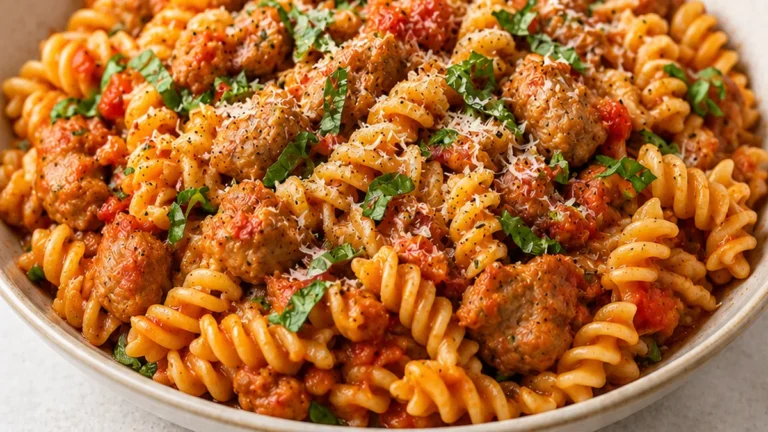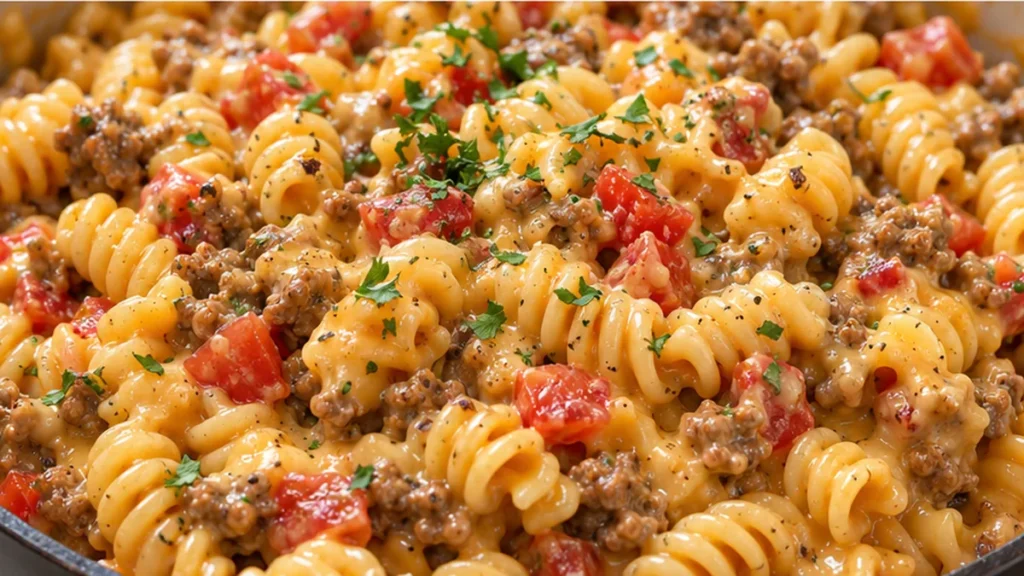
Queso pasta is the ultimate weeknight savior when you need comfort food in a hurry. This one-pot wonder combines tender pasta with seasoned ground beef, zesty Rotel, and a luxuriously creamy salsa con queso sauce. Forget complicated recipes; this dish delivers maximum flavor and cheesy goodness with minimal effort. Perfect for busy families or anyone craving a seriously satisfying meal. What makes this queso pasta recipe so special is its simplicity. It takes under 30 minutes from start to finish, and uses readily available ingredients. The combination of the savory seasoned beef, the slight heat from the Rotel, and the ultra-creamy queso creates a flavor profile that’s both comforting and exciting.
Key takeaways
- Use finely shredded cheese for optimal melting.
- Cook pasta al dente to maintain texture.
- Adjust salsa con queso to control saltiness.
- Experiment with protein swaps for different flavors.
Cheesy Skillet Queso Pasta
Ingredients
- 1 lb Rotini pasta
- 1 lb ground beef (seasoned)
- 15 oz salsa con queso
- 10 oz can Original Rotel (diced tomatoes and green chilies)
- 6 oz finely shredded Mexican blend cheese
- Salt (to taste)
- Pepper (to taste)
- Parsley (optional garnish)
Instructions
- Boil 1 lb of Rotini pasta according to package directions in a large pot of salted water until al dente. Drain and set aside.
- In a large pot or deep skillet over medium heat, add 1 lb of ground beef and break it up. Season with salt and pepper.
- Cook the beef for about 7-10 minutes until browned and drain off the fat.
- Pour in 10 oz can of Rotel tomatoes (undrained) and 15 oz of salsa con queso. Stir to combine.
- Stir in the cooked pasta until fully coated with the sauce.
- Remove from heat and stir in 6 oz of shredded cheese until melted and creamy. Taste and adjust seasoning if desired. Serve hot.
Video
Notes
The Importance of Cheese in Queso Pasta
The creamy and rich texture of cheese is what makes queso pasta stand out. Cheese not only adds flavor but also contributes to the dish’s overall mouthfeel. In this recipe, using a finely shredded Mexican blend cheese ensures a smooth melting process, creating a cohesive sauce that clings to the pasta. The ideal melting temperature for cheese is around 70°C (158°F), which allows it to melt without separating or becoming greasy. This balance is crucial for achieving that perfect queso consistency.
Common Mistakes and How to Avoid Them
One common mistake when preparing queso pasta is overcooking the pasta. Overcooked pasta can become mushy, which detracts from the overall texture of the dish. To avoid this, cook the rotini pasta until it is al dente, which typically takes about 8-10 minutes. This ensures that the pasta retains its shape and provides a pleasant bite.
Another issue can arise from using too much salsa con queso, leading to an overly salty dish. Adjust the quantity based on your taste preferences, and always taste as you go. If the dish turns out too salty, adding a splash of cream or milk can help balance the flavors.
Ingredient Swaps and Their Effects
While this recipe calls for ground beef, you can easily swap it for ground turkey or chicken for a leaner option. This change reduces the overall fat content but may result in a slightly drier texture. Additionally, using a different type of cheese, such as pepper jack, will add a spicy kick to the dish, enhancing the flavor profile.
If you prefer a vegetarian option, consider substituting the ground beef with black beans or lentils. This will provide a hearty texture and additional protein while maintaining the dish’s integrity.
Unique Characteristics of Queso Pasta
One defining feature of queso pasta is its ability to combine the comforting elements of mac and cheese with the bold flavors of Mexican cuisine. The use of salsa con queso and Rotel introduces a vibrant mix of tomatoes and green chilies, setting this dish apart from traditional pasta dishes. This fusion not only appeals to the palate but also offers a colorful presentation, making it an attractive option for gatherings or family dinners.
How to Properly Store and Reheat Queso Pasta
Storing queso pasta correctly is essential to maintain its creamy texture and flavor. Allow the dish to cool completely before transferring it to an airtight container. It can be stored in the refrigerator for up to 3-5 days. When reheating, use a stovetop method over low heat, adding a splash of milk or cream to restore creaminess. Microwaving is quicker but may result in uneven heating and a thicker consistency. Stir occasionally during reheating to ensure even warmth.
Scaling the Recipe for Larger Gatherings
Scaling the queso pasta recipe is straightforward, making it ideal for gatherings. When doubling or tripling the ingredients, maintain the same ratios. However, be mindful of cooking times, as larger quantities may require additional time to cook the pasta and allow the cheese to melt evenly. Use a larger skillet or pot to accommodate the increased volume, and consider cooking in batches if necessary to ensure even cooking and mixing.
Choosing the Right Equipment for Optimal Results
The right equipment can significantly affect the outcome of your queso pasta. A heavy-bottomed skillet or a cast-iron pan distributes heat evenly, preventing hotspots that can scorch the cheese. Non-stick pans are also beneficial, as they help prevent sticking and make cleanup easier. Additionally, using a pasta pot with a built-in strainer can streamline the cooking process, allowing for easy draining without needing a separate colander.
Pairing and Serving Suggestions for Queso Pasta
Pairing and serving queso pasta can elevate your dining experience. Consider serving it alongside fresh, crisp salads to balance the richness of the dish. A side of garlic bread or tortilla chips can add texture and complement the flavors. For beverages, light beers or margaritas work well, as their acidity can cut through the creaminess. Garnishing with fresh parsley not only adds a pop of color but also enhances the flavor profile, making each bite more enjoyable.
Understanding the Role of Cheese in Queso Pasta
The cheese in queso pasta is not just an ingredient; it’s the heart of the dish. The type of cheese used can significantly affect the texture and flavor. For instance, a finely shredded Mexican blend cheese typically melts smoothly, creating that desirable creamy texture. When combining cheeses, consider the moisture content and melting point. Cheeses with higher moisture content, like Monterey Jack, will yield a creamier sauce, while drier cheeses, such as aged cheddar, provide a sharper flavor. The balance between these cheeses can lead to a richer, more complex flavor profile. Aim for a cheese ratio of about 70% melting cheese to 30% flavor cheese to achieve the best results.
How Ingredient Quality Affects Queso Pasta
The quality of ingredients plays a pivotal role in the final outcome of queso pasta. Fresh, high-quality ground beef enhances the dish’s overall flavor, while store-bought salsa con queso can vary widely in taste and texture. Opting for organic or locally sourced ingredients can elevate the dish significantly. Additionally, using fresh herbs, such as parsley for garnish, adds a vibrant freshness that can brighten the rich flavors of the cheese and beef. When selecting tomatoes and chilies, look for those that are firm and fragrant, which indicates ripeness and flavor. The ideal ratio of tomatoes to cheese is about 1:3 for a balanced dish.
Adjusting Cooking Times for Different Equipment
The cooking equipment you use can greatly influence the preparation of queso pasta. For instance, using a cast-iron skillet can provide even heat distribution, allowing for better melting of cheese and preventing scorching. If using a non-stick pan, reduce the heat to avoid damaging the coating. When cooking on a stovetop, keep the flame medium-low to ensure the ground beef cooks thoroughly without burning. The pasta should be cooked until al dente, which typically requires about 8-10 minutes in boiling salted water. Adjust cooking times based on the equipment; for example, an electric stovetop may require slightly longer cooking times compared to gas.
Scaling Queso Pasta for Larger Gatherings
Scaling the recipe for larger gatherings requires careful consideration of ingredient ratios and cooking times. When doubling the recipe, maintain the same ratios of pasta to cheese and meat to ensure consistency in flavor and texture. However, be mindful that cooking times may need to be adjusted; larger quantities may take longer to heat through. For example, if preparing a batch for ten people, consider cooking the pasta in two separate pots to maintain even cooking. Additionally, if using a larger skillet, ensure that the beef is spread evenly to avoid uneven cooking. Always taste and adjust seasoning, as larger batches can dilute flavors.
Understanding the Role of Heat in Achieving Creamy Queso Pasta
The key to a perfectly creamy queso pasta lies in the control of heat during the cooking process. When melting cheese, high heat can cause it to separate and become grainy rather than smooth. To achieve the desired creamy texture, it is essential to use low to medium heat when combining the salsa con queso and shredded cheese with the cooked pasta. This allows the cheese to melt evenly without scorching. Aim for a temperature around 70°C (160°F) when mixing the cheese into the pasta. Stir continuously to ensure even distribution and to prevent sticking. Additionally, if the mixture becomes too thick, a splash of milk or pasta cooking water can help restore creaminess, ensuring a luxurious finish.
Adapting Queso Pasta for Seasonal Ingredients
Seasonal ingredients can significantly influence the flavor profile and texture of your queso pasta. For instance, incorporating fresh vegetables such as zucchini or bell peppers during the summer can add a vibrant color and enhance the dish’s nutritional value. Conversely, using roasted butternut squash or kale in the fall can provide a heartier feel, complementing the creamy queso. When adapting your recipe, consider adjusting the amount of salsa con queso to balance the added moisture from fresh vegetables. Additionally, seasonal herbs like basil in summer or sage in fall can elevate the dish’s flavor. By tailoring your queso pasta to the seasons, you not only enhance its taste but also support local agriculture and reduce your carbon footprint.
Pro tips
- Use a good quality salsa con queso for the best creamy texture.
- Don’t overcook the pasta; al dente is perfect for soaking up the sauce.
- Adjust the spice level by using mild or hot Rotel, or adding extra chili powder.
- For extra flavor, add a pinch of cumin or smoked paprika to the ground beef.
This skillet queso pasta is a guaranteed crowd-pleaser. Serve it up hot and watch it disappear!
Frequently asked questions
Can I make queso pasta without meat?
Yes, you can easily make queso pasta without meat by substituting ground beef with black beans, lentils, or even sautéed vegetables. This will maintain the dish’s heartiness while catering to vegetarian diets.
What type of cheese works best for this recipe?
For the best results, use a finely shredded Mexican blend cheese. This type of cheese melts smoothly and creates a creamy texture that complements the salsa con queso perfectly.
How can I make queso pasta spicier?
If you want to add some heat to your queso pasta, consider using pepper jack cheese instead of the Mexican blend. You can also add diced jalapeños or a dash of hot sauce to the dish for an extra kick.
Can I prepare this dish in advance?
Yes, you can prepare queso pasta in advance. Cook the pasta and mix it with the sauce, then store it in an airtight container in the refrigerator. When ready to serve, reheat it gently on the stove, adding a splash of milk to restore creaminess.
More from Easy Pasta Recipes →