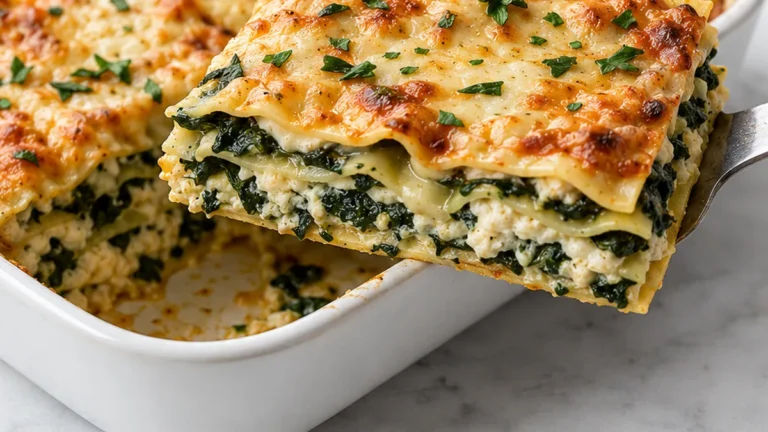
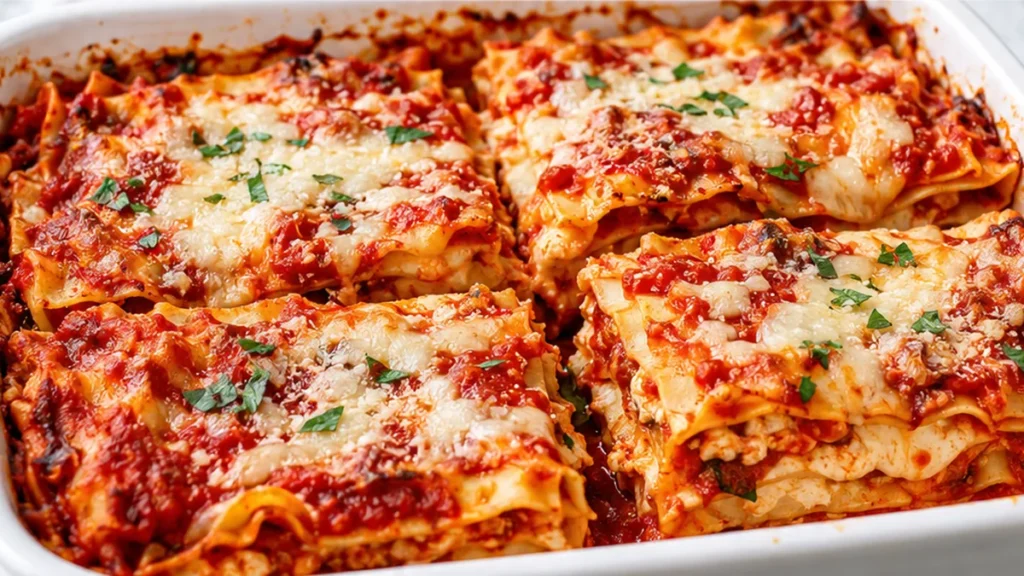
Ricotta lasagna is the ultimate comfort food, a dish that evokes warmth and family gatherings. This classic recipe focuses on creating layers of flavor with a creamy ricotta filling, rich marinara sauce, and perfectly melted mozzarella and Parmesan cheeses, all nestled between tender lasagna noodles. It’s a relatively simple dish to prepare, making it accessible for home cooks of all levels. Unlike other lasagna variations that might use béchamel or cottage cheese, this recipe highlights the delicate texture and mild flavor of whole milk ricotta, which forms the soul of the cheesy filling. The balance of savory marinara and the salty bite of Parmesan ensures every forkful is a delight, proving that sometimes the simplest approach yields the most delicious results.
Key takeaways
- Use whole milk ricotta for creaminess and flavor.
- Drain ricotta to avoid a watery filling.
- No-boil noodles simplify preparation and enhance flavor.
- Adjust seasoning in ricotta for a more flavorful lasagna.
Ricotta Lasagna Comfort Food
Ingredients
- 1 large egg
- 2 cups whole milk ricotta cheese
- 1 teaspoon salt
- 1 teaspoon freshly ground black pepper
- 1/4 cup chopped parsley
- 2 cups marinara sauce
- 16 no-boil lasagna noodles
- 1.5 cups grated Parmesan cheese
- 2.5 cups shredded mozzarella cheese
Instructions
- Preheat oven to 400°F (200°C).
- Whisk the egg in a medium bowl. Add the ricotta, salt, pepper, and parsley. Whisk until creamy and blended.
- Spread 1 cup of marinara sauce evenly over the bottom of a 9×13 inch baking dish.
- Arrange 1/3 of the lasagna noodles over the sauce. Top with 1/2 of the ricotta mixture, 1/2 cup Parmesan, and 1 cup mozzarella.
- Repeat layers: another 1/3 noodles, the remaining ricotta mixture, 1/2 cup Parmesan, and 1 cup mozzarella.
- Top with the final 1/3 noodles, remaining marinara sauce, remaining 1/2 cup Parmesan, and remaining 1 cup mozzarella. Cover dish with foil.
- Bake covered for 25 minutes. Remove foil and bake for another 15-20 minutes, or until bubbly and golden brown.
Video
Notes
Understanding the Role of Ricotta in Lasagna
Ricotta cheese is a key ingredient in ricotta lasagna, providing a creamy texture and mild flavor that balances the robust taste of marinara sauce. The moisture content in ricotta, typically around 60-65%, contributes to the overall creaminess of the dish. When combined with an egg, it forms a cohesive filling that holds together well during baking. The protein in the ricotta also helps to create a structure that supports the layers of noodles and sauce, ensuring that each slice maintains its form.
Common Issues and Their Solutions
One common issue with ricotta lasagna is a watery filling. This often occurs when the ricotta is not drained properly. To prevent this, place the ricotta in a fine-mesh sieve or cheesecloth for about 30 minutes prior to use, allowing excess moisture to drain. Another problem is a lack of flavor; this can be remedied by adding more seasoning to the ricotta mixture, such as additional salt, pepper, or herbs like basil and oregano.
Ingredient Swaps and Their Effects
Substituting ingredients can alter the final result of your ricotta lasagna. For instance, using low-fat ricotta instead of whole milk ricotta will reduce the richness but may result in a drier filling. If you choose to use cottage cheese instead of ricotta, the texture will be different—cottage cheese has a chunkier consistency but can still provide creaminess if blended. Additionally, if you opt for fresh herbs instead of dried, the flavor will be more vibrant, but you’ll need to adjust the quantity since fresh herbs are less concentrated.
The Unique Aspect of No-Boil Noodles
No-boil lasagna noodles are a game-changer for this dish. They absorb moisture from the sauce during baking, which helps them cook perfectly without the need for pre-cooking. This not only saves time but also enhances the flavor by allowing the noodles to soak up the marinara sauce. It’s essential to ensure there is enough sauce in the layers to adequately hydrate the noodles; typically, a good rule of thumb is to use about 2 cups of sauce for every 16 noodles.
Preparing Lasagna Ahead of Time: Tips for Make-Ahead Convenience
Making ricotta lasagna in advance can save time and enhance flavors. To prepare ahead, assemble the lasagna but do not bake it. Cover it tightly with plastic wrap and refrigerate for up to 24 hours. When ready to bake, simply remove the wrap and bake as directed, adding a few extra minutes to the cooking time if it’s cold from the fridge. For longer storage, you can freeze the unbaked lasagna. Wrap it well in aluminum foil or use a freezer-safe dish. Frozen lasagna can last up to three months. When ready to bake, thaw it in the refrigerator overnight before cooking.
Scaling Up: Adjusting Portions for Gatherings
If you’re hosting a larger gathering, scaling the ricotta lasagna recipe is straightforward. Each layer of noodles, ricotta, sauce, and cheese can be multiplied based on the number of servings needed. A common approach is to use a larger baking dish or multiple smaller dishes. Keep in mind that cooking times may vary; larger or deeper lasagnas may require more time in the oven. Always check for doneness by ensuring the center is hot and the cheeses are melted and bubbling. A tip for even cooking is to rotate the lasagna halfway through the baking time.
Choosing the Right Equipment: Bakeware for Optimal Results
The type of bakeware you use can significantly affect the outcome of your ricotta lasagna. Glass or ceramic dishes are excellent for even heat distribution, while metal pans can create a crispier bottom. If using a metal pan, consider lining it with parchment paper to prevent sticking. Additionally, avoid using non-stick spray on no-boil noodles, as they can become overly slippery. For best results, ensure your baking dish is large enough to accommodate all layers without overcrowding, which can lead to uneven cooking.
Seasonal Ingredients: How Quality Affects Your Lasagna
The quality of ingredients can greatly influence the taste of ricotta lasagna. In the summer, fresh herbs and tomatoes can elevate your dish, while winter may call for heartier ingredients. Opt for in-season produce for the best flavor. For instance, ripe tomatoes can be used in the marinara sauce, enhancing its freshness. Additionally, consider using artisanal cheeses when available; they often provide richer flavors than mass-produced options. Adjusting your ingredients based on the season can lead to a more vibrant and satisfying lasagna.
Understanding the Impact of Ingredient Quality on Ricotta Lasagna
The quality of ingredients used in ricotta lasagna significantly influences the overall flavor and texture of the dish. For instance, using fresh, high-quality ricotta cheese can enhance the creaminess and richness of the layers. Opt for ricotta that has a smooth texture without excess moisture, as this prevents the lasagna from becoming watery. Additionally, the marinara sauce should be made from ripe tomatoes, as their sweetness and acidity can elevate the dish. When using store-bought sauces, look for those with minimal preservatives and a flavor profile that complements the ricotta and cheeses. Fresh herbs like parsley not only add a pop of color but also a burst of flavor that can make a noticeable difference. In terms of mozzarella, choosing a high-moisture variety will yield a gooey, stretchy texture when melted, while low-moisture mozzarella can lead to a drier result. Therefore, investing in quality ingredients is crucial for achieving the best ricotta lasagna.
Batch Scaling: Adjusting Ricotta Lasagna for Larger Gatherings
Scaling up ricotta lasagna for larger gatherings requires careful adjustments to maintain the dish’s balance of flavors and textures. When increasing the recipe, consider the proportion of each ingredient carefully. For example, doubling the ricotta and marinara sauce may seem straightforward, but it’s essential to ensure that the layers remain well-balanced. A common mistake is to overload the lasagna with too much cheese, which can result in a heavy, unappetizing dish. Instead, aim for a consistent layering process, using equal amounts of ricotta, marinara, and noodles in each layer. Additionally, when preparing a larger batch, consider using a deeper baking dish to accommodate more layers without spilling over. Cooking times may also need adjustment; larger lasagnas typically require more time in the oven to ensure even heating and proper melting of the cheeses. Use a thermometer to check that the internal temperature reaches at least 74°C (165°F) for safe consumption. This method ensures a delicious ricotta lasagna that is both satisfying and visually appealing.
Make-Ahead Strategies for Ricotta Lasagna
Preparing ricotta lasagna ahead of time can be a game-changer for busy weeknights or special occasions. One effective strategy is to assemble the lasagna but not bake it. Once layered, cover it tightly with plastic wrap or aluminum foil and refrigerate for up to 24 hours. This allows the flavors to meld and can enhance the overall taste. If you plan to store it for longer, consider freezing the assembled lasagna instead. Wrap it tightly in plastic wrap and then aluminum foil to prevent freezer burn, and it can last up to three months. When ready to bake, thaw it overnight in the refrigerator before cooking. Remember to add an extra 10-15 minutes to the baking time to ensure it is heated through. Another approach is to cook the lasagna fully and then refrigerate or freeze portions. This method allows for easy reheating in the oven or microwave, making it a convenient option for meal prep. These make-ahead strategies ensure that you can enjoy delicious ricotta lasagna without the stress of last-minute preparation.
How to Properly Store and Reheat Ricotta Lasagna for Maximum Flavor
Storing ricotta lasagna correctly is essential for maintaining its flavor and texture. After baking, allow the lasagna to cool completely at room temperature for about 30 minutes. Once cooled, cover it tightly with aluminum foil or plastic wrap and refrigerate. Properly stored, it can last in the refrigerator for up to 3-5 days. For longer storage, consider freezing the lasagna. Cut it into portions and wrap each piece in plastic wrap, then place them in a freezer-safe container. Frozen ricotta lasagna can last for up to 3 months.
When reheating, avoid the microwave if possible, as it can make the pasta rubbery. Instead, reheat in the oven at 180°C (350°F) for about 25-30 minutes, covered with foil to retain moisture. For a crispy top, remove the foil for the last 10 minutes of heating. If reheating from frozen, it’s best to thaw it in the refrigerator overnight before reheating.
Adjusting Ricotta Lasagna for Different Serving Sizes
Scaling ricotta lasagna for different serving sizes requires careful consideration of the ingredient ratios and baking time. If you’re increasing the recipe to serve more people, maintain the same proportions of ricotta, marinara sauce, and noodles to ensure flavor consistency. For instance, if doubling the recipe, use 4 cups of ricotta, 4 cups of marinara, and 32 no-boil noodles.
However, when scaling up, you may need to adjust the baking time. A larger lasagna will require a longer cooking time, typically an additional 15-20 minutes. Keep an eye on the cheese melting and browning to avoid overcooking. Conversely, if you’re making a smaller lasagna, you can use a smaller baking dish and reduce the cooking time accordingly. Always check for doneness by ensuring the internal temperature reaches 74°C (165°F).
Pro tips
- For an even richer flavor, use a high-quality marinara sauce or make your own.
- If using fresh lasagna noodles, you may need to slightly reduce the baking time.
- Let the lasagna rest for at least 10-15 minutes after baking before slicing to allow the layers to set.
Enjoy this classic ricotta lasagna recipe and savor a taste of true Italian comfort. It’s a crowd-pleaser perfect for any occasion!
Frequently asked questions
Can I use fresh lasagna noodles instead of no-boil?
Yes, you can use fresh lasagna noodles, but you will need to adjust the cooking time and potentially pre-cook them to ensure they are tender. Fresh noodles typically cook faster than dried ones.
How can I make my ricotta lasagna less rich?
To reduce the richness, consider using part-skim ricotta instead of whole milk ricotta. You can also reduce the amount of cheese in the layers or add more vegetables to balance the flavors.
What can I substitute for marinara sauce?
If you don’t have marinara sauce, you can use a homemade tomato sauce or even a bechamel sauce for a creamier texture. Just keep in mind that the flavor profile will change significantly.
How do I store leftovers of ricotta lasagna?
Store leftover ricotta lasagna in an airtight container in the refrigerator for up to 3-4 days. You can reheat it in the oven at 180°C (350°F) until warmed through, or in the microwave for quicker serving.
More from Baked Pasta Recipes →