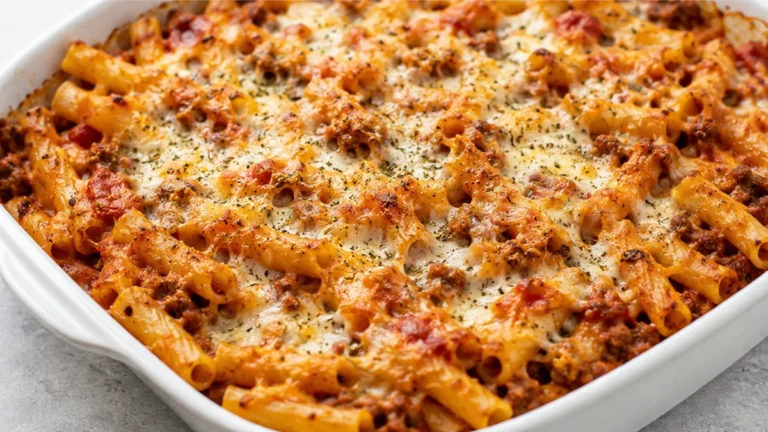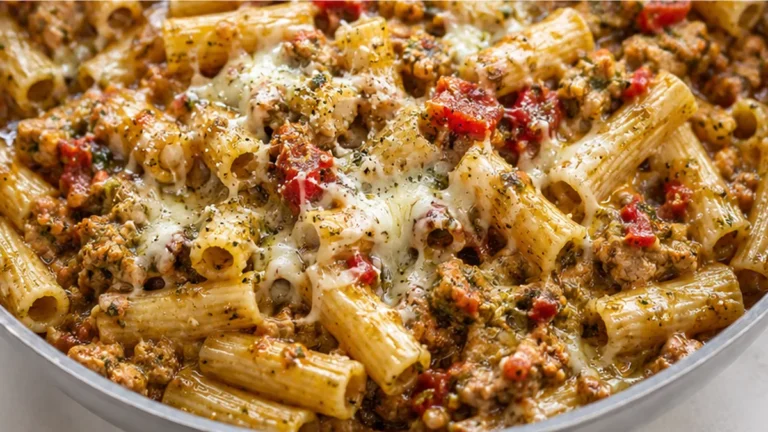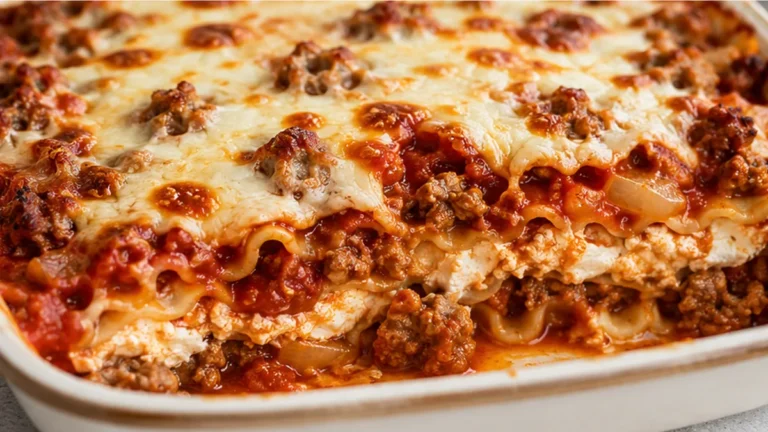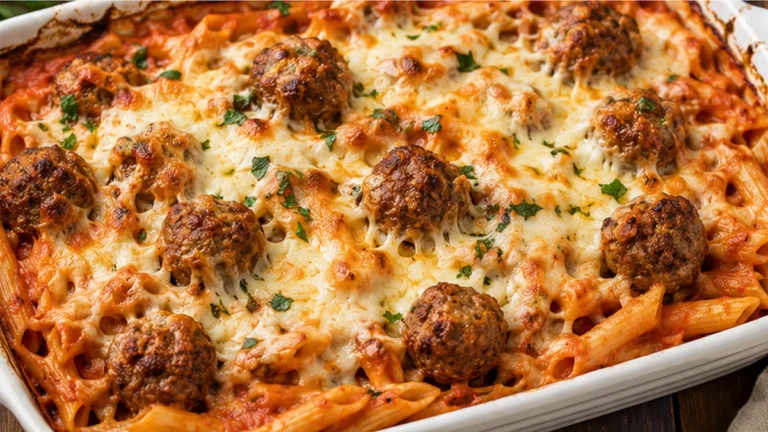
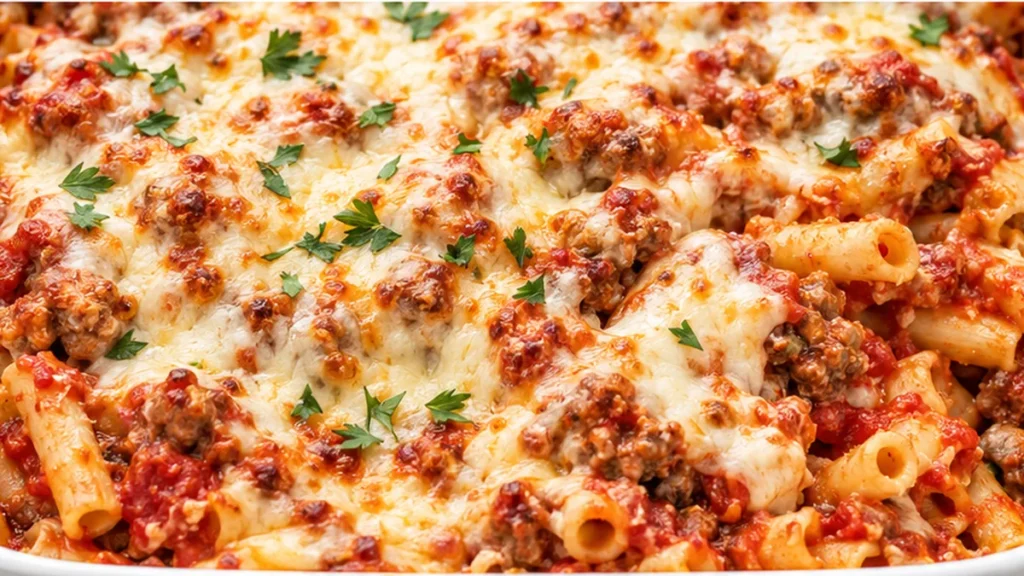
This baked ziti with ground italian sausage is a hearty dish that combines pasta, cheese, and savory sausage. It’s easy to prepare and perfect for any occasion.
Key takeaways
- Ground Italian sausage enhances flavor and moisture in baked ziti.
- Cook pasta al dente to prevent mushiness during baking.
- Use a balanced cheese blend for optimal creaminess and flavor.
- Incorporate fresh and dried herbs to elevate the dish’s taste.
Easy Baked Ziti: Cheesy, Saucy Comfort!
Ingredients
Instructions
- Brown the sausage in a large skillet or pot over medium heat until brown and crispy on the edges. Finely dice the onion while the sausage browns. Add the onion to the skillet once the sausage is browned and continue to sauté over medium heat until soft and translucent.
- Add the tomato paste, crushed tomatoes, Italian seasoning, and ½ cup water to the skillet with the sausage and stir to combine. Place a lid on the skillet and allow it to come up to a simmer. Once simmering, turn the heat down and allow it to continue to simmer while you cook the ziti. Stir the sauce occasionally as it simmers.
- Begin the ziti. Bring a large pot of water with ½ Tbsp salt to a boil over high heat. Once boiling, add the ziti and let it continue to boil until tender (about 7-8 minutes). Drain the pasta in a colander, shaking out excess water.
- While the pasta and sauce are cooking, prepare the cheese filling. Add the ricotta, Italian cheese blend, and some freshly cracked black pepper to a bowl and stir to combine. Preheat the oven to 350ºF / 180C / 160C fan or Gas Mark 4.
- After draining the ziti, return it to the pot and add 1 cup of the red sauce. Stir to coat the cooked pasta in sauce.
- Pour half of the ziti into a 9×13″ baking dish. Add half of the ricotta mixture on top of the pasta in small dollops. Spoon half of the red sauce and sausage over the pasta and ricotta. Repeat these layers with the second half of the pasta, ricotta mixture, and sauce. Finally, top with 2 cups shredded mozzarella.
- Cover the baking dish with foil, tenting it slightly so it doesn’t touch the cheese. Transfer the covered casserole to the oven and bake for 20 minutes. Uncover and bake for another 10-15 minutes, or until the cheese is bubbly and lightly golden.
Understanding the Role of Ground Italian Sausage in Baked Ziti
Ground Italian sausage adds a rich flavor profile to baked ziti, enhancing both the taste and texture of the dish. The fat content in the sausage helps to keep the pasta moist while also contributing to the overall sauciness. Typically, Italian sausage contains a blend of spices such as fennel, garlic, and red pepper flakes, which infuse the sauce with depth. This combination of elements is crucial; for instance, using lean sausage may lead to a drier dish, while fatty sausage can create a more indulgent experience. A balance of 15-20% fat content is ideal for optimal flavor without overwhelming the dish.
Common Issues with Pasta Cooking and Their Solutions
One common issue when making baked ziti is overcooked pasta. Pasta should be cooked to al dente, which means it retains a slight firmness. This is essential because the pasta will continue to cook in the oven, potentially becoming mushy. To achieve the perfect al dente texture, cook the pasta for 2-3 minutes less than the package instructions. Additionally, ensuring the water is at a rolling boil before adding the pasta can prevent it from becoming sticky. If you find yourself with overcooked pasta, consider adding a bit of olive oil to the dish before baking to help mitigate the texture.
Optimizing the Cheese Layer for Maximum Creaminess
The cheese layer is a critical component of baked ziti, and the type of cheese used can significantly impact the dish’s creaminess. A blend of ricotta, mozzarella, and Parmesan is traditional, but the ratios matter. Using too much ricotta can make the dish heavy, while too little can lead to a lack of creaminess. Aim for a ratio of 1:2:1 for ricotta to mozzarella to Parmesan for balanced flavor and texture. When layering, ensure that the cheese is evenly distributed to avoid dry spots. For added creaminess, consider mixing in a beaten egg with the ricotta, which will help bind the cheese and create a smoother consistency.
How to Enhance Flavor with Seasoning and Herbs
Seasoning is vital in elevating baked ziti from a simple dish to a flavorful meal. Fresh herbs like basil and parsley can brighten the dish, while dried herbs such as oregano and thyme add depth. When using fresh herbs, add them towards the end of cooking to preserve their flavor. Conversely, dried herbs should be added earlier to allow their flavors to infuse the sauce. A general guideline is to use about 1 teaspoon of dried herbs per 500 grams of pasta. If your dish tastes flat, it may be due to insufficient seasoning; always taste and adjust salt and pepper levels before serving.
Understanding the Importance of Cheese Selection for Optimal Texture
The choice of cheese in baked ziti significantly influences both texture and flavor. Using a combination of cheeses can create a more complex taste and texture. For instance, mozzarella provides that gooey stretch, while ricotta offers creaminess. Parmesan adds a nutty flavor and a slight crunch when baked. When selecting cheeses, consider their moisture content; low-moisture mozzarella is ideal for a firmer texture, while fresh mozzarella can lead to a watery dish if not drained properly. Aim for a cheese blend that balances moisture and flavor, typically in a ratio of 2:1 mozzarella to ricotta.
Batch Scaling: Adjusting Portions Without Compromising Quality
Scaling a baked ziti recipe can be straightforward, but it requires careful consideration to maintain flavor and texture. When doubling or halving the recipe, keep the ratios of pasta, sauce, and cheese consistent. However, baking time may vary: larger portions might require an additional 10-15 minutes in the oven, while smaller portions may cook faster. Always check for doneness by ensuring the cheese is bubbly and golden. Additionally, if scaling significantly, consider using a wider baking dish to ensure even cooking and prevent sogginess in the center.
Choosing the Right Equipment for Perfect Results
The equipment you use can affect the outcome of baked ziti. A deep, heavy-duty baking dish is recommended as it retains heat better, promoting even cooking. Glass or ceramic dishes are ideal for monitoring browning, while metal pans can yield a crispier bottom. If using a convection oven, reduce the baking temperature by about 20°C (approximately 25°F) to prevent over-browning. Furthermore, consider using a lid during the first half of baking to trap moisture and ensure the pasta cooks through before browning the cheese.
Seasonal Ingredients: How They Affect Flavor and Texture
Seasonal ingredients can dramatically change the flavor profile of baked ziti. For example, using fresh basil or tomatoes in the summer can enhance the dish’s freshness, while winter root vegetables can add heartiness. Additionally, the quality of ingredients matters; fresh, high-quality ingredients tend to yield a more flavorful dish. When using seasonal produce, adjust cooking times accordingly, as fresh vegetables may require less cooking than canned. This not only enhances flavor but also contributes to a more vibrant presentation.
Understanding the Make-Ahead and Storage Behavior of Baked Ziti
Baked ziti is an excellent dish for meal prep, allowing for easy storage and reheating without sacrificing flavor or texture. When prepared ahead of time, it’s best to assemble the dish but not bake it. This allows the pasta to maintain its integrity and prevents it from becoming mushy. Once assembled, cover the dish tightly with plastic wrap or aluminum foil and refrigerate for up to 24 hours before baking. If you want to store it for a longer period, consider freezing it. Wrap the assembled but unbaked ziti tightly in plastic wrap and then in aluminum foil to prevent freezer burn. It can be frozen for up to three months. When ready to bake, thaw it overnight in the refrigerator and then bake as directed, adding a few extra minutes to the cooking time to ensure it heats through completely.
Batch Scaling: Adjusting Portions Without Compromising Quality
Scaling baked ziti recipes is straightforward, but attention to detail is crucial to maintain quality. If you’re doubling the recipe, ensure you use a larger baking dish to accommodate the increased volume. For every additional serving, consider increasing the amount of sauce and cheese proportionately to maintain the flavor balance. A general rule of thumb is to increase the sauce by about 25% for every double batch to ensure the pasta remains adequately coated and flavorful. Additionally, when increasing the amount of ground Italian sausage, be mindful of the browning process; ensure your skillet is large enough to allow for even cooking without overcrowding, which can lead to steaming instead of browning.
Serving Suggestions and Pairings for Enhanced Enjoyment
While baked ziti is a satisfying meal on its own, pairing it with complementary sides can elevate the dining experience. A fresh green salad with a light vinaigrette can provide a refreshing contrast to the rich and hearty pasta. Garlic bread is another classic pairing, adding a crunchy texture that complements the creaminess of the cheese. For beverages, consider serving a medium-bodied red wine, such as Chianti or Merlot, which pairs well with the flavors of the ground Italian sausage and tomato sauce. If you’re looking for a non-alcoholic option, a sparkling water with a slice of lemon can cleanse the palate effectively.
Understanding the Make-Ahead and Storage Behavior of Baked Ziti
Baked ziti is a fantastic dish for meal prep due to its versatility in storage and reheating. When prepared in advance, it can be assembled and stored in the refrigerator for up to 24 hours before baking. This allows the flavors to meld, enhancing the overall taste. If you wish to store it longer, baked ziti can be frozen for up to three months. To freeze, ensure it is tightly covered with aluminum foil or placed in an airtight container. When ready to eat, thaw it overnight in the refrigerator and bake it at 175°C (350°F) until heated through, usually about 30-40 minutes. This method helps maintain the texture of the pasta and the creaminess of the cheese, ensuring a satisfying meal even after storage.
Scaling the Batch Without Compromising Quality
Scaling a baked ziti recipe requires careful adjustments to maintain the dish’s integrity. For instance, if doubling the recipe, ensure that the proportions of pasta, sauce, and cheese are consistent. A good rule of thumb is to maintain a ratio of 250 grams of pasta for every 500 ml of sauce. Additionally, when scaling, consider the baking time. A larger batch may require additional time in the oven to ensure even heating and proper melting of the cheese. Use a larger baking dish, but avoid overcrowding, as this can lead to uneven cooking. Always check the internal temperature, which should reach at least 74°C (165°F) for safe consumption. This attention to detail will ensure that even a scaled-up version of baked ziti retains its delicious, comforting qualities.
Pro tips
Pro tip: Best served immediately while hot!
Frequently asked questions
Can I use a different type of sausage in baked ziti?
Yes, you can substitute ground Italian sausage with other types of sausage, such as turkey or chicken sausage. However, be aware that this may alter the flavor profile and fat content of the dish.
What can I do if my baked ziti is too dry?
If your baked ziti turns out dry, try adding more sauce before baking or covering the dish with foil to trap moisture. You can also serve it with a side of marinara sauce for added moisture.
How can I store leftover baked ziti?
Store leftover baked ziti in an airtight container in the refrigerator for up to 3-4 days. To reheat, cover with foil and bake at 175°C (350°F) until heated through.
Is it necessary to cover the baked ziti while baking?
Covering the baked ziti with foil during the first half of baking helps retain moisture. Remove the foil during the last 10-15 minutes to allow the cheese to brown and become bubbly.
More from Baked Pasta Recipes →