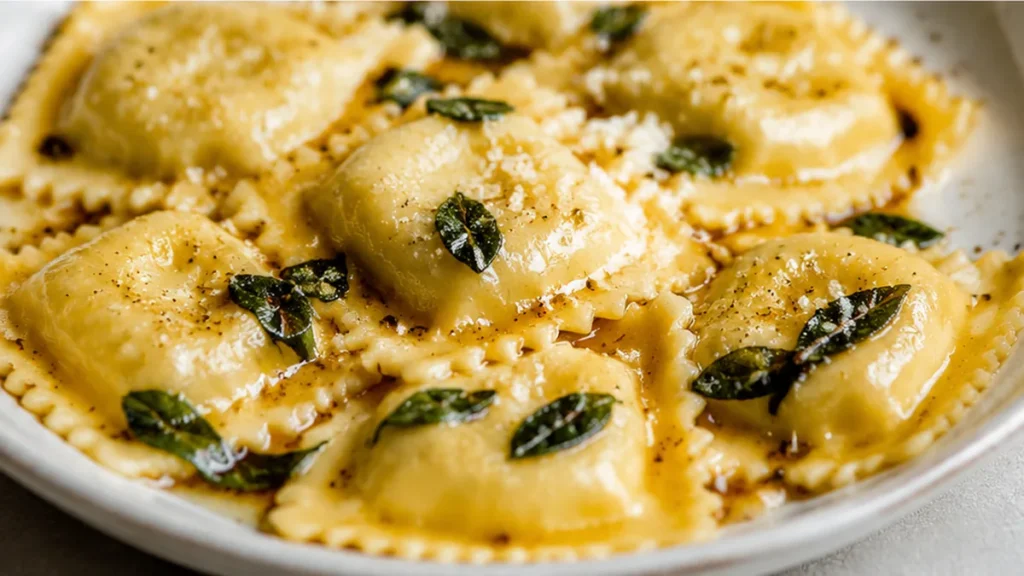
This butternut ravioli recipe is perfect for a cozy evening. Making pasta from scratch might seem daunting, but the rich, sweet butternut filling is worth the effort.
Key takeaways
- Roast butternut squash until caramelized for maximum flavor and reduced moisture.
- Ensure the filling is thick and not watery to prevent ravioli from breaking.
- Cook ravioli in plenty of salted boiling water and stir gently.
- Brown butter carefully over medium-low heat until fragrant and nutty, not burnt.
Butternut Squash Ravioli with Sage Butter
Ingredients
- 4 cups cubed butternut squash (about 1 medium squash)
- 1 tablespoon extra virgin olive oil
- kosher salt and pepper
- 1 cup whole milk ricotta cheese
- 1/2 cup crumbled gorgonzola cheese (may also use goat cheese)
- 1/2 cup grated parmesan cheese
- 1 teaspoon honey
- 1 pound fresh pasta dough (or 40 wonton wrappers)
- 4 tablespoons salted butter
- 1/2 cup fresh sage leaves, chopped
Instructions
- Preheat oven to 400°F. On a baking sheet, toss butternut squash cubes with olive oil, salt, and pepper. Roast for 25-30 minutes until tender.
- Transfer roasted squash to a food processor. Add ricotta, gorgonzola, parmesan, and honey. Puree until smooth, then season with salt and pepper.
- Roll pasta dough into lasagna sheets. Place 1 tablespoon of filling one inch apart over half the sheet. Brush water around filling, fold sheet over, and press to seal. Cut into squares. Keep ravioli covered to prevent drying.
- In a large skillet, brown salted butter over medium heat, stirring until golden and toasted. Add chopped sage and cook for 1 minute.
- Bring a large pot of salted water to a boil. Boil ravioli in batches for 1-2 minutes until they float. Drain.
- Divide ravioli among bowls and spoon the browned butter sage over top. Serve immediately and enjoy!
Notes
The Technique That Makes It: Roasting for Flavor and Texture
The key to exceptional butternut squash ravioli lies in how you prepare the squash filling. Roasting the cubed butternut squash is crucial. This process, known as the Maillard reaction and caramelization, transforms the squash’s natural sugars. High heat (around 400°F or 200°C) causes the surfaces of the squash cubes to brown and sweeten, developing complex, nutty, and caramelized flavors that a simple boil or steam cannot achieve. Roasting also drives off excess moisture, resulting in a thicker, more concentrated squash puree. This is vital for the filling; too much water will make the ravioli filling wet, potentially causing the pasta dough to tear during assembly or cooking, and diluting the rich flavor. Ensure the squash is tender and slightly caramelized before pureeing. The addition of ricotta and parmesan cheeses provides creaminess and saltiness, while gorgonzola adds a pungent depth. Honey is used sparingly to enhance the natural sweetness of the squash without making the filling overly sweet. The final texture of the filling should be thick and spreadable, not runny.
Troubleshooting
- Ravioli dough tearing during assembly: Ensure your squash filling is not too wet. If it is, spread it on a baking sheet and bake at a low temperature (around 250°F or 120°C) for 10-15 minutes to evaporate excess moisture. Also, avoid overfilling the ravioli.
- Ravioli sticking together during cooking: Use a large pot with plenty of boiling, salted water. Stir the ravioli gently immediately after adding them to the water to prevent them from clumping. Adding a tablespoon of oil to the water can also help.
- Sage butter is burnt or bitter: Cook the butter over medium-low heat. Watch it carefully as it browns; it should turn a nutty brown color and smell fragrant, not acrid. Add the sage leaves only when the butter has reached this stage and cook briefly until crisp.
- Filling is too bland: Taste and adjust seasoning before filling the ravioli. Add more salt, pepper, or a touch more honey or gorgonzola to balance the flavors. Roasting the squash thoroughly is the primary way to build flavor.
Substitutions
- Butternut Squash: Acorn squash or kabocha squash can be roasted and pureed similarly, offering a slightly different but complementary flavor profile. The texture might be slightly different, so adjust roasting time as needed.
- Gorgonzola Cheese: Goat cheese offers a tangy alternative, while feta provides a saltier, briny note. The overall richness and pungency of the filling will change depending on the cheese used.
- Fresh Pasta Dough: Store-bought wonton wrappers are a convenient alternative. They cook faster and have a slightly chewier texture. Ensure you seal the edges well with a little water to prevent them from opening.
- Sage Leaves: Fresh thyme leaves can be used in the butter sauce, offering a more herbaceous and less pungent flavor than sage. The characteristic aroma and flavor of the sauce will be different.
Pro tips
- Ensure your butternut squash is roasted until very tender; this guarantees a smooth, creamy filling.
- When rolling your pasta dough, aim for a thin sheet. This creates delicate ravioli that cook quickly and absorb the sauce beautifully.
- If you don’t have fresh pasta dough, high-quality wonton wrappers are a great shortcut. Just be sure to seal them well to prevent filling from escaping.
- For food safety, if adding any meat to the filling (not in this recipe, but for variations), ensure it reaches an internal temperature of 160°F (71°C).
- Store leftover cooked ravioli in an airtight container in the refrigerator for up to 3 days. Reheat gently in a skillet with a splash of broth or butter.
This butternut ravioli recipe is a testament to the magic of fresh, seasonal ingredients. Don’t hesitate to make this dish your own with slight variations, perhaps adding a sprinkle of toasted pecans or a hint of nutmeg to the filling. Enjoy the process and the delicious outcome!
Frequently asked questions
How do I prevent the ravioli from sticking together?
Use a large pot with ample boiling, salted water. Gently stir the ravioli immediately after adding them to the pot to separate them. Ensure they are not overcrowded in the pot, cooking in batches if necessary.
Can I make the filling ahead of time?
Yes, the roasted and pureed butternut squash filling can be made up to 2 days in advance and stored in an airtight container in the refrigerator. Mix in the cheeses just before assembling the ravioli.
What if I don’t have fresh pasta dough?
Wonton wrappers are an excellent substitute. They are readily available and cook very quickly. Ensure you seal the edges firmly with a bit of water to prevent the filling from escaping during cooking.
How do I know when the sage butter is ready?
Melt the butter over medium-low heat. It will foam, then subside. Watch for the milk solids to turn a golden-brown color and the butter to emit a nutty aroma. This indicates it’s perfectly browned and ready to use.
More from Creamy Pasta Recipes →