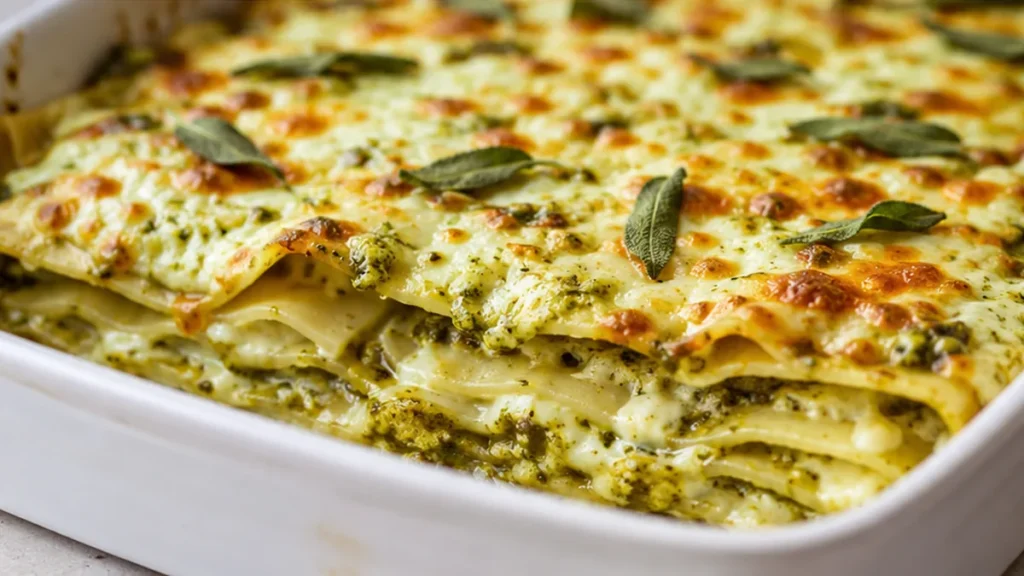
The secret to a truly memorable lasagna often lies in its layers—not just the pasta, but the depth of flavor in its sauces and fillings. Our sage pesto lasagna takes this concept to heart, infusing every component with aromatic herbs and a blend of rich cheeses. This recipe is designed for those who appreciate comfort food with an elevated touch, offering a delightful twist on a classic. Crafting the perfect sage pesto lasagna means paying close attention to the béchamel, ensuring it’s smooth and perfectly seasoned. Letting the butter brown slightly with the herbs before adding the flour creates a more profound base flavor; without that step the sauce can feel a bit flat. It makes all the difference.
Key takeaways
- The key to a smooth béchamel is a properly cooked roux and gradual liquid addition.
- Cook the roux for at least one minute to remove the raw flour taste without browning.
- Whisk constantly while adding milk and broth to prevent lumps.
- Taste and adjust seasoning of the béchamel before assembling the lasagna.
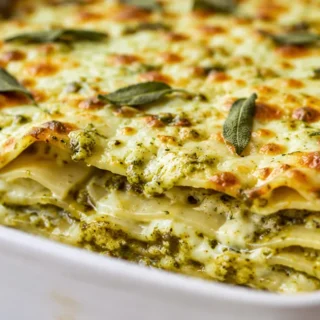
4-Cheese Sage Pesto Lasagna: Pure Comfort!
Ingredients
- 1 stick (8 tablespoons) salted butter
- 3 cloves garlic, minced or grated
- 2 tablespoons chopped fresh sage leaves
- 2 teaspoons fresh chopped rosemary
- 1 teaspoon crushed fennel seed
- 1 pinch crushed red pepper flakes
- kosher salt and black pepper
- 1/4 cup all-purpose flour
- 2 cups whole milk or canned coconut milk
- 2 cups low sodium vegetable or chicken broth
Instructions
- Preheat the oven to 375° F. Butter a 9×13 inch pan.
- In a medium saucepan, melt together the butter, garlic, sage, rosemary, fennel, and a pinch of red pepper flakes. Cook 3-4 minutes, until the butter is lightly browning. Whisk in the flour and cook for 1 minute. Add the milk and broth. Season with salt, and pepper. Bring to a boil. Stir in the Gruyère/fontina cheese, 1/2 cup of parmesan cheese, and the nutmeg. Stir until the cheese is melted and the sauce is smooth. Remove from the heat.
- In a medium bowl combine the ricotta, provolone, spinach, pesto, and egg. Season with pepper.
- Spread 1/4 of the cheese sauce in the bottom of the prepared baking dish. Top with 3-4 lasagna sheets. Spread with 1/2 the ricotta cheese mixture and another 1/4 of the cheese sauce. Repeat the layering. Repeat the layering until all the sauce has been used…don’t stress about making it perfect. Top with a 1/2 cup of parmesan.
- Bake covered for 30 minutes. Uncover and bake another 15-20 minutes, until the top has bubbled up and browned a bit. Let stand 10 minutes before serving. Enjoy!
Notes
The Technique: Building a Flavorful Béchamel
The foundation of this sage pesto lasagna lies in the béchamel sauce, a classic white sauce that acts as the creamy binder between the pasta layers. The key to a smooth, lump-free béchamel is the careful creation of a roux, followed by the gradual incorporation of liquid. First, the butter is melted and then the flour is whisked in to form the roux. Cooking the roux for a minute or two allows the raw flour taste to dissipate without browning it significantly, which is crucial for a neutral base. The milk and broth are then added slowly while whisking constantly. This gradual addition, combined with continuous agitation, prevents the flour particles from clumping together, ensuring a silky texture. The herbs and spices are added to infuse their flavor into the sauce as it thickens. Achieving the correct consistency – thick enough to coat the back of a spoon but still pourable – is essential for layering the lasagna without it becoming too dense or too runny.
Troubleshooting
- Lumpy Béchamel: If your béchamel develops lumps, try whisking vigorously over low heat. For stubborn lumps, strain the sauce through a fine-mesh sieve. Ensure liquids are added gradually to the roux in the future.
- Sauce Too Thick: If the béchamel becomes too thick, thin it out with a little more milk or broth, whisking until smooth. This can happen if it simmers too long or too much liquid evaporates.
- Sauce Too Thin: If the sauce is too thin, continue to simmer gently over low heat, stirring frequently, until it reaches the desired consistency. A cornstarch slurry (1 tsp cornstarch mixed with 2 tsp cold water) can also be whisked in and simmered for a minute to thicken quickly.
- Flavor Lacking: The sage and rosemary are delicate. Ensure they are fresh and finely chopped. Taste and adjust salt and pepper before assembling the lasagna. A pinch of nutmeg can also enhance the creamy flavor.
Substitutions
- Milk: Unsweetened, unflavored plant-based milks like almond or oat milk can be used, though they may slightly alter the richness and flavor profile. Canned full-fat coconut milk will add a distinct coconut note but provides creaminess.
- Broth: For a vegetarian option, use a good quality low-sodium vegetable broth. If you don’t have broth, you can use an equal amount of additional milk, but the sauce may be less complex in flavor.
- Fresh Herbs: If fresh sage or rosemary are unavailable, use dried herbs. Use about 1/3 the amount of dried herbs compared to fresh (e.g., 2/3 teaspoon dried sage, 1/2 teaspoon dried rosemary) and add them earlier in the cooking process to allow their flavor to bloom.
- Butter: Unsalted butter can be used, but you will need to adjust the salt content of the sauce accordingly. Olive oil can be used in a pinch, but it will impart a different flavor and may affect the emulsification slightly.
Pro tips
- For the creamiest béchamel, ensure your milk and broth are at room temperature or slightly warm before adding them to the roux. This prevents lumps. – When cooking poultry or meat in your lasagna, ensure it reaches an internal temperature of 165°F (74°C).
- Leftover lasagna can be stored in an airtight container in the refrigerator for up to 3-4 days. For longer storage, freeze individual portions for up to 2 months; reheat in the oven at 350°F (175°C) until warmed through.
This sage pesto lasagna is a testament to the power of thoughtful layering and fresh flavors. Whether for a special occasion or a comforting weeknight meal, it promises to be a crowd-pleaser. Don’t hesitate to experiment with different herb combinations or a spicy kick to make it uniquely yours. Enjoy!
Frequently asked questions
What is the purpose of the roux in this recipe?
The roux, a mixture of butter and flour cooked together, is the thickening agent for the béchamel sauce. Cooking it for a short time removes the raw flour taste, creating a smooth, creamy base that binds the lasagna layers together without being pasty.
Can I make the béchamel sauce ahead of time?
Yes, you can make the béchamel sauce ahead of time. To prevent a skin from forming, press plastic wrap directly onto the surface of the sauce while it cools. Gently reheat it before assembling the lasagna, whisking to ensure smoothness.
My béchamel sauce is lumpy. How can I fix it?
Lumps typically form when liquid is added too quickly to the roux. You can try to salvage it by whisking vigorously over low heat or straining it through a fine-mesh sieve. For future batches, add the milk and broth very slowly while whisking constantly.
How can I make this lasagna vegetarian?
To make this recipe vegetarian, simply use a low-sodium vegetable broth instead of chicken broth. Ensure all other ingredients, like the cheese and pesto, are also vegetarian-friendly.
More from Baked Pasta Recipes →